833 results for "Environment"

The Ursula Franklin reader: pacifism as a map

Franklin, Ursula M.
Feminist, educator, Quaker, and physicist, Ursula Franklin has long been considered one of Canada's foremost advocates and practitioners of pacifism. The Ursula Franklin Reader: Pacifism as a Map is a comprehensive collection of her work, and demonstrates subtle, yet critical, linkages across a range of subjects: the pursuit of peace and social justice, theology, feminism, environmental protection, education, government, and citizen activism. This thoughtful collection, drawn from more than four decades of research and teaching, brings readers into an intimate discussion with Franklin, and makes a passionate case for how to build a society centered around peace.
Between the Lines 2006 370 pages

INTERPLANETARY ODYSSEYS - Classic Tales of Interplanetary Adventure Including A Martian Odyssey, Its Sequel Valley of Dreams, the Complete 'Ham' Hammond Stories and Others

Stanley G Weinbaum
INTERPLANETARY ODYSSEYS ".....One of the novas of the SF cosmos." The New Encyclopaedia of Science Fiction Interplanetary Odysseys collects together all of Stanley G. Weinbaum's tales set on the planets and moons of our own solar system. With their colony cities and fast, easy space travel, these stories from the great romantic tradition of SF remain entertaining, readable and relevant. Weinbaum was noted as the first SF writer to create believable aliens that were a product of their own planetary environments and eco-systems. The lead story, the classic "A Martian Odyssey", demonstrates this talent perfectly and with the nine other tales included here it gives readers new and old a chance to relive the sense of wonder that sprang from the glory days of science fiction.
Leonaur Limited 2006-04 288 pages

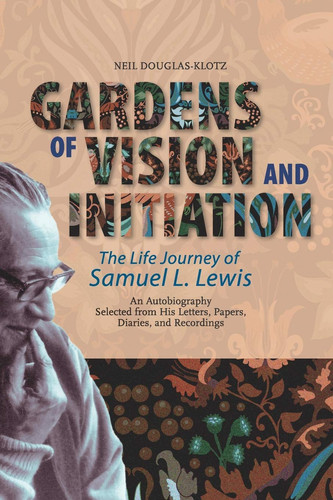
Gardens of Vision and Initiation The Life Journey of Samuel L. Lewis

Samuel Lewis,Neil Douglas-Klotz
Sufi Murshid, Zen Master, Environmental and Peace Activist, Missionary to the Hippie Generation, Founder of the Dances of Universal Peace....Drawn from his own voluminous writings, A Garden of Vision and Initiation allows us to hear Samuel Lewis's story and teaching in his own words, the authentic voice of a spiritual original and pioneer."Here is the story of a mystic, a gardener, a Sufi, a Zen student, a true human being. Samuel Lewis' spiritual practice was deepened through his meetings with Hazrat Inayat Khan, but his teaching, his wisdom, came from his own visionary nature. Garden of Visions and Initiation takes us on the inner and outer journey of this remarkable man, who left us with the gift of the Dances of Universal Peace, and the living grace of a soul who embraced both love and pain in service to God." --Llewellyn Vaughan-Lee, Ph.D., author, Love is a Fire, the Sufis Mystical Journey Home ."The reader of Dr. Neil Douglas-Klotz's sensitively selected and annotated writings of Murshid Samuel Lewis (1876-1971) is taken on the tumultuous spiritual journey of a truly universal being; a voyage propelled throughout his life by the quest for Truth, whether through the teachings of Sufism, Zen Buddhism or any other divinely revealed path. The reader grows with Sufi Sam as he explores with sincerity the inner and outer world, experiences hope and disappointment, and dances through this earthly life with his trademark flashes of spiritual humour and love for all. A collection of writings that will be of particular interest for those westerners who, like Lewis himself, find their path through the teachings of the east." --Muneera Haeri, author of The Chishtis, A Living Light , co-author with Shaykh Fadhlalla Haeri of Sufi Encounters ."Whether you have known Lewis or are new to his work, it is illuminating to experience, in his compelling first person prose, how his determination to rise above the vicissitudes of his early years became fully realized in the form of an extraordinary capacity for healing the world." --W. A. Mathieu, author of The Listening Book and Bridge of Waves ."Sufi Vision and Initiation (1986) was always for me a reference for chronology regarding the life of Sam Lewis. Now comes what could be described as an autobiography par excellence. Sam Lewis wrote in The Lotus and the Universe (1963): "This is not an autobiography, although one may come sometime." This book, Gardens of Vision and Initiation (2020) is as close to an autobiography as we will have. This updated chronology of Lewis's writings, dowsed from the files by the editor, is a labor of love." --Mansur Johnson, author of Murshid: A personal memoir of life with American Sufi Samuel L. Lewis and compiler and editor of Big Tales: All the stories in the 12 volumes of The Sufi Message of Hazrat Inayat Khan."Everytime I remember Sam, I end up laughing at myself. That's pretty good work for a dead-rascal-saint." --Ram Dass, author of Be Here Now and Still Here ."I have no fonder memory of the 60's than the appearance of this strange-looking man, who said things which made me first laugh, then smile, then later pause in a preciation of a spiritual original, a pioneer." --Dr. Jacob Needleman, author of The New Religions and Lost Christianity ."As much of a wonder-filled reading experience it is to dive into this 'map', this description of the territory, I'm sure that Murshid Sam would have encouraged the reader to go out and have some direct experiences, traveling the territory and leaving behind any concepts about it. Gardens of Vision offers us the opportunity to witness what a life of dynamic transformation lived through direct experiences and encounters looks like." --the Rev. Tasnim Hermila Fernandez, co-founder of the International Network for the Dances of Universal Peace.
Amazon Digital Services LLC - Kdp 2020-07-27 397 pages

Simple rules for a complex world

Epstein, Richard Allen
Too many laws, too many lawyers--that's the necessary consequence of a complex society, or so conventional wisdom has it. Countless pundits insist that any call for legal simplification smacks of nostalgia, sentimentality, or naiveté. But the conventional view, the noted legal scholar Richard Epstein tells us, has it exactly backward. The richer texture of modern society allows for more individual freedom and choice. And it allows us to organize a comprehensive legal order capable of meeting the technological and social challenges of today on the basis of just six core principles. In this book, Epstein demonstrates how. The first four rules, which regulate human interactions in ordinary social life, concern the autonomy of the individual, property, contract, and tort. Taken together these rules establish and protect consistent entitlements over all resources, both human and natural. These rules are backstopped by two more rules that permit forced exchanges on payment of just compensation when private or public necessity so dictates. Epstein then uses these six building blocks to clarify many intractable problems in the modern legal landscape. His discussion of employment contracts explains the hidden virtues of contracts at will and exposes the crippling weaknesses of laws regarding collective bargaining, unjust dismissal, employer discrimination, and comparable worth. And his analysis shows how laws governing liability for products and professional services, corporate transactions, and environmental protection have generated unnecessary social strife and economic dislocation by violating these basic principles. Simple Rules for a Complex World offers a sophisticated agenda for comprehensive social reform that undoes much of the mischief of the modern regulatory state. At a time when most Americans have come to distrust and fear government at all levels, Epstein shows how a consistent application of economic and political theory allows us to steer a middle path between too much and too little.
Harvard University Press 1997 361 pages

Closer to where we began

Richter, Lisa
Lisa Richter's Closer to Where We Began is a diverse collection of poetry that follows the speaker on a path of self-discovery. The collection navigates the tension between memory and imagination, between the personal and the political, and the primacy of sensual, sensory, lived experience. These dream-like poems not only concern themselves with the speaker, but with urban and natural environments, friends, family, and lovers, past and present. The poet explores overlapping/intersecting identities that shape and inform us, celebrating the importance of telling our stories as a means of bringing us closer to our authentic selves.
Tightrope Books 2017 96 pages

A life spent changing places

Halprin, Lawrence
Landscape architect, urban planner, teacher, and social visionary: over the course of a sixty-year career, Lawrence Halprin (1916-2009) reshaped the spaces we inhabit and our ways of moving through them. The New York Times called him "the tribal elder of American landscape architecture" and the critic Ada Louise Huxtable credited him with creating what "may be one of the most important urban spaces since the Renaissance." His bold use of abstract imagery could evoke the landscape of the American West in a sequence of city squares and fountains, while his plan for repurposing an abandoned factory near San Francisco's Fisherman's Wharf showed how adaptive use of a historic structure could turn commercial development into urban theater. A man who deeply loved cities, he left as one of his most important legacies the five thousand acres of coastline, hedgerows, and meadows that became Sonoma County's environmentally sensitive and enormously influential Sea Ranch. Featuring more than ninety black-and-white and one hundred color reproductions of photographs, plans, and sketchbooks, A Life Spent Changing Places is Halprin's own account of how a young boy who listened to the fireside chats of FDR on the radio became the man who designed the memorial to that president in the nation's capital. It is a book about the invention and reinvention of an extraordinary man over the span of decades and how he helped to reframe the world around him.
University of Pennsylvania Press 2011-07-01 258 pages

Decision making in action: models and methods : Workshop : Papers

Gary A. Klein
This book describes the new perspective of naturalistic decision making. The point of departure is how people make decisions in complex, time-pressured, ambiguous, and changing environments. The purpose of this book is to present and elaborate on past models developed to explain this type of decision making. The central philosophy of the book is that classical decision theory has been unproductive since it is so heavily grounded in economics and mathematics. The contributors believe there is little to be learned from laboratory studies about how people actually handle difficult and interesting tasks; therefore, the book presents a critique of classical decision theory. The models of naturalistic decision making described by the contributors were derived to explain the behavior of firefighters, business people, jurors, nuclear power plant operators, and command-and-control officers. The models are unique in that they address the way people use experience to frame situations and adopt courses of action. The models explain the strengths of skilled decision makers.
Ablex Pub 1993 480 pages

Early developmental hazards

Frances Degen Horowitz
This volume examines the importance of prenatal, birth, and postnatal factors in determining the extent of "risk" that may be predicted for an infant in the first year of life and in early childhood. It offers the reader an up-to-date review of major research efforts toward understanding the circumstances that insure optimal developmental opportunities for all children. In the first chapter, Dr. Horowitz presents some of the basic issues concerning vulnerability of young infants and developmental hazards. Papers by Arnold Sameroff and Herbert Leiderman consider early infant-environment interactions as they relate to normal developmental processes and social bonding. Lewis Lipsitt examines data from the Collaborative Perinatal Project and from studies on Sudden Infant death Syndrome to propose some factors that contribute to the SIDS phenomenon. Trygg Engen reviews his research on the conditions that influence children to ingest harmful substances. The concluding chapter considers the implications of these papers for understanding environmental and biological conditions as they affect the developmental course of the infant and young child.
Routledge 2019-06-07 133 pages

Frontinus And His Ii Books On The Water Supply Of The City Of Rome A. D. 97: A Lecture Delivered Before The Engineering Students Of Cornell University, February 2nd, 1894...

Herschel, Clemens
This is a reproduction of a book published before 1923. This book may have occasional imperfections such as missing or blurred pages, poor pictures, errant marks, etc. that were either part of the original artifact, or were introduced by the scanning process. We believe this work is culturally important, and despite the imperfections, have elected to bring it back into print as part of our continuing commitment to the preservation of printed works worldwide. We appreciate your understanding of the imperfections in the preservation process, and hope you enjoy this valuable book. ++++ The below data was compiled from various identification fields in the bibliographic record of this title. This data is provided as an additional tool in helping to ensure edition identification: ++++ Frontinus And His II Books On The Water Supply Of The City Of Rome A. D. 97: A Lecture Delivered Before The Engineering Students Of Cornell University, February 2nd, 1894 Clemens Herschel Technology & Engineering; Environmental; Water Supply; Aqueducts; Nature / Natural Resources; Technology & Engineering / Environmental / Water Supply; Water-supply
Nabu Press 2011-10-05 50 pages

Arts for change: teaching outside the frame

Naidus, Beverly
Beverly Naidus shares her passion and strategies for teaching socially engaged art, offering, as well, a short history of the field and the candid views of more than thirty colleagues. A provocative, personal look at the motivations and challenges of teaching socially engaged arts, Arts for Change overturns conventional arts pedagogy with an activist's passion for creating art that matters. How can polarized groups work together to solve social and environmental problems? How can art be used to raise consciousness? Using candid examination of her own university teaching career as well as broader social and historical perspectives, Beverly Naidus answers these questions, guiding the reader through a progression of steps to help students observe the world around them and craft artistic responses to what they see. Interviews with over 30 arts education colleagues provide additional strategies for successfully engaging students in what, to them, is most meaningful.
New Village Press 2009-04-01 239 pages

The Alvin Curran Fakebook

Alvin Curran
"Alvin Curran has realized a long and fruitful career as a composer, performer, installation artist, writer, and teacher in the American experimental music tradition. He studied with Ron Nelson, Elliott Carter, and Mel Powell, and co-founded the group Musica Elettronica Viva in 1966 in Rome where he currently resides. His music, whether chamber works, radio-art, large scale environmental theater or solo performance, embraces all sounds, all spaces, and all people. This illustrated anthology of compositions, musical fragments, and instruction pieces is intended to be enjoyed and used by adventurous musicians both literate and unlettered, scholars, teachers of composition and improvisation, and anyone interested in the evolution of art-music in our time."--Page 4 of cover
Alvin Curran 2015 300 pages

The art of dialogue in Jewish philosophy

Hughes, Aaron W
Aaron W. Hughes presents the first major study of dialogue as a Jewish philosophical practice. Examining connections between Jewish philosophy, the literary form in which it is expressed, and the culture in which it is produced, Hughes shows how Jews understood and struggled with their social, religious, and intellectual environments. In this innovative and insightful book, Hughes addresses various themes associated with the literary form of dialogue as well as its philosophical reception: Why did various thinkers choose dialogue? What did it allow them to accomplish? How do the literary features of dialogue construct philosophical argument? As a history of philosophical form, context, and practice, this book will interest scholars and students working at the intersections of religious studies, philosophy, and literature.
Indiana University Press 2008 234 pages

Roger Ballen: spirits and spaces

Ballen, Roger,Rhodes, Colin
"Having previously expressed no interest in color photography, Roger Ballen was inspired to engage with the medium after receiving a Leica SL camera as a gift in 2016. Opening to the potential of color in his work, Ballen used light in creative ways, exploring new avenues of experimentation. Spirits and Spaces eloquently captures the absurd and bizarre world of Roger Ballen, where animals and art brut-like drawings dominate, and humanity is reduced to obscure figures or fragmented body parts. The color images in Spirits and Spaces, created in conjunction with Ballen's artistic director, Marguerite Rossouw, were produced in a claustrophobic space, constructed of worn, wallpapered wooden panels and with minimalistic lighting. Here, in this dense, oppressive environment, Ballen creates what might be seen by many as a world that is unexplainable in words: one in which absurdity, chaos, comedy, and tragedy apparently exist side by side. Both a visual revelation and an artistic evolution by one of contemporary photography's most unique voices, Spirits and Spaces will be an essential and much-anticipated photobook for all Roger Ballen fans." - Publisher's description
Thames & Hudson Inc 2025-09-16 144 pages

The decomposition of sociology

Horowitz, Irving Louis
Sociology, writes Irving Louis Horowitz, has changed from a central discipline of the social sciences to an ideological outpost of political extremism. As a result, the field is in crisis. Some departments have been shut down, others cut back, research programs have dried up, and the growth of professional organizations and student enrollments have been either curbed or atrophied. In The Decomposition of Sociology, Professor Horowitz, for four decades a leading social scientist, offers a frank and full account of the maelstrom engulfing this field. Horowitz pulls no punches in this provocative volume. He charges that much contemporary sociological theory has degenerated into pure critique, strongly influenced by Marxist dogmatism. Such thinking has a strong element of anti-American and anti-Western bias, in which all questions have one answer--the evil of capitalism--and all problems one solution--the good of socialism. In criminology, for instance, he shows that high crime rates are seen as an expression of capitalist disintegration, and criminal behavior a covert expression of radical action. Indeed, in one area after another, Horowitz shows how this same formulaic thinking dominates the field, resulting in a crude reductionist view of contemporary social life. At a time when the world is moving closer to the free market and democratic norms, he concludes, such reductionist tendencies and ideological posturings are outmoded. Horowitz offers an alternative. He urges a larger vision of the social sciences, one in which universities, granting agencies and research institutes provide an environment in which research may be untainted by partisan agencies--where policy choices will not be hindered by the prevailing cultural climate. He counsels sociologists to move away from blind advocacy, to meet the challenges of the twenty-first century by incorporating the knowledge of other times and places, and to take into account the shrinking globe--in short, to develop and maintain a new set of universal standards in this era of a world culture. Here then is an eloquent plea for a revolution in sociology, written by one of the field's foremost figures. It offers as well a cautionary tale about the potentially devastating effect of ideology on scholarly pursuits.
Oxford University Press 1993 282 pages

The Harz Journey

Heinrich Heine
The Harz Journey is a travel narrative that blends personal reflections with observations about nature and society. The author embarks on a journey through the Harz Mountains, where he explores the liberating power of nature and its contrasts with urban life. As he departs from a university town, he reflects on its peculiar dynamics and the academic culture, emphasizing the tensions between intellectual pursuits and the natural world. His journey is marked by humor, lyricism, and social commentary, highlighting the complexity of human experience. Through vivid descriptions of the landscape, Heine reveals the richness of his encounters with both people and nature. The narrative is not only a travelogue but also a philosophical exploration of the individual's relationship with the world around them, infused with wit and poetic insight. His observations challenge conventional social norms, offering a thought-provoking journey that transcends mere physical travel. The work remains an important reflection on the tensions between intellectual life and the natural environment.
Double9 Books Llp 2025-04 58 pages

How libraries make tough choices in difficult times: purposeful abandonment

Stern, David
Contemporary library managers face the need to make difficult choices regarding resource allocation in the modern business environment. How Libraries Make Tough Choices in Difficult Times is a practical guide for library managers, offering techniques to analyze existing and potential services, implement best practices for maximizing existing resources, and utilize pressing financial scenarios in order to justify making difficult reallocation decisions. The book begins by asking the fundamental questions of why, what, and how, moving on to look at how to manage expectations and report to both administration and faculty. The book then considers the four 'D's of Do, Delegate, Delay and Drop, before covering project management, and how to understand the mission and objectives of your organisation. The book then focuses on: service quality improvement analyses; identifying underlying issues; reviewing resources; identifying best practice; managing feedback and expectations; and looking at decision making skills and implications. Introduces both philosophies and techniques for decision-making that will help inexperienced library managersProvides resources for a practical orientation to new Service Quality Improvement and Project Management approaches as library managers address a wide range of resource allocation considerationsWritten by a highly experienced practitioner in the field.
Chandos Publishing 2013 210 pages