134 results for "American History"

The Ojibwa Woman

Ruth Landes
The Ojibwa Woman is a book written by Ruth Landes that explores the life and culture of the Ojibwa people, specifically focusing on the experiences of Ojibwa women. The book is based on Landes' fieldwork among the Ojibwa people in the early 1930s, during which she lived among the tribe and conducted extensive interviews with women to gain a better understanding of their lives, beliefs, and customs.The book covers a wide range of topics related to Ojibwa women, including their roles in the community, their relationships with men and other women, their experiences of motherhood and childbirth, and their spiritual beliefs and practices. Landes also explores the impact of colonialism and Christianity on the Ojibwa people, and the ways in which these forces have affected the lives of Ojibwa women.Throughout the book, Landes presents a nuanced and empathetic portrait of the Ojibwa people and their culture, drawing on her own observations and the insights of the women she interviewed. The book is a valuable resource for anyone interested in the history and culture of indigenous peoples, as well as for those interested in the experiences of women in different cultures and societies.This scarce antiquarian book is a facsimile reprint of the old original and may contain some imperfections such as library marks and notations. Because we believe this work is culturally important, we have made it available as part of our commitment for protecting, preserving, and promoting the world's literature in affordable, high quality, modern editions, that are true to their original work.
Literary Licensing, LLC 2011-08 256 pages

An American Saga The Story of Helen Thomas and Simon Flexner

James T. Flexner
This tale of two families is set on a grand scale, as James Thomas Flexner brings his talents to bear on his own noteworthy heritage. An American Saga is an historical narrative, grounded on documentary sources, which ends with the marriage of Helen Thomas and Simon Flexner. The account deals equally with the lives and the backgrounds of husband and wife, the author's parents. Simon Flexner was the famous medical investigator, discoverer of the "Flexner vacillus" and the "Flexner serum," who became the creating director of the Rockefeller Institute for Medical Research (now Rockefeller University) and eventually acknowledged leader of American medical science. The Kentucky-born son of impoverished German Jewish immigrants, he grew up in penury. As he never completed the eighth grade, he was almost completely self-educated when he appeared at the Johns Hopkins University before its celebrated medical school had been founded. Almost instantly he began making the discoveries that soon made him the leading younger medical scientist in the United States.
Fordham University Press 1993 494 pages

Holding On Dreamers, Visionaries, Eccentrics, and Other American Heroes

David Isay,Harvey Wang
This book is a tribute to some of America's greatest characters, people holding on to unique ways of life at all costs. A castle builder, a forty-year veteran Woolworth's lunch-counter waitress, a moonshiner, and the president of The Brooklyn Elite Checker Club are among this varied group of ordinary people who prevail against all odds. They are Dewey Chafin and Barbara Elkins, snake handlers for the Church of the Lord Jesus in Jolo, West Virginia; Amos Powers, caretaker of America's only coon-dog graveyard in Colbert County, Alabama; Dixie Evans, curator of Exotic World, Museum of Burlesque in Helendale, California; and Mike Gashwarza of the Hopi tribe, fighting against electricity being brought to Old Oraibi, Arizona, the oldest town in North America. David Isay's compelling, often humorous profiles are accompanied by Harvey Wang's wonderful portraits of fifty such people, die-hard individualists who speak for themselves, illuminating their remarkable lives and personalities. Henry Roth's foreword is a moving testament to the creativity, tenacity, and dignity these people possess.
W. W. Norton, Incorporated 1997-05 216 pages

Brainstorming The Science and Politics of Opiate Research

Solomon H. Snyder
The discovery of how opiates such as morphine and heroin relieve pain and produce euphoria is one of the most dramatic tales of modern science. It begins in 1971 when, at the height of the undeclared war in Vietnam, Richard Nixon officially announced a war on drugs. Heroin addiction--no longer confined to urban ghettos--was causing bad public relations for the White House. The specter of young American soldiers demoralized, drugged, and committing atrocities was not the image President Nixon wished to convey as he argued for further bombings of North Vietnam. In this book Solomon Snyder describes the political maneuverings and scientific sleuthing that led him and Candace Pert, then a graduate student in his lab, to a critical breakthrough in the effort to understand addiction. Their discovery--the so-called opiate receptor--is a structure on the surface of certain nerve cells that attracts opiates. Heroin or morphine molecules fit into opiate receptors much as a key fits into the ignition switch of a car--thus turning on the engine of the cell. Snyder and his students were able to show that nerve cells which possess opiate receptors are found in precisely those parts of the brain that control emotion and pain. Dr. Snyder describes the friendly yet intense competition from other researchers to expand upon this initial discovery. From the work of two Scottish investigators, Hans Kosterlitz and John Hughes, neuroscientists now know not only where opiate receptors are found in the brain but also why they are there: to serve as binding sites for an opiate-like substance produced by the brain itself--the brain's own morphine. This substance, called enkephalin, regulates pain, mood, and a host of other physiological functions. From this very human chronicle of scientific battles in the ongoing war against pain and addiction, we gain an appreciation of the extraordinary intellectual processes of an eminent scientist. But Dr. Snyder's story of scientific brainstorming also affords us rare glimpses into the fruitful, sometimes frustrating, relationships among scientists which enrich and complicate creative work. We are reminded of the delicate political alliances that are forged at every level of organization, from the lab bench to the Oval Office, as the scientific community attempts to fit its needs to those of the larger society.
Harvard University Press 2013-10 219 pages

Betrayal France, the Arabs, and the Jews (Large Print 16pt)

David Pryce-Jones
It has now been more than forty years since President John F. Kennedy was assassinated on the streets of Dallas on November 22, 1963. No event in the post-war era, not even the terrorist attacks of September 11, 2001, has cast such a long shadow over our national life. The murder of the handsome and vigorous president shocked the nation to its core, and shook the faith of many Americans in their institutions and way of life. The repercussions from that event continue to be felt down to the present day. Looking back, it is now clear that Kennedy's death marked a historical crossroads after which point events began to move in surprising and destructive directions. In Camelot and the Cultural Revolution: How the Assassination of John F. Kennedy Shattered American Liberalism, James Piereson examines this seminal event from an entirely new and provocative point of view. Most books on the assassination take up the question as to who was really responsible for killing the President. Mr. Piereson takes it as established fact that Kennedy was killed by Lee Harvey Oswald. What needs to be explained, he argues, is the bizarre aftermath of the assassination: Why in the years after the assassination did the American Left become preoccupied with conspiratorial thinking? How and why was John F. Kennedy transformed in death into a liberal icon and a martyr for civil rights? In what way was the assassination linked to the collapse of mid-century liberalism, a doctrine which until 1963 was the reigning philosophy of the nation? In answering these questions, Piereson places great weight on the influence of Jacqueline Kennedy in shaping public memory of her husband and the meaning of his death. The Kennedy assassination, he argues, is a case study in public myth-making and the ways in which images and symbols can override fact and substance in political life.
ReadHowYouWant.com 2011-02 212 pages

The Exile Cuba in the Heart of Miami

David Rieff
This is a fascinating portrait of Miami's Cuban population, the most successful group of immigrants to settle in the United States since the Jews of the nineteenth century. David Rieff has provided an engrossing look at a group exiled from its homeland, showing how America has affected these immigrants, and what it means to become an American in the late twentieth century.
Simon and Schuster 1994-08-31 224 pages

Messages From My Father A Memoir

Calvin Trillin
Calvin Trillin, the celebrated New Yorker writer, offers a rich and engaging biography of his father, as well as a literate and entertaining fanfare for the common (and decent, and hard-working) man. Abe Trillin had the western Missouri accent of someone who had grown up in St. Joseph and the dreams of America of someone who had been born is Russia. In Kansas City, he was a grocer, at least until he swore off the grocery business. He was given to swearing off things—coffee, tobacco, alcohol, all neckties that were not yellow in color. Presumably he had also sworn off swearing, although he was a collector of curses, such as "May you have an injury that is not covered by workman's compensation." Although he had a strong vision of the sort of person he wanted his son to be, his explicit advice about how to behave didn't go beyond an almost lackadaisical "You might as well be a mensch." Somehow, though, Abe Trillin's messages got through clearly. The author's unerring sense of the American character is everywhere apparent in this quietly powerful memoir, Messages from My Father .
Macmillan 1997-06-12 128 pages

The Way of the World A Story of Truth and Hope in an Age of Extremism

Ron Suskind
National Bestseller Fully Updated Ron Suskind’s book promises to be a bracing international thriller – an ensemble of uranium merchants and panicked diplomats, stealthy Jihadist soldiers and CIA operatives, anxious Muslim children and angry world leaders – a diverse cast of players who will define the struggle between hope and fear in the modern era. Suskind will close the Bush years – a period he has helped to define – with a startling glimpse at what America actually faces across the roiling world. In the intelligence and military communities, the overwhelming concern is the uncontrolled spread of nuclear weapons and the ingredients from which weapons can be composed across a globe exploding with conflict and anti-American fervour. It is a failure of government that we are left with this overwhelming security issue – both domestically, where our security is deeply compromised, and internationally, where we face a host of seen and unseen threats. This book will explode in the middle of an election year with unparalleled disclosures and analysis. The book’s nature and timing will place it at the very centre of the election battle as it enters its final six months. It will be a must-read for anyone hoping to exercise truly informed consent.
Doubleday Canada 2009-08-25 448 pages

The Koch Papers My Fight Against Anti-Semitism

Edward I. Koch,Ed Koch,Rafael Medoff
For more than three decades, Ed Koch has been one of America's most interesting and outspoken political figures. In this provocative new book, Koch with Rafael Medoff guides readers through the major battles in his life-long fight against anti-Semitism. Interviews, speeches, new essays, never-before published personal correspondence, and more highlight his leadership--on campuses, in the media, on the streets of New York City, and in the halls of power in Washington, DC. The book also features personal letters from Henry Louis Gates, former President George Bush, and other prominent figures. Koch will reveal startling information for the first time here, and his writings are controversial, piercing, teasing, and questioning. This book will ignite discussion for years to come
Macmillan 2009-03-17 256 pages

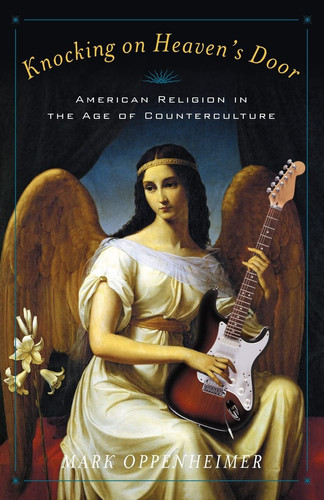
Knocking on Heaven's Door American Religion in the Age of Counterculture

Mark Oppenheimer
A witty and provocative reappraisal of the impact of the cultural upheavals of the sixties on American religious life What happened to American religion during the cultural revolution of the 1960s and early 1970s? The era has long been associated with the ascendancy of Eastern religions and fringe cults. But in this provocative book, Mark Oppenheimer demonstrates that contrary to conventional wisdom, most Americans did not turn on, tune in, and drop out of mainstream religious groups during the Age of Aquarius. Instead, many Americans brought the counterculture with them to their churches and temples, changing the face of American religion. Introducing us to America's first gay ministers and first female priests, to hippie Jews and folk-singing Catholics, Oppenheimer demonstrates that this was an era of extraordinary religious vitality. Drawing on a rich range of archival material as well as interviews with many of the protagonists, Knocking on Heaven's Door offersa wry and iconoclastic reappraisal of the ways in which the upheavals of the sixties changed America's relationship with God.
Yale University Press 2003 284 pages

Hail Babylon! NPR's Road Scholar Goes in Search of the American City

Andrei Codrescu
Andrei Codrescu takes us cross-country through the withered, yet alluring American urban landscape, visiting New York, Baltimore, New Orleans, Little Rock, San Antonio, Albuquerque, Las Vegas, and Portland, Oregon. He discovers that cities are at the very center of the forces determining our future, in this major work by one of America's most gifted social critics.
Macmillan 1999-06-19 272 pages

Exile and Return Predicaments of Palestinians and Jews

Ann M. Lesch,Ian S. Lustick
Exile and Return: Predicaments of Palestinians and Jews is a bold attempt to understand constructively and build upon the terrible irony of two peoples, each with a searing memory of displacement and exile, struggling for a return to a land each remembers, each claims, and from which each has sought to exclude the other. The Israeli, Palestinian, and American contributors to this volume consider the catastrophic failure of the Oslo peace process, the years of bloody violence that ensued, and a renewed awareness of the centrality of the Palestinian refugee question and the issues of demography and justice it raises with respect to any peace settlement. They explore the political meaning of the past delivered into the present by Palestinians whose personal and collective lives were forever transformed by the Nakba (catastrophe) of 1948, and by Israeli Jews whose sense of their own security and identity has been inseparably bound to centuries of persecution, culminating in the Holocaust, and a vividly constructed image as a people whose suffering arose from its exile from the Land of Israel twenty centuries ago. The contributors' work is honest and often as inspiring as it is provocative. This volume stands as a major contribution to the construction of a new intellectual infrastructure for decisive thinking about the refugee question, about the entire notion of the right of return (whether in Zionism or in Palestinian nationalism), and about the unavoidable obstacles and unappreciated opportunities that confront peacemakers. It offers formulas, categories, and approaches that can be used by both Palestinian and Israeli leaders to convince their peoples that the agreement being sought will destroy neither the state that Israeli Jews have built nor the deep yearnings for vindication and return that lie at the emotional core of the Palestinian struggle. The authors are leading scholars able to take full advantage of the flood of new work on these issues that the opening of various key archives has made possible. Their contributions here signal a shift toward a kind of reconciliation that is informed by the past, present, and future. Contributors : Elazar Barkan, Michael R. Fischbach, Sari Hanafi, Amal Jamal, Laleh Khalili, Ze'ev Khanin, Ann M. Lesch, Ian S. Lustick, Ilan Pappé, Elie Podeh, Nadim N. Rouhana, Gershon Shafir, Yehouda Shenhav, Salim Tamari.
University of Pennsylvania Press 2008-10-28 368 pages

Slave Badges and the Slave-Hire System in Charleston, South Carolina, 1783-1865

Harlan Greene,Harry S. Hutchins, Jr.,Brian E. Hutchins
The slave-hire system of Charleston, South Carolina, in the 1700s and the 1800s produced a curious object--the slave badge. The badges were intended to legislate the practice of hiring a slave from one master to another, and slaves were required by law to wear them. Slave badges have become quite collectible and have excited both scholarly and popular interest in recent years. This work documents how the slave-hire system in Charleston came about, how it worked, who was in charge of it, and who enforced the laws regarding slave badges. Numerous badge makers are identified, and photographs of badges, with commentary on what the data stamped on them mean, are included. The authors located income and expense statements for Charleston from 1783 to 1865, and deduced how many slaves were hired out in the city every year from 1800 on. The work also discusses forgeries of slave badges, now quite common. There is a section of 20 color plates.
McFarland 2008-09-08 208 pages

Henry Rollins

Henry Rollins
These interviews with Henry Rollins conducted by RE/Search (and Search & Destroy) founder V. Vale focus on Henry's travels -- often to countries considered dangerous and off-limits. There are references to Punk Rock history, the Occupy movement, and numerous personal adventures and experiences over the past 30-plus years of combing the planet giving musical and Spoken Word performances, and generally being as creative and humorous as possible no matter what the situation may be . Whatever Henry wants to do, he does it while giving his full attention, like a kind of Zen master. RE/Search tries to reveal the full scope of his creativity, achievements and darkly sardonic perceptiveness and contempt for cliche. This book is full of both humor and inspiration.
RE/Search Publications 2012 124 pages

African American Women and Christian Activism New York's Black YWCA, 1905-1945

Judith Weisenfeld
The middle class black women who people Judith Weisenfeld's history were committed both to social action and to institutional expression of their religious convictions. Their story provides an illuminating perspective on the varied forces working to improve quality of life for African Americans in crucial times. When undertaking to help young women migrating to and living alone in New York, Weisenfeld's protagonists chose to work within a national evangelical institution. Their organization of a black chapter of the Young Women's Christian Association in 1905 was a clear step toward establishing a suitable environment for young working women; it was also an expression of their philosophy of social uplift. And predictably it was the beginning of an equal rights struggle--to work as equals with white women activists. Growing and adapting as New York's black community evolved over the decades, the black YWCA assumed a central role both in the community's religious life and as a training ground for social action. Weisenfeld's analysis of the setbacks and successes closes with the National YWCA's vote in 1946 to adopt an interracial charter and move toward integration of local chapters, thus opening the door to a different set of challenges for a new generation of black activists. Weisenfeld's account gives a vibrant picture of African American women as significant actors in the life of the city. And it bears telling witness to the religious, class, gender, and racial negotiations so often involved in American social reform movements.
Harvard University Press 2013-10 239 pages

Irving Howe

Gerald Sorin
A New York Times “Books for Summer Reading” selection Winner of the 2003 National Jewish Book Award for History By the time he died in 1993 at the age of 73, Irving Howe was one of the twentieth century’s most important public thinkers. Deeply passionate, committed to social reform and secular Jewishness, ardently devoted to fiction and poetry, in love with baseball, music, and ballet, Howe wrote with such eloquence and lived with such conviction that his extraordinary work is now part of the canon of American social thought. In the first comprehensive biography of Howe’s life, historian Gerald Sorin brings us close to this man who rose from Jewish immigrant poverty in the 1930s to become one of the most provocative intellectuals of our time. Known most widely for his award-winning book World of Our Fathers, a rich portrayal of the East European Jewish experience in New York, Howe also won acclaim for his prodigious output of illuminating essays on American culture and as an indefatigable promoter of democratic socialism as can be seen in the pages of Dissent, the journal he edited for nearly forty years. Deeply devoted to the ideal of democratic radicalism and true equality, Howe was constantly engaged in a struggle for decency and basic fairness in the face of social injustice. In the century of Auschwitz, the Gulag, and global inter-ethnic mass murder, it was difficult to sustain political certainties and take pride in one's humanity. To have lived a life of conviction and engagement in that era was a notable achievement. Irving Howe lived such a life and Gerald Sorin has done a masterful job of guiding us through it in all its passion and complexity.
New York University Press 2002 386 pages