117 results for "Biography"

What time and sadness spared: mother and son confront the Holocaust

Ben-Atar, Roma Nutkiewicz,Ben-Atar, Doron S.
Roma Ben-Atar resisted until late in life the urging of her family to share the memories of her Nazi-era experiences. The Holocaust exerted a dark pressure on all of their lives but was never openly discussed. It was only when her granddaughter insisted on hearing the whole truth, with a directness partly generational, that Mrs. Ben-Atar agreed to tell her story. What Time and Sadness Spared is a journey of both loss and endurance, moving with shocking speed from a carefree adolescence in upper-middle-class Warsaw to the horrors of the Final Solution. The young girl sees her neighborhood transformed into a ghetto populated by skeletal figures both alive and dead. Unbelievably, things only grow worse as this ruin gives way to the death factories of Majdanek and Auschwitz and the death marches of 1945. Life in the camps changes her in less than a day, as if "the person in my body was a stranger I had never met." Her only consolation is to lie on her wooden bunk, no mattress, and speak to the soul of her mother, who, like virtually her entire family, had already been swept away. Roma must summon astonishing powers of adaptation simply to survive, bringing her finally through the wreckage of postwar Europe and to an entirely new life in Israel. In this unique family collaboration Roma Ben-Atar's son Doron, a historian who brings with him fluency in psychoanalysis, contributes through his commentary an awareness of the difficulties presented by historical narrative and memory. A visitor to the much-changed sites in which his mother grew up and was interned by the Nazis, he also voices the perspective of the survivors' children and their ambivalence over being "protected" from this past. As the generation that endured the camps passes from this world, What Time and Sadness Spared illustrates with particular urgency the historical responsibilities of the survivors' descendants, who must become the new vessels for a story that will not remain alive on its own but demands our courage and curiosity.
University of Virginia Press 2018-07-05 196 pages

My lucky star

Fantlová, Zdenka
Memoirs of a Jew born in 1922 in Blatná, Czechoslovakia. In 1925 her family moved to Rokycany (west of Prague). In 1940 Fantlová's father was arrested; he was interned in various camps and died in 1945 on a death march. In January 1942, Fantlová was deported to Theresienstadt with her stepmother, brother, and sister. Describes cultural activities in Theresienstadt, especially musical theater, in which she participated. In October 1944 the family was deported to Auschwitz, where Fantlová's stepmother was killed. Her brother was sent to Gleiwitz and died there. Fantlová and her sister were taken to the Kurzbach labor camp, and from there to Gross-Rosen, Mauthausen, and Bergen-Belsen, where her sister perished and Fantlová was liberated. In July 1945 she was sent for treatment to Sweden and remained there.
Herodias 2001 203 pages

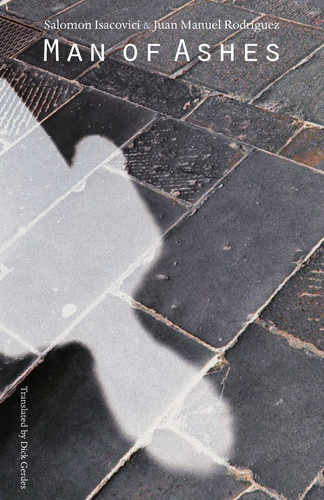
Man of ashes

Isacovici, Salomon
"A poignant, groundbreaking memoir that links the Holocaust and its aftermath to the safe haven that opened for camp survivors in Latin America at mid-century. The controversy surrounding the collaboration between Isacovici and Rodr guez remains an extraordinary opportunity to reflect on the thorny path of Jewish-Hispanic relations worldwide."-Ilan Stavans"Distinguished by geography as well as by its painful testimony. . . . Much of the memoir's early drama involves the creeping Nazi threat opposing Jews' wishful thinking-that the war might be ending and that 'it can't happen here.' . . . The author's family is shattered in Birkenau, but he survives Auschwitz with jobs peeling potatoes and mining coal at Jaworno, and he survives a gruesome death march as the Soviets advance. Isacovici is able to rejoin two brothers in a fruitless return to the family farm and to many European cities in search of a haven. He then joins the family of a woman with whom he has a serious romance, who end up with visas for Ecuador, where he feels an empathy for the suffering of the local Indians. . . . This account tells an unforgettable and unique story."-Kirkus ReviewsSalomon Isacovici died in 1998. Dick Gerdes is a professor of Spanish at George Mason University. Man of Ashes was first published in Mexico in 1990 as A7393: Hombre de cenizas and was awarded the Fernando Jeno Prize.
University of Nebraska Press 2002 244 pages

The diary of Rywka Lipszyc: found in Auschwitz by the Red Army in 1945 and first published in San Francisco in 2014

Lipszyc, Rywka
"Here is the extraordinary Diary of Rywka Lipszyc, finally published 70 years after it was created. Handwritten in a school notebook between October 1943 and April 1944, this remarkable diary depicts the nightmare of life under the Nazis in Poland's infamous Lodz ghetto--through the eyes of brilliant, 14-year-old Jewish girl"--Dust jacket flap.
Jewish Family and Children's Services Holocaust Center 2014 172 pages

Peter Owen, not a nice Jewish boy: memoirs of a Maverick publisher

Owen, Peter,Nye, James
In this wry, candid, and sometimes poignant memoir, Peter Owen recalls his lonely Jewish boyhood in Nazi Germany and migration to England where he survived the London Blitz, a teenage dalliance with aspiring actress Fenella Fielding, and working with a motley variety of book publishers. He founded his eponymous publishing firm in 1951, becoming one of the youngest publishers in Britain. A pioneer of books on social themes, gay and lesbian writing, and literature in translation, Owen's authors included ten Nobel laureates and brought Hermann Hesse, Ezra Pound, and Anaïs Nin to a wider audience. Enjoying their success, he and his wife Wendy were memorably stylish and eccentric figures at the literary parties of the 1960s and 1970s. Owen describes his often hilarious encounters with many of those he published, including John Lennon, Yoko Ono, and Salvador Dalí, his adventures in Japan with Yukio Mishima and Shūsaku Endō, and in Morocco with Tennessee Williams and Paul and Jane Bowles. As one of the last of the great émigré publishers, his death in 2016 aged 89 signalled the end of a literary era.
Fonthill Media 2021 255 pages

Parallel lines

Lantos, Peter L.
Memoirs of Lantos, born to the Leipniker family in 1939 in Makó, Hungary. In 1944, after his older brother was taken away, the rest of the family was sent to the ghetto of Szeged, but the Jews there were soon deported. He and his parents were first sent to Strasshof in Austria for a short time, then to Wiener Neustadt and to Bergen-Belsen, where his father died. He and his mother were then sent on a death transport, during which they were liberated by American soldiers. They returned to Hungary and found that his brother had perished. Lantos later studied medicine in England, and in 1969 decided to remain there.
Arcadia Books 2006 246 pages

The straits of hell: the chronicle of a Salonikan Jew in the Nazi extermination camps Auschwitz, Mauthausen, Melk, Ebensee

Ha-Elion, Moshe
"The Jerusalem of the Balkans is today a city of ghosts. Saloniki or Salonika, as Thessaloniki was known its Jewish community, today barely numbers a thousand Jews whereas from 1500 to World War I the Jews constituted the majority of its inhabitants. Moshe Ha-Elyon and his extended family were part of the deportation from Salonika of some 45,000 Jews to Auschwitz where all but a handful were gassed, beaten, or starved to death during the spring of 1943 to the end of the war. This memoir differs from the many memoirs of Greek Jews. Moshe Ha- Elyon portrays the religious and cultural life of his ancestral community as well as the spiritual and mystical research of his father who predicted, prior to his death at the onset of the war, both the persecution of the Jews and the subsequent rise of a Jewish state in its aftermath. It is the moving story of a teenager who suffered in extremis yet lived to transmit to his family in Israel the legacy of a vanished era. A most informative and worthwhile insight into the inner world of Greek Jewry before and during its destruction during World War II"--
Bibliopolis 2005 120 pages

Arnold Daghani's memories of Mikhailowka: the illustrated diary of a slave labour camp survivor

Daghani, Arnold
Arnold Daghani (1909-85) came from a German-speaking Jewish family in Suczawa, then in the Austro-Hungarian Empire, now Romania. His understated narrative of his experiences in the slave labour camp at Mikhailowka, south west Ukraine (1942-43), presented here in its first English book edition, provides a day-by-day account of the chilling experiences of Jewish slave labourers. It is written in a compelling style and illustrated by watercolours and drawings that Daghani made secretly in captivity and smuggled out of the camp and a Romanian ghetto. It includes an extraordinary account of the couple's escape and the shooting of over three hundred prisoners. The uniqueness of Daghani's Holocaust testimony lies in his role as an artist which led to his (and his wife's) escape from the camp and their survival. The camps in Ukraine have been under-investigated and the diary provides significant material. It was used as the basis of investigations in the 1960s into war crimes in the slave labour camps in Ukraine, helping to bring attention to the region and providing some form of recognition for those who suffered there. This richly illustrated and scrupulously edited book is distinguished from more conventional Holocaust memoirs by focusing on fundamental questions of historical testimony and the problems of representation in both words and images. Daghani's diary is contextualized on the basis of wide-ranging new historical, archival and art historical research in essays that document the artist's attempts to achieve justice and reconciliation. They locate the diary in relation to contemporary issues on migration and statelessness, genocide and trauma, self-reflection and memory. The diary is both art and document, addressing how we understand and construct history. It enables readers to engage with the Holocaust via the viewpoint of an individual, making statistics more meaningful and history less distant.
Vallentine Mitchell 2009 243 pages

The house by the sea: a portrait of the Holocaust in Greece

Fromer, Rebecca
Relates the experiences of Elia Aelion, a Jew from Salonika born in 1918, as told to Fromer and written by her. In 1941 he fled to Athens; in 1943, when the Germans entered Athens, Aelion and his friends left the city for a suburb, where they lived for ten months in a villa whose owner agreed to rent part of it to Jews. In August 1944 they were discovered by the Germans; Aelion managed to evade arrest and to survive until the liberation. Many members of his family perished in the Holocaust. Includes a historical introduction (pp. 3-15) and notes by Fromer. Pp. 145-159 contain appendices, including a chronology of the Holocaust in Greece and statistical information on transports and the destruction of Jewish communities in Greece.
Mercury House 1998 162 pages

East of time

Rosenberg, Yaakov ben Gershon
EAST OF TIME is a rendezvous of history and imagination, of realities and dreams, hopes and disenchantments. This extraordinary book, by turns stark and poetic, unfolds in a succession of short reminiscences that weave together into a shimmering tapestry depicting a lost world. The setting is Lodz, Poland, in the years of the author's childhood, when he witnessed the grand belief in a just new world overtaken by the cataclysmic events of the 1930s, imprisoned between the walls of ghettos, and finally silenced at Auschwitz. The book's touchstone is the determination of an entire community to remain human, even at the last frontier of life.
Brandl & Schlesinger 2005 220 pages