
185 results for "Ecology"

Roberto Burle Marx: the modernity of landscape

Marx, Roberto Burle
Roberto Burle Marx (Sao Paulo, 1909-Rio de Janeiro, 1994) is known as a landscape architect, but also as a painter, botanist, gardener, chef and jewellery designer. He considered the garden to be one of the fine arts, as "the adaptation of the biome to civilisation's natural requirements." This book introduces the realm of the full sensory experience. Burle Marx's work with plants becomes highly pictorial--everything is drawn, colored and constructed. In this symbiosis between aesthetics and botany, Burle Marx is the master of both species and spaces. His work is the embodiment of the "nature-city," a concept developed from the garden cities of the late 19th century, which has become compromised in the 21st century due to the compact city model. This new publication focuses on Burle Marx's scientific interest in the landscape and his relationship with the environment. Concepts that continue to be of major significance in contemporary landscape architecture, such as ecology, garden as an art form and landscape design in the urban structure, are some of the subjects the book deals with. The visual information of the book is complemented by the texts by Fares El-Dahdah, Francis Rambert, Jacques Leenhardt, Jose Tabacow, Lelia Coelho Frota, Andre Correa do Lago, Dorothee Imbert, Valerie Fraser and Gilles Clement.
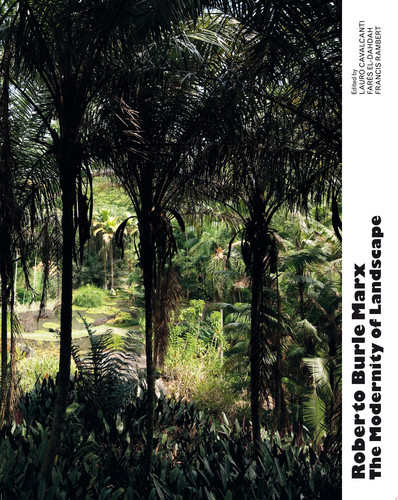
Cité de l'architecture & du patrimoine, Institut français d'architecture 2011 344 pages

This sacred earth: religion, nature, environment

Roger S. Gottlieb
This is the first comprehensive survey of the critical connections between religion, nature and the environment. It includes writings from sacred texts and a broad spectrum of new eco-theological selections. Historical and contemporary selections from key authors and a multicultural range of sources make This Sacred Earth an invaluable teaching resource and a unique introduction to the theory and practice of religious environmentalism.
Routledge 1995 673 pages

Hope on Earth: a conversation

Ehrlich, Paul R.
Hope on Earth is the thought-provoking result of a lively and wide-ranging conversation between two of the world’s leading interdisciplinary environmental scientists: Paul R. Ehrlich, whose book The Population Bomb shook the world in 1968 (and continues to shake it), and Michael Charles Tobias, whose over 40 books and 150 films have been read and/or viewed throughout the world. Hope on Earth offers a rare opportunity to listen in as these deeply knowledgeable and highly creative thinkers offer their takes on the most pressing environmental concerns of the moment. Both Ehrlich and Tobias argue that we are on the verge of environmental catastrophe, as the human population continues to grow without restraint and without significant attempts to deal with overconsumption and the vast depletion of resources and climate problems it creates. Though their views are sympathetic, they differ in their approach and in some key moral stances, giving rise to a heated and engaging dialogue that opens up dozens of new avenues of exploration. They both believe that the impact of a human society on its environment is the direct result of its population size, and through their dialogue they break down the complex social problems that are wrapped up in this idea and attempts to overcome it, hitting firmly upon many controversial topics such as circumcision, religion, reproduction, abortion, animal rights, diet, and gun control. For Ehrlich and Tobias, ethics involve not only how we treat other people directly, but how we treat them and other organisms indirectly through our effects on the environment. University of California, Berkeley professor John Harte joins the duo for part of the conversation, and his substantial expertise on energy and climate change adds a crucial perspective to the discussion of the impact of population on global warming. This engaging and timely book invites readers into an intimate conversation with some of the most eminent voices in science as they offer a powerful and approachable argument that the ethical and scientific issues involved in solving our environmental crisis are deeply intertwined, while offering us an optimistic way forward. Hope on Earth is indeed a conversation we should all be having.
The University of Chicago Press 2014-04-21 188 pages

Behavioural ecology

John R. Krebs
Intended for graduate and upper level undergraduate courses in behavioral ecology where students are already familiar with the basic ideas, this book continues to define the subject. A completely new set of contributions has been brought together once more to take account of the many exciting new developments in the field. Each chapter presents a balanced view of the subject, integrating a clear exposition of the theory with a critical discussion of how predictions have been tested by experiments and comparative studies. In addition, the book points to unreconciled issues and possible future developments. Edited by two of the most highly regarded experts in the field, this new volume contains contributions from an international authorship and continues the tradition of clarity and accessibility established by the three previous editions.
Blackwell Scientific 1984 493 pages

Toward a holy ecology: reading the Song of Songs in the age of climate crisis

Bernstein, Ellen,McKibben, Bill
"The Song of Songs is among the most accessible of all biblical books. It is also the most deeply ecological text of the canon, yet few people are aware of the Song's ecological message. The intention of Toward a Holy Ecology: Reading the Song of Songs in the Age of Climate Crisis is to illuminate that message. Today there is such urgency around our many earth crises-so much brokenness-that we need a vision of wholeness and an ecological language that can help inspire, soothe and reinvigorate us, and bring us together regardless of our various affiliations and ideologies. The Song offers both ecological language and a vision. It sets the natural world before us with intensity and beauty, bidding us to savor it with all of our senses so that we may return to the world with the renewed clarity, love and energy necessary to work toward a healthy future for the earth and all her inhabitants. The Song is a particularly powerful book since it never utters the name of the divine, yet is a deeply spiritual work that may reach people who are interested in matters of the sacred, but prefer to steer clear of God language and conventional religious ideas. In both the Jewish and Christian worlds, where many people are disengaging from religion altogether, the Song-with its universal themes of love, justice and the integrity of nature-may help open the door to the possibilities which religion has to offer. Toward a Holy Ecology: Reading the Song of Songs in an Age of Climate Crisis seeks to engage a wide readership including all people who love the earth and its inhabitants, outdoor enthusiasts, spiritual seekers, poets, feminists, and students of the humanities, religion and ecology"--
Monkfish Book Publishing Company 2024 148 pages

The ecology of freedom: the emergence and dissolution of hierarchy

Bookchin, Murray
"The very notion of the domination of nature by man stems from the very real domination of human by human." With this succinct formulation, Murray Bookchin launches his most ambitious work, The Ecology of Freedom . An engaging and extremely readable book of breathtaking scope, its inspired synthesis of ecology, anthropology and political theory traces our conflicting legacies of hierarchy and freedom from the first emergence of human culture to today's globalized capitalism, constantly pointing the way to a sane, sustainable ecological future. Murray Bookchin , cofounder of the Institute for Social Ecology, has been an active voice in the ecology and anarchist movements for more than 40 years. The author of numerous books and articles, he lives in Burlington, Vermont. In Oakland, California on March 24, 2015 a fire destroyed the AK Press warehouse along with several other businesses. Please consider visiting the AK Press website to learn more about the fundraiser to help them and their neighbors.
AK Press 2005 491 pages

Barbed wire: an ecology of modernity

Netz, Reviel
In this original and controversial book, historian and philosopher Reviel Netz explores the development of a controlling and pain-inducing technology--barbed wire. Surveying its development from 1874 to 1954, Netz describes its use to control cattle during the colonization of the American West and to control people in Nazi concentration camps and the Russian Gulag. Physical control over space was no longer symbolic after 1874. This is a history told from the perspective of its victims. With vivid examples of the interconnectedness of humans, animals, and the environment, this dramatic account of barbed wire presents modern history through the lens of motion being prevented. Drawing together the history of humans and animals, Netz delivers a compelling new perspective on the issues of colonialism, capitalism, warfare, globalization, violence, and suffering. Theoretically sophisticated but written with a broad readership in mind, Barbed Wire calls for nothing less than a reconsideration of modernity.
Wesleyan University Press 2004 267 pages

Break through: from the death of environmentalism to the politics of possibility

Nordhaus, Ted.
Current tactics can't solve today's complex global crises. The "bad boys of environmentalism" call for a bold and empowering new vision Environmental insiders Michael Shellenberger and Ted Nordhaus triggered a firestorm of controversy with their self-published essay "The Death of Environmentalism," which argued that environmentalism cannot deal with global warming and should die so that a new politics can be born. Global warming is far more complex than past pollution problems, and American values have changed dramatically since the movement's greatest victories in the 1960s, but environmentalists keep fighting the same old battles. Seeing a connection between the failures of environmentalism and the failures of the entire left-leaning political agenda, the authors point the way toward an aspirational politics that will resonate with modern American values and be capable of tackling our most pressing challenges. In this eagerly awaited follow-up to the original essay, the authors give us an expansive and eloquent manifesto for political change. What Americans really want, and what could serve as the basis for a new politics, is a vision capable of inspiring us to greatness. Making the case for abandoning old categories (nature/market, left/right), the authors articulate a pragmatism fit for our times that has already found champions in such prominent figures as Hillary Clinton and Barack Obama. This book will hit the same nerve as What's the Matter with Kansas and Don't Think of an Elephant . But its analysis will reshape American politics for decades to come.
Houghton Mifflin 2007-10-04 344 pages

A spirituality of resistance: finding a peaceful heart and protecting the earth

Gottlieb, Roger S.
With clarity, humor, detailed scholarship, and passionate eloquence, Roger S. Gottlieb uses a unique range of resources to portray a spiritual path keyed to caring for the earth. This personal and powerful book speaks to anyone who has ever wondered how to be happy when there is so much suffering in the world-anyone who seeks a peaceful heart in a dark time. Its unique combination of spiritual insight, political commitment, and environmental knowledge reveals the deep ties between spiritual aspiration and ecological activism; and makes a critical contribution to both environmentalism and religious studies. Gottlieb begins by describing the gifts which spirituality offers, and how those gifts cannot be realized if we flee into avoidance or denial in the face of ecological peril. In a startling and compelling comparison between the Holocaust and the environmental crisis, he shows how a psychic dependence on "work" can lead us-even against our wills-to take part in genocide or ecocide. Addressing questions about our obligations to the earth, he deepens our understanding of what it is to live an "environmentally correct" life and what we really mean by "nature." Finally, by connecting personal fulfillment to social activism, he shows how a truly peaceful heart is only possible if we devote some of our energies to resisting the forces of destruction.
Rowman & Littlefield 2003-06-18 205 pages

The sixth extinction: journey among the lost and left behind

Glavin, Terry
The Sixth Extinction is a haunting account of the age in which we live. Ecologists are calling it the Sixth Great Extinction, and the world isn't losing just its ecological legacy; also vanishing is a vast human legacy of languages and our ways of living, seeing, and knowing. Terry Glavin confirms that we are in the midst of a nearly unprecedented, catastrophic vanishing of animals, plants, and human cultures. He argues that the language of environmentalism is inadequate in describing the unraveling of the vast system in which all these extinctions are actually related. And he writes that we're no longer gaining knowledge with every generation. We're losing it. In the face of what he describes as a dark and gathering sameness upon the Earth, Glavin embarks on a global journey to meet the very things we're losing (a distinct species every ten minutes, a unique vegetable variety every six hours, an entire language every two weeks) and on the way encounters some of the world's wonderful, rare things: a human-sized salmon in Russia; a mysterious Sino-Tibetan song-language; a Malayan tiger, the last of its kind; and a strange tomato that tastes just like black cherry ice cream. And he finds hope in the most unlikely places---a macaw roost in Costa Rica; a small village in Ireland; a relic community of Norse whalers in the North Atlantic; the vault beneath the Royal Botanical Garden at Kew; and the throne room of the Angh of Longwa in the eastern Himalayas. A fresh narrative take on the usual doom and gloom environmentalism, The Sixth Extinction draws upon zoology, biology, ecology, anthropology, and mythology to share the joys hidden within the long human struggle to conserve the world's living things. Here, we find hope in what's left: the absolute and stunning beauty in the Earth's last cultures and creatures.
Thomas Dunne Books/St. Martin's Press 2007-04-03 318 pages

Toward the next economics and other essays

Drucker, Peter F.
A collection of Peter Ferdinand Drucker's legendary essays on business, management, economics and society, written between 1972 and 1980. They reflect an international viewpoint and are concerned with what Drucker called "social ecology" and especially institutions - governments, organized science, business or schools. This hardcover release is being published as part of the Harvard Business Press Drucker Library.
Harvard Business Press 2010 216 pages

CRC handbook of lichenology

Margalith Galun
This easy-to-read handbook provides a comprehensive review of the current knowledge on lichens. The structure of lichens and their dual nature is explained, as well as the physiology of interaction of the symbionts. The way lichens reproduce and their ecology is included, with methods for cultivating them and their isolated symbionts. Extremely useful as a text of lichenology, this handbook will benefit students of lichenology and allied fields, those interested in symbiotic associations and ecology, and teachers of biology, botany, and ecology courses.
CRC Press 1988-09 688 pages

The socialist challenge today: Syriza, Corbyn, Sanders

Panitch, Leo,Gindin, Sam,Maher, Stephen
Leo Panitch, Sam Gindin, and Stephen Maher provide a newly updated and expanded primer for twenty-first century democratic socialists. The Socialist Challenge Today presents an essential historical, theoretical, and critical perspective for understanding the potential as well as the limits of three important recent phenomena: the Sanders electoral insurgency in the United States; the Syriza experience in Greece; and Corbyn's leadership of the Labour Party in the United Kingdom. The renowned coauthors compellingly convey the importance of developing strategic and practical capacities to democratically transform state structures so as to render them fit for realizing collective democracy, social equality, sustainable ecology, and human solidarity.
Haymarket Books 2020-04-28 119 pages

Coral health and disease

Eugene Rosenberg,Yossi Loya
Coral reefs are the most spectacular and diverse ecosystems in the marine environment. Over the last decades, however, dramatic declines of coral reef communities have been observed. Corals are endangered due to natural and anthropogenic detrimental factors, such as global warming and environmental pollution. Based onan international meeting on Coral Health and Diseasein Eilat, Israelin April 2003, the bookstarts with case studies of reefs, e.g. the Red Sea, Caribbean, Japan, Indian Ocean and the Great Barrier Reef. The second part on microbial ecology and physiology describes the symbiotic relations of corals and microbes, and the microbial role in nutrition or bleaching resistance of corals. Particular coral diseases such as aspergillosis, white pox, black and white band diseases are treated in the third part. Finally, various hypotheses of the mechanisms of coral bleaching, including a projection of the future of coral reefs, are discussed. TOC: Part I Regional aspects of coral reef health and disease Part II Microbial ecology and physiology of corals Part III Coral diseases Part IV Coral bleaching
Springer 2004-04-27 488 pages

Neri Oxman Mediated Matter /anglais

OXMAN NERI
An ambitious monograph on Neri Oxman, one of the most inventive minds of our time, whose interdisciplinary design work blends, transcends and redefines the practices of computer science, digital fabrication, material science and synthetic biology. Neri Oxman has forged a singular career across design, science and technology for over twenty years. Trained as both a medical doctor and an architect, she has brought an entirely new spirit of thinking and experimentation to all facets of design. Oxman defines her work at the MIT Media Lab, which approaches nature as processes and substances to be molded to design ends, as 'material ecology.' Using this method, products and buildings are designed as interactive entities that are environmentally informed, biologically augmented, computationally grown and digitally manufactured. The products of her ground-breaking methods are arresting and have major implications for all aspects and scales of design, where Oxman's work is at the edge of many interrelated - and unexpected - practices. From using silkworms' thread to generate a cocoon-like construction to a synthetic apiary, from a water-based fabrication platform that prints structures made out of biopolymers, to automated microrobots that can build their own structure, Oxman and her teams are producing an entirely new vocabulary for designers with far-reaching implications. Mediated Matter is the first comprehensive overview of Oxman's work. Six central chapters - Biopolymers, Cellular Solids, Fibers, Functional Pigments, Organic Comb and Symbiotic Microbes - present the thinking behind the key projects and the process of their creation as well as, crucially, their potential for use in the built environment, all shown in detail through diagrams, explanatory texts, process documents and breathtaking photographs. Through its scientific rigour, sheer imagination and design innovation, this novel publication, like its author, is a future-facing manifesto for a true symbiosis of nature and design.
THAMES HUDSON 2025-10-23 608 pages

Psychogeography

Self, Will
Provocateurs Will Self and Ralph Steadman join forces in this post-millennial meditation on the vexed relationship between psyche and place in a globalised world, bringing together for the first time the very best of their 'Psychogeography' columns for the Independent . Ranging from the Scottish Highlands to Istanbul and from Morocco to Ohio, Will Self's engaging and disturbing vision is perfectly counter-pointed by Ralph Steadman's edgy and beautiful artwork.
Bloomsbury Publishing PLC 2015-10-23

Ecology & the Jewish spirit: where nature and the sacred meet

Ellen Bernstein
What is nature's place in our spiritual lives? In today's modern culture, we've become separated from the sacredness of the natural world. This book offers a different, eye- and soul-opening way of viewing our religion: A perspective grounded in nature, and rich in insights for seekers of all faiths. Respect for the holiness of Creation, our duty to protect the natural world, reverence for the land ... a focus on nature is part of the fabric of Jewish thought. Here, innovative contributors bring us a richer understanding of the long-neglected themes of nature that are woven through the biblical creation story, ancient texts, traditional law, the holiday cycles, prayer, mitzvot (good deeds) and community. Ecology & the Jewish Spirit explores the wisdom that the Jewish tradition has to offer all of us, to help nature become a sacred, spiritual part of our own lives. Contributors: Eileen Abrams * Bradley Shavit Artson * Philip J. Bentley * Ellen Bernstein * Ellen Cohn * Eliezer Diamond * Shira Dicker * David Ehrenfeld * Charles Fenyvesi * Shamu Fenyvesi * Dan Fink * Barry Freundel * David Gedzelman * Everett Gendler * Neil Gillman * Neal Joseph Loevinger * Victor Raboy * Debra J. Robbins * Robert Sand * Marc Sirinsky * Jeff Sultar * Marc Swetlitz * Lawrence Troster
Jewish Lights Pub 1998 277 pages