
450 results for "Economics"

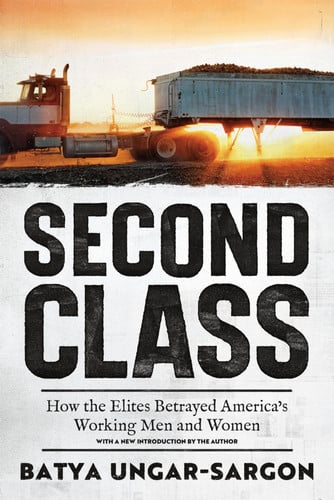
Second class: how the elite betrayed America's working men and women

Ungar-Sargon, Batya
A personal, journalistic ethnography of the modern American working class, based on the travels and interactions of the author through the American heartland. " Second Class is the most important book you will read all year. A political realignment is coming, and it's my hope that the end result will work in favor of our all-too-neglected American working class. When that realignment comes, Batya and her book will help lead the way." --Greg Lukianoff, CEO of the Foundation for Individual Rights in Education, and co-author of The Coddling of the American Mind Who is the American working class? Do they still have a fair shot at the American Dream? What do they think about their chances to secure the hallmarks of a middle-class life? While writing this book, Batya Ungar-Sargon visited states across the nation to speak with members of the American working class who are fighting tooth and nail to survive. In Second Class , working-class Americans of all races, political orientations, and occupations share their stories--cleaning ladies, health care aides, cops, truck drivers, fast food workers, electricians, and more. In their own words, these working-class Americans explain the struggles and triumphs of their increasingly precarious lives--as well as what policies they think would improve them. Second Class combines deep reporting with a look at the data and expert opinions on America's emergent class divide, in which the most basic elements of a secure and stable life are increasingly out of reach for those without a college education. America has broken its contract with its laboring class. So, how do we get back to the American Dream? How do we once again become the land of opportunity, the promised land, where hard work and commitment to family are enough to protect you from poverty? It's not that hard actually. All it would take, as this book illustrates, is for those in power to once again respect the dignity of work--and the American worker.
Encounter Books 2025 248 pages

The Road to Freedom Economics and the Good Society

Joseph E. Stiglitz
We are a nation born from the conviction that people must be free. But since the middle of the last century, that idea has been co-opted. Forces on the political Right have justified exploitation by cloaking it in the rhetoric of freedom, leading to pharmaceutical companies freely overcharging for medication, a Big Tech free from oversight, politicians free to incite rebellion, corporations free to pollute, and more. How did we get here? Whose freedom are we--and should we--be thinking about? In The Road to Freedom, Nobel prize winner Joseph E. Stiglitz dissects America's current economic system and the political ideology that created it, laying bare their twinned failure. "Free" and unfettered markets have only succeeded in delivering a series of crises: the financial crisis, the opioid crisis, and the crisis of inequality. While a small portion of the population has amassed considerable wealth, wages for most people have stagnated. Free and unfettered markets have exploited consumers, workers, and the environment alike. Such failures have fed populist movements that believe being free means abandoning any obligations citizens have to one another. As they grow in strength, these movements now pose a real threat to true economic and political freedom. As an economic advisor to presidents and as chief economist at the World Bank, Stiglitz has witnessed these profound changes firsthand. As he argues, the failures follow from the elites' unshakeable dedication to "the neoliberal experiment." Explicitly taking on giants such as Friedrich Hayek and Milton Friedman, Stiglitz exposes accepted ideas about our political and economic life for what they are: twisted visions that tear at the social fabric while they enrich the very few. The Road to Freedom breaks new ground, showing how economics--including recent advances in which Stiglitz has played such an important role--reframes how to think about freedom and the role of the state in a twenty-first century society. Drawing on the work of contemporary philosophers, Stiglitz explains a deeper, more humane way to assess freedoms--one that considers with care what to do when one person's freedom conflicts with another's. We must reimagine our existing economic and legal systems and embrace forms of collective action, including regulation and investment, if we are to create an innovative society in which everyone can flourish. The task could not be more urgent, and Stiglitz's latest book is essential reading for those committed to the American ideal of an economic and political system that delivers well-being, opportunity, and meaningful freedoms for all.
W. W. Norton, Incorporated 2026-02-24 384 pages

Macroeconomics

Landsburg, Steven E.
The Fourth Edition represents the most comprehensive revision to date, systematically covering modern economic theory. Aided by examples, illustrations and step-by-step explanations, it provides a clear connection between theory and policy. Highlighting aggregate supply and aggregate demand, the Fourth Edition features new sections on current issues in unemployment, inflation, growth, productivity, and fiscal and monetary policy. More so than in other texts, it provides a complete selection of applied micro topics, including chapters on agriculture, natural resources, government regulation, politics and economics. The many special features that enhance the text include: ``key concepts,'' ``key terms'' and ``key-point summaries;'' running glossaries; many charts, graphs and tables; and end-of-chapter problems.
McGraw-Hill College 1996-12 266 pages

The Tyranny of the Status Quo

Milton Friedman,Rose D. Friedman
In Tyranny of the Status Quo, Milton and Rose Friedman describe a remarkable political phenomenon: the uniform tendency in government to reverse the declared policies of leaders whether left or right. In the first six to nine months following their election, Reagan, Thatcher, and Mitterand, too, initiated big changes. Soon, each was frustrated by the "Iron Triangle" which preserves the status quo. In the triangle's corners are the direct beneficiaries of laws, the bureaucrats who thrive on them, the politicians who seek votes. Book jacket.
HarperCollins Publishers 1985-03 192 pages

Supercapitalism The Transformation of Business, Democracy, and Everyday Life

Robert B. Reich
Mid-twentieth-century capitalism has turned into global capitalism, and global capitalism - turbocharged, Web-based, and able to find and make almost anything just about anywhere - has turned into supercapitalism. But as Robert B. Reich makes clear in this eye-opening book, while supercapitalism is working wonderfully well to enlarge the economic pie, democracy - charged with caring for all citizens - is becoming less and less effective under its influence. Reich explains how widening inequalities of income and wealth, heightened job insecurity, and the spreading effects of global warming are the logical outcomes of supercapitalism. He shows us why companies, fighting harder than ever to maintain their competitive positions, have become even more deeply involved in politics; and how average citizens, seeking great deals and invested in the stock market to an unprecedented degree, are increasingly loath to stand by their values if it means biting the hands that feed them. As one of America's most influential voices, Reich sets out a clear course to a vibrant capitalism and a concurrent, equally vibrant democracy.
Scribe Publications 2008 272 pages

Healthcare, guaranteed: a simple, secure solution for America

Emanuel, Ezekiel J.
America spends more than any other developed nation on healthcare—2.1 trillion in 2007 alone. But 47 million Americans remain uninsured, and of those Americans who are insured, many suffer from poor health. In his ground-breaking proposal, Dr. Ezekiel Emanuel offers up a plan to comprehensively restructure the delivery and quality of our healthcare. By eliminating employer-healthcare and establishing an independent program to evaluate healthcare plans and insurance companies, he offers a no-nonsense guide to how government can institute private insurance options that will allow each of us a choice of doctor and plan. With the rate of healthcare costs rapidly outpacing our gross domestic product, we can no longer afford to maintain our fragmented delivery of care, or entertain reforms that seek to patch, rather than cure, a fractured system. Accessible, straightforward, and revolutionary in its approach, Healthcare, Guaranteed is an inarguable guide to lasting healthcare reform.
PublicAffairs 2008-05-27 219 pages

Principles of Macroeconomics

Ben S. Bernanke,Nilss Olekalns
This book presents concepts logically an intuitively, and avoids excessive reliance on mathematical formulations. Short-run macroeconomic concepts are covered first, before moving on to long-run macroeconomic principles. Students are taught to 'think like an economist' using familiar everyday examples and to apply economic principles in order to understand and explain the world today.
McGraw-Hill Australia 2005 547 pages

Economics rules: why economics works, when it fails, and how to tell the difference

Rodrik, Dani
The economics profession has become a favourite punching bag in the aftermath of the global financial crisis. Economists are widely reviled and their influence derided by the general public. Yet their services have never been in greater demand. To unravel the paradox, we need to understand both the strengths and weaknesses of economics. Dani Rodrik argues that the multiplicity of theoretical frameworks - what economists call 'models' that exist side by side is economics' great strength. Economists are trained to hold diverse, possibly contradictory models of the world in their minds. This is what allows them, when they do their job right, to comprehend the world, make useful suggestions for improving it, and to advance their stock of knowledge over time. In short, it is what makes economics a 'science' a different kind of science from physics or some other natural sciences, but a science nonetheless. But syncretism is not a comfortable state of mind, and economists often jettison it for misplaced confidence and arrogance, especially when they confront questions of public policy. Economists are prone to fads and fashions, and behave too often as if their discipline is about the search for the model that works always and everywhere, rather than a portfolio of models. Their training lets them down when it comes to navigating among diverse models and figuring out which one applies where. Ideology and political preferences frequently substitute for analysis in choosing among models.
Oxford University Press 2017-01-19 253 pages

The Idealist Jeffrey Sachs and the Quest to End Poverty

Nina Munk
A powerful portrayal of Jeffrey Sachs's ambitious quest to end extreme global poverty, now a Signal paperback. "The poor you will always have with you," according to Matthew 26:11. But Jeffrey Sachs, economics superstar, special advisor to the Secretary General of the UN and the author of The End of Poverty , vehemently disagrees. In his view, poverty -- especially the extreme deprivation of sub-Saharan Africa -- can easily be eradicated. The vast sums spent in foreign aid over the decades has not come close to alleviating the dire subsistence problems of Africans. Sachs believed he knew the reason: the developed world simply hadn't spent enough. In 2006, Sachs, backed by tens of millions of donor dollars, launched the five-year Millennium Villages Project. Sachs would test his theories in villages in different African countries, then, with each success, scale up until until the program was continent-wide. His first village "make-over" was a small community in Sauri, Kenya, and the immediate effect was encouraging. With that first inkling of success achieved, Sachs rolled out a dozen model Millennium villages in ten countries. For the past six years, Nina Munk has reported deeply on the Project, following Sachs on official trips and listening in on conversations with heads of states, rival organisations and potential donors. And she has immersed herself in the lives of people in two of the remote villages: Ruhiira, in southwest Uganda, and Dertu, in the arid borderland between Kenya and Somalia. Accepting hospitality from these camel herders and smallhold farmers, and sharing in their struggles, Munk came to understand the on-the-ground issues challenging Sachs' one-size-fits-all approach to global poverty. The Idealist is the profound and moving story of what happened when the abstract theories of a brilliant, driven man met messy human reality.
McClelland & Stewart 2014-10-07 288 pages

John Maynard Keynes

Minsky, Hyman P.
â Today, Mr. Minsky's view [of economics] is more relevant than ever.â - The New York Times â Indeed, the Minsky moment has become a fashionable catch phrase on Wall Street.â -The Wall Street Journal John Maynard Keynes offers a timely reconsideration of the work of the revered economics icon. Hyman Minsky argues that what most economists consider Keynesian economics is at odds with the major points of Keynes's The General Theory of Employment, Interest, and Money. Keynes and Minsky refuse to ignore pervasive uncertainty. Once uncertainty is given center stage, recurring episodes of financial system crises are all but inescapable. As Robert Barbera notes in a new preface, â Benign economic circumstancesâ ¦invite increasingly aggressive financial market wagers. Innovation in finance is a signature development in a capitalist economy. Once leveraged wagers are in place, small disappointments can have exaggerated consequences.â Thus for Minsky economic calm on Main Street engenders financial system fragility which, in turn, ensures a perpetuation of boom and bust cycles. Minsky colleagues Dimitri B. Papadimitriou and L. Randall Wray write in a new introduction, â We offer this new edition, in the hope that it will contribute to the reformation of economic theory so that it can address the world in which we actually live-the world that was always the topic of Minsky's analysis.â
Columbia University Press 1975 181 pages

Football for a Buck The Crazy Rise and Crazier Demise of the USFL

Jeff Pearlman
From Jeff Pearlman--the New York Times best-selling author of Three Ring Circus--comes the rollicking, outrageous story of the USFL, full of larger-than-life characters and you-can't-make-this-up stories featuring some of the biggest celebrities and buffoons in the game. The United States Football League--known fondly to millions of sports fans as the USFL--did not merely challenge the NFL, but cause its owners and executives to collectively shudder. In its three seasons from 1983-85, it secured multiple television deals, drew millions of fans and launched the careers of legends such as Steve Young, Jim Kelly, Herschel Walker, and Reggie White. But then it died beneath the weight of a particularly egotistical and bombastic team owner--a New York businessman named Donald J. Trump. In Football for a Buck, Jeff Pearlman draws on more than four hundred interviews to unearth all the salty, untold stories of one of the craziest sports entities to have ever captivated America. From 1980s drug excess to airplane brawls and player-coach punch outs, to backroom business deals and some of the most enthralling and revolutionary football ever seen, Pearlman transports readers back in time to this crazy, boozy, audacious, unforgettable era of the game. He shows how fortunes were made and lost on the backs of professional athletes and how, forty years ago, Trump was already a scoundrel and a spoiler. For fans of Terry Pluto's Loose Balls or Jim Bouton's Ball Four and of course Pearlman's own stranger-than-fiction narratives, Football for a Buck is sports as high entertainment--and a cautionary tale of the dangers of ego and excess.
HarperCollins Publishers 2019-09-10 400 pages

Throwing rocks at the Google bus: how growth became the enemy of prosperity

Rushkoff, Douglas
In this groundbreaking book, acclaimed media scholar and author Douglas Rushkoff tells us how to combine the best of human nature with the best of modern technology. Tying together disparate threads - big data, the rise of robots and AI, the increasing participation of algorithms in stock market trading, the gig economy, the collapse of the eurozone - Rushkoff provides a critical vocabulary for our economic moment and a nuanced portrait of humans and commerce at a critical crossroads. -- From the Amazon
Portfolio/Penguin 2016 278 pages

Input-Output Economics

Wassily Leontief
The structural approach to economics developed by Leontief, and known as input-output analysis, paved the way for the transformation of into a truly empirical discipline that could utilize modern data processing technology. This thoroughly revised second edition includes 20 essays-12 of which are new to this edition-that reflect the past developments and the present state of the field.
Oxford University Press 1966 270 pages

The economics of climate change: The stern review

Stern, Nicholas
There is now clear scientific evidence that emissions from economic activity, particularly the burning of fossil fuels for energy, are causing changes to the Earth's climate. A sound understanding of the economics of climate change is needed in order to underpin an effective global response to this challenge. The Stern Review is an independent, rigourous and comprehensive analysis of the economic aspects of this crucial issue. It has been conducted by Sir Nicholas Stern, Head of the UK Government Economic Service, and a former Chief Economist of the World Bank. The Economics of Climate Change will be invaluable for all students of the economics and policy implications of climate change, and economists, scientists and policy makers involved in all aspects of climate change.
Cambridge University Press 2008 500 pages

Hidden order: the economics of everyday life

Friedman, David D.
David Friedman has never taken an economics class in his life. Sure, he's taught economics at UCLA. Chicago, Tulane, Cornell, and Santa Clara, but don't hold that against him. After all, everyone's an economist. We all make daily decisions that rely, consciously or not, on an acute understanding of economic theory--from picking the fastest checkout tine at the supermarket to voting or not voting, from negotiating the best job offer to finding the right person to marry. Hidden Order is an essential guide to rational living, revealing all you need to know to get through each day without being eaten alive. Friedman's wise and immensely accessible book is perfect for amateur economists, struggling economics students, young parents and professionals--just about anyone who wants a clear-cut approach to why we make the choices we do and a sensible strategy for how to make the right ones.
HarperBusiness 1996 340 pages

Can You Outsmart an Economist? 100+ Puzzles to Train Your Brain

Steven E. Landsburg
"Will delight and inform anyone who enjoys rigorous thinking and the unexpected conclusions it delivers." -- Jamie Whyte, author of Crimes Against Logic "This ingenious gallop through the mind of Steven Landsburg enables you to think like an economist without incurring a Keynesian headache or a huge student loan. You may even end up 'smarter than Google.' But you will not readily put down this exhilarating adventure in ideas." -- George Gilder, author of Knowledge and Power and Life After Google Can you outsmart an economist? Steven Landsburg, acclaimed author and professor of economics, dares you to try. In this whip-smart, entertaining, and entirely unconventional economics primer, he brings together over one hundred puzzles and brain teasers that illustrate the subject's key concepts and pitfalls. From warm-up exercises to get your brain working, to logic and probability problems, to puzzles covering more complex topics like inferences, strategy, and irrationality, Can You Outsmart an Economist? will show you how to do just that by expanding the way you think about decision making and problem solving. Let the games begin "Entertaining as well as edifying. Read it, expand your mind, and have fun "-- N. Gregory Mankiw, Robert M. Beren Professor of Economics, Harvard University
Houghton Mifflin Harcourt 2018 304 pages