551 results for "History"

Folk music: a Bob Dylan biography in seven songs

Marcus, Greil
"Across seven decades, Bob Dylan has been the first singer of American song. As a writer and performer, he has rewritten the national songbook in a way that comes from his own vision and yet can feel as if it belongs to anyone who might listen. In Folk Music, Greil Marcus tells Dylan's story through seven of his most transformative songs. Marcus's point of departure is Dylan's ability to "see myself in others." Like Dylan's songs, this book is a work of implicit patriotism and creative skepticism. It illuminates Dylan's continuing presence and relevance through his empathy-his imaginative identification with other people. This is not only a deeply felt telling of the life and times of Bob Dylan, but a rich history of American folk songs and the new life they were given as Dylan sat down to write his own."--
Yale University Press 2022 273 pages

You don't know me but you don't like me: Phish, Insane Clown Posse, and my misadventures with two of music's most maligned tribes

Rabin, Nathan
One of Rolling Stone ’s 20 Best Music Books of 2013 When memoirist and head writer for The A.V. Club Nathan Rabin first set out to write about obsessed music fans, he had no idea the journey would take him to the deepest recesses of both the pop culture universe and his own mind. For two very curious years, Rabin, who Mindy Kaling called “smart and funny” in The New Yorker , hit the road with two of music’s most well-established fanbases: Phish’s hippie fans and Insane Clown Posse’s notorious “Juggalos.” Musically or style-wise, these two groups could not be more different from each other, and Rabin, admittedly, was a cynic about both bands. But once he gets deep below the surface, past the caricatures and into the essence of their collective cultures, he discovers that both groups have tapped into the human need for community. Rabin also grapples with his own mental well-being—he discovers that he is bipolar—and his journey is both a prism for cultural analysis and a deeply personal exploration, equal parts humor and heart.
Scribner 2013-06-11 261 pages

Rust in peace: the inside story of the Megadeth masterpiece

Mustaine, Dave,Selvin, Joel
"Rust in Peace details the making of Megadeth's iconic record, which was released in 1990, at an incredible time of flux and creativity in the rock world. Relayed by the lead vocalist and guitarist of Megadeth himself, Dave Mustaine, the book covers the process of hiring the band and supporting cast, of trying to handle the ensuing success, and ultimately the pressure of fame and fortune -- which caused the band to finally break-up. In short, it's a true story of groundbreaking anti-pop that was moving toward the mainstream (or the mainstream that was moving toward the band), at a time of great cultural change, power, ego, drugs, and other vices that went hand-in-hand with Rock N' Roll, circa the late eighties-early nineties. Little did Mustaine know that the birth pangs of the record were nothing compared to the oncoming pain and torment that would surround it. Alcohol, drugs, sex, money, power, property, prestige, the lies the band was told by the industry -- and the lies they told each other -- were just beginning, and much like rust in real life, these factors would ultimately eat away at the band's bond until only the music survived."--Amazon.com
Hachette Books 2020 191 pages

How to win an information war: the propagandist who outwitted Hitler

Pomerantsev, Peter
"From one of our leading experts on disinformation, this inventive biography of the rogue WWII propagandist Thomas Sefton Delmer confronts hard questions about the nature of information war: what if you can't fight lies with truth? Can a propaganda war ever be won? In the summer of 1941, Hitler ruled Europe from the Atlantic to the Black Sea. Britain was struggling to combat his powerful propaganda machine, crowing victory and smearing his enemies as liars and manipulators over his frequent radio speeches, blasted out on loudspeakers and into homes. British claims that Hitler was dangerous had little impact against this wave of disinformation. Except for the broadcasts of someone called Der Chef, a German who questioned Nazi doctrine. He had access to high-ranking German military secrets and spoke of internal rebellion. His listeners included German soldiers and citizens, as well as politicians in Washington DC who were debating getting into the war. And--most importantly--Der Chef was a fiction. He was a character created by the British propagandist Thomas Sefton Delmer, a unique weapon in the war. Then, as author Peter Pomerantsev seeks to tell Delmer's story, he is called into a wartime propaganda effort of his own: the US response to the invasion of Ukraine. In flashes forward to the present day, Pomerantsev weaves in what he's learning from Delmer as he seeks to fight against Vladimir Putin's tyranny and lies. This book is the story of Delmer and his modern investigator, as they each embark on their own quest to manipulate the passions of supporters and enemies, and to turn the tide of an information war, an extraordinary history that is informing the present before our eyes"--
PublicAffairs 2024-03 277 pages

Stan Lee: a life in comics

Leibovitz, Liel
Few artists have had as much of an impact on American popular culture as Stan Lee. The characters he created-Spider-Man and Iron Man, the X-Men and the Fantastic Four-occupy Hollywood's imagination and production schedules, generate billions at the box office, and come as close as anything we have to a shared American mythology. This illuminating biography focuses as much on Lee's ideas as it does on his unlikely rise to stardom. It surveys his cultural and religious upbringing and draws surprising connections between celebrated comic book heroes and the ancient tales of the Bible, the Talmud, and Jewish mysticism. Was Spider-Man just a reincarnation of Cain? Is the Incredible Hulk simply Adam by another name? From close readings of Lee's work to little-known anecdotes from Marvel's history, the book paints a portrait of Lee that goes much deeper than one of his signature onscreen cameos.
Yale University Press 2020-04-21 179 pages

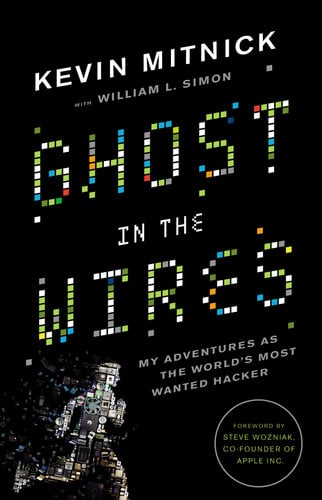
Ghost in the wires: my adventures as the world's most wanted hacker

Mitnick, Kevin
Kevin Mitnick was the most elusive computer break-in artist in history. He accessed computers and networks at the world's biggest companies--and however fast the authorities were, Mitnick was faster, sprinting through phone switches, computer systems, and cellular networks. He spent years skipping through cyberspace, always three steps ahead and labeled unstoppable. But for Kevin, hacking wasn't just about technological feats-it was an old fashioned confidence game that required guile and deception to trick the unwitting out of valuable information. Driven by a powerful urge to accomplish the impossible, Mitnick bypassed security systems and blazed into major organizations including Motorola, Sun Microsystems, and Pacific Bell. But as the FBI's net began to tighten, Kevin went on the run, engaging in an increasingly sophisticated cat and mouse game that led through false identities, a host of cities, plenty of close shaves, and an ultimate showdown with the Feds, who would stop at nothing to bring him down. Ghost in the Wires is a thrilling true story of intrigue, suspense, and unbelievable escape, and a portrait of a visionary whose creativity, skills, and persistence forced the authorities to rethink the way they pursued him, inspiring ripples that brought permanent changes in the way people and companies protect their most sensitive information
Little, Brown and Company 2011-08-15 413 pages

Hollywood ending: Harvey Weinstein and the culture of silence

Auletta, Ken
"A shocking account of how Harvey Weinstein rose to become one of the most iconic figures in the world of movies, how he used that position to feed his monstrous sexual appetites, and how it all came crashing down, from the author who has covered the Hollywood power game for the New Yorker for three decades. Twenty years ago, Ken Auletta wrote one of the iconic New Yorker profiles for which he is famous, of the Hollywood mogul Harvey Weinstein, then at the height of his powers. The profile created waves for exposing how volatile, even violent, Weinstein was to his employees and collaborators. But there was a much darker story that was just out of reach: rumors had long swirled that Weinstein was a sexual predator, but no one was willing to go on the record, and in the end he and the magazine concluded they couldn't close the case. But the story always nagged at him, and many years later, he was able to share his reporting notes and all that he knew with Ronan Farrow, and to cheer him along with Jodi Kantor and Megan Twohey as they broke their pioneering stories and wrote their bestselling books. But the story continued to nag at him. Farrow, Twohey, and Kantor did a brilliant job exposing the trail of assaults and their cover-up, but the larger questions remained: what explained Weinstein's monstrousness? Even more importantly, how and why was it never checked? How does a man run the day to day operations of a company with hundreds of employees and revenues in the hundreds of millions of dollars and at the same time live a shadow life of sexual predation without ever being caught, for years and years? How much is this a story about Harvey Weinstein, and how much is this a story about Hollywood and power? To answer that question fully, Ken Auletta has spent the past three years constructing a full reckoning with a career in film that has no parallel in Hollywood's history in its combination of extraordinary business and creative success and a personal brutality and viciousness that left a trail of ruined lives in its wake. How did one thing relate to the other? Hollywood Ending is an unflinching examination of Weinstein's life and career in full. Not simply a prosecutor's litany of crimes, it embeds them in the context of his overall business, his failures but also his outsized successes. To understand how he could behave as he did, we have to understand the power he wielded. Iconic film stars, Miramax employees and board members, old friends and family, even the person who knew him best, Harvey's brother Bob, all talked to Auletta at length. The result is not simply the portrait of a predator, it is a portrait of the power that allowed Weinstein to operate with such impunity for so many years, the spider web in which his victims found themselves trapped. To understand Weinstein's web is to understand how many other spider webs no doubt still remain."--
Penguin Press 2022-07-12 466 pages

Being Heumann: an unrepentant memoir of a disability rights activist

Heumann, Judith E.
"One of the most influential disability rights activists in US history tells her personal story of fighting for the right to receive an education, have a job, and just be human. A story of fighting to belong in a world that wasn't built for all of us and of one woman's activism--from the streets of Brooklyn and San Francisco to inside the halls of Washington--Being Heumann recounts Judy Heumann's lifelong battle to achieve respect, acceptance, and inclusion in society."--
Beacon Press 2020 218 pages

The Fat Duck cookbook

Blumenthal, Heston
The cookbook hailed by the Los Angeles Times as a "showstopper" and by Jeffrey Steingarten of Vogue as "the most glorious spectacle of the season...like no other book I have seen in the past twenty years" is now available in a reduced-price edition. With a reduced trim size but an identical interior, this lavishly illustrated, stunningly designed, and gorgeously photographed masterpiece takes you inside the head of maverick restaurateur Heston Blumenthal. Separated into three sections (History; Recipes; Science), the book chronicles Blumenthal's improbable rise to fame and, for the first time, offers a mouth-watering and eye-popping selection of recipes from his award-winning restaurant. He also explains the science behind his culinary masterpieces, the technology and implements that make his alchemical dishes come to life. Designed by acclaimed artist Dave McKean-and filled with photographs by Dominic Davies-this artfully rendered celebration of one of the world's most innovative and renowned chefs is a foodie's dream.
Bloomsbury 2009-10-20 529 pages

The White House years

Kissinger, Henry
In this first volume of his memoirs, Dr Kissinger covers his first four years (1969-1973) as Assistant to the President for National Security Affairs, and President Nixon's closest adviser on foreign policy. It is undoubtedly the most significant book to come out of the Nixon Administration. Among the countless great and critical moments Dr Kissinger recalls are his first meeting with Nixon, his secret trip to China, the first SALT negotiation, the Jordan crisis of 1970, the India-Pakistan war of 1971, and the historic summit meetings in Peking and Moscow. He covers the major controversies over Indochina policy during that period, including events in Laos, the overthrow of Cambodia's Prince Sihanouk, his secret talks with the North Vietnamese in Paris, his 'Peace is at hand' press conference, and the breakdown of the talks that led to the 'Christmas bombing' of 1972. He offers his insight s into the Middle East conflicts, Sadat's break with the Soviets, the election of Salvador Allende in Chile, issues of defence strategy, and relations with Europe and Japan. Other highlights are his relationship with Nixon, brilliant portraits of major foreign leaders, and his views as to the handling of crises and the art of diplomacy. Few men have wielded as much influence in the arena of American foreign policy as Henry Kissinger. This record makes an invaluable and lasting contribution to the history of this crucial time.
Weidenfeld and Nicolson 1979 1521 pages

Retail gangster: the insane, real-life story of Crazy Eddie

Weiss, Gary
"A biography of the spectacular rise and fall of Eddie Antar, better known as "Crazy Eddie," whose home electronics empire changed the world even as it turned out to be one of the biggest business scams of all time Back in the fall of 2016 we heard the news about the passing of Eddie Antar, "Crazy Eddie" as he was known to millions of people, the man behind the successful chain of electronic stores and one of the most iconic ad campaigns in history. Few things evoke the New York of a particular era the way "Crazy Eddie! His prices are insaaaaane!" does. The journalist Herb Greenberg called his death the "end of an era" and that couldn't be more true. What's insane is that his story has never been told. Before Enron, before Madoff, before The Wolf of Wall Street, Eddie Antar's corruption was second to none. The difference was that it was a street franchise, a local place that was in the blood stream of everyone's daily life in the 1970s and early '80s. And Eddie pulled it off with a certain style, an in your face blue collar chutzpah. Despite the fact that then U.S. Attorney Michael Chertoff called him "the Darth Vader of capitalism" after the extent of the fraud was revealed, one of the largest SEC frauds in American history after Crazy Eddie's stores went public in 1984, Eddie was talked about fondly by the people who worked for him. They still do--there are myriads of ex-Crazy Eddie employee web pages that still attract fans, and the Crazy Eddie fraud scheme is now taught in every business school across the United States. Many years have passed since the franchise went down in spectacular fashion but Crazy Eddie's moment has endured the way that iconic brands and characters do--one only need Google the media outpouring that accompanied his death. Maybe it's because it crystallized everything about 1970s New York almost perfectly, the merchandise and rise of consumer electronics (stereos!), the ads (cheesy!), the money (cash!). In Retail Gangster, investigative journalist Gary Weiss takes readers behind the scenes of one of the most unbelievable business scam stories of all time, a story spanning continents and generations, reaffirming the old adage that the truth is often stranger than fiction"--
Hachette Books 2022 316 pages

Boys in the trees: a memoir

Simon, Carly
Simon's memoir reveals her remarkable life, beginning with her storied childhood as the third daughter of Richard L. Simon, the co-founder of publishing giant Simon & Schuster, her musical debut as half of The Simon Sisters performing folk songs with her sister Lucy in Greenwich Village, to a meteoric solo career that would result in 13 top-40 hits, including the #1 song "You're So Vain." She was the first artist in history to win a Grammy Award, an Academy Award and a Golden Globe Award, for a song composed, written, and performed entirely by a single artist: "Let the River Run" from the movie Working Girl. The memoir recalls a childhood enriched by music and culture, but also one shrouded in secrets that would eventually tear her family apart. Simon captures moments of creative inspiration, the sparks of songs, and the stories behind writing "Anticipation" and "We Have No Secrets" among many others. Romantic entanglements with some of the most famous men of the day fueled her confessional lyrics, as well as the unraveling of her storybook marriage to James Taylor.
Flatiron Books 2015-11-24 376 pages

My anecdotal life : a memoir

Reiner, Carl
More than once, Carl Reiner has had friends say, “Hey, Reiner, you ought to write those things down.” And at eighty, he finally has. In this funny and engaging memoir, one of the best raconteurs on the planet recalls his life in show business in short comic takes. Reiner tells of how, after answering an ad for free acting classes on his brother Charlie’s advice, he forsakes a budding career as a machinist for an acting career. In “Sidney Bechet and His Jazz Band Meet Franz Kafka,” he captivates the legendary jazz man and his band with an unusual reading of The Metamorphosis , during a thunderstorm at a Catskills resort in 1942. Reiner also recalls the highlights of the succeeding decades: his first sweaty audition, impersonating a dog impersonating movie stars; his forays into the theater; his work on Your Show of Shows and The Dick Van Dyke Show during TV’s golden days; and his long friendship and collaboration with Mel Brooks which gave birth to the Two Thousand Year Old Man. In “A Recipe to Remember,” he recites a recipe for cream cheese cookies to a star-studded audience that includes Paul Newman, Leonard Bernstein, and Barbra Streisand. In “The Gourmet Eating Club,” he gives an insider’s take on the now-legendary group that included Mario Puzo, Joseph Heller, Zero Mostel, and other luminaries. Mary Tyler Moore, Sid Caesar, Mickey Rooney, Johnny Carson, Cary Grant, Dinah Shore, Ann Bancroft, Jean Renoir – the list goes on and on – also appear in what Reiner calls the “literary variety show” that captures the highs and lows of his extraordinary life. Through it all, Reiner displays the wit and warmth that have made him one of the most beloved figures in the entertainment business. This charming memoir will delight anyone who wants a behind-the-scenes look at five decades of Hollywood and television history.
St. Martin's Press 2003-05-16 236 pages

The Romanovs: 1613-1918

Sebag Montefiore, Simon
The Romanovs were the most successful dynasty of modern times, ruling a sixth of the world's surface for three centuries. How did one family turn a war-ruined principality into the world's greatest empire? And how did they lose it all? This is the intimate story of twenty tsars and tsarinas, some touched by genius, some by madness, but all inspired by holy autocracy and imperial ambition. Simon Sebag Montefiore's gripping chronicle reveals their secret world of unlimited power and ruthless empire-building, overshadowed by palace conspiracy, family rivalries, sexual decadence and wild extravagance, with a global cast of adventurers, courtesans, revolutionaries and poets, from Ivan the Terrible to Tolstoy and Pushkin, to Bismarck, Lincoln, Queen Victoria and Lenin. To rule Russia was both imperial-sacred mission and poisoned chalice: six of the last twelve tsars were murdered. Peter the Great tortured his own son to death while making Russia an empire, and dominated his court with a dining club notable for compulsory drunkenness, naked dwarfs and fancy dress. Catherine the Great overthrew her own husband (who was murdered soon afterward), enjoyed affairs with a series of young male favorites, conquered Ukraine and fascinated Europe. Paul I was strangled by courtiers backed by his own son, Alexander I, who in turn faced Napoleon's invasion and the burning of Moscow, then went on to take Paris. Alexander II liberated the serfs, survived five assassination attempts and wrote perhaps the most explicit love letters ever composed by a ruler. The Romanovs climaxes with a fresh, unforgettable portrayal of Nicholas II and Alexandra, the rise and murder of Rasputin, war and revolution--and the harrowing massacre of the entire family. Dazzlingly entertaining and beautifully written from start to finish, The Romanovs brings these monarchs--male and female, great and flawed, their families and courts--blazingly to life. Drawing on new archival research, Montefiore delivers an enthralling epic of triumph and tragedy, love and murder, encompassing the seminal years 1812, 1914 and 1917, that is both a universal study of power and a portrait of empire that helps define Russia today.
Alfred A. Knopf 2016 744 pages

The big Fat Duck cookbook

Blumenthal, Heston
Takes you inside the head of maverick restaurateur, Heston Blumenthal. Separated into three sections (History; Recipes; Science), Blumenthal chronicles his improbable background and unorthodox rise to fame and, for the first time ever, offers a mouth-watering and eyes-widening selection of recipes from his award-winning restaurant. He also explains the science behind his culinary masterpieces, the technology and implements that make his alchemic dishes come to life.
Bloomsbury 2008 529 pages

Alger Hiss and the battle for history

Jacoby, Susan
Books on Whittaker Chambers and Alger Hiss abound, as countless scholars havelabored to uncover the facts behind Chambers s shocking accusation before the House Committee on Un-American Activities in the summer of 1948 that Alger Hiss, a former rising star in the State Department, had been a Communist and engaged in espionage. In this highly original work, Susan Jacoby turns her attention to the Hiss case, including his trial and imprisonment for perjury, as a mirror of shifting American political views and passions. Unfettered by political ax-grinding, the author examines conflicting responses, from scholars and the media on both the left and the right, and the ways in which they have changed from 1948 to our present post Cold War era. With a brisk, engaging style, Jacoby positions the case in the politics of the post World War II eraand then explores the ways in which generations of liberals and conservatives have put Chambers and Hiss to their own ideological uses. An iconic event of the McCarthy era, the case of Alger Hiss fascinates political intellectuals not only because of its historical significance but because of its timeless relevance to equally fierce debates today about the difficult balance between national security and respect for civil liberties."
Yale University Press 2009 256 pages

The House of Government: a saga of the Russian Revolution

Slezkine, Yuri
"On the 100th anniversary of the Russian Revolution, the epic story of an enormous apartment building where Communist true believers lived before their destruction. The House of Government is unlike any other book about the Russian Revolution and the Soviet experiment. Written in the tradition of Tolstoy's War and Peace, Grossman's Life and Fate, and Solzhenitsyn's The Gulag Archipelago, Yuri Slezkine's gripping narrative tells the true story of the residents of an enormous Moscow apartment building where top Communist officials and their families lived before they were destroyed in Stalin's purges. A vivid account of the personal and public lives of Bolshevik true believers, the book begins with their conversion to Communism and ends with their children's loss of faith and the fall of the Soviet Union. Completed in 1931, the House of Government, later known as the House on the Embankment, was located across the Moscow River from the Kremlin. The largest residential building in Europe, it combined 550 furnished apartments with public spaces that included everything from a movie theater and a library to a tennis court and a shooting range. Slezkine tells the chilling story of how the building's residents lived in their apartments and ruled the Soviet state until some eight hundred of them were evicted from the House and led, one by one, to prison or their deaths. Drawing on letters, diaries, and interviews, and featuring hundreds of rare photographs, The House of Government weaves together biography, literary criticism, architectural history, and fascinating new theories of revolutions, millennial prophecies, and reigns of terror. The result is an unforgettable human saga of a building that, like the Soviet Union itself, became a haunted house, forever disturbed by the ghosts of the disappeared."--Publisher description
Princeton University Press 2017 1104 pages