127 results for "History"

The Crusades and the Near East

Conor Kostick
The crusades are often seen as epitomising a period when hostility between Christian West and the Muslim Near East reached an all time high. As this edited volume reveals, however, the era was one which saw both conflict and cohabitation. Tackling such questions as whether medicinal and architectural innovations came to Europe as a direct result of the Crusades, and why and how peace treaties and intermarriages were formed between the different cultures, this distinguished group of contributors reveal how the Holy Wars led on the one hand to a reinforcement of the beliefs and identities of each side, but on the other to a growing level of cultural exchange and interaction. This volume breaks new ground in not only exploring the conflict between the Christian and the Muslim worlds, but also the impact of this conflict on the cultural evolution of European and Near Eastern thought and practices. Utilising the latest scholarship and original studies of the sources, this survey sheds new light on the cultural realities of East-West relations and marks a new departure for studies of the crusades. Contributors include John France, Yehoshua Frenkel, Chris Wright, Natasha Hodgson, A.V. Murray, Sini Kangas, Léan Ní Chléirigh, Susan Edgington, Jürgen Krüger, Yvonne Friedman and Bernard Hamilton.
Routledge 2011 271 pages

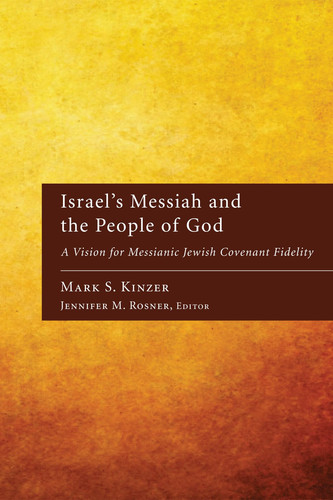
Israel's messiah and the people of God: a vision for Messianic Jewish covenant fidelity

Kinzer, Mark
Israel's Messiah and the People of God presents a rich and diverse selection of essays by theologian Mark Kinzer, whose work constitutes a pioneering step in Messianic Jewish theology. Including several pieces never before published, this collection illuminates Kinzer's thought on topics such as Oral Torah, Jewish prayer, eschatology, soteriology, and Messianic Jewish-Catholic dialogue. This volume offers the reader numerous portals into the vision of Messianic Judaism offered in Kinzer's Postmissionary Messianic Judaism (2005). An introductory essay by editor Jennifer M. Rosner sets Kinzer's thought and writings in context.
Cascade Books 2011-01-07 221 pages

The refutation of the Christian principles

Crescas, Ḥasdai
During the fourteenth century, there was a general demoralization in the Jewish community in Spain. Many Jews were on the brink of conversion. Rabbi Crescas met the Christian challenge by writing this pithy book refuting the principles of the Christian religion. He argued that the basic Christian doctrines, namely, original sin, salvation, trinity, incarnation, virgin birth, transubstantiation, baptism, the messiah, a new covenant, and demons, contradict human reason, thereby calling into question Christianity’s claim to be a true religion. The Refutation is an important document of the medieval Jewish-Christian debate and is also especially important for the history of Jewish philosophy in general.
State University of New York 1992-07-01 156 pages

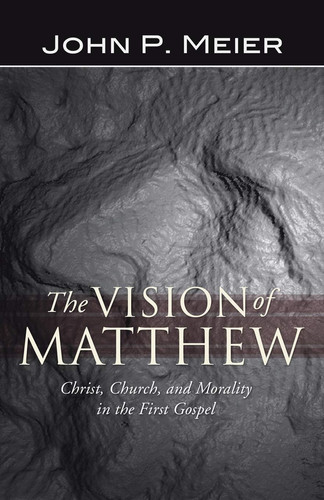
The Vision of Matthew Christ, Church, and Morality in the First Gospel

John P. Meier
In this volume Father Meier explores how Matthew remodeled the form, the Christological message, and the moral demand of the gospel. Part I shows Matthew's church in crisis. It was experiencing a shift in its Christian existence: from a narrow Jewish-Christian past to a universal Gentile future. To preserve yet reinterpret the particularistic traditions of that Jewish-Christian past, Matthew drew up a model of salvation history and then reshaped the gospel message to fit it. Part II offers a mini-commentary on the whole gospel to illustrate this reshaping of the message. Pericope by pericope, Matthew presents Jesus as Son of God and Son of Man, and therefore as 'the' definitive teacher of his Church. Indeed, the nexus between Christ and his Church emerges as the outstanding characteristic of Matthew's gospel. Part III studies Matthew's construction of a unified moral vision on the basis of this connection between Christ and Church. The basic stance of Jesus and his disciples towards the Mosaic Law is one of fulfillment - a 'prophetic' fulfillment which involves at times a deepening of, at times the abrogation of, the letter of the Law.
Wipf and Stock Publishers 2004-09-30 280 pages

The Talmud in dispute during the High Middle Ages

Fidora, Alexander,Hasselhoff, Görge K.,Ragacs, Ursula
"The Christian discovery of the Babylonian Talmud is a significant landmark in the long and complex history of anti-Jewish polemic. While the Talmudic corpus developed in the same period as early Christianity, this post-biblical text was largely unknown to the Christians. Full awareness of the Talmud among Christian authors did not arise until the late 1230s, when the Jewish convert Nicholas Donin presented a Latin translation of Talmudic fragments to Pope Gregory IX. Though the Talmud was subsequently put on trial (1240) and burnt (1241/2) in Paris, the controversy surrounding it continued over the following years, as Pope Innocent IV called for a revision of its condemnation. The textual basis for this revision is the Extractiones de Talmud, that is, a Latin translation of 1.922 Talmudic fragments. The articles in this volume shed new light on this monumental translation and its historical context. They also offer critical editions of related texts, such as DoninÕs anti-Talmudic polemic. Authors of the contributions are: Wout van Bekkum, Piero Capelli, Ulisse Cecini, Enric Cort s, îscar de la Cruz Palma, Federico Dal Bo, Alexander Fidora, Gšrge K. Hasselhoff, MoisŽs Orfali, Ursula Ragacs and Eulˆlia Vernet i Pons."
Universitat Autònoma de Barcelona, Servei de Publicaciones 2019-12-17 281 pages

Judaism on trial: Jewish-Christian disputations in the Middle Ages

Hyam Maccoby
Hyam Maccoby's now classic study focuses on the major Jewish—Christian disputations of medieval Europe: those of Paris (1240), Barcelona (1263), and Tortosa (1413–14). It examines the content of these theological confrontations with a sense of present-day relevance, while also discussing the use made of scriptural proof-texts. Part I provides a general thematic consideration of the three disputations and their social and historical background. Part II is a complete translation of the account of the Barcelona Disputation written by Nahmanides, one of the greatest figures in the history of Jewish learning, and was Jewish spokesman at the disputation. Part III contains Jewish and Christian accounts of the Paris and Tortosa disputations.
Vallentine Mitchell 1993 245 pages

A documentary history of Jewish-Christian relations: from antiquity to the present day

Edward Kessler,Neil Wenborn
"Jews and Christians have interacted for two millennia, yet there is no comprehensive, global study of their shared history. Comprising a broad collection of over 200 primary documents and commentaries, this book offers a chronological and thematic approach to developments in the history of Jewish-Christian relations worldwide"--
Cambridge University Press 2024-10-17 588 pages

The Irrevocable Calling Israel's Role as a Light to the Nations

Daniel C. Juster,Don Finto
Referring to the chosen-ness of the Jewish people, Paul, the Apostle, ?For God's free gifts and his calling are irrevocable? (Rom. 11: 29). This messenger to the Gentiles understood the unique calling of his people, Israel. So does Daniel Juster. In The Irrevocable Calling, he expands Paul's words, showing how Israel was uniquely chosen to bless the world and how these blessings can be enjoyed today.
Messianic Jewish Publishers 2007 52 pages

John Paul II and Interreligious Dialogue

Byron L. Sherwin,Harold Kasimow
In the first book to explore Pope John Paul II's view on interreligious dialogue, leading scholars from Buddhism, Islam, and Judaism respond to his writings and speeches on their respective traditions, and the relationship between those faiths and Catholicism. Contributors: -Pope John Paul II -The XIV Dalai Lama -Robert Aitken -Masao Abe -Jose Ignacio Cabezon -David M. Gordis -Mahmoud Ayoub -Ibrahim M. Abu-Rabi -Michael L. Fitzgerald -Wayne Teasdale
Wipf and Stock Publishers 2005-09-30 252 pages

Jews, Christians and religious pluralism

Cohn-Sherbok, Dan
Provides a basis for considering the claims of a wide variety of Jewish and Christian writers in the Judeo-Christian tradition, from biblical times to the present, who have wrestled with the issues of religious pluralism. In many cases these thinkers have reflected on the merits of one another's faith; alternatively, they have considered the truth-claims of their own faith in relation to the world's religions. Profiles on some 90 thinkers, such as Augustine, Helen Fry, and Baruch Spinoza, provide the type of information most commonly sought by students and general readers, including biographical details, theological position, and samples of work. The author is a professor of Judaism at the University of Wales, and visiting professor of interfaith dialog at Middlesex University. Annotation c. Book News, Inc., Portland, OR (booknews.com)
Edwin Mellen Press 1999 336 pages

The Origins of the Great Schism A Study in Fourteenth-Century Ecclesiastical History

Walter 1910-1983 Ullmann
This work has been selected by scholars as being culturally important and is part of the knowledge base of civilization as we know it. This work is in the public domain in the United States of America, and possibly other nations. Within the United States, you may freely copy and distribute this work, as no entity (individual or corporate) has a copyright on the body of the work. Scholars believe, and we concur, that this work is important enough to be preserved, reproduced, and made generally available to the public. To ensure a quality reading experience, this work has been proofread and republished using a format that seamlessly blends the original graphical elements with text in an easy-to-read typeface. We appreciate your support of the preservation process, and thank you for being an important part of keeping this knowledge alive and relevant.
Creative Media Partners, LLC 2021-09-09 276 pages

Anything but straight: unmasking the scandals and lies behind the ex-gay myth

Besen, Wayne R.
The real story behind “ex-gay” ministries and reparative therapy! Nationally known activist Wayne Besen spent four years examining the phenomenon of “ex-gay” ministries and reparative therapies—interviewing leaders, attending conferences, and visiting ministries undercover as he accumulated hundreds of hours of research. The result is Anything but Straight: Unmasking the Scandals and Lies Behind the Ex-Gay Myth, a groundbreaking exposé of the controversial movement that's revered by independent religious groups and reviled by gay and lesbian organizations. The book presents a historical perspective on the dispute, examining “ex-gay” groups such as Love In Action, Exodus International, Homosexuals Anonymous, and profiling a cast of characters that includes Pat Robertson, the Rev. Jerry Falwell, “ex-gay” poster boy John Paulk, National Association of Research and Therapy of Homosexuality activist Richard Cohen, and psychiatrist Dr. Robert Spitzer. An in-depth, well-researched, and historically significant account, Anything but Straight is full of startling facts and alarming surprises. The original content and novel material in the book includes: a first-ever comprehensive history of the “ex-gay” ministries and “reparative therapy” the inside story of the night the author photographed “ex-gay” poster boy John Paulk inside a gay bar the author's discovery that Anne Paulk lied about being a lesbian and has admitted to having a strong attraction to men BEFORE she became “ex-gay” previously undisclosed bizarre techniques used by the “ex-gay” ministries and “reparative therapists” the author's exclusive in-depth interviews with leading “ex-gay” leaders—they disclose their deepest secrets, hidden desires, and true motivations an extraordinary new study that shows that most “ex-gay” leaders have suffered from substance abuse or severe emotional problems—while many “ex-gay” leaders claim they were “unhappy being gay,” this report helps prove that their dissatisfactions came not from their homosexuality, but from poor life choices and irresponsible behavior new revelations that one of the nation's leading “reparative therapists” hailed from a secretive cult that was scandalized for practicing nude therapy From the author: Through my extensive experience, I have learned that the extraordinary claims made by the “ex-gay” groups are without merit and the efficacy of their programs is dubious at best and harmful at worst . . . One frequent question I get is, “Why can't gay activists simply leave 'ex-gay' groups alone and let them go about their business?” This is exactly what happened for nearly three decades while “ex-gay” groups labored in near anonymity. But all this recently changed when the “ex-gay” groups intricately aligned themselves with the anti-gay political agenda of the Religious Right. With “ex-gays” added to their arsenal, the Right could disingenuously claim to love gay people and offer them “hope for change,” while simultaneously fighting for punitive legislation. Their insidious message: Since gays and lesbians can change, there is no need for laws that protect them against arbitrary prejudice. Anything but Straight: Unmasking the Scandals and Lies Behind the Ex-Gay Myth is an essential read for activists on both sides of the “ex-gay” fence, family members of gays and lesbians, Gay, Bisexual, Lesbian, and Transgender church members, psychiatric and social science professionals, and anyone who has dealt with “coming out” issues. An appendix of resources and a helpful bibliography make it easy to find additional information on this fascinating topic.
Harrington Park Press 2003 311 pages

Jews, Christians and Muslims in Encounter

Edward Kessler
This book reflects on one of the most pressing challenges of our time: the current and historical relationships that exist between the faith-traditions of Judaism, Christianity and Islam. It begins with discussion on the state of Jewish-Christian relations, examining antisemitism and the Holocaust, the impact of Israel and theological controversies such as covenant and mission. Kessler also traces different biblical stories and figures, from the Hebrew Bible and the New Testament, demonstrating Jewish-Christian contact and controversy. Jews and Christians share a sacred text, but more surprisingly, a common exegetical tradition. They also need to deal with some of the more problematic and violent biblical texts. Jews, Christians and Muslims includes reflection on the encounter with Islam, including topics associated with a divergent history and memory as well contemporary relations between the three Abrahamic faiths. Kessler's writings shed light on common purpose as well as how to manage difference, both vital in forming a positive identity and sustaining a flourishing community.
Hymns Ancient & Modern Limited 2013-05-31 290 pages

Paul the convert: the apostolate and apostasy of Saul the Pharisee

Segal, Alan F.
Although Paul's writings have been intensively studied by Christian theologians, they have been dismissed by Jewish scholars as the meditations of an antagonistic apostate who broke completely with his Jewish past. In this revisionist account of Paul's work, Alan Segal argues that Paul's life can be better understood by taking his Jewishness seriously, and that Jewish history can be illuminated greatly by examining Paul's writings. By reading Paul from the viewpoint of the religion he left behind, Segal sheds new light on the man who played a critical role in both Judaism and Christianity.
Yale University Press 1990-01-01 368 pages

Hybrid hate: conflations of antisemitism and anti-black racism from the Renaissance to the Third Reich

Parfitt, Tudor
"The study of western racism has tended to concentrate either on the hatred and murder of Jews or the hatred and enslavement of black people. As chief objects of racism Jews and Blacks have been linked together for centuries, peoples apart from the general run of humanity. In medieval Europe Jews were often perceived as Blacks, and the conflation of Jews and Blacks continued throughout the period of the Enlightenment. With the discovery of a community of Black Jews in Loango in west Africa in 1777, and later of black Jews in India, the Middle East and other parts of Africa, the figure of the hybrid black Jew was thrust into the maelstrom of evolving theories about race hierarchies and taxonomies. The new hybrid played a particular role in the great battle between monogenists and polygenists as they sought to establish the unitary or disparate origins of humankind. From the mid-nineteenth century to the period of the Third Reich Jews and Blacks were increasingly conflated in a racist discourse which combined the two fundamental racial hatreds of the west. While Hitler considered Jews 'Negroid parasites', in Nazi Germany as in Fascist Italy, through texts, laws and cartoons, Jews and Blacks were combined in the figure of the Black/Jew, the mortal foe of the Aryan race"-- Provided by publisher
Oxford University Press 2025 290 pages

Reassessing Jewish life in Medieval Europe

Chazan, Robert
"This book re-evaluates the prevailing notion that Jews in medieval Christian Europe lived under an appalling regime of ecclesiastical limitation, governmental exploitation and expropriation, and unceasing popular violence. Robert Chazan argues that, while Jewish life in medieval Western Christendom was indeed beset with grave difficulties, it was nevertheless an environment rich in opportunities; the Jews of medieval Europe overcame obstacles, grew in number, explored innovative economic options, and fashioned enduring new forms of Jewish living. His research also provides a reconsideration of the legacy of medieval Jewish life, which is often depicted as equally destructive and projected as the underpinning of the twentieth-century catastrophes of antisemitism and the Holocaust. Dr Chazan's research proves that, although Jewish life in the medieval West laid the foundation for much Jewish suffering in the post-medieval world, it also stimulated considerable Jewish ingenuity, which lies at the root of impressive Jewish successes in the modern West"--
Cambridge University Press 2010-09-27 270 pages

Blood and belief: the circulation of a symbol between Jews and Christians

Biale, David
Ancient biblical Judaism ascribed magical and supernatural properties to blood. Both Rabbinic Judaism and Christianity inherited this attitude toward blood, and adopted, each in its own way, symbolic and spiritualized rituals connected with blood. Throughout the centuries, Judaism and Christianity borrowed beliefs and rituals from one another. Argues that the blood libel emerged as a negative by-product of an increase in popular eucharistic piety. Encouragement for this accusation was provided by the Fourth Lateran Council of 1215, which approved the doctrine of transubstantiation and heightened popular interest in blood, especially Christian blood. The alleged Jewish consumption of Christian blood seemed to prove the dogma of transubstantiation in popular consciousness. In the 19th century the blood libel emerged again in Europe, devoid of its theological underpinning but supplemented with a belief in blood as the bearer of heredity, and hence of the ethnic and racial traits of the person. Academic authorities, from August Rohling to the Nazi Erich Bischof, tried to prove the truth of the blood libel and created the theory of blood - i.e. racial pollution. It was in such a form that blood mysticism was picked up by the Nazis. The revival of the blood libel in the 19th century provoked a wave of literature refuting the accusation. Paradoxically, while Jews were vigorously rejecting the claim that human blood played a role in their rituals, some of them adopted the blood language of modern nationalism, a belief in the nation-making "Jewish blood".
University of California Press 2007-10-23 299 pages