
174 results for "History"

A global history of history

Woolf, D. R.
A global history of historical writing, thought and the development of the historical discipline from the ancient world to the present. This is a definitive guide to human efforts to recover, understand and represent the past, bringing together different historical traditions and their social, economic, political and cultural contexts. Daniel Woolf offers clear definitions of different genres and forms of history and addresses key themes such as the interactions between West and East, the conflict of oral, pictographic, and written accounts of the past and the place of history in society and in politics. Numerous textual extracts and illustrations in every chapter capture the historical cultures of past civilizations and demonstrate the different forms that historical consciousness has taken around the world. The book offers unique insights into the interconnections between different historical cultures over 3000 years and relates the rise of history to key themes in world history. --
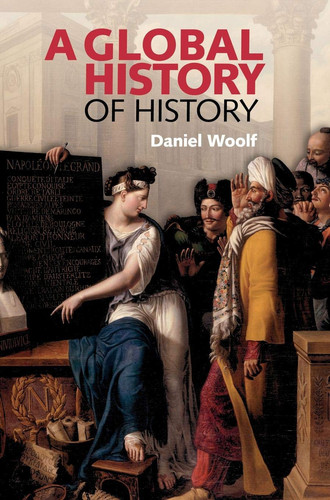
Cambridge University Press 2011-02-17 568 pages

Why Rome fell: decline and fall,or, drift and change?

Arnheim, M. T. W.
Why Rome Fell: Decline and Fall, or Drift and Change? discusses the causes of the fall of the Roman Empire in the West in the context of concepts of monarchy, power structure, social mobility, religion, and the aristocratic ethos. Dr. Michael Arnheim, an accomplished scholar of Roman history, delivers compelling comparisons of the later Roman Empire with the Principate and the Byzantine Empire. Unlike (in Gibbon's phrase) "the indissoluble union and easy obedience that pervaded the government of Augustus and the Antonines," the later Roman Empire is revealed in this book as a fractured society rent by divided loyalties ; Why Rome Fell includes coverage of the transition from the ancient to the medieval world, exploring the monarchy, and the relationship with the aristocracy of Diocletian, by contrast with that of Constantine and his successors. It also discusses Constantine's role in the rise of Christianity, together with the general significance of religion and religious persecution. There are also expansive treatments of conflicting theories, including Gibbon's "decline and fall," the Pirenne thesis, the malaria hypothesis, and the approach of the school of "late antiquity." The book also explores the criteria for optimal professional history writing, with comparative case studies of a number of societies spanning three thousand years. --Book Jacket
John Wiley & Sons, Inc 2022-03-15 476 pages

The stakes of history: on the use and abuse of Jewish history for life

Myers, David N.
A leading scholar of Jewish history's bracing and challenging case for the role of the historian today Why do we study history? What is the role of the historian in the contemporary world? These questions prompted David N. Myers's illuminating and poignant call for the relevance of historical research and writing. His inquiry identifies a number of key themes around which modern Jewish historians have wrapped their labors: liberation, consolation, and witnessing. Through these portraits, Myers revisits the chasm between history and memory, revealing the middle space occupied by modern Jewish historians as they work between the poles of empathic storytelling and the critical sifting of sources. History, properly applied, can both destroy ideologically rooted myths that breed group hatred and create new memories that are sustaining of life. Alive in these investigations is Myers's belief that the historian today can and should attend to questions of political and moral urgency. Historical knowledge is not a luxury to society but an essential requirement for informed civic engagement, as well as a vital tool in policy making, conflict resolution, and restorative justice.
Yale University Press 2018-01-01 180 pages

History, rhetoric, and proof

Ginzburg, Carlo
Historian Carlo Ginzburg uses the occasion of his Menachem Stern Lectureship to present a provocative and characteristically brilliant examination of the relation between rhetoric and historiography. In four lectures, based on a wide range of texts -- Aristotle's Poetics; humanist Lorenzo Valla's tract exposing the Donation of Constantine as a forgery; an early 18th-century Jesuit historical account purporting to record the diatribe of a Mariana Island native against Spanish rule; and Proust's commentary on Flaubert's style -- he demonstrates that rhetoric, if properly understood, is related not only to ornament but to historical understanding and truth. Ginzburg discovers a middle ground between the empiricist or positivist view of history, and the current postmodern tendency to regard any historical account as just one among an infinity of possible narratives, distinguished or measured not by the standard of truth, but by rhetorical skill. As a whole, these lectures stake out a position that both mediates and transcends warring factions in the current historiographical debate.
University Press of New England 1999 119 pages

Shared histories: a Palestinian-Israeli dialogue

Paul Scham,Walid Salem,Benjamin Pogrund
There is no single history of the development of the Israeli-Palestinian conflict. The Israeli historical narrative speaks of Zionism as the Jewish national movement, of building a refuge from persecution, and of national regeneration. The Palestinian narrative speaks of invasion, expulsion, and oppression. Its no wonder peace remains elusive. This volume attempts to present both histories with parallel narratives of key points in the 19th and 20th centuries to 1948. The histories are presented by fourteen Israeli and Palestinian experts, joined by other historians, journalists, and activists, who then discuss the differences and similarities between their accounts. By creating an appreciation, understanding, and respect for the “other,” the first steps can be made to foster a shared history of a shared land. The reader has the opportunity to witness first hand a respectful confrontation between the competing versions of the Israeli-Palestinian conflict.
Left Coast Press 2005-10-15 298 pages

Re-inventing the Jewish past: European Jewish intellectuals and the Zionist return to history

Myers, David N.
David Myers' book explores a fascinating and untold chapter in modern Jewish intellectual history: the role of the first generation of Jewish scholars at the Hebrew University in Jerusalem in establishing Jewish studies within framework of a jewish national university. committed to rewriting jewsh history according to zionst standarts, these "jerusalem scholars" richly reflect the tensions that attended their dual allegiances, to both zionism and the discipline of history
Oxford University Press 1995-11-30 278 pages

Writing the Holocaust (Writing History)

Dreyfus, Jean-Marc,Langton, Daniel
Writing the Holocaust provides students and teachers with an accessibly written overview of the key themes and major theoretical developments which continue to inform the nature of historical writing on the Holocaust. Holocaust studies is at a paradox: while historians of the Holocaust defend it as a legitimate and well-defined area of research, they write against a complex political and ideological background that undermines any claim for it as a normative field of historical study. Writing the Holocaust offers a lucid inquiry into this complex field by demonstrating the impact of current theories from the humanities and social sciences upon the treatment of Holocaust studies.
Bloomsbury Academic 2011-01-01 256 pages

How we forgot the Cold War: a historical journey across America

Wiener, Jon
Hours after the USSR collapsed in 1991, the U.S. Congress began making plans to establish the official memory of the Cold War. Conservatives dominated the proceedings, spending millions of dollars to portray the conflict as a clash of good vs. evil, ending in a defeat of totalitarianism equal in significance to the outcome of World War II. In this book, the author visits Cold War monuments, museums, and memorials across the United States to find out how the era is remembered today. His journey provides a history of the Cold War that turns many conventional notions on their heads
University of California Press 2012 376 pages

The teleology of the modern nation-state: Japan and China

Fogel, Joshua A.
Japan and China did not begin to emerge as unified political entities until the nineteenth century. Yet scholars and politicians persistently refer to "Japan" and "China" in discussions of earlier periods, as if the modern nation-state had long been established in these regions. Joshua Fogel here brings together essays by eight renowned East Asian scholars to demonstrate why this oversight distorts our historical analysis and understanding of both countries. The nation-states of Japan and China developed much later and, indeed, far less uniformly than usually conveyed in popular myth and political culture. Moreover, the false depiction of an earlier national identity not only alters the factual record; it serves the contemporary engines of nationalist mythology and propaganda. This interdisciplinary volume asks deceptively simple questions: When did "Japan" and "China" become Japan and China? When and why do inhabitants begin to define their identity and interests nationally rather than locally? Identifying the role of mitigating factors from disease and travel abroad to the subtleties of political language and aesthetic sensibility, the answers provided in these diverse and insightful essays are appropriately complex. By setting aside Western notions of the nation-state, the contributors approach each region on its own terms, while the thematic organization of the book provides a unique lens through which to view the challenges common to understanding both Japan and China. This highly readable collection will be important to scholars both inside and beyond the field of East Asian studies.
University of Pennsylvania Press 2005 243 pages

Murder in our midst: the Holocaust, industrial killing, and representation

Bartov, Omer
Product Description Murder in Our Midst: The Holocaust, Industrial Killing, and Representation examines the emergence, implementation, and representation of industrial killing, an inherent and crucial component of modernity whose most extreme manifestation was the Holocaust.The mechanized, impersonal, and sustained mass destruction of human beings, organized and legitimized by states, scientists, jurists, and intellectuals, is rooted in the industrial slaughterhouse of the Great War. In Murder in Our Midst, Omer Bartov argues that the Nazi death factories are best understood in the context of modern warfare, beginning with the First World War. He shows how the way we understand ourselves reflects the ambivalent effects of the Holocaust on our perceptions of war and violence, history and memory, progress and barbarism.Analyzing a wide array of historical texts, works of fiction, films, and museums, Bartov leads the reader from ancient myths of heroism to the trenches of the Western Front, from Thomas Mann's romantic vision of war to Primo Levi's stark depictions of genocide, from colonial war museums to the visual art of the Holocaust. These representations of killing share some of the same important features. They attempt to form coherent images from horrific events, to draw didactic lessons from them, and to use them for political ends. About the Author Omer Bartov is Associate Professor of History at Rutgers University.
Oxford University Press 1996 251 pages

Twilight of history

Sand, Shlomo
"The acclaimed and controversial historian turns his critical gaze on the writing of history today. Drawing on his four decades as a professional historian, Shlomo Sand interrogates the academic discipline of history, whose origin lay in the need for a national ideology. In the last few decades, traditional history has begun to fragment, yet only to give rise to a new role of historians as priests of official memory. Working in Israel has sharpened Sand's perspective, since the role of history as national myth is particularly salient in a country where the Bible is treated as a history book. He asks such questions as: Is every historical narrative ideologically marked? Do political requirements and state power weigh down inordinately on historical research and teaching? And, in such conditions, can there be a morally neutral and 'scientific' truth? Despite his trenchant criticism of academic history, Sand would still like to believe that the past can be understood without myth, and sees pointers for this in the work of Weber and Sorel."--Publisher's description
Verso 2017 276 pages

Prophets of the past: interpreters of Jewish history

Brenner, Michael
Prophets of the Past is the first book to examine in depth how modern Jewish historians have interpreted Jewish history. Michael Brenner reveals that perhaps no other national or religious group has used their shared history for so many different ideological and political purposes as the Jews. He deftly traces the master narratives of Jewish history from the beginnings of the scholarly study of Jews and Judaism in nineteenth-century Germany; to eastern European approaches by Simon Dubnow, the interwar school of Polish-Jewish historians, and the short-lived efforts of Soviet-Jewish historians; to the work of British and American scholars such as Cecil Roth and Salo Baron; and to Zionist and post-Zionist interpretations of Jewish history. He also unravels the distortions of Jewish history writing, including antisemitic Nazi research into the "Jewish question," the Soviet portrayal of Jewish history as class struggle, and Orthodox Jewish interpretations of history as divinely inspired. History proved to be a uniquely powerful weapon for modern Jewish scholars during a period when they had no nation or army to fight for their ideological and political objectives, whether the goal was Jewish emancipation, diasporic autonomy, or the creation of a Jewish state. As Brenner demonstrates in this illuminating and incisive book, these historians often found legitimacy for these struggles in the Jewish past.
Princeton University Press 2010-08-22 301 pages

Israel in history: the Jewish state in comparative perspective

Penslar, Derek Jonathan
Covering topical issues concerning the nature of the Israeli state, this engaging work presents essays that combine a variety of comparative schemes, both internal to Jewish civilization and extending throughout the world, such as: modern Jewish society, politics and culture; historical consciousness in the 20th century; colonialism, anti-colonialism and postcolonial state-building.With its open-ended, comparative approach, Israel in History provides a useful means of correcting the biases found in so much scholarship on Israel, be it sympathetic or hostile. This book will appeal to scholars and students with research interests in many fields, including Israeli Studies, Middle East Studies, and Jewish Studies.
Routledge 2007 276 pages

Sometimes an art: nine essays on history

Bailyn, Bernard
"From one of the most respected historians in America, twice the winner of the Pulitzer Prize, a new collection of essays that reflect a lifetime of erudition and accomplishments in history. The past has always been elusive: how can we understand people whose worlds were utterly different from our own without imposing our own standards and hindsight? What did things feel like in the moment when outcomes were uncertain? How can we recover the uncertainties of the past, before the outcomes were known? What kind of imagination goes into the writing of transformative history? Are there latent trends that distinguish the kinds of history we now write? How unique was North America among the far-flung peripheries of the early British empire? As Bernard Bailyn argues in this elegant, deeply informed collection of essays, history always combines approximations based on incomplete data, with empathic imagination and the interweaving of strands of knowledge into a narrative which also explains. This is a stirring and insightful work drawing on the wisdom and perspective of a career spanning more than five decades--a book that will appeal to anyone interested in history"--From publisher's website
Alfred A. Knopf 2015 307 pages