72 results for "Innovation"

The early Palaeologan renaissance (1261-c. 1360): by Edmund Fryde

Fryde, E. B.
The Byzantine world underwent a remarkable recovery of intellectual energy in the period following the recovery of Constantinople in 1261. The reaction of the emperors and their entourage of well-educated high officials to their political disasters was a deliberate revival of the glories of ancient Greek culture. The main subject of this book is the preservation and dissemination by this learned elite of such ancient literature, philosophy and science as still survived then, the development of editorial techniques which resulted in more complete and less corrupt texts, and their improvement buy the addition of commentaries and other innovations.
Brill 2000 423 pages

Apogee of empire: Spain and New Spain in the age of Charles III, 1759-1789

Stein, Stanley J.
"In Apogee of Empire, the authors argue that the inability to renovate the Hapsburg legacies reflected reluctance to undertake radical changes first at home, then in Spain's relationship with its colonies." "The Steins trace in detail efforts to reform the Spanish establishment in the early 1760s, initially under the leadership of the marques de Esquilache, who accompanied Charles from Naples. Reformers had to determine which adjustments could be made without risking radical innovation. The ensuring seven-year conflict between reformers and traditionalists ended in a coup that outsted Esquilache. The authors then analyze the shift in focus to the colonies and the emphasis on incrementally modifying a key element of Spanish colonialism, transatlantic trade, via so-called free trade within the imperial system. Comercio libre, like most Bourbon reformism in general, neither realized a colonial pact nor improved Spain's competitive position in the Atlantic trading system. At the time of Charles III's death, the authors conclude, Spain had only made superficial changes, rather than the profound transformation the situation demanded, and by 1789 Spain and its wealthiest colony, New Spain, would be ill-prepared for the coming decades of upheaval in Europe and America."--Jacket
Johns Hopkins University Press 2003-11-04 464 pages

A Survey of Modernist Poetry

Laura Riding,Robert Graves
"A survey of modernist poetry" by renowned authors Robert Graves and Laura Riding stands as a seminal work in literary criticism, offering an indispensable examination of 20th-century poetic innovation. This landmark text provides a comprehensive and critical look at the rise of modernism in literature, delving into the foundational principles and varied expressions that shaped the movement. Graves and Riding meticulously analyze the historical trajectory of modernist poetry, tracing its evolution, identifying key figures, and exploring the profound shifts in form and content. This authoritative survey is essential for anyone interested in the history of poetry, the development of free verse, and the broader impact of modernism. It dissects the stylistic shifts and theoretical underpinnings that defined one of the most transformative periods in literary history, offering deep insights into the craft and intellectual currents of the era. "A survey of modernist poetry" remains a vital resource, offering profound understanding of the complex landscape of 20th-century poetry and the enduring legacy of modernism. As a carefully prepared print republication, it continues to serve as a cornerstone for students, scholars, and enthusiasts seeking clarity on a pivotal era of literary change. This work has been selected by scholars as being culturally important, and is part of the knowledge base of civilization as we know it. This work is in the public domain in the United States of America, and possibly other nations. Within the United States, you may freely copy and distribute this work, as no entity (individual or corporate) has a copyright on the body of the work. Scholars believe, and we concur, that this work is important enough to be preserved, reproduced, and made generally available to the public. We appreciate your support of the preservation process, and thank you for being an important part of keeping this knowledge alive and relevant.
Creative Media Partners, LLC 2025-12-12 218 pages

Misunderstanding media

Winston, Brian
The 1980s saw constant reports of an information revolution. This book, first published in 1986, challenges this view. It argues that the information revolution is an illusion, a rhetorical gambit, an expression of profound historical ignorance, and a movement dedicated to purveying misunderstanding and disseminating disinformation. In this historically based attack on the information revolution, Professor Winston takes a had look at the four central information technologies - telephones, television, computers and satellites. He describes how these technologies were created and diffused, showing that instead of revolution we just have 'business as usual'. He formulates a 'law' of the suppression of radical potential - a law which states that new telecommunication technologies are introduced into society only insofar as their disruptive potential is contained. Despite the so-called information revolution, the major institutions of society remain unchanged, and most of us remain in total ignorance of the history of technology.
Routledge 2016-09-02 424 pages

Neonatal bioethics: the moral challenges of medical innovation

Lantos, John D.
Neonatal intensive care has been one of the most morally controversial areas of medicine during the past thirty years. This study examines the interconnected development of four key aspects of neonatal intensive care: medical advances, ethical analysis, legal scrutiny, and econometric evaluation. The authors assert that a dramatic shift in societal attitudes toward newborns and their medical care was a stimulus for and then a result of developments in the medical care of newborns. They divide their analysis into three eras of neonatal intensive care. The first, characterized by the rapid advance of medical technology from the late 1960s to the Baby Doe case of 1982, established neonatal care as a legitimate specialty of medical care, separate from the rest of pediatrics and medicine. During this era, legal scholars and moral philosophers debated the relative importance of parental autonomy, clinical prognosis, and children's rights. The second era, beginning with the Baby Doe case (a legal battle that spurred legislation mandating that infants with debilitating birth defects be treated unless the attending physician deems efforts to prolong life "futile"), stimulated efforts to establish a consistent federal standard on neonatal care decisions and raised important moral questions concerning the meaning of "futility" and of "inhumane" treatment. In the third era, a consistent set of decision-making criteria and policies was established. These policies were the result of the synergy and harmonization of newly agreed upon ethical principles and newly discovered epidemiological characteristics of neonatal care. Tracing the field's recent history, notable advances, and considerable challenges yet to be faced, the authors present neonatal bioethics as a paradigm of complex conversation among physicians, philosophers, policy makers, judges, and legislators which has led to responsible societal oversight of a controversial medical innovation.
Johns Hopkins University Press 2009 177 pages

Western Culture in Eastern Lands A Comparison of the Methods Adopted by England and Russia in the Middle East

Ármin Vámbéry
Excerpt from Western Culture in Eastern Lands: A Comparison of the Methods Adopted by England and Russia in the Middle East During the many years that I have been engaged in studying the political and cultural questions of Inner Asia, it has often been laid to my charge that, in my criticism and appreciation of the two chief factors of our civilising influence in the East, I have not taken up a purely objective standpoint, and that, because of my partiality to the one, I have not been quite fair to the other. In Europe the prevailing idea is that the Russians, who in many respects are themselves still semi-Asiatic, are better fitted to undertake the civilisation of Asia, and will be more likely to bring about the transition from one sphere of action to another, than the English, the accomplished representatives of Western culture, who lack the necessary pliability, and whose stiff, proud bearing is supposed to be detrimental to the work of transformation. To prove the erroneousness of this view, and also to defend myself against the accusation of an unjustifiable partiality, these pages have been written. The comparative survey of the various innovations and reforms introduced by Russia and by England respectively, which I have endeavoured to give, will convince the reader that, in forming my conclusions, I have not been guided by personal motives, but that they are the outcome of a close investigation of what has actually been done by our two Culture-bearers. About the Publisher Forgotten Books publishes hundreds of thousands of rare and classic books. Find more at www.forgottenbooks.com This book is a reproduction of an important historical work. Forgotten Books uses state-of-the-art technology to digitally reconstruct the work, preserving the original format whilst repairing imperfections present in the aged copy. In rare cases, an imperfection in the original, such as a blemish or missing page, may be replicated in our edition. We do, however, repair the vast majority of imperfections successfully; any imperfections that remain are intentionally left to preserve the state of such historical works.
Fb&c Limited 2015-06-25 424 pages

Jews and their Roman rivals: pagan Rome's challenge to Israel

Berthelot, Katell
"Across almost the entire expanse of Jewish history, Jews have had to adjust to being ruled by empires. In antiquity alone Jews lived under a succession of imperial powers - Assyrian, Babylonian, Persian, and Seleucid - before having to deal with the Romans. Judaism (of course) was shaped by each successive encounter with an imperial power. But as Katell Berthelot argues in this book, Rome and Roman imperialism presented Jews with unique ideological challenges, and compelled Jews to rethink key aspects of their own self-definition. Long before Rome became Christian, Jews recognized pagan Romans as unprecedented rivals because of some striking similarities between the two peoples. Previously Jews were ruled by empires associated with kingdoms and kings. By contrast, "Rome" was first and foremost a city and a people - and Romans thought of their city and themselves as a people in ways uncomfortably close to the ways Jews defined themselves: as an Israelite people tied to a capital city, Jerusalem. Moreover both Romans and Jews conceived of themselves as a pious people with a divine calling; both thought they possessed the most perfect laws ever written; and both believed themselves to be entrusted with a universal mission that implied bringing peace to the world. This was too close for comfort. The disturbingly close parallels led some Jews to feel that Rome was in fact trying to take Israel's place in God's plan for the world. Revealingly, the ancient rabbis depicted this rivalry by turning to the famous biblical story of the sibling rivals Jacob and Esau, associating the Jews with the former and the Romans with the latter. The perceived rivalry led to a series of innovations in Jewish self-perceptions in late antiquity in several areas that Berthelot will discuss in a series of book chapters: innovations in Jewish understandings of power, citizenship (or membership in a people), and law. Berthelot argues that in some cases the Jewish sources imitate or mimic Roman representations (of, e.g. legal thinking and practice), and in other cases propose a countermodel"--
Princeton University Press 2021 519 pages

The genesis of the naval profession

Elias, Norbert
Drawn largely from unpublished manuscripts, this compilation illustrates Norbert Elias' theory that the emergence of the professional naval officer in Great Britain was related both to the necessities of naval warfare and to the structure of society on land. Specifically, the innovation of the rank of midshipman meant that the British were able to mitigate the impact of social barriers between officers and ratings and gradually merge the two hierarchies.
University College Dublin Press 2007 172 pages

Rabbi Esriel Hildesheimer and the Creation of a Modern Jewish Orthodoxy

David Ellenson
The story of modern Orthodox Judaism is usually told only from the perspective of Rabbi Samson Raphael Hirsch. Ellenson’s work, a thorough examination of the life and work of one of Hirsch’s contemporaries, Rabbi Esriel Hildesheimer, reveals another important contributor to the creation of a modern Jewish Orthodoxy during the late 1800s. like Hirsch, Hildesheirmer felt the need to continue certain traditions while at the same time introducing certain innovations to meet the demands of a modern society. This original study of an Orthodox rabbinic leader shows how Hildesheirmer’s flexible and pragmatic approach to these problems continues to be relevant to modern Judaism. The way in which this book draws upon response literature for its comprehension of Hildesheimer makes it a distinctive work in modern Jewish historiography and sociology.
University of Alabama Press 2003-05-05 232 pages

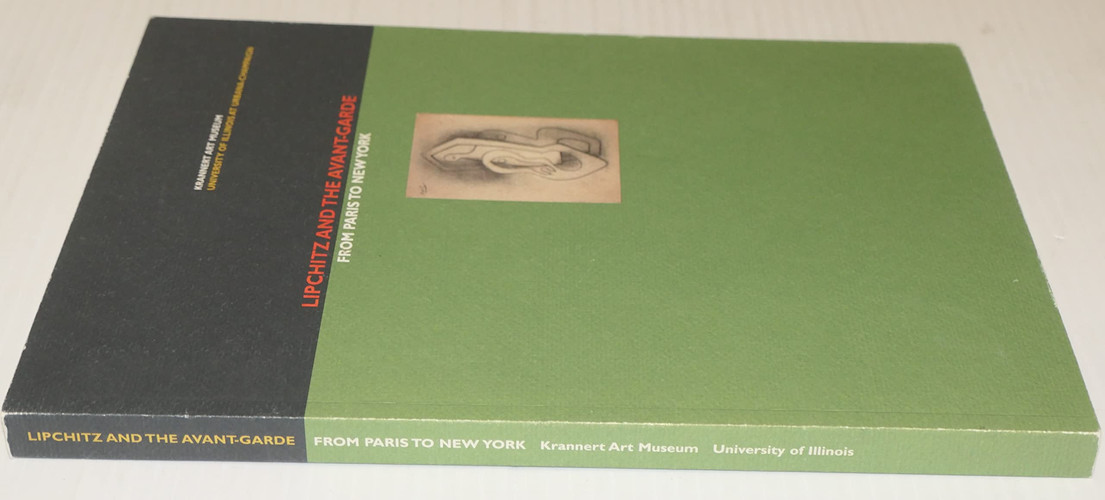
Lipchitz and the avant-garde: from Paris to New York

Lipchitz, Jacques
Utilizing works from museums across North America, Lipchitz and the Avant-Garde traces the path of the pioneering sculptor Jacques Lipchitz from his birthplace in Lithuania to his early work in Paris before World War I, where he was associated with the Parisian avant-garde and applied cubist principles to three-dimensional artwork. By breaking the volume and using different planes, Lipchitz created works that were a new force in the history of sculpture. His innovation of the transparents style in sculpture during the late 1920s was groundbreaking and was copied by many, including Picasso. At the outbreak of World War II the Jewish artist fled to New York, where he worked on increasingly monumental sculptures until his death in 1973. This substantive catalog contains new essays by internationally renowned scholars and translated articles by contemporaries Ramón Gómez de la Serna and Joaquin Torres-García that have not appeared in English before.
Krannert Art Museum and Kinkead Pavilion, University of Illinois at Urbana-Champaign 2001 152 pages

Late Geometric and Protoattic Pottery, Mid 8th to Late 7th Century B.C.

Eva T. H. Brann
This volume reports on Athenian pottery found in the Athenian Agora up to 1960 that can be dated from about the middle of the 8th century B.C., when the appearance of a painter of sufficient personal distinction to enliven the whole craft marks a real break from the earlier Geometric style, through the third quarter of the 7th century B.C. when Protoattic gives way to black-figure and black wares. A sampling of contemporary imported ware is included. The material is treated first by shape and then, more extensively, by painting styles. Some 650 characteristic pieces are selected for cataloguing. The introduction discusses the development of the various shapes and styles, characterizing the special techniques and innovations of the period. The topographical features of the Agora that are indicated by the places of discovery of deposits of late Geometric and Protoattic pottery are summarized under wells, houses, workshops, sanctuaries, cemeteries, and roads.
ASCSA 1962 134 pages

Engines of Social Progress

Walter Lionel George
In this thought-provoking work, Walter Lionel George explores the historical and philosophical roots of social progress, arguing that technological innovation and economic growth have been the driving forces behind human advancement. While acknowledging the challenges and dangers posed by modernity, George makes a compelling case for the continued pursuit of progress as a means of improving human well-being. This work has been selected by scholars as being culturally important, and is part of the knowledge base of civilization as we know it. This work is in the "public domain in the United States of America, and possibly other nations. Within the United States, you may freely copy and distribute this work, as no entity (individual or corporate) has a copyright on the body of the work. Scholars believe, and we concur, that this work is important enough to be preserved, reproduced, and made generally available to the public. We appreciate your support of the preservation process, and thank you for being an important part of keeping this knowledge alive and relevant.
Creative Media Partners, LLC 2023-07-18 326 pages