132 results for "Memoir"

Austerity baby

Wolff, Janet
"Austerity Baby might best be described as an "oblique memoir". Janet Wolff's fascinating volume is a family history - but one that is digressive and consistently surprising. The central underlying and repeated themes of the book are exile and displacement; lives (and deaths) during the Third Reich; mother-daughter and sibling relationships; the generational transmission of trauma and experience; transatlantic reflections; and the struggle for creative expression. Stories mobilised, and people encountered, in the course of the narrative include: the internment of aliens in Britain during the Second World War; cultural life in Rochester, New York, in the 1920s; the social and personal meanings of colour(s); the industrialist and philanthropist, Henry Simon of Manchester, including his relationship with the Norwegian explorer, Fridtjof Nansen; the liberal British campaigner and MP of the 1940s, Eleanor Rathbone; reflections on the lives and images of spinsters. The text is supplemented and interrupted throughout by images (photographs, paintings, facsimile documents), some of which serve to illustrate the story, others engaging indirectly with the written word."--Publisher's description.
Manchester University Press 2017 262 pages

The subtenant ; To outwit God

Krall, Hanna
This volume presents two works by acclaimed Polish journalist Hanna Krall: The Subtenant, a semi-autobiographical novel, and To Outwit God, a remarkable interview with Marek Edelman, the last surviving leader of the Warsaw Ghetto uprising. The Subtenant explores the troubled and ever-shifting relationships between Poles and Jews, beginning with the author's concealment as a child during the Nazi years and ending in 1981 when martial law was declared in Poland. In To Outwit God, Edelman's words assault conventional assumptions about heroes and heroism, taking in his time not only in the Warsaw Ghetto but his careers as a physician and a Solidarity activist. Taken together, the two works form a powerful memoir of Jewish survival, a meditation on Polish-Jewish relations, and a commentary on the forces that have produced modern Polish opposition movements.
Northwestern University Press 1992 247 pages

Gaby Brimmer: an autobiography in three voices

Brimmer, Gabriela
This English-language translation of the autobiography of Gabriela Brimmer (1947-2000) tells an amazing story in three voices. Gaby, who had cerebral palsy, communicated largely by typing with her left foot on an electric typewriter, and also by using that foot to point at letters and numbers on an "alphabet board" at the base of her wheelchair. She gained admission to Mexico City public schools, attended the prestigious National Autonomous University of Mexico, and became a key figure in launching Mexico's disability rights movement. Brimmer was raised by her parents, Austrian Jews who fled the Nazis in the late 1930s, and a devoted Mexican caregiver, Florencia Morales Sanchez. Renowned writer Elena Poniatowska structured this text by alternating Gaby's voice with those of her mother, Sari, and Florencia. Memorable not just as the memoir of an extraordinary woman, but as a unique and imaginative form of autobiographical writing, the volume opens with a foreword by Judith E. Heumann and Jorge Pineda, and features a new introduction by Lauri Umansky and afterword by Avital Bloch providing additional context about Gaby's life and writing, as well as disability, women's, and Jewish/Mexican history.
Brandeis University Press 2009 200 pages

Destined to live

Ungar, William
Memoirs of Wilo (Wolf) Ungar, a Jew born in 1913 in Krasne, near Tarnopol. In September 1939 he was drafted into the Polish Army; notes the anti-Jewish mood of Poles after the Polish defeat. He fled to Lvov, where the Nazi invasion caught up with him in July 1941. Describes Nazi measures against the Jews and life in the ghetto. Ungar's wife and newly-born child perished during the Nazi "action" in June 1942. He lived on "Aryan papers" in the vicinity of Lvov and later fled to Warsaw. From there he moved to Nowy Dwór, northwest of Warsaw, and before March 1943 was interned in the ghetto there. He fled and returned to Lvov. Having been exposed as a Jew, he narrowly escaped being sent to the Janowska camp; he was hidden by a Ukrainian woman until the liberation. He tried to enlist in the Polish army in Lvov in 1944, but was rejected as a Jew. After the war he emigrated to the USA.
University Press of America 2000 362 pages

Child of war

Seltzer, Nachman
Memoirs of Friedman, born in 1936 in Budapest, whose hasidic family survived in and around his native city, thanks to their luck or Divine providence, and their abilities - including his father's skillful forging of fake documents, the daring of his young aunts, and the acting ability of his mother and himself. Friedman, his mother, and baby brother survived posing as non-Jews in Buda, while most of the city's Jews were in danger in Pest. He pretended to be mentally ill due to the absence of a father serving in the Hungarian army, while his father was actually sheltered in the "glass house". Includes a brief account of how one aunt escaped on the Kasztner train. One sister was hidden in a convent until the Jewish children were found by the Gestapo, but she was saved by the ingenuity of her aunt Irene. Another sister was hidden in the countryside, discovered by the fascists, and rescued by her Aunt Edith. One relative survived by pretending to be a Gypsy violinist; another found refuge in a mental hospital. Friedman's grandmother escaped from a death march. Relates some of the horrors of life under the Arrow Cross, and the difficulty of remaining alive until the Russians liberated the city.
Mesorah Publications 2009 267 pages

The choice: Poland, 1939-1945

Eber, Irene
Memoirs of a Jew born in 1927 in Halle. In 1938, together with other Jews of Polish origin, she and her family were deported to Poland; they settled in Mielec. Describes the Nazi occupation and the establishment of a ghetto. In March 1942 most of the ghetto's inhabitants were transferred to other ghettos or concentration camps. Eber and her family were sent to the Dębica ghetto, but she soon escaped. She found shelter with a Polish family, and hid in a chicken coop for almost two years. Her father was shot in a labor camp. After the war Eber discovered that her mother and sister had been saved by Oskar Schindler. In 1948, after living in a DP camp in Germany, Eber emigrated to the USA.
Schocken Books 2004 229 pages

Eros and the Jews: from Biblical Israel to contemporary America

Biale, David
Contradictory stereotypes about Jewish sexuality pervade modern culture, from Lenny Bruce's hip eroticism to Woody Allen's little man with the big libido (and even bigger sexual neurosis). Does Judaism in fact liberate or repress sexual desire? David Biale does much more than answer that question as he traces Judaism's evolving position on sexuality, from the Bible and Talmud to Zionism up through American attitudes today. What he finds is a persistent conflict between asceticism and gratification, between procreation and pleasure. From the period of the Talmud onward, Biale says, Jewish culture continually struggled with sexual abstinence, attempting to incorporate the virtues of celibacy, as it absorbed them from Greco-Roman and Christian cultures, within a theology of procreation. He explores both the canonical writings of male authorities and the alternative voices of women, drawing from a fascinating range of sources that includes the Book of Ruth, Yiddish literature, the memoirs of the founders of Zionism, and the films of Woody Allen. Biale's historical reconstruction of Jewish sexuality sees the present through the past and the past through the present. He discovers an erotic tradition that is not dogmatic, but a record of real people struggling with questions that have challenged every human culture, and that have relevance for the dilemmas of both Jews and non-Jews today.
Basic Books 1992 319 pages

Shush! growing up Jewish under Stalin : a memoir

Draitser, Emil
Memoirs of a Jew born in 1937 in Odessa, relating his childhood experiences in the postwar period. Popular antisemitism was rampant in Odessa, and the people in power, from school teachers to local authorities, turned a blind eye to it. Between 1948-53 popular antisemitism gave way to officially-sponsored antisemitic campaigns. Draitser, who had a traditional Jewish upbringing, was taught to be quiet, to maintain a low profile, and never to stress his Jewishness publicly. Contends that all Soviet Jews of his generation received the same upbringing of self-hatred, learned fear (including fear of "gentile" women), and an inferiority complex. In 1974 he emigrated to the USA. Describes, also, his family's evacuation from Odessa in 1941, and how some relatives perished either in German-occupied Minsk or in Ukraine.
University of California Press 2008-09-04 301 pages

Rather die fighting: a memoir of World War II

Blaichman, Frank
"Frank Blaichman was sixteen years old when German forces invaded Poland. He saw his friends and neighbors conscripted to work as slave laborers. His uncle was taken outside his home and shot for preparing kosher meat; a few weeks later, one of his cousins was shot in her bed. When the roundups and deportations came, Blaichman knew he would not go quietly." "He set off for a nearby forest to find the underground bunkers of Jews who had already escaped. Together they formed a Jewish partisan force dedicated to fighting the Germans and anyone who collaborated with them, while hiding and sheltering those who were unable to take up arms. Death stalked the lives of these brave soldiers without an army - but they knew they would rather die fighting than surrender. As their numbers grew, they took up arms alongside Polish partisan units, and in 1944, they faced their greatest test: well-armed and well-rested German army battalions and air force units sent to destroy them." "Rather Die Fighting is the inspirational memoir of a man who dared to stand up to the Nazis against all odds. It is a saga of courage, sacrifice, and honor - and a fitting tribute to those who fought shoulder to shoulder to protect their families and homeland in World War II." --Book Jacket.
Arcade 2009 210 pages

For solo violin: a Jewish childhood in fascist Italy : a memoir

Zargani, Aldo
" For Solo Violin is a gracefully written, elegiac memoir of childhood."— The Los Angeles Times "An eloquent tribute to [and] a moving account of those who, despite the cruelty of so many around them, found ways to rejoice and trust in the kindness of a few. One is instantly reminded of Life Is Beautiful ."—André Aciman, author of Out of Egypt In an extraordinary literary debut, Aldo Zargani reconstructs the lost world of his Jewish childhood during the perilous years 1938–45 when he and his family fled from Fascists and Nazis in northern Italy. His haunting memoir acquires a cinematic intensity as he crosscuts from the blood-red stone spires of Basel, where his father failed to find refuge for his family in 1939, to fiery scenes of the Allied bombing of Turin in 1942, to the freezing winter of 1943–44, which Zargani and his brother spent hidden in a Catholic boarding school deep in the countryside. For Solo Violin is filled with colorful portraits of Italian aristocrats and peasants, priests and soldiers, teachers and students, informers and partisans. At its heart is Zargani's vivid depiction of his father, a concert violinist forced to give up his career when the Fascists came to power. In this time of persecution, the Zargani family survived through their own resourcefulness and through the efforts of the many Italians who came to their aid, from the young doctor who helped them escape from Turin to the shepherd who supplied them with milk during the last year of the war, when they lived among the partisans in a remote Piedmont valley. Looking back over a distance of fifty years, Zargani rediscovers the enchantment of childhood shining in "fable-like constellations" even amidst the inferno of war. Lullabies and school games, fairy tales and family jokes are interwoven with the events of terror and oppression. Lyrical, humorous, tender, and wise, For Solo Violin is a testament to resilience and hope during the darkest period in human history. "A broad panorama of Italian-Jewish history in [the last] century. Elegant in its style and, however tragic, also rich with understatement, irony, and wit, For Solo Violin counts among the great, enduring works of art."— Focus Magazine , Germany "A tragic, deeply engaging, delicious book—yes delicious, too. (Reading it makes you smile.) It's a miracle…It makes one think of the wit of Kafka!"— L'Espresso , Italy "Zargani depicts a wealth of sad, despairing, but often also incredibly funny episodes…But vibrating along with the humor is always the sense of threat, and behind it opens the abyss of terror."— Neue Zürcher Zeitung , Switzerland
Paul Dry Books 2002 326 pages

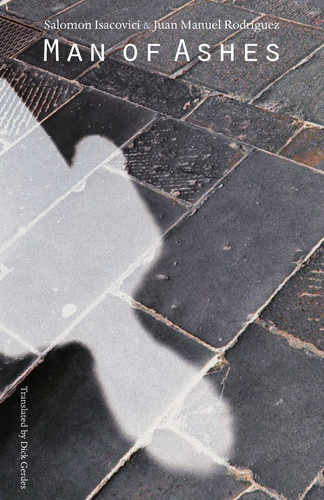
Man of ashes

Isacovici, Salomon
"A poignant, groundbreaking memoir that links the Holocaust and its aftermath to the safe haven that opened for camp survivors in Latin America at mid-century. The controversy surrounding the collaboration between Isacovici and Rodr guez remains an extraordinary opportunity to reflect on the thorny path of Jewish-Hispanic relations worldwide."-Ilan Stavans"Distinguished by geography as well as by its painful testimony. . . . Much of the memoir's early drama involves the creeping Nazi threat opposing Jews' wishful thinking-that the war might be ending and that 'it can't happen here.' . . . The author's family is shattered in Birkenau, but he survives Auschwitz with jobs peeling potatoes and mining coal at Jaworno, and he survives a gruesome death march as the Soviets advance. Isacovici is able to rejoin two brothers in a fruitless return to the family farm and to many European cities in search of a haven. He then joins the family of a woman with whom he has a serious romance, who end up with visas for Ecuador, where he feels an empathy for the suffering of the local Indians. . . . This account tells an unforgettable and unique story."-Kirkus ReviewsSalomon Isacovici died in 1998. Dick Gerdes is a professor of Spanish at George Mason University. Man of Ashes was first published in Mexico in 1990 as A7393: Hombre de cenizas and was awarded the Fernando Jeno Prize.
University of Nebraska Press 2002 244 pages

Tiny lights for travellers

Lewis, Naomi K.
"When her marriage suddenly ends, and a diary documenting her beloved grandfather's escape from Nazi-occupied Netherlands in the summer of 1942 is discovered, Naomi K. Lewis decides to retrace his journey to learn about her family history. Despite suffering from extreme disorientation and a lifetime of anxiety, she travels alone for the first time. Moving from Amsterdam to Lyon--relying on the marvels of GPS--she discovers family secrets and her own narrative as a second-generation Jewish Canadian. With vulnerability, humour, and wisdom, Lewis's memoir asks tough questions about her identity as a secular Jew, the accuracy of family stories, and the impact of the Holocaust on subsequent generations. How do immigrants weave their sense of identity into their chosen countries? Must we be able to locate ourselves within family and cultural geography to belong?"--
University of Alberta Press 2019-05-15 281 pages

The straits of hell: the chronicle of a Salonikan Jew in the Nazi extermination camps Auschwitz, Mauthausen, Melk, Ebensee

Ha-Elion, Moshe
"The Jerusalem of the Balkans is today a city of ghosts. Saloniki or Salonika, as Thessaloniki was known its Jewish community, today barely numbers a thousand Jews whereas from 1500 to World War I the Jews constituted the majority of its inhabitants. Moshe Ha-Elyon and his extended family were part of the deportation from Salonika of some 45,000 Jews to Auschwitz where all but a handful were gassed, beaten, or starved to death during the spring of 1943 to the end of the war. This memoir differs from the many memoirs of Greek Jews. Moshe Ha- Elyon portrays the religious and cultural life of his ancestral community as well as the spiritual and mystical research of his father who predicted, prior to his death at the onset of the war, both the persecution of the Jews and the subsequent rise of a Jewish state in its aftermath. It is the moving story of a teenager who suffered in extremis yet lived to transmit to his family in Israel the legacy of a vanished era. A most informative and worthwhile insight into the inner world of Greek Jewry before and during its destruction during World War II"--
Bibliopolis 2005 120 pages

Mother's boy

Jacobson, Howard
"Howard Jacobson's funny, revealing and tender memoir of his path to becoming a writer. It's my theory that only the unhappy, the uncomfortable, the gauche, the badly put together, aspire to make art. Why would you seek to reshape the world unless you were ill-at-ease in it? And I came out of the womb in every sense the wrong way round. In Mother's Boy, Booker-Prize winner Howard Jacobson reveals how he became a writer. It is an exploration of belonging and not-belonging, of being an insider and outsider, both English and Jewish. Jacobson was forty when his first novel was published. In Mother's Boy he traces the life that brought him there. Born to a working-class family in 1940s Manchester, the great-grandson of Lithuanian and Russian immigrants, Jacobson was raised by his mother, grandmother and aunt Joyce. His father was a regimental tailor, as well as an upholsterer, a market-stall holder, a taxi driver, a balloonist, and a magician. Grappling always with his family's history and his Jewish identity, Jacobson takes us from the growing pains of childhood to studying at Cambridge under F.R. Leavis, and landing in Sydney as a maverick young professor on campus." --
Jonathan Cape 2022 279 pages

Alva's boy

Collins, Alan
"This book is a frank, confronting yet surprisingly funny memoir based on the life experiences and recollections of a Jewish childhood over a time span from 1928 to the mid-forties. In some telling, names of people, places and dates have been changed. Mercifully, those named who are or were of a repellent nature have long since gone to God. The stories present incidents from the life of one person, the first-person narrator. The memoir is purposely unsentimental. The writer has worked hard to circumvent cheap emotion. Some readers might find it confronting. The linked stories encompass a childs unsparingly honest observations as he is buffeted by events which range from indifference and naked cruelty to sparkling life-affirming exuberance."--Provided by publisher.
Hybrid Publishers 2008 180 pages

My lucky star

Fantlová, Zdenka
Memoirs of a Jew born in 1922 in Blatná, Czechoslovakia. In 1925 her family moved to Rokycany (west of Prague). In 1940 Fantlová's father was arrested; he was interned in various camps and died in 1945 on a death march. In January 1942, Fantlová was deported to Theresienstadt with her stepmother, brother, and sister. Describes cultural activities in Theresienstadt, especially musical theater, in which she participated. In October 1944 the family was deported to Auschwitz, where Fantlová's stepmother was killed. Her brother was sent to Gleiwitz and died there. Fantlová and her sister were taken to the Kurzbach labor camp, and from there to Gross-Rosen, Mauthausen, and Bergen-Belsen, where her sister perished and Fantlová was liberated. In July 1945 she was sent for treatment to Sweden and remained there.
Herodias 2001 203 pages

Munich 1919: diary of a revolution

Klemperer, Victor
Munich 1919 is a vivid portrayal of the chaos that followed World War I and the collapse of the Munich Council Republic by one of the most perceptive chroniclers of German history. Victor Klemperer provides a moving and thrilling account of what turned out to be a decisive turning point in the fate of a nation, for the revolution of 1918-9 not only produced the first German democracy, it also heralded the horrors to come. With the directness of an educated and independent young man, Klemperer turned his hand to political journalism, writing astute, clever and linguistically brilliant reports in the beleaguered Munich of 1919. He sketched intimate portraits of the people of the hour, including Erich Mühsam, Max Levien and Kurt Eisner, and took the measure of the events around him with a keen eye. These observations are made ever more poignant by the inclusion of passages from his later memoirs. In the midst of increasing persecution under the Nazis he reflected on the fateful year 1919, the growing threat of antisemitism, and the acquaintances he made in the period, some of whom would later abandon him, while others remained loyal. Klemperer's account once again reveals him to be a fearless and deeply humane recorder of German history. Munich 1919 will be essential reading for all those interested in 20th century history, constituting a unique witness to events of the period.
Polity Press 2022-09-06 224 pages

Parallel lines

Lantos, Peter L.
Memoirs of Lantos, born to the Leipniker family in 1939 in Makó, Hungary. In 1944, after his older brother was taken away, the rest of the family was sent to the ghetto of Szeged, but the Jews there were soon deported. He and his parents were first sent to Strasshof in Austria for a short time, then to Wiener Neustadt and to Bergen-Belsen, where his father died. He and his mother were then sent on a death transport, during which they were liberated by American soldiers. They returned to Hungary and found that his brother had perished. Lantos later studied medicine in England, and in 1969 decided to remain there.
Arcadia Books 2006 246 pages