101 results for "Neuroscience"

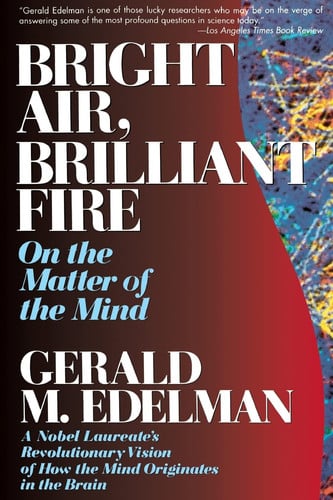
Bright air, brilliant fire: on the matter of the mind

Edelman, Gerald Maurice
We are on the brink of understanding ancient mysteries: how we know, what governs our nature, what makes a person different from a thing. In the last decade, more than twenty disciplines dealing with every aspect of the brain have contributed to a revolution in the neurosciences--a revolution as significant, in the view of many observers, as the Galilean and Copernican revolutions in mathematics and physics or the Darwinian revolution in biology. In this book, one of the world's foremost brain scientists gives us a glimpse into the workings of the human brain--the most complex material object in the universe. A match head's worth of the brain contains about a billion connections that can combine in ways which can only be described as hyperastronomical--on the order of ten followed by millions of zeros (there are only about ten followed by eighty zeros' worth of positively charged particles in the whole known universe).^
BasicBooks 1992 280 pages

The new executive brain: frontal lobes in a complex world

Goldberg, Elkhonon
Elkhonon Goldberg's groundbreaking The Executive Brain was a classic of scientific writing, revealing how the frontal lobes command the most human parts of the mind. Now he offers a completely new book, providing fresh, iconoclastic ideas about the relationship between the brain and the mind.In The New Executive Brain, Goldberg paints a sweeping panorama of cutting-edge thinking in cognitive neuroscience and neuropsychology, one that ranges far beyond the frontal lobes. Drawing on the latest discoveries, and developing complex scientific ideas and relating them to real life through many fascinating case studies and anecdotes, the author explores how the brain engages in complex decision-making; how it deals with novelty and ambiguity; and how it addresses moral choices. At every step, Goldberg challenges entrenched assumptions. For example, we know that the left hemisphere of the brain is the seat of language--but Goldberg argues that language may not be the central adaptation of the left hemisphere. Apes lack language, yet many also show evidence of asymmetric hemispheric development. Goldberg also finds that a complex interaction between the frontal lobes and the amygdale--between a recently evolved and a much older part of the brain--controls emotion, as conscious thoughts meet automatic impulses. The author illustrates this observation with a personal example: the difficulty he experienced when trying to pick up a baby alligator he knew to be harmless, as his amygdala battled his effort to extend his hand.In the years since the original Executive Brain, Goldberg has remained at the front of his field, constantly challenging orthodoxy. In this revised and expanded edition, he affirms his place as one of our most creative and insightful scientists, offering lucid writing and bold, paradigm-shifting ideas.
Oxford University Press 2009-08-12 334 pages

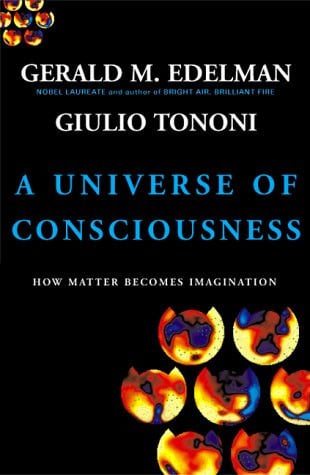
A universe of consciousness: how matter becomes imagination

Edelman, Gerald Maurice
In A Universe of Consciousness, Gerald Edelman builds on the radical ideas he introduced in his monumental trilogy-Neural Darwinism, Topobiology, and The Remembered Present-to present for the first time an empirically supported full-scale theory of consciousness. He and the neurobiolgist Giulio Tononi show how they use ingenious technology to detect the most minute brain currents and to identify the specific brain waves that correlate with particular conscious experiences. The results of this pioneering work challenge the conventional wisdom about consciousness.
Basic Books 2000 274 pages

Brain Imaging - An Illustrated Guide to the Future of Neuroscience

Moran Cerf
Can we download our consciousness, and if so where should the backup be stored? Why is it that we can drive tired, but not drunk (when sleepiness has caused many more accidents)? What senses would we want to add if we could expand our perception? What types of crimes might we face in an era of neural implants? What would learning look like if humans could transmit thoughts across brains? How can we improve (/ruin) relationships, sex, and intimacy using cross-brain communication? And what can the business world do as it prepares for a world of mind reading? Those and other issues that are at the forefront of current neuroscience research are addressed in a sequence of comical and thought-provoking illustrations by Moran Cerf, professor of neuroscience and business. This graphical visualization of our future makes readers of all ages - kids and adults alike - laugh, and then think.
Mindcraft 2025-05-20 84 pages

The social neuroscience of empathy

Jean Decety
In recent decades, empathy research has blossomed into a vibrant and multidisciplinary field of study. The social neuroscience approach to the subject is premised on the idea that studying empathy at multiple levels (biological, cognitive, and social) will lead to a more comprehensive understanding of how other people's thoughts and feelings can affect our own thoughts, feelings, and behavior. In these cutting-edge contributions, leading advocates of the multilevel approach view empathy from the perspectives of social, cognitive, developmental, and clinical psychology and cognitive/affective neuroscience. Chapters include a critical examination of the various definitions of the empathy construct; surveys of major research traditions based on these differing views (including empathy as emotional contagion, as the projection of one's own thoughts and feelings, and as a fundamental aspect of social development); clinical and applied perspectives, including psychotherapy and the study of empathy for other people's pain; various neuroscience perspectives; and discussions of empathy's evolutionary and neuroanatomical histories, with a special focus on neuroanatomical continuities and differences across the phylogenetic spectrum. The new discipline of social neuroscience bridges disciplines and levels of analysis. In this volume, the contributors' state-of-the-art investigations of empathy from a social neuroscience perspective vividly illustrate the potential benefits of such cross-disciplinary integration. Contributors : C. Daniel Batson, R. J. R. Blair, Karina S. Blair, Jerold D. Bozarth, Ann Buysse, Susan F. Butler, Michael Carlin, C. Sue Carter, Kenneth D. Craig, Mirella Dapretto, Jean Decety, Mathias Dekeyser, Ap Dijksterhuis, Robert Elliott, Natalie D. Eggum, Nancy Eisenberg, Norma Deitch Feshbach, Seymour Feshbach, Liesbet Goubert, Leslie S. Greenberg, Elaine Hatfield, James Harris, William Ickes, Claus Lamm, Yen-Chi Le, Mia Leijssen, Raymond S. Nickerson, Jennifer H. Pfeifer, Stephen W. Porges, Richard L. Rapson, Simone G. Shamay-Tsoory, Rick B. van Baaren, Matthijs L. van Leeuwen, Andries van der Leij, Jeanne C. Watson Social Neuroscience series
MIT Press 2009 255 pages

Of minds and language: a dialogue with Noam Chomsky in the Basque country

Chomsky, Noam
This book presents a state-of-the-art account of what we know and would like to know about language, mind, and brain. Chapters by leading researchers in linguistics, psycholinguistics, language acquisition, cognitive neuroscience, comparative cognitive psychology, and evolutionary biology are framed by an introduction and conclusion by Noam Chomsky, who places the biolinguistic enterprise in an historical context and helps define its agenda for the future. The questions explored include: What is our tacit knowledge of language? What is the faculty of language? How does it develop in the individual? How is that knowledge put to use? How is it implemented in the brain? How did that knowledge emerge in the species? The book includes the contributor's key discussions, which dramatically bring to life their enthusiasm for the enterprise and skill in communicating across disciplines. Everyone seriously interested in how language works and why it works the way it does are certain to find, if not all the answers, then a convincing, productive, and lively approach to the endeavour.
Oxford university press 2010-10-07 459 pages

Know how

Stanley, Jason
The goal of inquiry is to acquire knowledge of truths about the world. In this book, Jason Stanley argues that knowing how to do something amounts to knowing a truth about the world. When you learned how to swim, what happened is that you learned some truths about swimming. Knowledge of these truths is what gave you knowledge of how to swim. Something similar occurred with every other activity that you now know how to do, such as riding a bicycle or cooking a meal. Of course, when you learned how to swim, you didn't learn just any truth about swimming. You learned a special kind of truth about swimming, one that answers the question, 'How could you swim?' Know How develops an account of the kinds of answers to questions, knowledge of which explains skilled action. Drawing on work in epistemology, philosophy of mind, ethics, action theory, philosophy of language, linguistic semantics, and cognitive neuroscience, Stanley presents a powerful case that it is our success as inquirers that explains our capacity for skilful engagement with the world.
Oxford University Press 2013-07-18 201 pages

Why knowledge matters: rescuing our children from failed educational theories

Hirsch, E. D.
In this provocative book, influential scholar E.D. Hirsch, Jr., addresses critical issues in contemporary education reform - over-testing, teacher blaming, preschool fadeout, and the persistence of achievement gaps over time. In each case, he shows how cherished truisms about education and child development have led to unintended and negative consequences. Drawing on recent findings in neuroscience and new data from France, he provides new evidence for the argument that a coherent, knowledge-based elementary curriculum is essential to providing the foundations for children's life success and ensuring equal opportunity for students of all backgrounds.
Harvard Education Press 2016 270 pages

The paradigm shift to multimodality in contemporary computer interfaces

Oviatt, Sharon,Cohen, Philip R.
During the last decade, cell phones with multimodal interfaces based on combined new media have become the dominant computer interface worldwide. Multimodal interfaces support mobility and expand the expressive power of human input to computers. They have shifted the fulcrum of human-computer interaction much closer to the human. This book explains the foundation of human-centered multimodal interaction and interface design, based on the cognitive and neurosciences, as well as the major benefits of multimodal interfaces for human cognition and performance. It describes the data-intensive methodologies used to envision, prototype, and evaluate new multimodal interfaces. From a system development viewpoint, this book outlines major approaches for multimodal signal processing, fusion, architectures, and techniques for robustly interpreting users' meaning. Multimodal interfaces have been commercialized extensively for field and mobile applications during the last decade. Research also is growing rapidly in areas like multimodal data analytics, affect recognition, accessible interfaces, embedded and robotic interfaces, machine learning and new hybrid processing approaches, and similar topics. The expansion of multimodal interfaces is part of the long-term evolution of more expressively powerful input to computers, a trend that will substantially improve support for human cognition and performance.
Morgan & Claypool Publishers 2015 221 pages

Second nature: brain science and human knowledge

Edelman, Gerald M.
Burgeoning advancements in brain science are opening up new perspectives on how we acquire knowledge. Indeed, it is now possible to explore consciousness the very center of human concern by scientific means. In this illuminating book, Dr. Gerald M. Edelman offers a new theory of knowledge based on striking scientific findings about how the brain works. And he addresses the related compelling question: Does the latest research imply that all knowledge can be reduced to scientific description? Edelman s brain-based approach to knowledge has rich implications for our understanding of creativity, of the normal and abnormal functioning of the brain, and of the connections among the different ways we have of knowing. While the gulf between science and the humanities and their respective views of the world has seemed enormous in the past, the author shows that their differences can be dissolved by considering their origins in brain functions. He foresees a day when brain-based devices will be conscious, and he reflects on this and other fascinating ideas about how we come to know the world and ourselves.
Yale University Press 2006-10-24 203 pages

The Mindful Brain Cortical Organization and the Group-Selective Theory of Higher Brain Function

Gerald M. Edelman,Vernon B. Mountcastle
A proposal by two eminent biological scientists for a mechanism whereby mind becomes manifest from the operations of brain tissue. This significant contribution to neuroscience consists of two papers, the first by Mountcastle an, the second by Edelman. Between them, they examine from different but complementary directions the relationships that connect the higher brain—memory, learning, perception, thinking—with what goes on at the most basic levels of neural activity, with particular stress on the role of local neuronal circuits.Edelman's major hypothesis is that "the conscious state results from phasic reentrant signaling occurring in parallel processes that involve associations between stored patterns and current sensory or internal input." This selective process occurs by the polling of degenerate primary repertoires of neuronal groups that are formed during embryogenesis and development. Edelman's theory extrapolates to the brain the selectionistic immunological theories for which he was awarded the 1972 Nobel Prize in Physiology or Medicine. Mountcastle's paper reviews what is known about the actual structure of various parts of the neo cortex. He relates the large entities of the neocortex to their component modules—the local neuronal circuits—and shows how the complex interrelationships of such a distributed system can yield dynamic distributed functioning. There are strong conceptual parallels between Mountcastle's idea of cortical columns and their functional subunits and Edelman's concept of populations of neurons functioning as processors in a brain system based on selectional rather than instructional principles. These parallels are traced and put into perspective in Francis Schmitt's Introduction.
MIT Press 1982-03-30 106 pages

Mind wars: brain research and national defense

Moreno, Jonathan D.
In his fascinating new book, Jonathan D. Moreno investigates the deeply intertwined worlds of cutting-edge brain science, U.S. defense agencies, and a volatile geopolitical landscape where a nation's weaponry must go far beyond bombs and men. The first-ever exploration of the connections between national security and brain research, Mind Wars: Brain Research and National Defense reveals how many questions crowd this gray intersection of science and government and urges us to begin to answer them. From neuropharmacology to neural imaging to brain-machine interface devices that relay images and sounds between human brains and machines, Moreno shows how national security entities seek to harness the human nervous system in a multitude of ways as a potent weapon against the enemy soldier. Moreno charts such projects as monkeys moving robotic arms with their minds, technology to read the brain’s thought patterns at a distance, the development of "anti-sleep" drugs to enhance soldiers’ battle performance and others to dampen their emotional reactions to the violence, and advances that could open the door to "neuroweapons"—virus-transported molecules to addle the brain. "As new kinds of weapons are added to the arsenal already at the disposal of fallible human leaders," Moreno writes, "we need to find new ways to address the problem"--of the ethical military application of so powerful and intimate a science. This book is the first step in confronting the quandaries inherent in this partnership of government and neuroscience, serves as a compelling wake-up call for scientists and citizens, and suggests that, with imagination, we might meet the needs of both security and civil liberty.
Dana Press 2006-11-17 210 pages

The view from afar

Lévi-Strauss, Claude
This collection touches on a wide range of anthropological issues, including family and marriage, myths, and rites, the environment and its representation, and constraint and freedom. The essays encompass more than forty years of analysis and constrain arguments that are as relevant today as they were thirty years ago. "Hardly a field remains untouched—sociobiology, linguistics, botany, genetics, psychiatry, esthetics, ecology, politics, neuroscience, education, morality, psychology. . . . It's all breathtaking and alarming, some of it wonderful, some of it ridiculous. . . . At times the experience is exhilarating."—Richard A. Shweder, New York Times Book Review
University of Chicago Press 1992-12 311 pages

Scientists making a difference: one hundred eminent behavioral and brain scientists talk about their most important contributions

Robert J. Sternberg,Susan T. Fiske,Donald J. Foss
Scientists Making a Difference is a fascinating collection of first-person narratives from the top psychological scientists of the modern era. These readable essays highlight the most important contributions to theory and research in psychological science, show how the greatest psychological scientists formulate and think about their work, and illustrate how their ideas develop over time. In particular, the authors address what they consider their most important scientific contribution, how they got the idea, how the idea matters for the world beyond academic psychology, and what they would like to see as the next steps in research. The contributors, who were chosen from an objectively compiled list of the most eminent psychological scientists, provide a broad range of insightful perspectives. This book is essential reading for students, researchers and professionals interested in learning about the development of the biggest ideas in modern psychological science, described firsthand by the scientists themselves.
Cambridge University Press 2016-08-15 512 pages

Twentieth century neurology: the British contribution

Frank Clifford Rose
Neuroscience is one of the scientific fields where progress in the 20th century has been spectacular. With the coming of the new millennium, it is appropriate to look at some of the advances and the neurologists who helped to produce them. The original contributions in this volume reflect the background against which the rapid advances have taken place in the past 100 years.
Imperial College Press 2001 313 pages

Wider than the sky: the phenomenal gift of consciousness

Edelman, Gerald M.
A neuroscientist demystifies the subject of consciousness in this up-to-date discussion of mind-body connections. How does the firing of neurons give rise to subjective sensations, thoughts, and emotions? How can the disparate domains of mind and body be reconciled? The quest for a scientifically based understanding of consciousness has attracted study and speculation across the ages. In this direct and non-technical discussion of consciousness, Dr. Gerald M. Edelman draws on a lifetime of scientific inquiry into the workings of the brain to formulate answers to the mind-body questions that intrigue every thinking person. Concise and understandable, the book explains pertinent findings of modern neuroscience and describes how consciousness arises in complex brains. Edelman explores the relation of consciousness to causation, to evolution, to the development of the self, and to the origins of feelings, learning, and memory. His analysis of the brain activities underlying consciousness is based on recent remarkable advances in biochemistry, immunology, medical imaging, neuroscience, and evolutionary biology, yet the implications of his book extend farther--beyond the worlds of science and medicine into virtually every area of human inquiry.
Yale University Press 2004-01-01 201 pages

The test: why our schools are obsessed with standardized testing - but you don't have to be

Kamenetz, Anya
"[The anti-testing] movement now has a guidebook. . . . Kamenetz shows how fundamentally American it would be to move toward a more holistic system." - New York Times Book Review The Test is an essential and critically acclaimed book for any parent confounded by our national obsession with standardized testing. It recounts the shocking history and tempestuous politics of testing and borrows strategies from fields as diverse as games, neuroscience, and ancient philosophy to help children cope. It presents the stories of families, teachers, and schools maneuvering within and beyond the existing educational system, playing and winning the testing game. And it points the way toward a hopeful future of better tests and happier kids.
PublicAffairs 2016-01-05 272 pages