58,196 results in 0.07 seconds

Jackie Robinson and the Integration of Baseball

Scott Simon
"An extraordinary book . . . invitingly written and brisk." --Chicago Tribune "Perhaps no one has ever told the tale [of Robinson's arrival in the major leagues] so well as [Simon] does in this extended essay." --The Washington Post Book World "Scott Simon tells a compelling story of risk and sacrifice, profound ugliness and profound grace, defiance and almost unimaginable courage. This is a meticulously researched, insightful, beautifully written book, one that should be read, reread, and remembered." --Laura Hillenbrand, author of the New York Times bestseller Seabiscuit The integration of baseball in 1947 had undeniable significance for the civil rights movement and American history. Thanks to Jackie Robinson, a barrier that had once been believed to be permanent was shattered--paving the way for scores of African Americans who wanted nothing more than to be granted the same rights as any other human being. In this book, renowned broadcaster Scott Simon reveals how Robinson's heroism brought the country face-to-face with the question of racial equality. From his days in the army to his ascent to the major leagues, Robinson battled bigotry at every turn. Simon deftly traces the journey of the rookie who became Rookie of the Year, recalling the taunts and threats, the stolen bases and the slides to home plate, the trials and triumphs. Robinson's number, 42, has been retired by every club in major league baseball--in homage to the man who had to hang his first Brooklyn Dodgers uniform on a hook rather than in a locker.
Wiley 2007-03-23 180 pages

When March Went Mad The Game That Transformed Basketball

Seth Davis
"A must-read for anybody who considers themselves a basketball fan."—Michael Wilbon, The Washington Post On March 26, 1979, basketball as we know it was born. The NCAA championship game played that day launched an epic rivalry between two exceptional players: Earvin "Magic" Johnson and Larry Bird. Though they played each other only once as college athletes, that game transformed the NCAA tournament into a multibillion-dollar enterprise and laid the foundation for the resurgence of the NBA. To this day it remains the highest-rated basketball game, college or pro, in the history of television. In the national bestseller When March Went Mad , Seth Davis recounts the dramatic story of the season leading up to that game, as Johnson's Michigan State Spartans and Bird's Indiana State Sycamores overcame long odds and great doubts to reach the game's grandest stage. Davis also tells the stories of their remarkable coaches, Jud Heathcote and Bill Hodges, and he shows how tensions over race and class heightened the drama of the competition. Davis combed through several years' worth of newspaper and magazine coverage, interviewed nearly one hundred people, and watched dozens of games to reconstruct the colorful, historic, and improbable narrative of how Larry Bird and Magic Johnson burst on the scene—a coming-of-age story that continues to resonate. The Final Four, the NBA, and the game of basketball have never been the same.
St. Martin's Publishing Group 2010-02-02 352 pages

Unholy Night

Seth Grahame-Smith
From the author of the New York Times bestselling Abraham Lincoln: Vampire Hunter, comes UNHOLY NIGHT, the next evolution in dark historical revisionism. They're an iconic part of history's most celebrated birth. But what do we really know about the Three Kings of the Nativity, besides the fact that they followed a star to Bethlehem bearing strange gifts? The Bible has little to say about this enigmatic trio. But leave it to Seth Grahame-Smith, the brilliant and twisted mind behind Abraham Lincoln: Vampire Hunter and Pride and Prejudice and Zombies to take a little mystery, bend a little history, and weave an epic tale. In Grahame-Smith's telling, the so-called "Three Wise Men" are infamous thieves, led by the dark, murderous Balthazar. After a daring escape from Herod's prison, they stumble upon the famous manger and its newborn king. The last thing Balthazar needs is to be slowed down by young Joseph, Mary and their infant. But when Herod's men begin to slaughter the first born in Judea, he has no choice but to help them escape to Egypt. It's the beginning of an adventure that will see them fight the last magical creatures of the Old Testament; cross paths with biblical figures like Pontius Pilate and John the Baptist; and finally deliver them to Egypt. It may just be the greatest story never told.
Grand Central Publishing 2012-11-13 352 pages

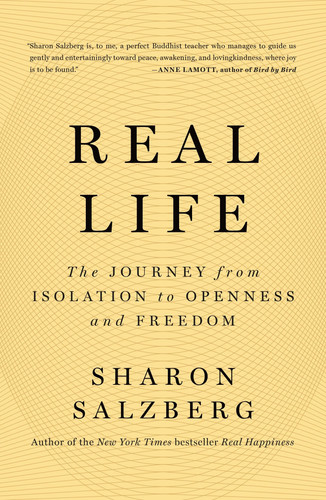
Finding your way: meditations, thoughts, and wisdom for living an authentic life

Salzberg, Sharon
"SHARON SALZBERG, one of the world's most renowned and beloved meditation teachers, distills the wisdom that's come from decades of helping people navigate the daily challenges of life into this true gift of a book. On every page, discover inspiration for you next step, and then the step after, no matter where your path is taking you. Here are reflections to help you shift perspective. Prompts that expand mindfulness. Affirmations to bring compassion into focus. Meditation techniques designed to be simple, immediate, heart-opening. Remarks from conversations with other wisdom teachers that resonate long after the talking"--
Workman Publishing 2023 106 pages

The second self: computers and the human spirit

Turkle, Sherry
"In The Second Self, Sherry Turkle looks at the computer not as a 'tool,' but as part of our social and psychological lives; she looks beyond how we use computer games and spreadsheets to explore how the computer affects our awareness of ourselves, of one another, and of our relationship with the world. 'Technology,' she writes, 'catalyzes changes not only in what we do but in how we think.' First published in 1984, The Second Self is still essential reading as a primer in the psychology of computation. This twentieth anniversary edition allows us to reconsider two decades of computer culture - to (re)experience what was and is most novel in our new media culture and to view our own contemporary relationship with technology with fresh eyes. Turkle frames this classic work with a new introduction, a new epilogue, and extensive notes added to the original text. Turkle talks to children, college students, engineers, AI scientists, hackers, and personal computer owners - people confronting machines that seem to think and at the same time suggest a new way for us to think - about human thought, emotion, memory, and understanding. Her interviews reveal that we experience computers as being on the border between inanimate and animate, as both an extension of the self and part of the external world. Their special place betwixt and between traditional categories is part of what makes them compelling and evocative. (In the introduction to this edition, Turkle quotes a PDA user as saying, 'When my Palm crashed, it was like a death. I thought I had lost my mind.') Why we think of the workings of a machine in psychological terms - how this happens, and what it means for all of us - is the ever more timely subject of The Second Self." -
MIT Press 2005-09-30 372 pages

After 9/11: America's war on terror (2001-)

Jacobson, Sid
Having made The 9/11 Commission Report understandable for everyone, the award-winning, bestselling graphic novel team of Sid Jacobson and Ernie Colón use all their considerable talents to explain the post-9/11 world. Working from news reports drawn from multiple international media, Jacobson and Colón depict the critical events, decision makers, and consequences of America's "war on terror," and, most important, the context in which the war began, unfolded, and unraveled. The most demanding story they have ever tackled, After 9/11 is also the most tailor-made for their medium, capturing simultaneous events, geographic complexity, numerous participants, and a vast array of economic, statistical, and quantitative information—compellingly told through the sequential panel art narrative form unique to graphic books. Proving yet again that graphic novels best meet the challenge of giving the most information with the least amount of ink, Jacobson and Colón answer with clarity and unforgettable imagery the question: How the hell did we end up where we are?
Hill and Wang 2008-08-19 28 pages