58,196 results in 0.08 seconds

The optimism bias: a tour of the irrationally positive brain

Sharot, Tali
From one of the most innovative neuroscientists at work today, an investigation into the bias toward optimism that exists on a neural level in our brains and plays a major part in determining how we live our lives. Psychologists have long been aware that most people maintain an often irrationally positive outlook on life. In fact, optimism may be crucial to our existence. Tali Sharot’s experiments, research, and findings in cognitive science have contributed to an increased understanding of the biological basis of optimism. In this fascinating exploration, she takes an in-depth, clarifying look at how the brain generates hope and what happens when it fails; how the brains of optimists and pessimists differ; why we are terrible at predicting what will make us happy; how emotions strengthen our ability to recollect; how anticipation and dread affect us; and how our optimistic illusions affect our financial, professional, and emotional decisions. With its cutting-edge science and its wide-ranging and accessible narrative, The Optimism Bias provides us with startling new insight into the workings of the brain.
Pantheon Books 2011-06-14 245 pages

The new Golden bough: A new abridgment of the classic work

Frazer, Sir James George; Gaster, Theodor H. (ed and abridger)
A Good Reading Copy - Book Is In Very Good Condition. Boards Have A Light Amount Of Shelf Wear/Rub, A Bit Bumped. Fore Edges Have A Moderate Amount Of Reading Wear. White Out To Ffep. Interior Is Clean And Legible. Not Remaindered. Dust Jacket Is In Very Good Condition. Small Amount Of Chip And Crinkle Along The Edges. Not Price Clipped. Dust Jacket Is Covered By Mylar Wrapper. Thanks And Enjoy.
Criterion Books 1959 738 pages

Against epistemology: a metacritique : studies in Husserl and the phenomenological antinomies

Adorno, Theodor W.
Theodor Adorno (1903-1969) was a cultural philosopher, sociologist, literary critic, and historian of music who, along with Max Horkheimer, Herbert Marcuse, and Erich Fromm, founded the Frankfurt School. Against Epistemology is one of his most important works. It inspired Habermas and Marcuse and continues to influence other eminent thinkers in philosophy and the social sciences today. Against Epistemology is in essence a long essay against Western metaphysics or, as Adorno put it, "the lordship of the subject." Traditional philosophy, he noted, leads in practice to fascism. In this book, he combines analytic philosophy, social theory, and cultural criticism to try to show how epistemology betrays experience, using Husserl's work as a concrete model.
MIT Press 1983 248 pages

Critical models: interventions and catchwords

Adorno, Theodor W.
"Critical Models combines into a single volume two of Adorno's most important postwar works — Interventions: Nine Critical Models (1963) and Catchwords: Critical Models II (1969). Written after his return to Germany in 1949, the articles, essays, and radio talks included in this volume speak to the pressing political, cultural, and philosophical concerns of the postwar era. The pieces in Critical Models reflect the intellectually provocative as well as the practical Adorno as he addresses such issues as the dangers of ideological conformity, the fragility of democracy, educational reform, the influence of television and radio, and the aftermath of fascism. This new edition includes an introduction by Lydia Goehr, a renowned scholar in philosophy, aesthetic theory, and musicology. Goehr illuminates Adorno's ideas as well as the intellectual, historical, and critical contexts that shaped his postwar thinking"
Columbia University Press 2005 410 pages

In search of Wagner

Adorno, Theodor W.
Written in exile from Germany, this potent study of Europe’s most controversial composer explodes the frontiers of musical and cultural analysis. Measuring key elements of Wagner’s oeuvre with patent musical dexterity, Adorno sheds light on a nineteenth-century bourgeois figure whose operas betray the social gestures and high-culture fantasies that helped plant the seeds of the modern Culture Industry. A foreword by Slavoj Žižek situates Adorno’s reflections within present debates over Wagner’s anti-Semitism and the moral status of his work, proving why this book remains one of the most important character studies of the twentieth century.
Verso 2009-06-09 148 pages

International human rights in a nutshell

Buergenthal, Thomas,Shelton, Dinah,Stewart, David P.,Vázquez, Carlos M.
"[This book provides an] ... overview of the international, regional and domestic human rights systems. Reviews recent developments in the field, including in the UN, European, OAS and African human rights systems and the adoption of new conventions such as those on forced disappearances and persons with disabilities. Includes chapters on the treatment of human rights treaties and norms within the U.S. legal system as well as on the role of non-governmental human rights organizations. Discover the history behind international human rights, including the institutional context from which they evolved."--
West Academic Publishing 2017 553 pages

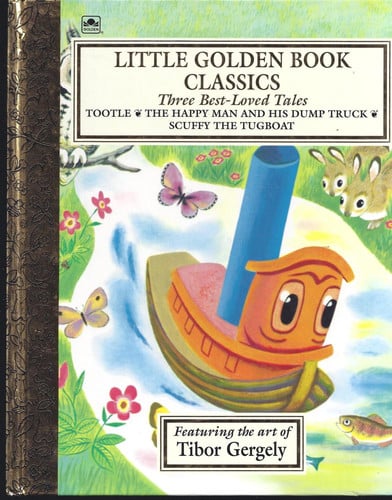
Three Best-Loved Tales Tootle; The Happy Man and His Dump Truck; Scuffy the Tugboat

Gergely, Tibor
Tootle, the baby locomotive, goes to the village of Lower Trainswitch to learn how to become a working locomotive. A man with a dump truck takes all of his friends for a ride and lets them use his dumper for a slide. Tuffy sails down a stream, into the river, and finally into the ocean, where he is rescued by the man with polka-dot tie.
Random House Children's Books 1992-07 80 pages

The Serbs: history, myth and the destruction of Yugoslavia

Judah, Tim
Journalist Timothy Judah witnessed firsthand many of the most horrifying episodes of the war in former Yugoslavia while on assignment from 1990-1995. Judah offers here a history of the Serbs from medieval times to the present, combining a gripping personal description of the war with a skillful analysis of the historical and cultural context out of which it emerged. For this paperback edition Judah adds observations on the emergence of a more moderate Bosnian Serb leadership, and on the worrying signs of a possible new war, this time in Kosovo.
Yale University Press 2000-01-01 382 pages

Dear White America: letter to a new minority

Wise, Tim J.
""Sparing neither family nor self he considers how the deck has always been stacked in his and other white people's favor. His candor is invigorating."-Publishers Weekly" One of the most brilliant, articulate and courageous critics of white privilege in the nation."-Michael Eric Dyson The old notion that "being white means never having to think about it" is being challenged on all fronts as whites are increasingly having to wrestle with what it means to be part of a fast-changing, culturally diverse nation. In Dear White America Tim Wise directly addresses white people's growing concerns about political, cultural, and community-level shifts displacing their power and privilege. Wise examines the perfect storm of events fueling white anxiety: the election of a black president, economic insecurity at a level unseen by whites as a group in seventy-five years, a popular culture that reflects the nation's growing multicultural reality, and demographic shifts that make it increasingly difficult for whites-who have long been able to see themselves as the prototypical American-to continue to view themselves as the norm. Through stories, anecdotes, and analysis, Wise taps current trends and addresses how to move forward as a unified, diverse, and vibrant democracy.Tim Wise is one of the most prominent antiracist essayists, educators, and activists in the United States. He is regularly interviewed by A-list media, including CNN, C-SPAN, The Tavis Smiley Show, The Tom Joyner Morning Show, Michael Eric Dyson's radio program, and many more. His most recent books include Colorblind and Between Barack and a Hard Place"--
City Lights Books 2012-01-10 189 pages

Join the club: how peer pressure can transform the world

Rosenberg, Tina
"Empowering . . . sweepingly ambitious . . . . Rosenberg's case studies are as different as they are fascinating . . . A brilliant book." —Abraham Verghese, Newsweek A winner of the National Book Award and the Pulitzer Prize, Tina Rosenberg has spent her career tackling some of the world’s hardest problems. Now, through striking stories from around the globe, Rosenberg shows how positive peer pressure can change people’s behavior and solve seemingly intractable social quandaries. In every case, pioneering social entrepreneurs throw out the old models for social change in favor of humanity’s most powerful and abundant resource: our connections with one another. The result is one of those rare books that will not only revolutionize the way you look at the world but also give you the power to change it.
Norton 2011 402 pages