3040 results for "Biography"

Rahel Varnhagen: the life of a Jewish woman

Arendt, Hannah
"Rahel Varnhagen: The Life of a Jewish Woman was Hannah Arendt's first book, largely completed when she went into exile from Germany in 1933, though it would not be published until the 1950s. It is the biography of a remarkable, complicated, troubled, passionate woman, an important figure in German romanticism, the person who in a sense founded the Goethe cult that would become central to German cutural life in the nineteenth century, as well as someone who confronted and bore the burden of being both a woman in a man's world and an assimilated Jew in Germany with unusual determination. Rahel Levin Varnhagen, was, Hannah Arendt writes, "neither beautiful nor attractive... and possessed no talents with which to employ her extraordinary intelligence and passionate originality." Arendt sets out to tell the story of Rahel's life as Rahel might have told it and, in doing so, to reveal the way in which intellectual and social assimilation works out in one person's destiny. On her deathbed Rahel is reported to have said, "The thing which all my life seemed to me the greatest shame, which was the misery and misfortune of my life--having been born a Jewess--this I should on no account now wish to have missed." Only because she had remained both a Jew and a pariah, Hannah Arendt observes, "did she find a place in the history of European humanity.""--
New York Review Books 2021 236 pages

Shoemaker by Levy: the man who made an impact

Levy, David H.
It was a lucky twist of fate when in the early1980s David Levy, a writer and amateur astronomer, joined up with the famous scientist Eugene Shoemaker and his wife, Carolyn, to search for comets from an observation post on Palomar Mountain in Southern California. Their collaboration would lead to the 1993 discovery of the most remarkable comet ever recorded, Shoemaker-Levy 9, with its several nuclei, five tails, and two sheets of debris spread out in its orbit plane. A year later, Levy would be by the Shoemakers' side again when their comet ended its four-billion-year-long journey through the solar system and collided with Jupiter in the most stunning astronomical display of the century. Not only did this collision revolutionize our understanding of the history of the solar system, but it also offered a spectacular confirmation of one scientist's life work. As a close friend and colleague of Shoemaker (who died in 1997 at the age of 69), Levy offers a uniquely insightful account of his life and the way it has shaped our thinking about the universe. Early in his training as a geologist, Shoemaker suspected that it wasn't volcanic activity but rather collisions with comets and asteroids that created most of the craters on the moon and most other bodies in the solar system. Convincing the scientific community of the plausibility of impact theory, and revealing its power for penetrating mysteries such as the extinction of the dinosaurs and the timing of the Earth's eventual demise, became Shoemaker's mission. Through conversations with Shoemaker and his family, Levy reconstructs the journey that began with a young geologist's serious desire to go to the moon in the late1940s. Sent by the government to find a way to harvest plutonium, Shoemaker instead found evidence in desert craters for what became his impact theory. While he never became an astronaut, he did become the first geologist hired by NASA and subsequently set the research agenda for the first manned lunar landing. After a series of victories and setbacks for Shoemaker, the collision of Shoemaker-Levy 9 with Jupiter provided the most convincing proof to date of the role of impacts in our solar system. Levy's explanation of the scientific reasoning that guided Shoemaker in his career up to this dramatic point--as well as his personal portrait of a man who found white-water rafting to be an easy way to relax--sets these fascinating events in a human scale. This biography shows what Shoemaker's legacy will be for our understanding of the story of the Earth well into the twenty-first century. -- "Scientific American"
Princeton University Press 2000 303 pages

Icon of evil: Hitler's Mufti and the rise of radical Islam

Dalin, David G.
A political biography of Haj Amin al-Husaini (1895-1974), the Palestinian Arab nationalist leader and one-time Mufti of Jerusalem. Husaini adopted aggressive antisemitism in his youth, while studying in Cairo. He bears responsibility for the bloody anti-Jewish riots in the Land of Israel in 1920, 1921, and 1929, and was an instigator of the Arab revolt of 1936-39 in the country. In the 1930s he was close with Nazi leaders, with whom he shared extreme antisemitism and the goal of annihilation of the Jews. In the 1940s Husaini was instrumental in the establishment of pro-Nazi Muslim military formations in Europe, among them the Bosnian SS division "Handschar", which killed 12,600 Bosnian Jews. Argues that Husaini's legacy is alive in the modern Muslim world. He was the link between World War II antisemitism and the modern Islamic one, as well as a founding father of radical Islamic antisemitism. Dwells on the latter, which adopted from the West belief in the "Protocols of the Elders of Zion", blood libels, Holocaust denial, etc.
Transaction Publishers 2009 227 pages

Madiba A to Z: the many faces of Nelson Mandela

Schechter, Danny
From the makers of the major motion picture Mandela: Long Walk to Freedom, a completely unique biography and thematic telling of the story of Nelson Mandela. This book, which provided key source material for the film, is an unexpurgated collection of the views and opinions of South Africa's first Black president, and it draws on Danny Schechter’s forty-year relationship with "Madiba," as Nelson Mandela is known in his native South Africa. Each chapter of this unique portrait corresponds to a letter of the alphabet, and the letters cover major and minor, unexpected and fascinating themes in Mandela’s life and his impact on others: Athlete, Bully, Comrade, Forgiveness, Indigenous, Jailed, Militant, and President, to name a few. The book quotes liberally from Mandela himself, his ex-wives and other family members, global leaders, Mandela's cellmates and guards on Robben Island, the team behind Mandela: Long Walk to Freedom , former president F. W. de Klerk, members of the South African Police, and his comrades including his successor Thabo Mbeki. Madiba A to Z reveals sides of Nelson Mandela that are not often discussed and angles of the anti-apartheid movement that most choose to brush under the table in order to focus on the happy-ending version of the story. As Schechter reports in the book, according to Mandela's successor as president of South Africa, Thabo Mbeki, “the fundamental problems of South Africa, poverty, inequality, have remained unchanged since 1994.” This is partly because, as Schechter writes, “six months before the 1994 elections, when South Africa was being governed jointly by the ANC and the National Party under a Transitional Executive Council (TEC), there were secret negotiations about the economic future.” There are many rarely spoken of revelations in Madiba A to Z , a book about Mandela’s brilliance, his courage, his tremendous impact in saving his country and its people of all races, but one that also shows how far South Africa still has to go.
Seven Stories Press 2013-11-26 272 pages

Linda McCartney

Fields, Danny
Linda McCartney died of breast cancer in April 1998. This biography by a friend of over 30 years offers to bring the whole Linda McCartney into view. In 1969, when Linda Eastman married the world's most eligible bachelor, The Beatles' Paul McCartney people said it wouldn't last. Yet it lasted nearly 30 years. How did they do it? What was the nature of their commitment, and what made it so strong? Was it indeed as idyllic as the press has defined it. In their own words, Linda and Paul reveal to Danny Fields how a romance given a poor chance of survival, flourished until Linda's death. Interviews with the couple, with friends, family and stars of the world they lived in, and the perspective of a 30-year intense friendship have gone into the writing of the book, intended to both inform and inspire.
Warner Books 2001 280 pages

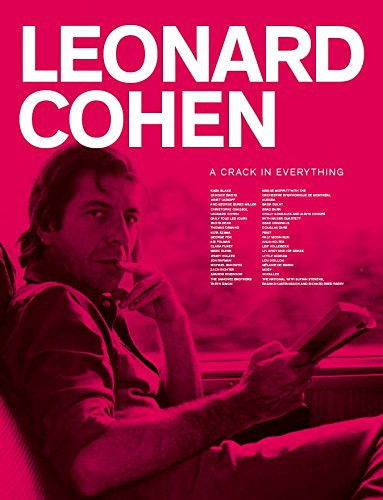
Leonard Cohen: a crack in everything

Victor Shiffman,Sylvie Simmons,Chantal Ringuet,John Zeppetelli
The world-renowned novelist, poet and singer/songwriter inspired generations of writers, musicians and artists. For decades, Leonard Cohen tenaciously supplied the world with melancholy but urgent observations on the state of the human heart. With equal parts gravitas and grace, he teased out a startlingly inventive and singular language, depicting both an exalted spirituality and an earthly sexuality. His interweaving of the sacred and the profane, of mystery and accessibility, was such a compelling combination it became seared into memory. Situated between monograph and devotional exercise, this visually striking publication documents a unique exhibition and pays homage to a global star's enormous cultural achievements. Visual artists, filmmakers, performers and musicians from around the world revisit Cohen's words, songs, and biography with new perspectives. Cohen himself makes an appearance as a visual artist with a projection of his many self-portraits. Co-curators John Zeppetelli and Victor Shiffman discuss the two years that went into bringing the ambitious event to fruition, from its original conception as a celebration to its final form of a tribute suffused in elegy. Cohen biographer Sylvie Simmons reviews Cohen's career from early promise to unexpected paths, through set-backs, and onto its astounding culmination. Chantal Ringuet draws upon specific moments in Cohen's life from early childhood to his last writings where he seems to be reciting his own Kaddish, the Jewish prayer for the dead. Also featured are artist statements from each of the 40 participants.
Musée d'art contemporain 2018 160 pages

Growing: seven years in Ceylon

Woolf, Leonard
Growing is a portrait of a young man sent straight out from university to help govern Ceylon. It is doubtful that any Empire at any time has been served by such an intelligent, dutiful, hardworking and incorruptible civil servant as the young Leonard Woolf. He was determined to do what was good but discovered for himself that colonial rule, be it ever so high-minded, is fated to do wrong. Growing is also a deeply affectionate account of the mystery, magic and savage beauty of Ceylon at the turn of the century, an island whose diverse beliefs and cultures Woolf had the time and wit to explore in detail.
Eland 2015 206 pages

The Republican Roosevelt

Blum, John Morton
This is a book about politics and politicians; about elections, lawmaking, governing, and how they work. It is also about power, its increasing concentration in American society, and its implications at home and abroad especially for those who exercise it. It is a book about the Republican Party during the period in which it developed the forces and frictions which still characterize it today. Finally, it is a book about a remarkably successful and vibrant man who contained within himself much of the best and the worst of his environment, who contributed generously to American life, who knew in his time disappointment, temptation, and pain, but also glory; a man remembered most by his intimates for the "fun of him." The author is in an enviable position to assess these matters. During five years as Associate Editor of The Letters of Theodore Roosevelt , he read and studied all TR's letters as well as all his published works, and delved deeply into the relevant literature of the period, including the vast material in the Congressional Record. From this rich store, John Morton Blum has drawn a new interpretation of Roosevelt the conservative, Roosevelt the professional Republican politician and Roosevelt the leader of men. He presents new material on Roosevelt's work as the manager of the Republican Party and as manager of Congress. He relates Roosevelt's roles in these situations to his conduct of foreign policy-a foreign policy so anticipatory of that of contemporary America-and to his Progressiveness-a doctrine of government with strong affinities to both the New Deal and the New Crusade.
Harvard University Press 1977 170 pages

The earth chronicles expeditions: journeys to the mythical past

Sitchin, Zecharia
Zecharia Sitchin’s autobiographical recounting of a half century of investigative expeditions to unravel the enigmas of ancient civilizations and their gods • Includes vivid accounts of explorations in Greece, Thera, Crete, Egypt, the Sinai, Israel, Jordan, and Mesoamerica • Reveals behind-the-scenes findings in museums and archaeological sites • Contains 60 color and 159 black-and-white images from the author’s personal archive, including previously unpublished photographic evidence of UFOs in biblical times For the first time, Zecharia Sitchin, author of the bestselling The Earth Chronicles series, reveals the foundational research and adventurous expeditions that resulted in the concrete evidence for his conclusions that ancient myths were recollections of factual events, that the gods of ancient peoples were visitors to Earth from another planet, and that we are not alone in our own solar system. In the course of his investigations Sitchin also became convinced of the veracity of the Bible. Sitchin’s expeditions take readers from the Yucatan peninsula to the isle of Crete to ancient Egypt and the lands of the Bible as he explores the links between the Old World and the New World. His adventurous exploits reveal archaeological cover-ups concerning Olmec origins in Mexico and ancient UFO artifacts in Turkey. Other quests send him through the holy sites of Jerusalem, Jordan, Syria, and Lebanon in search of evidence of extraterrestrial gods in the artifacts and murals of these ancient civilizations. The Earth Chronicles Expeditions is a masterful historical and archaeological adventure into the origins of mankind and a “must” guidebook for all who wish to visit the numerous sites and museums covered in this book.
Bear & Co 2004-03-25 243 pages

Journeys to the mythical past

Sitchin, Zecharia
In JOURNEYS TO THE MYTHICAL PAST the renowned researcher of antiquity Zecharia Sitchin reveals, for the first time, the existence of a secret chamber in Egypt's Great Pyramid and he tells his own story of an indefatigable dedication to finding the truth that almost cost him his life - accidentally or otherwise - when uncovering secrets of the Giza pyramids and Sphinx. Exposing hidden artefacts tha[Bokinfo]
Bear & Co 2009-06-25 216 pages

Newspaperman: inside the news business at the Wall Street journal

Phillips, Warren
An inside look at America’s largest newspaper— The Wall Street Journal ”Phillips offers fascinating insights about American business, politics, and journalism. He traveled in the circles of CEOs, U.S. presidents, prime ministers, and royalty; always at his core he was a reporter. That is the beauty of Newspaperman .” —Vernon E. Jordan Jr., civil rights leader; senior managing director, Lazard Freres & Company; adviser to President Bill Clinton “[Phillips] captures the fabulous stories of a scrawny, precocious boy from reporter to publisher and then CEO, participating in and then presiding over the Journal ’s years of greatest growth.” —Joan Konner, Dean Emerita, Columbia University Graduate School of Journalism “Phillips fell in love with newspapers when he was a boy. He’s still infatuated but he doesn’t skip over his tough times or mistakes. That’s what makes Newspaperman such a telling guide to the newsroom and to the top office in the executive suite.” —Lou Boccardi, former president and chief executive, Associated Press; former chairman, Pulitzer Prize Board “This lovely book recounts the life of a wise, thoughtful, and admired newspaper editor and publisher. The tiny Wall Street Journal Warren Phillips joined grew up to be a giant. Newspaperman tells that story.” —Donald E. Graham, chairman and chief executive, The Washington Post Company “[Phillips provides] perceptive commentaries on Germany, Greece, Turkey, England, Spain, China, Russia, and the Middle East. All is told with modest good humor, but repeatedly emphasizes the need for integrity and high standards.” —George B. Munroe, retired chairman and chief executive, Phelps Dodge Corporation “The story of a boy born in Brooklyn, a reporter, an editor, a publisher, a corporate executive, and now the author of a fascinating book.” —James Q. Riordan, former vice chairman, Mobil Corporation “In spite of a few hiccups, honestly related here, Dow Jones was rated by Fortune magazine as the second most-admired company in the United States, and so proved that an outstanding newspaperman can also achieve enormous success as a business builder and leader.” —Hamish Maxwell, former chairman and CEO, Philip Morris Companies Inc. “A memoir from a man who helped transform The Wall Street Journal from a local newspaper to a global operation.. . . Throughout the book, Phillips looks at his part in shaping the Journal ’s news and editorial coverage, and these sections provide insight into his highly successful methods. The author includes many anecdotes culled from his diaries, some very funny, which illustrate the variegated aspects of his life and the people who shared in it.. . . A well-rounded autobiography about the journalism industry and the people who shaped the news over the past 50 years.” —Kirkus Reviews “The sections about the rise of the Wall Street Journal 's quality and influence are fascinating - for journalists and non-journalists alike.” — Philadelphia Inquirer ”Phillips provides an arresting retrospective on modern world history that general readers will find informative and delightful.” — Star-Telegram About the Book When Warren Phillips was eleven years old, his father took him on a guided tour of the New York Daily News , where he got his first look at the frenzied yet surprisingly ordered and controlled world of newspaper publishing. He saw everything from the industrial printing presses churning out newspapers at astonishing speeds to reporters hunched over their typewriters, writing the very stories those presses would be producing within hours—or even minutes. Phillips was hooked. He knew exactly what he wanted to do with his life. Newspaperman tells the story of how an immigrant’s shy son from Queens, New York, rose to the top of his industry powered by little more than passion, brains, and hard work. Phillips began his career working as a copyboy for the New York Herald Tribune for sixteen dollars a week—and ended it as publisher of The Wall Street Journal and CEO of its parent corporation, Dow Jones & Company. The life story of Warren Phillips is the story of the American newspaper business. Here, the details of his vast experience come together to create a broad picture of the newspaper business— revealing how news is discovered, reported, edited, published, and disseminated. Sharing vivid tales of working as a reporter around the world and describing the many colorful characters he meets along the way, Phillips provides a level of insight that only a leading figure in the industry could offer. Newspaperman gives you an up-close look at one of the most influential people in the history of The Wall Street Journal —and an unprecedented view of the business, from its rapid modernization during the post–WWII , cold war era to the early years of digital publishing and the rise of the Internet, which may mark the decline of the printed page forever. Phillips’s entertaining, penetrating, and impressively detailed account is a must-read for both devotees of America’s most iconic business publication and anyone with an interest in how news is reported.
McGraw-Hill 2012 316 pages

Lenin

Cliff, Tony
Tony Cliff was a lifelong organizer within the international socialist movement. His groundbreaking work established the unique interpretation of the Soviet Union as a bureaucratic, state-centered version of capitalism, rather than a workers' state. His many works include State Capitalism in Russia and the volume that follows-up from this book, All Power to the Soviets, about Lenin's political leadership from 1914 to 1917.
Pluto Press 1976 412 pages

Jewish self-hate

Lessing, Theodor
"The diagnosis of Jewish self-hatred has become almost a commonplace in contemporary cultural and political debates, but the concept's origins are not widely appreciated. In its modern form, it received its earliest and fullest expression in Theodor Lessing's 1930 book Der jüdische Selbsthass. Written on the eve of Hitler's ascent to power, Lessing's hotly contested work has been variously read as a defense of the Weimar Republic, a platform for anti-Weimar sentiments, an attack on psychoanalysis, an inspirational personal guide, and a Zionist broadside. This new edition makes a seminal text in Jewish thought accessible to English readers for the first time"--
Berghahn 2021-03-03 164 pages