
2180 results for "Business"

Milton Berle: an autobiography

Berle, Milton
(Applause Books). When Milton Berle died in the Spring of 2002, THE NEW YORK TIMES declared that the legendary comic "may have had a more profound influence on our way of life than some presidents or Nobel Prize winners." This landmark memoir, as startling today as it was when it was first published, reveals the life and times of the man known affectionately to millions as Uncle Miltie. Told with unflinching candor, here is one of the most fabled and influential show business careers of all time: from performing as a child in Vaudeville and making silent movies with Charlie Chaplin and Mary Pickford, to nightclub performances for Al Capone, working on radio during World War II, performing in Broadway musicals, and, finally, superstardom on television. Perhaps even more fascinating is Berle's scandal-ridden private life: his star-crossed love affair with a 1930's movie queen and the child they had out of wedlock, his numerous affairs with women ranging from evangelist Aimee Semple McPherson to Marilyn Monroe, and his stormy relationship with beautiful showgirl Joyce Mathews, whom Berle married twice. It is Berle's unsparing account of his life and his determination to show the world his real face that led Frank Sinatra, at the time, to call this "the gutsiest book I've read in years." Told with equal amounts of comedy and pathos, and featuring colorful appearancesby all the major stars of his day, MILTON BERLE is simply one of the best show business memoirs ever written.
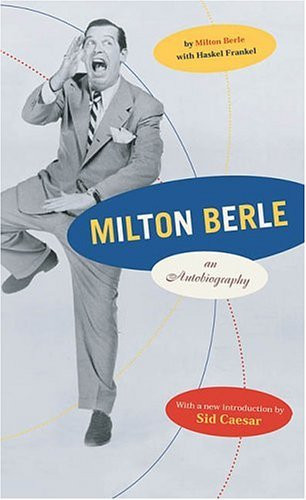
Applause Theatre & Cinema Books 2002-09-01 337 pages

The fall of the house of Roosevelt: brokers of ideas and power from FDR to LBJ

Janeway, Michael
In the 1930s a band of smart and able young men, some still in their twenties, helped Franklin D. Roosevelt transform an American nation in crisis. They were the junior officers of the New Deal. Thomas G. Corcoran, Benjamin V. Cohen, William O. Douglas, Abe Fortas, and James Rowe helped FDR build the modern Democratic Party into a progressive coalition whose command over power and ideas during the next three decades seemed politically invincible. This is the first book about this group of Rooseveltians and their linkage to Lyndon Johnson's Great Society and the Vietnam War debacle. Michael Janeway grew up inside this world. His father, Eliot Janeway, business editor of Time and a star writer for Fortune and Life magazines, was part of this circle, strategizing and practicing politics as well as reporting on these men. Drawing on his intimate knowledge of events and previously unavailable private letters and other documents, Janeway crafts a riveting account of the exercise of power during the New Deal and its aftermath. He shows how these men were at the nexus of reform impulses at the electoral level with reform thinking in the social sciences and the law and explains how this potent fusion helped build the contemporary American state. Since that time efforts to reinvent government by "brains trust" have largely failed in the U.S. In the last quarter of the twentieth century American politics ceased to function as a blend of broad coalition building and reform agenda setting, rooted in a consensus of belief in the efficacy of modern government. Can a progressive coalition of ideas and power come together again? The Fall of the House of Roosevelt makes such a prospect both alluring and daunting.
Columbia University Press 2004 284 pages

Merrill Reese It's Gooooood!

Merrill Reese,Mark Eckel
Merrill Reese has lived his dream. From the time he could talk he wanted to broadcast Philadelphia Eagles football games and that is exactly what he has done for more than 20 years. In his autobiography, Reese tells of his beginnings as a radio and television child actor, his early struggles in the radio business, and how he went from a small station in Pottstown to the familiar and popular Voice of the Eagles.
Sports Pub 1998-09-01 215 pages

Empress Bianca

Campbell, Colin Lady
To her father, she was a princess. To her first husband, she was the perfect wife and mother. But to the other men in her life she was so much more. Daughter of a Welsh Surveyor who had brought his Palestinian wife to Mexico at the end of World War II to seek his fortune, Bianca was raised always to expect the best of everything. She quickly discovered, however, that the best was never going to be enough. Charming, attractive, vivacious and extremely aware of her power over rich and powerful men, she sought nothing less than to be the absolute ruler of international society. Reluctantly but ruthlessly contriving to bring about the end of her marriage to Bernardo, she quickly allowed herself to become wedded to the fortunes of Ferdie, the psychologically unstable scion of the powerful and rich Piedraplata family, whose international concerns include commerce, banking and jewelry. However, when deep cracks start to form in their glamourous jet-set lifestyle together, Bianca turns to the calculating and amoral Philippe Mahfud, an Iraqi business associate of Ferdies, to help her attain the wealth and status she secretly covets. Lady Colin Campbells compulsive dÃbut novel is a tale of charm, intrigue and cold-blooded murder set among the high flyers of twentieth-century international society. F ollow Empress Bianca from her earliest days as a middle-class housewife in post-war Mexico as she lies, cheats, schemes and seduces her way to the top. A veritable monster of vanity and pretension, captured with deadly accuracy in Lady Colin s lucid prose, Bianca leaves her mark on every couturier s salon, chic restaurant or exclusive gathering she walks into, cutting an unmistakable swathe through social circles and gossip columns from the late 1950s right up to today. See international society the way insiders see it. See it through Empress Biancas eyes.
Arcadia 2005 358 pages

The myth of America's decline: politics, economics, and a half century of false prophecies

Joffe, Josef
“A bracing and intelligent reminder that, for all its woes, America remains extraordinarily dynamic, innovative, and resilient.”—Fareed Zakaria Hailed by the Wall Street Journal as one of the best books of 2013, The Myth of America’s Decline is a highly provocative look at how the United States, for all its failings, continues to be the leading business, political, and intellectual model for all other nations. In a world where America bashers constantly chortle that the United States is in decline, Josef Joffe, using lively historical examples and empirical economic models, demonstrates that these doomsday contentions are flawed, and that America—even when compared with a resurgent China—is the land where the future is being born.
Liveright Publishing Corporation, a division of W.W. Norton & Company 2015 327 pages

What I do: more true tales of everyday craziness

Ronson, Jon
In What I Do: More True Tales of Everyday Craziness, the second volume of Jon Ronson's collected Guardianjournalism, he hilariously demonstrates how our everyday lives are determined by the craziest thoughts and obsessions; how we spend our time believing in and getting worked up by complete nonsense. But also, as he chillingly demonstrates, there are clever people working in the highest echelons of business who are employed to spot, nurture and exploit the irrationalities of those among us who can barely cope as it is.
Picador 2007 269 pages

Japan unbound: a volatile nation's quest for pride and purpose

Nathan, John
Not since World War II has Japan faced a crisis like the one before it now. An apparently endless recession has weakened the foundations of the traditional family and severed the bond between Japan's corporations and employees. Unruly children turn classrooms into battlefields. Ultranationalist pride and xenophobia are celebrated in best-selling comic books and championed by media superstars, including the governor of Tokyo. Upheavals across the society have significant ramifications for America. As the Japanese reject their traditions wholesale, they view their half-century-old connection to the United States with mounting skepticism. Drawing on his fluent Japanese and unmatched intimacy with the culture, John Nathan reveals a nation newly unmoored from the traditions that have shored it up and sometimes stifled it. Dramatic changes in business are augured by Carlos Ghosn, the Brazilian president of Nissan, once scorned as an outsider, now hailed for reviving a moribund giant. The soft-spoken artist Yoshinori Kobayashi foments and reflects rabid nationalism among millions with his hugely popular comic books. Yasuo Tanaka, a puckish writer and bon vivant, wins the governorship of Nagano and revolutionizes Japanese politics with his radical populism. Nathan delves beyond Japan's celebrities to map the epic shifts in daily life. He unveils the horrors of the Japanese school system. He goes inside a "career transition service" to witness the novel, nuanced rituals of job-hunting Japanese-style. He takes the pulse of ordinary citizens who are caught up in the country's many profound social shifts: agitprop pop culture, emerging feminism, environmentalism, teenage consumerism, entrepreneurship, and more. With immediacy and élan, John Nathan dispels conventional wisdom about Japan and replaces it with a brilliant vision of a country roiling with pride, uncertainty, creativity, fear, and hope.
Houghton Mifflin 2004-01 271 pages

Notes on a Cowardly Lion

Lahr, John
A son's funny, frank, and "endlessly fascinating" memoir of his father, Wizard of Oz star Bert Lahr ( Harper's Magazine ). Bert Lahr, best known for his role as the Cowardly Lion in The Wizard of Oz , made audiences laugh from burlesque stages to vaudeville to Broadway--and impressed them as Estragon in the American theater debut of Waiting for Godot . But reality wasn't always funny for the legendary actor and comedian, or his family. Drawing on personal recollections and the memories of his father's colleagues, a veteran writer for the New Yorker and renowned theater critic brilliantly explores both the long and glorious professional career of a Hollywood icon and the experience of growing up with him. Here, in rich detail, is Bert Lahr evolving from a low-comic star to a Ziegfeld Follies sophisticate, hamming it up with the Scarecrow and Tin Man on the set of The Wizard of Oz , and garnering rich praise as he performed in Samuel Beckett's masterpiece. But while Lahr could be equally raucous and polished in public, in private he was painfully insecure and self-absorbed, keeping his family at arm's length as he quietly battled his inner demons. "A work of literature, a work of history, a subtle psychological study," Notes on a Cowardly Lion is more than one man's quest to understand his father. It is an extraordinary examination of a life on the stage and screen ( Harper's Magazine ). From a writer with an intimate knowledge of the theater and show business world, this is both a "frank and objective" ( The New York Times Book Review ) family memoir that will appeal to readers of Carrie Fisher's Wishful Drinking or Alan Cumming's Not My Father's Son , and a "book-length love letter. To open it is to enter a life, to participate in a sensibility and, perhaps most important, to laugh. Uproariously" ( Life) .
Ballantine Books 1970-10-12

The big ten: the big emerging markets and how they will change our lives

Garten, Jeffrey E.
A dramatic transformation of global power is under way, one only dimly recognized by most Americans. As economics and trade now loom larger than nuclear stockpiles or Cold War ideology, those countries with the fastest growing economies have begun to rewrite the rules of power and influence in the world. These nations are the Big Emerging Markets, and for too long we have failed to recognize their importance. We can no longer afford that luxury. The Big Ten is the essential guide to the ten most important Big Emerging Markets. Jeffrey E. Garten, the Dean of the Yale School of Management and the former Under Secretary of Commerce for International Trade, explains who they are, why they have burst onto the world scene, and how they will reshape the world in the twenty-first century. The ten countries to watch are spread across the globe: Mexico, Brazil, and Argentina in the Americas; China, India, Indonesia, and South Korea in Asia; Poland and Turkey in Europe; and in Africa, South Africa. The Big Ten are bigger than most people realize: they are home to half the world's population, and the United States exports more products to these countries than to Europe and Japan combined. They also wield immense political influence in many of the world's most critical regions. Moreover, American industrial firms, mutual funds, and pension plans have begun to invest heavily in these dynamic economies, making our own prosperity increasingly dependent on theirs.While the Big Ten offer new opportunities for the United States, Garten observes their potential political instability could create economic havoc around the world. In addition, they pose powerful ethical and strategic dilemmas. The BEMs do not share our values regarding human rights, child labor, corruption, or environmental degradation, and our growing contacts with these societies are sure to violate our notions of fairness and our moral sensibilities. And as the Big Ten grow and mature as regional powers, they will pose unprecedented challenges to American global leadership.Drawing on his first-hand experiences at the highest levels of government, finance, and academia, Garten advances a comprehensive plan for America to meet the challenges of this emerging new world. he addresses the critical questions facing American policy makers, business executives, educators, and concerned citizens, and he outlines the bold changes that will be necessary if we are to control our national destiny in the decades to come. The Big Ten will help readers understand the importance of NAFTA, the rise of China, the connection between trade and human rights, and the imperatives for American foreign policy, business, and higher education. Packed with powerful insights and real-life stories from the front lines of international commerce, The Big Ten will redefine the way we think about America's global role in the twenty-first century.
BasicBooks 1997 232 pages

The collapse of the fact/value dichotomy and other essays

Putnam, Hilary
If philosophy has any business in the world, it is the clarification of our thinking and the clearing away of ideas that cloud the mind. In this book, one of the world's preeminent philosophers takes issue with an idea that has found an all-too-prominent place in popular culture and philosophical thought: the idea that while factual claims can be rationally established or refuted, claims about value are wholly subjective, not capable of being rationally argued for or against. Although it is on occasion important and useful to distinguish between factual claims and value judgments, the distinction becomes, Hilary Putnam argues, positively harmful when identified with a dichotomy between the objective and the purely "subjective." Putnam explores the arguments that led so much of the analytic philosophy of language, metaphysics, and epistemology to become openly hostile to the idea that talk of value and human flourishing can be right or wrong, rational or irrational; and by which, following philosophy, social sciences such as economics have fallen victim to the bankrupt metaphysics of Logical Positivism. Tracing the problem back to Hume's conception of a "matter of fact" as well as to Kant's distinction between "analytic" and "synthetic" judgments, Putnam identifies a path forward in the work of Amartya Sen. Lively, concise, and wise, his book prepares the way for a renewed mutual fruition of philosophy and the social sciences.
Harvard University Press 2002-12-05 190 pages

Cross Cultural Design: Communicating in the Global Marketplace

Henry Steiner,Ken Haas
Cross-Cultural Design is the first book to examine the challenges and rewards experienced by the world's leading communication professionals when handling assignments outside their own cultures. The solutions to these marketing problems are documented here in 309 stunning full-colour images, accompanied by the creators' provocative descriptions of their setbacks, triumphs and discoveries.The works shown range from designs for advertisements, corporate identity programmes, annual reports, films, packages, books, magazines, posters and signage to currency, postage stamps and environmental graphics. Among clients represented are banks, print media, software companies, airlines, governments and manufacturing firms.This anthology is introduced by Henry Steiner's stimulating essay "Spam Sushi and Chameleons", which articulates the issues and provides conceptual ideas for succeeding in the global marketplace. In the pages that follow, the work of such outstanding professionals as Saul Bass, Walter Bernard, Ken Cato, Ivan Chermayeff, Joe Duffy, Alan Fletcher, Dan Friedman, Milton Glaser, Eiko Ishioka, Tibor Kalman, Clement Mok, Erik Spiekermann and Henry Wolf is illustrated and discussed. This unique volume also includes much practical information, a contributors' directory, an extensive bibliography and a thorough index.Cross-Cultural Design will be welcomed as both a thought-provoking exploration of international design and an invaluable reference source for designers, advertising agencies, marketing professionals, business corporations, scholars and students.
Van Nostrand Reinhold 1990-05

Simply Managing [Paperback] [Nov 28, 2013] Henry Mintzberg

Henry Mintzberg
In 2009, henry mintzberg's managing was named one of the best books of the year by strategy business and library journal magazines, the number two business book of the year by the toronto globe and mail, one of the top ten academic titles by choice magazine, and the management book of the year in a competition organized by the chartered management institute in association with the british library. So this is clearly a book every manager should read. But one of the issues mintzberg addresses is the frenetic pace and relentless pressures of the job-most managers hardly have time to think. Somintzberg has done some revising and some updating and has distilled the essence of his original 320-page book into a lean, actionoriented216 pages.
Collins Business-Berret Koehler 1600-01-01 216 pages

The Deathworld omnibus

Harrison, Harry
The planet was called Pyrrus, a strange place where all the beasts, plants and natural elements were designed for one specific purpose: to destroy man. The settlers there were supermen, twice as strong as ordinary men and with milli-second reflexes. They had to be. For their business was murder. It was up to Jason dinAlt, interplanetary gambler, to discover why Pyrrus had become so hostile during man's brief habitation. This omnibus contains all three novels in the Deathworld trilogy!
Gateway 2019-11-12 576 pages

Due to circumstances beyond our control ..

Friendly, Fred W.
When Fred Friendly's powerful examination of broadcast news was published in 1967, it was judged by The New Yorker to be "an engrossing professional memoir." and it quickly leaped onto The New York Times bestseller list. Now reissued with a new Introduction by Dan Rather, anchor and managing editor of the CBS Evening News, and Tom Bettag, executive producer of Nightline, on the anniversary of Friendly's death, this discourse on the importance of television in society presents Friendly's uncannily prescient views on the corrosive effect of money on the news business, the sensationalization of news reporting, and the viewing public's appetite for quality broadcasting. With Edward R. Murrow, Fred Friendly practically invented television journalism. Through telling anecdotes and penetrating analysis, he recalls his collaborations with Murrow, from their stinging documentary on Senator Joseph McCarthy to CBS's pioneering coverage of the burgeoning civil rights and anti-Vietnam War movements. Friendly also recounts his resignation as president of CBS News in 1966, when the network ran reruns of I Love Lucy instead of Senate hearings on the war in Vietnam. Following that controversial decision, he began writing this memorable book.
Vintage Books 1995 338 pages

The prince of the city: Guiliani, New York, and the genius of American life

Siegel, Frederick F.
In this first post-9/11 account of the career of the man who established himself as America's Mayor in the dark days after America was attacked, Fred Siegel shows how Rudy Giuliani's successes in New York--restoring law and order, cutting taxes and radically reducing the welfare rolls--demonstrated that Gotham was indeed governable (a matter of doubt until his election) and that our major cities might again become vibrant and dynamic places to live after thirty years of middle-class flight. Someone who has worked with Giuliani as well as studied him, Siegel describes this colorful figure as an immoderate centrist, who, like the city he came to embody, evokes contradictory emotions. For some, he was a ruthless autocrat during his years at city hall; for others, he was a heroic figure who took on the vested interests that had dragged the city down. Siegel regards Guiliani as a shrewd tactician and artist of the possible who could have stepped out of the pages of Machiavelli's THE PRINCE. A self-promoting, self-absorbed man, the mayor made his own enormous ego serve the city's well-being. He promoted the virtues of duty and sacrifice, but was sometimes unable to honor these values in his personal life. He was suspicious of those outside his immediate circle, but he also placed this tribal ethos in the service of ideals that transcended New York's ethnic politics and business as usual. THE PRINCE OF THE CITY is at once a fascinating character study, a history of New York over the last forty years, and a classic inquiry into the issue of how cities thrive or die. Siegel's story culminates with a dramatic account of September 11, 2001, revealing how Giuliani's s eight years in office had prepared him and the city to rise to this tragic occasion. Siegel concludes with a look at how Guiliani's successor, Mayor Michael Bloomberg, has handled his legacy and at what the future might hold for America's Mayor.
Encounter 2007 392 pages

We the people: a progressive reading of the Constitution for the twenty-first century

Chemerinsky, Erwin
Worried about what a super conservative majority on the Supreme Court means for the future of civil liberties? From gun control to reproductive health, a conservative court will reshape the lives of all Americans for decades to come. The time to develop and defend a progressive vision of the U.S. Constitution that protects the rights of all people is now. University of California Berkeley Dean and respected legal scholar Erwin Chemerinsky expertly exposes how conservatives are using the Constitution to advance their own agenda that favors business over consumers and employees, and government power over individual rights. But exposure is not enough. Progressives have spent too much of the last forty-five years trying to preserve the legacy of the Warren Court's most important rulings and reacting to the Republican-dominated Supreme Courts by criticizing their erosion of rights--but have not yet developed a progressive vision for the Constitution itself. Yet, if we just look to the promise of the Preamble--liberty and justice for all--and take seriously its vision, a progressive reading of the Constitution can lead us forward as we continue our fight ensuring democratic rule, effective government, justice, liberty, and equality -- Publisher.
Picador 2018-11-13 300 pages

Saratoga Trunk

Edna Ferber,Stuart M. Rosen
The basis for the classic film starring Gary Cooper and Ingrid Bergman, Saratoga Trunk unfolds the story of Clio Dulaine, an ambitious Creole beauty who more than meets her match in Clint Maroon, a handsome Texan with a head for business -- and an eye for beautiful young women. Together they do battle with Southern gentry and Eastern society, but in their obsession to acquire all they've ever wanted, they fail to realize they already have all they'll ever need -- each other.
Harper Collins 2000-08-22 304 pages

Everything is miscellaneous: the power of the new digital disorder

Weinberger, David
From A to Z, Everything Is Miscellaneous will completely reshape the way you think - and what you know - about the world. Includes information on alphabetical order, Amaxon.com, animals, Aristotle, authority, Bettmann Archive, blogs (weblogs), books, broadcasting, British Broadcasting Corporation (BBC), business, card catalog, categories and categorization, clusters, companies, Colon Classification, conversation, Melvil Dewey, Dewey Decimal Classification system, Encyclopaedia Britannica, encyclopedia, essentialism, experts, faceted classification system, first order of order, Flickr.com, Google, Great Books of the Western World, ancient Greeks, health and medical information, identifiers, index, inventory tracking, knowledge, labels, leaf and leaves, libraries, Library of Congress, links, Carolus Linnaeus, lumping and splitting, maps and mapping, marketing, meaning, metadata, multiple listing services (MLS), names of people, neutrality or neutral point of view, New York Public Library, Online Computer Library Center (OCLC), order and organization, people, physical space, everything having place, Plato, race, S.R. Ranganathan, Eleanor Rosch, Joshua Schacter, science, second order of order, simplicity, social constructivism, social knowledge, social networks, sorting, species, standardization, tags, taxonomies, third order of roder, topical categorization, tree, Uniform Product Code (UPC), users, Jimmy Wales, web, Wikipedia, etc. Philosopher Weinberger shows how the digital revolution is radically changing the way we make sense of our lives. Human beings constantly collect, label, and organize data--but today, the shift from the physical to the digital is mixing, burning, and ripping our lives apart. In the past, everything had its one place--the physical world demanded it--but now everything has its places: multiple categories, multiple shelves. Everything is suddenly miscellaneous. Weinberger charts the new principles of digital order that are remaking business, education, politics, science, and culture. He examines how Rand McNally decides what information not to include in a physical map (and why Google Earth is winning that battle), how Staples stores emulate online shopping to increase sales, why your children's teachers will stop having them memorize facts, and how the shift to digital music stands as the model for the future. --
Holt 2008-04-29 277 pages

The future of finance: how private equity and venture capital will shape the global economy

Schwartz, Dan
Dan Schwartz has done a masterful job of synthesizing the thoughts of some of the best minds in the private equity business along with his own to create a superb discussion of the industry, past, present, and most importantly where it is going. This is a must read for anyone in the private equity world and for those considering the field. Leonard Harlan Chairman, Executive Committee, Castle Harlan Dan Schwartz was a first-hand witness to the birth of private equity in Asia and has chronicled its explosive growth over the past two decades. In The Future of Finance he uses an insider’s perspective to full effect, pulling together the views of many practitioners to illuminate both the roots of the 2008 global crisis and private equity’s potential role in rebuilding our financial system. Schwartz’ fast-paced, conversational style makes for a welcome contrast to dry economic analysis—well worth reading for both business leaders and students of finance. Dan Carroll Managing Partner, TPG Dan Schwartz’s The Future of Finance offers an insightful and compelling window into the world of private equity and venture capital. Schwartz has leveraged his more than 20 years of industry experience to produce a well researched and nuanced work that will prove invaluable to anyone interested in these fields. Joe Bae Managing Partner, Kohlberg Kravis Roberts & Co. Asia For anyone concerned about the future economic impact of global innovation, job creation, and finance, Dan Schwartz’s comprehensive new treatise is a must read. Replete with in-depth perspectives of dozens of the most senior global venture capital and private equity leaders and numerous case study examples, this gem artfully explains the dramatic changes happening in these vital industries and how government leaders, policy makers, entrepreneurs and investors must adapt for continuing success in the second decade of the 21st century. Dixon R. Doll Cofounder and General Partner, DCM Chairman, U.S. National Venture Capital Assoc. (2008-09) From cottage industry to multi-billion asset class, Asian private equity has transformed the region’s financial and corporate landscape in two short decades. Dan Schwartz was present at the beginning of this fascinating era as iconic spokesman and entrepreneurial founder of AVCJ . His contribution as chief convener to the industry helped shape an asset class. The Future of Finance is forward looking while drawing upon the rich past of an industry’s development amid volatile cycles, financial crises, pandemics, capital excess, capital drought and Darwinian struggles. Many of the prime movers, who paved the way to the future, have shared privileged views with Dan over the years and now on these insightful pages. Philip Bilden Managing Director, HarbourVest Partners (Asia) Dan Schwartz’s extensive and experienced network has enabled him to tap the key issues and insights of today’s leading private equity and venture capital practitioners around the world. This enlivens Dan’s stroll through Europe, North America and Asia as he examines the development of these private capital markets…and these insights shape the prism through which he views a future for private equity in the coming decades. Bill Ferris Executive Chairman, Champ Private Equity Dan Schwartz is the person best placed to write about the history of the private equity industry in Asia—he was there right from the beginning. In nearly two decades, he has been a keen observer of the industry’s developments and market trends. He was the cheerleader when the industry was down and he has been a friend to most of the leading practitioners, a position that provides him with unique insights into the actual workings of the industry as described in the book. The “New Corporate Theory” introduced in the last section of the book is an interesting thesis. If it comes to fruition, it will transform the shareholder-driven corporate governance model as we know it today. Tang Kok Yew Chairman and Managing Partner, Affinity Equity Partners (HK) It would be hard to find a better guide to the private equity world. Dan Schwartz has been central to providing thought leadership in the Asian private equity markets and a leading commentator worldwide for over 20 years, he also has had impeccable timing as an entrepreneur. Jeremy Coller CEO and CIO, Coller Capital
Wiley 2010-03-29 222 pages

Romantic poets, critics, and other madmen

Rosen, Charles
Few can match Charles Rosen's cultivation and discernment, whether as pianist, music historian, or critic. Here he gives us a performance of literary criticism as high art, a critical conjuring of the Romantic period by way of some of its central texts. "What is the real business of the critic?" Rosen asks of George Bernard Shaw in one of his essays. It is a question he answers throughout this collection as he demonstrates and analyzes various critical approaches. In writing about the Romantic poets Lord Byron, William Wordsworth, William Cowper, and Friedrich Hölderlin, he examines the kind of criticism which attempts to uncover concealed code. He investigates the relationship between Romantic aesthetic theory and artworks, and explores the way Romantic art criticism has been practiced by critics from Friedrich Schlegel to Walter Benjamin. In essays on Honoré de Balzac, Robert Schumann, Gustave Flaubert, and others, he highlights the intersections between Romantic art and music; the artist's separation of life and artistic representations of it; and the significance of the established text. With an apt comparison or a startling juxtaposition, Rosen opens whole worlds of insight, as in his linking of Caspar David Friedrich's landscape painting and Schumann's music, or in his review of the theory and musicology of Heinrich Schenker alongside the work of Roman Jakobson. Throughout this volume we hear the voice of a shrewd aesthetic interpreter, performing the critic's task even as he redefines it in his sparkling fashion.
Harvard University Press 1998 257 pages