1222 results for "World Literature"

The worlds of S. An-sky: a Russian Jewish intellectual at the turn of the century

Gabriella Safran,Steven J. Zipperstein,Craig Stephen Cravens
Shloyme-Zanvl Rappoport, known as An-sky (1863-1920), the author of the best known play in the Hebrew and Yiddish languages, "The Dybbuk,” was a figure of immense versatility and also ambiguity in Russian and Jewish intellectual, literary, and political spheres. He was a leading Russian populist; he was the author of the poem adopted as the anthem of the Jewish Socialist Labor Bund; he is credited with being the founder of the field of Jewish ethnography; and he wrote one of the most influential works of Jewish catastrophe literature in modern times, his masterpiece "Hurbn Galitsye,” on the travails of East European Jews in the First World War. This volume is the most complete examination of An-sky ever produced. It draws together leading historians, ethnographers, literary scholars, and others in a far-ranging, multidisciplinary exploration. It also contains numerous photographs culled from archives in the former Soviet Union, a superb English translation of an early Russian draft--among the very first--of "The Dybbuk,” and a timeline that covers all of An-sky’s peripatetic life. Finally, it includes a compact disk combining material drawn from An-sky’s own 1912-14 field recordings of Jewish songs, together with contemporary renditions, recorded at Stanford, of the Russian and Yiddish music that An-sky wrote, collected, and heard. Includes a CD of An-sky’s music,, in Russian and Yiddish
Stanford University Press 2006 542 pages

Unlikely history: the changing German-Jewish symbiosis, 1945-2000

J. Zipes,L. Morris
In the English-speaking world, it is generally believed that there are very few Jews living and thriving in Germany. Yet, there has been an unlikely postwar history 1945-2001 that has been somewhat repressed in North America and the United Kingdom. While most people are well-informed about the Holocaust and the consequences that this tragic event has had for the world, very few people know that there has been a steady increase in the population of Jews in Germany since 1945 and that there is a flourishing 'Jewish' culture, certainly a relatively strong Jewish presence, in Germany today. Does this development mean that Jews are playing a significant role in German social life? Does this mean that the great German-Jewish relationship, often referred to as a kind of symbiosis, has re-emerged despite the odds against it? The sixteen essays in this book written by the leading critics in the field cover the fascinating changes that have been made in German society since 1945 in the Jewish communities, literature, theater, film, architecture, and other areas of interest including an examination of the resurgence of anti-Semitism in Austria. For anyone interested in reading about the unpredictable transformations in German-Jewish relations since 1945, Unlikely History will provide information and insights into a history that needs to be told to bring about greater understanding of Jews and Germans in contemporary Germany.
Palgrave 2002-04-15 335 pages

With all thine heart: love and the Bible

Stavans, Ilan
Is the Bible actually a love story between a deity and a people? And what does this love story have to do with the modern world? In With All Thine Heart distinguished cultural critic Ilan Stavans speaks to freelance writer Mordecai Drache about love in the Bible. Presented in an engaging, conversational format and touched with striking artwork, the textured dialogue between Stavans and Drache is meant to show how the Bible is a multidimensional text and one that, when considered over the course of history, still has the power to shape our world. The theme of love provides the connective tissue that binds this work. Addressing a wide range of topics, from biblical archaeology and fundamentalism to Hollywood movies, lexicography, and the act of praying, With All Thine Heart suggests that the Hebrew Bible is a novel worth decoding patiently, such as one does with classics like Don Quixote de la Mancha, In Search of Lost Time, and Anna Karenina. Similar to the protagonists in these tales, biblical characters, although not shaped with the artistic nuance of modern literature, allow for astonishing insight. This exploration of love through the pages of the Bible--organized chronologically from Genesis to Exodus and followed by insightful meditations on the Song of Songs and the Book of Job--is a delightful intellectual and spiritual treat . . . Shema Ysrael!
Rutgers University Press 2010 185 pages

The Sociology of the Kibbutz

Ernest Krausz,David Glanz
This is the second volume of the publication series of the Israeli Sociological Society, whose object is to identify and clarify the major themes that occupy social research in Israel today. Studies of Israeli Society gathers together the best of Israeli social science investigation, which was previously scattered in a large variety of international jour�nals. Each book in the series is in�troduced by integrative essays. The contents of volume two focus on the sociology of a unique Israeli social institution--the kibbutz. Kib�butz society constitutes an impor�tant laboratory for the investigation of a variety of problems that have been of perennial concern to the social sciences. Topics in this volume include relevant contem�porary issues such as the dynamics of social stratification in a "classless" society, the function and status of the family in a revolutionary society, relations between generations, industrializa�tion in advanced rural communities, and collective economies versus the outside world. The questions of the concept and development of the kib�butz, social differentiation and socialization, and work and produc�tion within the kibbutz possess a significance far beyond their im�mediate social context. Does the kibbutz offer a model for an alter�native, communal lifestyle for the modern world? How has the kibbutz changed over the past decadeswithin the context of a rapidly modernizing Israeli society? Emphasizing the "nonfailure" of the kibbutz experiment and con�trasting it with many socialist, cooperative, and communal ex�periments that clearly did fail, Martin Buber, in his analysis, attributes this success to the kib-but/'s undogmatic character, its ability to adapt structures and in�stitutions to changing conditions, while preserving its essential values and ideals. This volume presents an excellent review of the social research under�taken on the kibbutz in the past decades, and provides an introduc�tion to the growing scientific literature on the kibbutz. Contributors: Melford E. Spiro, Menachem Rosner, Martin Buber, Joseph Ben-David, Daniel Katz, Naftali Golomb, Erik Cohen, Arye Fishman, Michael Saltman, S.N. Eisenstadt, Eva Rosenfeld, Amitai Etzioni, Ephraim Yuchtman, Eliezer Ben-Rafael, Nissim Cohen, Yonina Talmon-Garber, Joseph Shepher, Lionel Tiger, Edward C. Devereux, Reuben Kahane, Ivan Vallier, David Barkin, John W. Bennet, Yehuda Don, Uri Leviatan, Eliette Orchan, Shimon Shur and David Glanz.
Transaction 1983-01-01 429 pages

Endymion.

Disraeli, Benjamin
Title: Endymion.Publisher: British Library, Historical Print EditionsThe British Library is the national library of the United Kingdom. It is one of the world's largest research libraries holding over 150 million items in all known languages and formats: books, journals, newspapers, sound recordings, patents, maps, stamps, prints and much more. Its collections include around 14 million books, along with substantial additional collections of manuscripts and historical items dating back as far as 300 BC.The GENERAL HISTORICAL collection includes books from the British Library digitised by Microsoft. This varied collection includes material that gives readers a 19th century view of the world. Topics include health, education, economics, agriculture, environment, technology, culture, politics, labour and industry, mining, penal policy, and social order. ++++The below data was compiled from various identification fields in the bibliographic record of this title. This data is provided as an additional tool in helping to insure edition identification: ++++ British Library Disraeli, Benjamin; 1880. pp. 84. 29 cm. 12623.k.25.
British Library, Historical Print Editions 2011-03-17 132 pages

American Guy: masculinity in American law and literature

Saul Levmore,Martha Craven Nussbaum
American Guy examines American norms of masculinity and their role in the law, bringing a range of methodological and disciplinary perspectives to the intersection of American gender, legal, and literary issues. The collection opens with a set of papers investigating "American Guys"--The heroic nonconformists and rugged individualists that populate much of American fiction. Diverse essays examine the manly men of Hemingway, Dreiser, and others, in their relation to the law, while also highlighting the underlying tensions that complicate this version of masculinity. A second set of papers examines "Outsiders"--men on the periphery of the American Guys who proclaim a different way of being male. These essays take up counter-traditions of masculinity ranging from gay male culture to Philip Roth's portrait of the Jewish lawyer. American Guy, a follow-up to Subversion and Sympathy, edited by Alison L. LaCroix and Martha C. Nussbaum, aims at reinvigorating the law-and-literature movement through original, cross-disciplinary insights. It embraces a variety of voices from both within and outside the academy, including several contributions from prominent judges. These contributions are particularly significant, not only as features unique to the field, but also for the light they throw on the federal bench. In the face of a large body of work studying judicial conduct as a function of rigid commitment to ideology, American Guy shows a side of the judiciary that is imaginatively engaged, aware of cultural trends, and reflective about the wider world and the role of the law in it. -- from dust jacket
Oxford University Press 2014 329 pages

In prayer and laughter: essays on Medieval Scandinavian and Germanic mythology, literature, and culture

Liberman, Anatoly
In Prayer and Laughter: The Religion and Culture of Medieval Scandinavia and Beyond is the culmination of a lifelong study of the Middle Ages by Anatoly Liberman, an internationally acclaimed medievalist and linguist. It contains an introduction, 21 chapters of different length, a bibliography, and indexes. The book opens with a bird's-eye view of the state of comparative mythology and proceeds with an analysis of the most important questions confronting a student of Germanic and Scandinavian religion. In his exposition, be it the characters of the Scandinavian gods, the creatures of lower mythology (such as dwarfs, trolls, and all kinds of devils), the nature of ancient rituals (such as initiation), shamanism, the origin of the runic alphabet, or the function of mythic animals, Liberman combines attention to detail with a broad view of the medieval world. His keen interest in the large picture is noticeable at every step, and he never loses sight of the methodological aspects the humanities pose (the use of structuralism beyond linguistics, among others), the idiosyncrasies of "the medieval mind," and the limits of reconstruction.
Paleograph Press 2016 587 pages

Spinoza And Time

Samuel Alexander
This book has been considered by academicians and scholars of great significance and value to literature. This forms a part of the knowledge base for future generations. So that the book is never forgotten we have represented this book in a print format as the same form as it was originally first published. Hence any marks or annotations seen are left intentionally to preserve its true nature.
Alpha Editions 2020-10-11 82 pages

Sade my neighbor

Klossowski, Pierre
Enlightenment ideals of a society rooted in liberationist reason and morality were trampled in the wake of the savagery of the Second World War. That era's union of cold technology and ancient hatreds gave rise to a dark, alternative reason—an ethic that was value-free and indifferent with regard to virtue and vice, freedom, and slavery. In a world where "the unthinkable" had become reality, it is small wonder that theorists would turn to the writings of a man whose eighteenth-century imagination preceded twentieth-century history in its unbridled exploration of viciousness, perversion, and monstrosity: the Marquis de Sade. Klossowski was one of the first philosophers in postwar Europe to ask whether Sade's reason, although aberrant and perverted to evil passions, could be taken seriously. Klossowski's seminal work inspired virtually all subsequent study of Sadean thought, including that of de Beauvoir, Deleuze, Derrida, Bataille, Blanchot, Paulhan, and Lacan.
Northwestern University Press 1991-06 144 pages

The Box

Rabe, Peter
Quinn thought he had all the angles figured. After all, taking over the Organization should be a piece of cake for such a smart guy. But what he didn’t figure was that boss Ryder would stuff him in a large crate with enough food and water to sustain him - and ship him around the world. When the freighter ports at the North African town of Okar, the captain of the boat decides it's time to unload the box. It's starting to make noises, and it smells bad. What emerges from this wooden coffin looks barely human. But once Quinn recovers, he starts to look around. Is this a new chance at life, or an opportunity to cash in on another racket, halfway around the world?
Black Lizard Books 1990-05-01 160 pages

Festschrift Zum Achtzigsten Geburtstage Moritz Steinschneider's

Moritz Steinschneider
This work has been selected by scholars as being culturally important, and is part of the knowledge base of civilization as we know it. This work was reproduced from the original artifact, and remains as true to the original work as possible. Therefore, you will see the original copyright references, library stamps (as most of these works have been housed in our most important libraries around the world), and other notations in the work. This work is in the public domain in the United States of America, and possibly other nations. Within the United States, you may freely copy and distribute this work, as no entity (individual or corporate) has a copyright on the body of the work. As a reproduction of a historical artifact, this work may contain missing or blurred pages, poor pictures, errant marks, etc. Scholars believe, and we concur, that this work is important enough to be preserved, reproduced, and made generally available to the public. We appreciate your support of the preservation process, and thank you for being an important part of keeping this knowledge alive and relevant.
Creative Media Partners, LLC 2018-02-02 532 pages

Judaism's story of creation: scripture, halakhah, aggadah

Neusner, Jacob
During the formative age of Judaism, the first seven centuries CE, the great rabbis thought deeply about beginnings in light of endings. They imposed upon their sequential reading of each passage the accumulated results of their reflection about all passages. Thus, they encompassed Scripture, so as to describe the world as God had intended it to be.This act of intellect resulted in two distinct, ahistorical media of thought and expression, the Halakhah, law, and Aggadah, lore. The author provides three systematic accounts of the Halakhic reading, and two Aggadic accounts. The Halakhic accounts cover [1] Work and Rest, [2] Ownership and Possession, Eden and the Land, and [3] Ownership and Possession in the Household. The Aggadic accounts pertain to [1] the Six Days of Creation, and [2] Adam and Eve.
Brill 2000 296 pages

Bottom dogs

Dahlberg, Edward
Dahlberg's first novel, written in 1928 and published in 1930, is the story of Lorry Lewis, of Kansas City, Missouri, whose mother sent him to an orphanage in Cleveland when he was eleven. Lorry eventually winds up riding the freights across the West to Portland, and then down to Los Angeles, having many sordid encounters along the way. Somewhere between the cold naturalism of Frank Norris and the urgent spontaneity of Jack Kerouac, the book is often classified as a proletarian novel. It gives a peek into the seamy side of life in the U.S. in the late 1920s. D. H. Lawrence wrote a strange and interesting 10-page introduction, which begins: "When we think of America, and of her huge success, we never realize how many failures have gone, and still go to build up that success. It is not till you live in America, and go a little under the surface, that you begin to see how terrible and brutal is the mass of failure that nourishes the roots of the gigantic tree of dollars." And he ends by saying, "I don't want to read any more books like this. But I am glad to have read this one, just to know what is the last word in repulsive consciousness, consciousness in a state of repulsion. It helps one to understand the world, and saves one the necessity of having to follow out the phenomenon of physical repulsion any further, for the time being."
AMS Press 1976-01-01 269 pages

Controlling Interests

Charles Bernstein
Poetry. "In the poems of CONTROLLING INTERESTS Bernstein continually reveals his desire for the concomitance of the individual and the world, of all language and experience . This book is one of the most original and imaginative in American lyric verse"--Douglas Messerli. "Bernstein presents the reader with a world in which the articulation of an individual language is all but prevented by the official discourses that bombard the consciousness from all sides . He [is] on to something important"--Marjorie Perloff. "It is writing of absolute necessity, demanding not to be appreciated, but understood"--Ron Silliman.
Segue Foundation 1985-06-01

The Apocryphal Acts of Paul, Peter, John, Andrew, and Thomas

Pick, Bernhard
The publication of the apocryphal Acts of the Apostles has unveiled a vast yet unexplored domain in ancient Christian literature. These Acts, particularly the oldest ones, provide insights into second-century Christianity. They are vital for understanding early Christian worship practices and offer a glimpse into divine services held in homes, complementing the Acts of the Apostles. They also hold significance in the history of Christian poetry, notably within Gnostic circles. Despite their mix of fact and fiction, these Acts are relevant to educators, preachers, missionaries, and historians. The oldest and most significant Acts are presented in this volume. These Acts are crucial for early Church literature and provide valuable insights into Christian history. Bernhard Pick (1842–1917) was a German-American Lutheran pastor and prolific scholar, studied at New York City's Union Theological Seminary. He contributed extensively to theological encyclopedias, provided critical indexes, and delved into hymnology. This Reader's Edition is based on a public domain text. This text has been thoroughly spellchecked and proofread to correct errors that appear in the public domain edition. The formatting has also been altered to provide a cleaner, more readable experience. Introductions and footnotes not native to the text have been removed to avoid interruptions to and distractions from the text. Many readers find that this allows them a greater ability to focus on the text itself. It is our hope that this Reader's Edition will provide you with the best possible reading experience of this classic text. Our mission is to breathe new life into the pages of the past by removing barriers between the reader and the text.
Independently published 2023-09-18 237 pages

Dr. Adriaan

Louis Couperus,Alexander Teixeira De Mattos
"Dr. Adriaan" by Louis Couperus delves into the intricate world of family and domestic life, offering a compelling character study within the framework of psychological fiction. Couperus masterfully explores the complexities of relationships, revealing the subtle tensions and unspoken dramas that simmer beneath the surface of everyday interactions. A timeless exploration of families, this literary work offers a deep dive into the psychological landscape of its characters. Through nuanced prose, Couperus examines the enduring themes of human connection and the subtle yet powerful forces that shape our lives within the family unit. "Dr. Adriaan" remains a resonant and insightful portrayal of the human condition, showcasing the author's skill in capturing the nuances of familial bonds. This meticulously prepared edition preserves the original text for readers to experience Couperus's vision. This work has been selected by scholars as being culturally important, and is part of the knowledge base of civilization as we know it. This work is in the public domain in the United States of America, and possibly other nations. Within the United States, you may freely copy and distribute this work, as no entity (individual or corporate) has a copyright on the body of the work. Scholars believe, and we concur, that this work is important enough to be preserved, reproduced, and made generally available to the public. We appreciate your support of the preservation process, and thank you for being an important part of keeping this knowledge alive and relevant.
Creative Media Partners, LLC 2025-03-29 218 pages

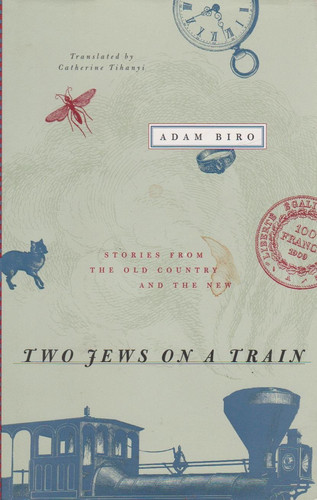
Two Jews on a train

Biro, Adam
"Two Jews were traveling on a train. . . . " Many Eastern European jokes—and several of the charming and often hilarious conversations in this book—begin this way. From all regions of the world and from all walks of life, the characters are young and full of life and old and ugly; they are rabbis, matchmakers, students, and immigrants. They gossip and speak about everything from the banalities of the world to the unspeakable evils of existence all for a single purpose: to laugh and to celebrate the good luck of being alive. As Biro recounts these tales, we hear not only his voice and the voice of his father, but those of generations of storytellers who have used humor to teach about the truly important issues in life—the delicacy of love, the fragility of friendship, the pitfalls of self-righteousness, the costs of narrow-mindedness, and the unpredictability of life itself. Biro artfully spins each story, lingering on the details, guiding the reader to the inevitable—yet always unexpected—punchline. Taken individually, these stories will make you laugh out loud; taken as a whole, they form an invaluable record of the sensibilities of an entire people. Biro writes: "These Jewish stories of which not a single one happened to me, and of which I did not invent a single one, do describe me, do characterize me, do explain me. They are always my own story. And yours."
University of Chicago Press 2001-05 128 pages