1166 results for "American History"

West European communism and American foreign policy

Ledeen, Michael Arthur
The great vogue of Eurocommunism came to an end with the return of the French and Italian Communist Parties to positions of opposition to authority in the late 1970's, and the electoral confirmation that Spain's Communist Party would remain small. As the vogue of communism with a human face passed. The question of American policy toward Communists became far less pressing; yet the question will almost certainly require attention in the future. This is particularly true with respect to the Italian Communist Party, which remains powerful in numbers and flexible in policy. Michael Ledeen examines Communist Party participation in Western European governments since World War II, and the ambivalent American foreign policy toward it. He concentrates on the Italian Communist Party: its history and its relations with the Soviet Union. Togliatti, Secchia, Gramsci, Nenni are identified as the major players in Italian communist and socialist politics. The author explores in depth why the United States has been reluctant to become involved in internal Italian affairs, and how this policy posture has strongly influenced in the development of communism in Western Europe. Ledeen shows that the strategies of contemporary West European Communist Parties are now roughly similar to those of the immediate post-war period. He argues that American intellectuals are as uncritical of Eurocommunism as they were after the first flush of Allied victory in World War II, that the Carter administration's foreign policy was incoherent, and that the United States needs a consistent, ideological approach to communism--one that includes the capacity for action as well as reaction. Michael Ledeen is a senior associate of the Center for Strategic and International Studies at Georgetown University, and formerly taught history at Washington University. He was the founding editor of The Washington Quarterly , and is the author of, among other works, Grave New World; The First Duce: D'Annunzio at Fiume; and editor of U.S. Defense and Foreign Policy.
Transaction Books 1987 197 pages

Why baseball matters

Jacoby, Susan
Baseball, first dubbed the "national pastime" in print in 1856, is the country's most tradition-bound sport. Despite remaining popular and profitable into the twenty-first century, the game is losing young fans, among African Americans and women as well as white men. Furthermore, baseball's greatest charm--a clockless suspension of time--is also its greatest liability in a culture of digital distraction. These paradoxes are explored by the historian and passionate baseball fan Susan Jacoby in a book that is both a love letter to the game and a tough-minded analysis of the current challenges to its special position--in reality and myth--in American culture. The concise but wide-ranging analysis moves from the Civil War--when many soldiers played ball in northern and southern prisoner-of-war camps--to interviews with top baseball officials and young men who prefer playing online "fantasy baseball" to attending real games. Revisiting her youthful days of watching televised baseball in her grandfather's bar, the author links her love of the game with the informal education she received in everything from baseball's history of racial segregation to pitch location. Jacoby argues forcefully that the major challenge to baseball today is a shortened attention span at odds with a long game in which great hitters fail two out of three times. Without sanitizing this basic problem, Why Baseball Matters remind us that the game has retained its grip on our hearts precisely because it has repeatedly demonstrated the ability to reinvent itself in times of immense social change.
Yale University Press 2018-01-01 200 pages

Taxing America: Wilbur D. Mills, Congress, and the state, 1945-1975

Zelizer, Julian E.
Taxing America, first published in 1999, offers an interpretation of the American state between 1945 and 1975 by tracing the career of Wilbur D. Mills, chairman of the House Ways and Means Committee from 1958 to 1974. Blending methodological insights from history, political science, and sociology, Julian Zelizer provides one of the first comparative histories of income taxation, Social Security, and Medicare in this study of the crucial role Mills played in negotiating between the tax policy community and Congress. Taxing America lays out four innovative arguments about the expansion of the state during the postwar period; Congress played a crucial role in the institutionalization of the state after World War II, policy communities helped encourage policymaking, taxation was central to postwar liberalism and its domestic agenda, and a fragile alliance between influential fiscal conservatives and the state was instrumental in expanding support of the policies of the tax community.
Cambridge University Press 2000-11-13 384 pages

The Americanist

Aaron, Daniel
“I have read all of Daniel Aaron’s books, and admired them, but in The Americanist I believe he has composed an intellectual and social memoir for which he will be remembered. His self-portrait is marked by personal tact and admirable restraint: he is and is not its subject. The Americanist is a vision of otherness: literary and academic friends and acquaintances, here and abroad. Eloquently phrased and free of nostalgia, it catches a lost world that yet engendered much of our own.” —Harold Bloom “ The Americanist is the absorbing intellectual autobiography of Daniel Aaron, who is the leading proponent and practitioner of American Studies. Written with grace and wit, it skillfully blends Daniel Aaron’s personal story with the history of the field he has done so much to create. This is a first-rate book by a first-rate scholar.” —David Herbert Donald, Professor Emeritus, Harvard University The Americanist is author and critic Daniel Aaron’s anthem to nearly a century of public and private life in America and abroad. Aaron, who is widely regarded as one of the founders of American Studies, graduated from the University of Michigan, received his Ph.D. from Harvard, and taught for over three decades each at Smith College and Harvard. Aaron writes with unsentimental nostalgia about his childhood in Los Angeles and Chicago and his later academic career, which took him around the globe, often in the role of America’s accidental yet impartial critic. When Walt Whitman, whom Aaron frequently cites as a touchstone, wrote, “I am large, I contain multitudes,” he could have been describing Daniel Aaron—the consummate erudite and Renaissance individual whose allegiance to the truth always outweighs mere partisan loyalty. Not only should Aaron’s book stand as a resplendent and summative work from one of the finest thinkers of the last hundred years, it also succeeds on its own as a first-rate piece of literature, on a par with the writings of any of its subjects. The Americanist is a veritable Who’s Who of twentieth-century writers Aaron interviewed, interacted with, or otherwise encountered throughout his life: Ralph Ellison, Robert Frost, Lillian Hellman, Richard Hofstadter, Alfred Kazin, Sinclair Lewis, Malcolm Muggeridge, John Crowe Ransom, Upton Sinclair, Edmund Wilson, Leonard Woolf, and W. B. Yeats, to name only a few. Aaron’s frank and personal observations of these literary lights make for lively reading. As well, scattered throughout The Americanist are illuminating portraits of American presidents living and passed—miniature masterworks of astute political observation that offer dazzlingly fresh approaches to well-trod subjects.
University of Michigan Press 2007-02-26 199 pages

Temptations of a superpower

Steel, Ronald
America is the last remaining superpower. Yet what does this triumph mean when the challenges we face often defy military solutions? In Temptations of a Superpower , one of our most eloquent and incisive foreign policy analysts takes a hard look at this question, with all its implications for America's role in the post-Cold War world. Ronald Steel offers a devastating critique of a high-stakes game of foreign policy played by rules that no longer apply, and then proposes a more realistic--and pragmatic--view of the world and our place in it. The Cold War imposed a certain order on the world, giving us a secure sense of our enemies and allies, our interests and our mission. Steel paints a disturbing picture of the world now deprived of its ordering principle, where ethnic conflicts and national rivalries once held in check erupt in violence, where the shifting allegiances and fevered ambitions flout familiar strategies for keeping peace, conducting trade, and protecting human rights. He explores the history of our present predicament and explains the dangers of adapting outmoded but habitual policies to a new world whose shape is fast evolving. What, for instance, is the future of America's military, deeply embedded as it is in our culture and economy? If Wilsonian idealism, with its vision of converting the world to democracy, replaces anti-communism as the guiding principle behind foreign policy, how far should it take us? What distinctions should we make between our nearest neighbors and distant nations? How are we to balance economic needs and ethical imperatives? Analyzing the turmoil sweeping the world from China to Bosnia, Haiti to the Caucasus, Steel depicts the shattering dilemmas facing American policymakers. What concern should the United States have with many world quarrels? How can national interest be reconciled with strategic considerations and morality? When should domestic needs take precedence over foreign policy? The alternatives that Steel proposes to current policies defy much of the conventional wisdom and are certain to provoke controversy. He asks not only what America should do for the world, but what it must do for itself. Reminding us that foreign and domestic policy are inseparable, Steel argues that a renewed foreign policy must address not only changes in the world order, but the pressing, unmet needs within America itself.
Harvard University Press 1995 144 pages

Democratization in America: a comparative-historical analysis

Desmond King,Robert C. Lieberman,Gretchen Ritter,Laurence Whitehead
The essays in this volume examine democracy’s development in the United States, demonstrating how that process has shaped—and continues to shape—the American political system. Scholars of American politics commonly describe the political development of the United States as exceptional and distinct from that of other advanced industrial democracies. They point to the United States as the longest-lived and most stable liberal democracy in history. What they often fail to mention, though, is that it took considerable time to extend democracy throughout the country. The contributors to this volume suggest that it is intellectually fruitful to consider the U.S. case in comparison to other countries. They argue that the development of democracy is ongoing in America; that even with a written constitution grounded in liberal democracy, the meaning and significance of U.S. democracy are still evolving. This volume shows that democratization and the pursuit of democracy are processes affected by multiple and continuing challenges—including such issues as citizenship, race, institution building, and political movements—as patterns and practices of politics and governance continue to change. This innovative approach contributes significantly to comparative democratization studies, a field normally confined to Latin America and former communist countries. The U.S. case is a unique reference point for students of American political development and comparative democratization.
Johns Hopkins University Press 2009-08-05 337 pages

VIXI: memoirs of a non-belonger

Pipes, Richard
A distinguished historian, Harvard professor, and White House adviser looks back on his own life and on the tumultuous twentieth century. Sixteen-year-old Richard Pipes escaped from Nazi-occupied Warsaw with his family in October 1939. Their flight took them to the United States by way of Italy, and Pipes went on to earn a college degree, join the U.S. Air Corps, serve as professor of Russian history at Harvard for nearly forty years, and become adviser to President Reagan on Soviet and Eastern European affairs. In this engrossing book, the eminent historian remembers the events of his own remarkable life as well as the unfolding of some of the twentieth century’s most extraordinary political events.From his youthful memories of bombs falling on Warsaw to his recollections of the conflicts inside the Reagan administration over American policies toward the USSR, Pipes offers penetrating observations as well as fascinating portraits of such cultural and political figures as Isaiah Berlin, Ronald Reagan, and Alexander Haig. Perhaps most interesting of all, Pipes depicts his evolution as a historian and his understanding of how history is witnessed and how it is recorded.
Yale University Press 2006 264 pages

Only in America: Al Jolson and The Jazz Singer

Bernstein, Richard
"Al Jolson, born Asa Yoelson, immigrated from his shtetl in Lithuania to the United States in 1894 after his father secured a job as a rabbi in Washington, D.C. A poor, Yiddish-speaking newcomer navigating a racially segregated and antisemitic America, young Jolson dreamed of becoming a star, and he did. Thanks to his immense talent and his knack for assimilating into new environments, by the time he reached his twenties he was the most famous and highly paid entertainer in America, making almost $5,000 a week at a time when the average American made $800 a year. Jolson's public adoration and widespread acceptance as a star marked the beginning of an enriching cultural transformation, a moment when the American mind opened up to ethnic and racial differences, widening the gap of acceptability. And yet Jolson himself, despite being ferociously ambitious and gigantically talented, was crippled by insecurity, often nervous to the point of collapse, prisoner to his many vices. Through Jolson, Bernstein simultaneously breaks open the history and legacy of the cultural sensation The Jazz Singer. Not only was The Jazz Singer the first feature length film with synchronized music and dialogue, but it was also taboo smashing in its content: The Jazz Singer is all about Jews, Orthodox and otherwise. Bernstein expounds on the making of The Jazz Singer, what the film meant then and now, introducing the many individuals involved in its production, including Samson Raphaelson, a young Jewish writer whose short story was the basis for the movie; the four Warner brothers who made a fortune off it; and George Jessel, Jolson's rival and the star of Raphaelson's stage adaptation of his short story. In the background emerges a picture of old Hollywood in the Roaring Twenties: cutthroat and greedy yet visionary and progressive. And while The Jazz Singer represented the future in many ways, it also dredged up the worst of the past, including Jolson's use of blackface, common at the time. At once a tale of the Judaizing of American culture and an acknowledgment of the challenges to come, Only in America is a glistening examination of a man at the center of a watershed moment in the arts"--
Schocken Books 2024 252 pages

A woman wanders through life and science

Koprowska, Irena
Irena Koprowska's autobiography illuminates the struggles of a young immigrant woman to combine family responsibilities and a demanding medical career. Irena Koprowska's autobiography chronicles the life and struggles of an immigrant woman who successfully pursued a career while raising a family. In the process, she became an award-winning physician, professor, and research pioneer at a time in history when it was believed a woman's place was in the home. Born in Warsaw in 1917, Irena Koprowska was married, pregnant, and a physician by the age of twenty-two. Forced to flee the Nazis, first in Poland and then in France, she fled to Brazil in 1940. Four years later she immigrated to the United States. Unable to speak English, she started her academic career as a volunteer at the Department of Pathology at Cornell University Medical College. During the years of her subsequent Research Fellowships at Cornell University Medical College, she worked with George N. Papanicolaou, inventor of the Pap smear. The two co-authored a case report of the earliest diagnosis of lung cancer by a sputum smear. Eight years later, she was appointed Assistant Professor of Pathology at State University of New York Downstate Medical College and went on to become the first woman physician to become a full professor at Hahnemann Medical College and Hospital (now known as Hahnemann University) in Philadelphia. Later she joined the faculty of Temple University Medical School where, upon her retirement in 1987, she became Professor Emerita. She was recognized as "Woman Physician of the Year" by a Gold Medicus award of the Polish American Society in 1977 and received the Papanicolaou Award of the AmericanSociety of Cytology in 1985.
State University of New York Press 1997-01-01 306 pages

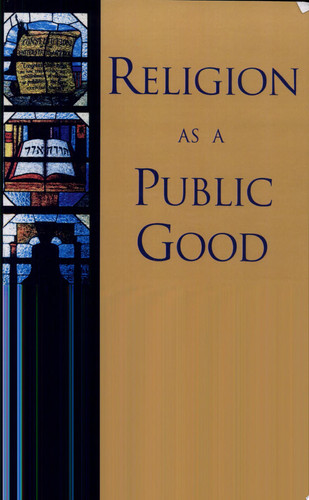
Religion as a public good: Jews and other Americans on religion in the public square

Alan Mittleman
Religion as a Public Good: Jews and Other Americans on Religion in the Public Square explores the often controversial topic of how religion ought to relate to American public life. The sixteen distinguished contributors, both Jewish and Christian, reflect on the topic out of their own disciplines-social ethics, political theory, philosophy, law, history, theology, and sociology. and take a stand based on their religious convictions and political beliefs. The volume is at once scholarly and committed, polemic and civil, reflective and activist. Written in the shadow of 9/11, it invites a new consideration of how religion enhances democratic public life with full awareness of the dangers that religion can sometimes pose. The volume is polemical, as befits the topic, but also civil, as befits a dialogue about an issue of profound significance for democratic citizenship.
Rowman & Littlefield 2003-12-09 336 pages

A mad, mad, mad, mad world: a life in Hollywood

Kramer, Stanley
He proudly calls himself "the most frequently picketed producer in movie history"--A distinction he richly earned by taking on some of the most controversial subjects of our time. In the process, he directed or produced such classics of the American cinema as Guess Who's Coming to Dinner, High Noon, On the Beach, Judgment at Nuremberg, The Defiant Ones, Champion, Inherit the Wind, Ship of Fools, Death of a Salesman, and The Caine Mutiny.
Harcourt Brace 1997 251 pages

Prologue to annihilation: ordinary American and British Jews challenge the Third Reich

Norwood, Stephen H.
"American and British appeasement of Nazism during the early years of the Third Reich went far beyond territorial concessions. In Prologue to Annihilation: Ordinary American and British Jews Challenge the Third Reich, Stephen H. Norwood examines the numerous of ways that the two nations' official position of tacit acceptance of Jewish persecution enabled the policies that ultimately led to the Final Solution and how Nazi annihilationist intentions were clearly discernible even during the earliest years of Hitler's rule. Further, Norwood looks at the nature and impact of American and British Jewish resistance to Nazi persecution and the efforts of Jews at the grassroots level to press Jewish organizations to respond more forcefully to the Nazi menace. He examines the worldwide protest and boycott movements against Germany and German goods as well as mass demonstrations by working-class and lower-middle-class Jews in many American and British cities. Prologue to Annihilation details how the events of 1930-1936 tested American and British societies' willingness to accept Nazism and its anti-Jewish philosophy and illuminates the divisions that existed even within the Jewish community about how best to challenge Nazi antisemitic policies and atrocities"--
Indiana University Press 2021 347 pages

The civil wars of Julia Ward Howe: a biography

Showalter, Elaine
"Julia Howe (1819-1910) was a beautiful, studious New York heiress and aspiring poet when she married Bostonian Dr. Samuel Gridley Howe, a hero of the Greek war of independence against the Turks and an internationally acclaimed pioneer in the education of the blind. Their marriage united two exceptional people. Together the Howes knew many of the key figures of their era, from Charles Dickens and Florence Nightingale in England, to Margaret Fuller, Henry Wadsworth Longfellow, Horace Mann, Charles Sumner, and John Brown. But despite his philanthropic and abolitionist ideals, Dr. Howe did not support married women's work outside the home. He isolated Julia, opposed her literary ambitions, and wasted her inheritance. She defied him by continuing to publish poems and plays while raising their six children. She also secretly wrote a bold novel about a hermaphrodite, undiscovered until long after her death. And during the Civil War, she wrote the words to the most powerful and enduring anthem in the nation's history. Authorship of the 'Battle Hymn of the Republic' made her famous and revered. But she fought her own civil war at home, battling with her husband over her rights to equality, intellectual freedom, and a public voice. As soon as the war ended, she became a pacifist and suffragist leader. In the second half of her life, she came into her own as a tireless campaigner for women's rights and social reform. In this biography, Elaine Showalter tells the story of Howe's determined self-creation and vividly restores her to the pantheon of feminist intellectuals who changed the world"--Jacket
Simon & Schuster 2016-03-08 303 pages

Facing Black and Jew: literature as public space in twentieth-century America

Newton, Adam Zachary
A reading of African American and Jewish American writers from Henry Roth and Ralph Ellison to Philip Roth and David Bradley. Reading the work of such writers alongside and through one another, Newton's book offers an original way of juxtaposing two major traditions in modern American literature, and rethinking the sometimes vexed relationship between two constituencies ordinarily confined to sociopolitical or media commentary alone. Newton combines Emmanuel Levinas's ethical philosophy and Walter Benjamin's theory of allegory in shaping an innovative kind of ethical-political criticism. Through artful, dialogical readings of Saul Bellow and Chester Himes, David Mamet and Anna Deavere Smith, and others, Newton seeks to represent American Blacks and Jews outside the distorting mirror of 'Black-Jewish Relations', and restrictive literary histories alike. A final chapter addresses the Black/Jewish dimension of the O. J. Simpson trial.
Cambridge University Press 1999-07-15 218 pages

Love in black and white: a memoir of race, religion, and romance

Cohen, William S.
Streaming Video on Love In Black & White now available at Expandedbooks.com Most Americans regard the World War II period as belonging to the "greatest generation," but it was also a time when religious intolerance and racial violence flourished. Shamefully, it was commonplace to see signs that read "Whites Only" or "Jews Not Allowed." It is within this world that this compelling memoir is set. William Cohen, born in Bangor, Maine, was the eldest son of a Jewish father and a Protestant Irish mother. Janet Langhart, an African-American, was raised in Indianapolis, Indiana by her single parent mother, a Southern Baptist. The book draws fascinating parallels between the histories of two people from different regions, races, and religions, as both are witnesses to and targets of the social tensions of the day. Throughout Love in Black and White, readers accompany Bill and Janet in their struggle to overcome to the barriers of ethnic and racial bigotry and hatred. The stories are rich and profound. At times they are amusing. Other times, harrowing. Against impossible odds, Bill would be elected to serve his country as a U.S. Congressman and Senator, and Janet would become a prominent television personality, activist, and highly respected businesswoman and author. Opposites in so many ways―in color, faith and culture―seemingly a bundle of contradictions, they meet in 1974, become friends, and eventually fall in love. They decide to marry on Valentine's Day 1996 in the very place that once harbored some of the nation's most prominent racists-the U.S. Capitol. They receive the surprise of a lifetime when Bill is asked by President Bill Clinton to serve as the nation's 20th Secretary of Defense. It is a calling that proves to be life transforming for both him and Janet, as they lead, inspire and bring comfort to the men and women who defend our nation. It is at the Pentagon where they witness just how powerful our nation ca
Rowman & Littlefield Publishers 2007 373 pages