

94 results for "Biography"

Assassination at St. Helena revisited

Anna Held and Flo Ziegfeld
Text: English, French (translation)

Pierre Simon Laplace, 1749-1827: a determined scientist

Errata: an examined life
This is very much not an academic book, though it is, as one would expect, throughout infomed by Steiner's vast and polyglot reading, from the classics through to contemporary science, across fiction, poetry, theology and philosophy It is rather in a genre of its own, littered with entertaining anecdotes, and the closest we will get to an autobiography.

My work in films

Atomic rivals
Goldschmidt, Professor Bertrand

Thomas Couture and the eclectic vision

The Hundred Days
The Hundred Days is a historical non-fiction book written by Philip Guedalla. The book is centered around the period of Napoleon Bonaparte's return to power after his exile to Elba in 1814. This period is known as the Hundred Days, and it marked a significant moment in European history. Guedalla's book provides a detailed account of the events that occurred during this period, including the political and military maneuvers that took place. He also explores the personalities and motivations of the key players involved, including Napoleon himself, as well as the other European leaders who were determined to stop him.The Hundred Days is a well-researched and engaging account of a fascinating period in history. Guedalla's writing is clear and concise, making the book accessible to readers of all levels. It is a must-read for anyone interested in European history or the life and times of Napoleon Bonaparte.This scarce antiquarian book is a facsimile reprint of the old original and may contain some imperfections such as library marks and notations. Because we believe this work is culturally important, we have made it available as part of our commitment for protecting, preserving, and promoting the world's literature in affordable, high quality, modern editions, that are true to their original work.

The Political System of Napoleon Iii

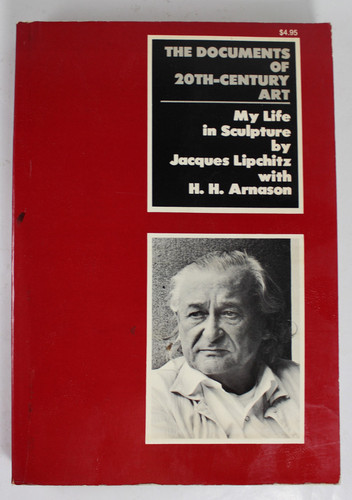
My life in sculpture
The Jews of the Republic: a political history of state Jews in France from Gambetta to Vichy

Origins of molecular biology: a tribute to Jacques Monod

Vidal and his family: from Salonica to Paris : the story of a Sephardic family in the twentieth century
Edgar Morin, one of France's greatest living intellectuals, tells the story of his father, Vidal Nahoum, but also the story of Sephardic Jews, and of Europe. In this 'holographic history' Vidal's story, and that of his family, carries within it the flowering, decline, and death of Jewish culture in Spain, the passage from Empires to Nation States, the complex relations between Jews and Gentiles, between East and West, and, ultimately, the history of the twentieth century itself. Morin's work ranges from the great sweep of global historical events to the everyday details of individual lives, letters, feelings, reflections, and experiences. Vidal was born in 1894 in the Ottoman Empire's great Macedonian port. His great-grandfather came from Tuscany and spoke Italian. His mother tongue was fifteenth-century Spanish. He learned French and German as a child. When he was an adolescent, he dreamed of living in France; he was deported there as a prisoner, and then liberated by the French Prime Minister. He lived through the Balkan wars, the collapse of the Ottoman Empire, and two World Wars. Vidal cannot be isolated from his family. And as Edgar Morin explains, "this book also tells the stories of the men and women in his immediate family When, as his son, I inevitably come into his story... I describe him as objectively as possible. The reverence that inspired me did not call for a work of edification; it implied that I should attempt to write a truthful book. For this reason, the book is not in the least respectful, or at least not in the usual sense of the word. Vidal felt that loving someone meant being able to tease him. The author of these lines, who has inherited something of this trait, does not think it disrespectful to tease or make fun of the people he loves."
