97 results for "History"

A cheerful and comfortable faith: Anglican religious practice in the elite households of eighteenth-century Virginia

Winner, Lauren F.
This enlightening book examines the physical objects found in elite Virginia households of the eighteenth century to discover what they can tell us about their owners’ lives and religious practices. Lauren F. Winner looks closely at punch bowls, needlework, mourning jewelry, baptismal gowns, biscuit molds, cookbooks, and many other items, illuminating the ways Anglicanism influenced daily activities and attitudes in colonial Virginia, particularly in the households of the gentry.
Yale University Press 2010-01-01 272 pages

The queen's necklace

Szerb, Antal
A witty and erudite love letter to a bygone age, from one of Europe's last great humanists. "A sparkling slice of eighteenth-century life" Paul Bailey, Independent In August 1785 Paris buzzed with scandal. It involved an eminent churchman, a notorious charlatan, a female fraudster, a part-time prostitute and the hated Queen herself. At its heart was the most expensive diamond necklace ever assembled and the web of fraud, folly and self-delusion it had inspired. In Szerb's last major work, a witty and often surprising account of events, the story is used as a standpoint from which to survey the entire age. Written in war-torn Hungary in the early 1940s,it constitutes a remarkable gesture of defiance against the brutal world in which the writer lived and died. Antal Szerb (1901-1945) was born in Budapest. Though of Jewish descent, he was baptised at an early age and remained a lifelong Catholic. He rapidly established himself as a formidable scholar, through studies of Ibsen and Blake and histories of English, Hungarian and world literature. He was a prolific essayist and reviewer, ranging across all the major European languages. Debarred by successive Jewish laws from working in a university, he was subjected to increasing persecution, and finally murderedin a forced labour camp in 1945. Pushkin Press publishes his novels The Pendragon Legend , Oliver VII and his masterpiece Journey by Moonlight , as well as the historical study The Queen's Necklace and Love in a Bottle and Other Stories .
Pushkin Press 2013 380 pages

Exclusion and hierarchy: orthodoxy, nonobservance, and the emergence of modern Jewish identity

Ferziger, Adam S.
Following the Jewish Enlightenment, many eighteenth-century Jews chose not to observe the religious laws and customs that had earlier marked them as culturally different from their Christian peers. As the Jewish population became increasingly assimilated, an ultraorthodox movement also emerged, creating a discrete identity for a group within the Jewish community that opted not to move toward the mainstream but instead to embrace the traditional laws .By tracing the evolution of the approach of the Orthodox to their nonpracticing brethren, Adam S. Ferziger sheds new light on the emergence of Orthodoxy as a specific movement within modern Jewish society. In the course of this process, German Orthodoxy in particular articulated a new hierarchical vision of Jewish identity and the structure of modern Jewish society. Viewing Orthodox Judaism as no less a nineteenth-century phenomenon than Reform Judaism or Zionism, Ferziger looks at the ways it defined itself by its relationship to the nonobservant Jewish population. Ferziger argues that as the Orthodox movement emerged, it rejected the stance that the assimilated and nonobservers were deviant outcasts. Instead, they were accepted as legitimate members of a Jewish community, in which Orthodox Jews occupied the pinnacle, as the guardians of its tradition. This book's contribution, however, moves beyond a historical study of Orthodox Judaism. The sociological methodology that Ferziger employs enables the reader to appreciate how other religious groups have sought to carve out their places within the mosaic of modern society.
University of Pennsylvania Press 2005-06-09 303 pages

Subversion and sympathy: gender, law, and the British novel

Martha C. Nussbaum,Alison L. LaCroix
"Subversion and Sympathy : Gender, Law, and the British Novel brings new energy and perspective to the law-and-literature movement. Focusing on the position of women in British novels of the eighteenth and nineteenth centuries - a period during which literature played a creative role in legal reform - the book illustrates the many ways in which the investigation of legal matters sheds new light on major literary works. At the same time, it shows that attention to literary representations of legal issues illuminates developments in the law by bringing to life matters at stake in legal reforms. In fourteen essays, the volume spans a range of gender-related issues, including inheritance, money lending, illegitimacy, marriage, and rape. At the same time, it makes a methodological contribution, displaying (and discussing) a range of perspectives that exemplifies the breadth and range of this interdisciplinary area of scholarship, which links history, gender studies, philosophy, literary studies, and law. The volume seeks to reinvigorate the methodology of the law-and-literature movement by provoking a cross-disciplinary conversation among legal scholars, judges, literary scholars, and feminist philosophers. Participants include those already known for their work on law and literature but also, crucially, legal leading lights who have not previously written about literature. Subversion and Sympathy shows that the conversation between law and literature can enrich our understanding not just of the fields in question but also of the deeper human issues at the heart of a given period - and beyond"--Unedited summary from book jacket.
Oxford University Press 2013-01-31 313 pages

The uses of history in early modern England

Paulina Kewes
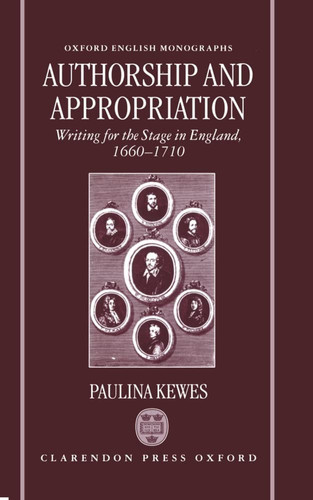
The essays in this collection investigate the ways in which the past was exploited to meet the concerns of the present in early modern England. The understanding of the past in this period was characterized by a deepening and more fully articulated conception of time and history, with its roots in impassioned religious and political controversies. The discourses that arose from this dialogue informed and drew together a daunting range of genres and activities: prose accounts, polemical tracts, poems, plays, romances, secret histories, novels. Although many of these genres are no longer recognized as history, early modern writers and readers treated them as such. In assessing the uses of the past, therefore, these essays consider “literary” and “factual” writings side by side, avoiding traditional chronological and disciplinary divisions and the artificial separation of secular from ecclesiastical history. Cumulatively, they supply the context and provide a vast array of evidence for the way in which the deployment of history for political, religious, moral, aesthetic, or commercial purposes shifted between the mid-sixteenth century and the late eighteenth. Contributors include Ian W. Archer, Eve Tavor Bannet, David Cressy, Richard Dutton, Martin Dzelzainis, Felicity Heal, Christopher Highley, John N. King, Mark Knights, Karen O’Brien, Paul Seaward, John Spurr, Andrew Starkie, Arthur H. Williamson, David Womersley, Daniel R. Woolf, and Blair Worden. Paulina Kewes is a fellow and tutor in English literature at Jesus College, Oxford, and a fellow of the Royal Historical Society. Her publications include Authorship and Appropriation: Writing for the Stage in England, 1660–1710 (1998), and a number of articles on Renaissance, Restoration, and eighteenth-century drama and politics. She has also edited a volume of essays, Plagiarism in Early Modern England (2003), and is completing a book on the staging of history in Elizabethan England.
Huntington Library 2006-11-15 449 pages

Rites and passages: the beginnings of modern Jewish culture in France, 1650-1860

Berkovitz, Jay R.
In September 1791, two years after the Revolution, French Jews were granted full rights of citizenship. Scholarship has traditionally focused on this turning point of emancipation while often overlooking much of what came before. In Rites and Passages, Jay R. Berkovitz argues that no serious treatment of Jewish emancipation can ignore the cultural history of the Jews during the ancien régime. It was during the late seventeenth and eighteenth centuries that several lasting paradigms emerged within the Jewish community—including the distinction between rural and urban communities, the formation of a strong lay leadership, heightened divisions between popular and elite religion, and the strain between local and regional identities. Each of these developments reflected the growing tension between tradition and modernity before the tumultuous events of the French Revolution.Rites and Passages emphasizes the resilience of religious tradition during periods of social and political turbulence. Viewing French Jewish history through the lens of ritual, Berkovitz describes the struggles of the French Jewish minority to maintain its cultural distinctiveness while also participating in the larger social and economic matrix. In the ancien régime, ritual systems were a formative element in the traditional worldview and served as a crucial repository of memories and values. After the Revolution, ritual signaled changes in the way Jews related to the state, French society, and French culture. In the cities especially, ritual assumed a performative function that dramatized the epoch-making changes of the day. The terms and concepts of the Jewish religious tradition thus remained central to the discourse of modernization and played a powerful role in helping French Jews interpret the diverse meanings and implications of emancipation. Introducing new and previously unused primary sources, Rites and Passages offers a fresh perspective on the dynamic relationship between tradition and modernity.
University of Pennsylvania Press 2004 333 pages

Connecting the covenants: Judaism and the search for Christian identity in eighteenth-century England

Ruderman, David B.
The first few decades of the eighteenth century witnessed an important moment in Jewish-Christian relations, as influential Christian scholars increasingly looked to Jewish texts to reveal the truths of their own faith. To what extent could postbiblical writings help them better understand the New Testament? And who would best be able to explicate these connections?Connecting the Covenants focuses on two separate but entwined stories, the first centering around the colorful character of Moses Marcus. The English-born son of wealthy parents and the grandson of the famous autobiographical author Glikl of Hameln, Marcus was a prominent Jew educated in the Ashkenazic yeshivah at Hamburg. On New Year's Day, 1723, Marcus was baptized as a Christian, later publishing a justification of his conversion and a vindication of his newly discovered faith in a small book in London. A trophy convert, he was promoted by figures at the highest levels of the Anglican Church as a cultural mediator between Judaism and Christianity. His modest successes in the world of the elite clerical establishment were followed, however, by conspicuous failures, both intellectual and material.The second story that David Ruderman tells emerges against the background of Marcus's professional decline. In the end, the prize convert proved to be a theologian of limited ability, far outstripped in sophistication and openness to rabbinic learning by a circle of Enlightenment Protestant scholars. It was not the Jew who had abjured Judaism who was willing or able to apply the Mishnah and Talmud to Christian exegesis, but figures such as William Whiston, Anthony Collins, William Wotton, and the Dutch scholar William Surenhusius who seized upon the ways to connect the covenants.
University of Pennsylvania Press 2007 141 pages

Changing perspectives in literature and the visual arts, 1650-1820

Roston, Murray
Continuing with the theme of his work Renaissance Perspectives in Literature and the Visual Arts , Murray Roston applies to a later period the same critical principle: that for each generation there exists a central complex of inherited ideas and urgent contemporary concerns to which each creative artist and writer responds in his or her own way. Roston demonstrates that what emerges is not a fixed or monolithic pattern for each generation but a dynamic series of responses to shared challenges. The book relates leading English writers and literary modes to contemporary developments in architecture, painting, and sculpture. "A sumptuous book. . . . Clearly and gracefully written and cogently argued, Roston's admirable achievement is of paramount significance to literary studies, to cultural and art history, and to aesthetics. . . . Outstanding."--Choice Originally published in 1990. The Princeton Legacy Library uses the latest print-on-demand technology to again make available previously out-of-print books from the distinguished backlist of Princeton University Press. These editions preserve the original texts of these important books while presenting them in durable paperback and hardcover editions. The goal of the Princeton Legacy Library is to vastly increase access to the rich scholarly heritage found in the thousands of books published by Princeton University Press since its founding in 1905.
Princeton University Press 2014 454 pages

The consecration of the writer, 1750-1830: Le sacre de l'écrivain

Bénichou, Paul
The Consecration of the Writer is the definitive study of the first stages of a phenomenon that has profoundly affected world literature: the process by which modern writers ceased to speak as representatives of some religious or political power and instead seized the mantle of spiritual authority in their own right, speaking directly to and in the name of humanity. ø Paul Bänichou identifies three great moments in this process: the advent of the Enlightenment faith in philosophy and the rise of its literary concomitant, the man of letters; the literary creations of the counterrevolution and their surprising involvement in the elevation of the status of poetry; and, finally, the fusion of these tendencies in the early phases of romanticism in France. ø Bänichou deepens our understanding of romanticism by showing that it was a revision of the Enlightenment faith rather than a reaction against it. The extraordinary depth of Bänichou?s research, the originality of his conclusions, and the importance of his methodological reflections make this study an essential reference in the contemporary return to literary history.
University of Nebraska Press 1999-01-01 454 pages

The Age Of Absolutism 1660-1815

Max Beloff
This work has been selected by scholars as being culturally important, and is part of the knowledge base of civilization as we know it. This work is in the "public domain in the United States of America, and possibly other nations. Within the United States, you may freely copy and distribute this work, as no entity (individual or corporate) has a copyright on the body of the work. Scholars believe, and we concur, that this work is important enough to be preserved, reproduced, and made generally available to the public. We appreciate your support of the preservation process, and thank you for being an important part of keeping this knowledge alive and relevant.
Creative Media Partners, LLC 2022-10-27 188 pages

Russia's first modern Jews: the Jews of Shklov

Fishman, David E.
Long before there were Jewish communities in the land of the tsars, Jews inhabited a region which they called medinat rusiya, the land of Russia. Prior to its annexation by Russia, the land of Russia was not a center of rabbinic culture. But in 1772, with its annexation by Tsarist Russia, this remote region was severed from the Polish-Lithuanian Commonwealth; its 65,000 Jews were thus cut off from the heartland of Jewish life in Eastern Europe. Forced into independence, these Jews set about forging a community with its own religious leadership and institutions. The three great intellectual currents in East European Jewry--Hasidism, Rabbinic Mitnagdism, and Haskalah--all converged on Eastern Belorussia, where they clashed and competed. In the course of a generation, the community of Shklov—the most prominent of the towns in the area—witnessed an explosion of intellectual and cultural activity. Focusing on the social and intellectual odysseys of merchants, maskilim, and rabbis, and their varied attempts to combine Judaism and European culture, David Fishman here chronicles the remarkable story of these first modern Jews of Russia.
New York University Press 1995 195 pages