162 results for "Literature"

Three traditions of moral thought

Krook-Gilead, Dorothea
Originally published in 1959, the basis of this book was a course of lectures given at Cambridge University entitled Three Traditions of Moral Thought: Platonic-Christian; Utilitarian; Humanist. Designed chiefly for students of literature, and maintaining the accessible structure of the original lectures, it was intended to provide an introduction to English moral thought and the problems of moral philosophy. Whilst this approach necessarily involved an avoidance of a 'pure' philosophical method, it was enriched by fresh perspectives derived from literary criticism and a direct, non-technical style. This is an informative volume that will be of value to anyone with an interest in moral philosophy, literary criticism, and the relationship between the two.
Cambridge University Press 2011-11-18 370 pages

History from loss: a global introduction to histories written from defeat, colonization, exile and imprisonment

Marnie Hughes-Warrington,Daniel Woolf
"History from Loss challenges the common thought that 'history is written by the winners' and explores how history makers in different times and places across the globe have written histories from loss, even when this has come at the threat to their own safety. A distinguished group of historians from around the globe offer an introduction to different history-makers' lives and ideas, and important extracts from their works which highlight various meanings of loss: from physical ailments to social ostracism, exile to imprisonment, and from dispossession to potential execution. Throughout the volume consideration of the information 'bubbles' of different times and places helps to show how information has been weaponised to cause harm. In this way, the text helps to put current debates about the biases and weaponization of platforms such as social media into global and historical perspective. In combination, the chapters build a picture of history from loss which is global, sustained, and anything but a simple mirror of history made by victors. The volume also includes an Introduction and Afterword which draw out the key meanings of history from loss, and which offer ideas for further exploration. History from Loss provides an invaluable resource for students, teachers, and general readers who wish to put current debates on bias, the politicization of history, and threats to history makers into global and historical perspective"--
Routledge 2023 250 pages

Koheleth The Man and His World

Robert Gordis
Koheleth: The Man and His World is a book written by Robert Gordis that explores the philosophical and existential themes of the biblical book of Ecclesiastes, also known as Koheleth. The book of Ecclesiastes is known for its pessimistic tone and its exploration of the futility of human existence. Gordis delves into the historical and cultural context of the book, as well as its literary style and structure. He also analyzes the philosophical ideas presented in the book, such as the meaning of life, the nature of wisdom, and the inevitability of death. Throughout the book, Gordis provides his own interpretations and insights into the text, drawing on his extensive knowledge of Jewish tradition and philosophy. Koheleth: The Man and His World is a thought-provoking and insightful exploration of one of the most fascinating and enigmatic books of the Hebrew Bible.Texts And Studies Of The Jewish Theological Seminary Of America, V19.This scarce antiquarian book is a facsimile reprint of the old original and may contain some imperfections such as library marks and notations. Because we believe this work is culturally important, we have made it available as part of our commitment for protecting, preserving, and promoting the world's literature in affordable, high quality, modern editions, that are true to their original work.
Literary Licensing, LLC 2012-04 416 pages

Art, the arts and the great ideas

Adler, Mortimer J.
Continuing his exploration of the substance of a basic education, Mortimer J. Adler examines the inherent values of various art forms and considers their significance within a well-rounded curriculum. He maintains that imaginative literature and works of science, philosophy, theology, and history act upon our intellects and stimulate the discussion of ideas. The non-verbal arts, which act directly and powerfully on our emotions and sentiments without the intermediation of thought, are to be valued for their beauty, their workmanship, and the pleasure they give rather than their contributions to a body of ideas. Elucidating his ideas through the discussion of specific works, Adler concludes that an appreciation of all the human arts is essential to the development of a fully cultivated and well-educated person.
Simon & Schuster 1995 148 pages

Global Bioethics: The Impact of the UNESCO International Bioethics Committee

Alireza Bagheri,Jonathan D. Moreno,Stefano Semplici
The UNESCO International Bioethics Committee is an international body that sets standards in the field of bioethics. This collection represents the contributions of the IBC to global bioethics. The IBC is a body of 36 independent experts that follows progress in the life sciences and its applications in order to ensure respect for human dignity and freedom. Currently, some of the topics of the IBC contributions have been discussed in the bioethics literature, mostly journal articles. However, this is a unique contribution by the scholars who developed these universal declarations and reports. The contributors have not only provided a scholarly up to date discussion of their research topics, but as members of the IBC they have also discussed specific practical challenges in the development of such international documents. This book will be suited to academics within bioethics, health care policy and international law.
Springer International Publishing 2016-08-23 201 pages

Three Hundred Years of Psychiatry, 1535-1860 A History Presented in Selected English Texts

Richard Hunter,Ida MacAlpine
""Three Hundred Years of Psychiatry, 1535-1860: A History Presented in Selected English Texts"" is a comprehensive book written by Richard Hunter. The book traces the history of psychiatry from the 16th century to the mid-19th century, focusing on the development of psychiatric theories and practices during this period. The author presents a collection of selected English texts that offer a glimpse into the evolution of psychiatric understanding, including the works of prominent figures such as John Locke, William Cullen, and Philippe Pinel. The book is divided into four parts, each representing a distinct period in the history of psychiatry. Part one covers the period from 1535 to 1700, during which time the concept of madness was still closely tied to religious beliefs. Part two covers the period from 1700 to 1800, during which time the focus shifted towards the medicalization of mental illness. Part three covers the period from 1800 to 1850, during which time the first psychiatric institutions were established and the study of mental illness became more scientific in nature. Part four covers the period from 1850 to 1860, during which time new theories of mental illness emerged, including the idea of moral treatment.Throughout the book, the author provides insightful commentary on the texts and their relevance to the broader history of psychiatry. The book is an essential resource for anyone interested in the history of mental health and the evolution of psychiatric theory and practice.This scarce antiquarian book is a facsimile reprint of the old original and may contain some imperfections such as library marks and notations. Because we believe this work is culturally important, we have made it available as part of our commitment for protecting, preserving, and promoting the world's literature in affordable, high quality, modern editions, that are true to their original work.
Literary Licensing, LLC 2013-07 1134 pages

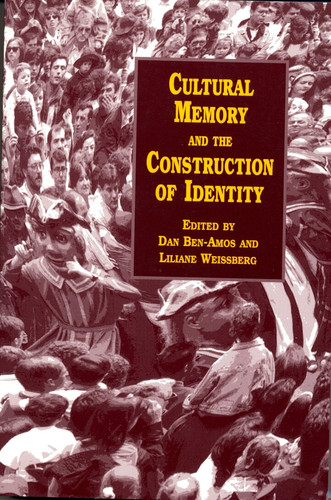
Cultural memory and the construction of identity

Dan Ben-Amos,Liliane Weissberg
This volume explores the dynamics of cultural memory in a variety of contexts. How do we remember persons, objects, events? Memory seems so personal, but, at the same time, it is shaped by collective experience and public representations. Newspapers, television, and even celebrations and festivities mark for us not only who we are, but also who we were and how we lived. Cultural Memory and the Construction of Identity brings together scholars of folklore, literature, history, and communication to explore the dynamics of cultural memory in a variety of contexts. The authors show how memory is shaped and how it operates in uniting society and creating images that attain the value of truth even if they deviate from fact. They point to the relationship between this memory and our notion of "culture." They also discuss this cultural memory on the level of everyday life. Building on research in the field, their contributions clearly show that cultural memory has become the creative invention of the past in service of both the present and an imagined future.
Wayne State University Press 1999 333 pages

Wittgenstein's ladder: poetic language and the strangeness of the ordinary

Perloff, Marjorie
Marjorie Perloff, among our foremost critics of twentieth-century poetry, argues that Ludwig Wittgenstein provided writers with a radical new aesthetic, a key to recognizing the inescapable strangeness of ordinary language. Taking seriously Wittgenstein's remark that "philosophy ought really to be written only as a form of poetry," Perloff begins by discussing Wittgenstein the "poet." What we learn is that the poetics of everyday life is anything but banal. "This book has the lucidity and the intelligence we have come to expect from Marjorie Perloff.—Linda Munk, American Literature "[Perloff] has brilliantly adapted Wittgenstein's conception of meaning and use to an analysis of contemporary language poetry."—Linda Voris, Boston Review " Wittgenstein's Ladder offers significant insights into the current state of poetry, literature, and literary study. Perloff emphasizes the vitality of reading and thinking about poetry, and the absolute necessity of pushing against the boundaries that define and limit our worlds."—David Clippinger, Chicago Review "Majorie Perloff has done more to illuminate our understanding of twentieth century poetic language than perhaps any other critic. . . . Entertaining, witty, and above all highly original."—Willard Bohn, Sub-Stance
University of Chicago Press 1996-10 285 pages

Philippines

Cixous, Hélène
Philippines is Hélène Cixous's reverie or 'true dreaming' which intertwines Freud's uneasy views on telepathy, autobiographical memories conflating Algeria and Paris, childhood and adult life, shared with her brother 'Pete', and literary evocations from Proust and George du Maurier's forgotten novel Peter Ibbetson. Amid telepathic conversations, real or imagined, and life events uncannily answering one another from a distance, Cixous's dense evocative journey ceaselessly 'returns to its starting point' and, like the twin almonds in one shell evoked by the title, reveals intimate, secret bonds between scenes and beings, real and fictional. Its interpretive sharpness delivered with stylistic elegance and candour will make this study typical of Cixous's art, which plies between literature and criticism, appealing not only to scholars and critics interested in psychoanalysis, autobiography and the act of reading, but also to a broader readership captivated by the hallucinatory coincidences between life, dream and fiction, when 'Reality is the dream. The dream is the true reality'.
Polity 2011-02-07 82 pages

Complaint: grievance among friends

Ronell, Avital
"Everyone has a complaint, but nobody likes a complainer. Rather than making things better a complaint can just make things worse. Often its only relief is the harmless and temporary release of steam. But it can also pose as criticism in one of several seemingly respectable forms. In Complaint, Avital Ronell looks at how complaints and complainers have been treated in literature and philosophy, in feedback loops that pay little attention to injustice and suffering. Beginning with Hamlet, and with open awareness of her own experiences, Ronell proceeds to show how complaining is aggravated, distracted, stifled, and transformed. She looks at exemplary complaints made by Friedrich Nietzsche, Hannah Arendt, and Barbara Johnson. She examines the complaint riven history of deconstruction. Renowned for her courage in taking on painful subjects with candor and wit, Ronell dares to listen to the haunting complaints of the dead"--
University of Illinois Press 2018-04-02 244 pages

Themes out of school: effects and causes

Cavell, Stanley
In the first essay of this book, Stanley Cavell characterizes philosophy as a "willingness to think not about something other than what ordinary human beings think about, but rather to learn to think undistractedly about things that ordinary human beings cannot help thinking about, or anyway cannot help having occur to them, sometimes in fantasy, sometimes as a flash across a landscape." Fantasies of film and television and literature, flashes across the landscape of literary theory, philosophical discourse, and French historiography give Cavell his starting points in these twelve essays. Here is philosophy in and out of "school," understood as a discipline in itself or thought through the works of Shakespeare, Molière, Kierkegaard, Thoreau, Brecht, Makavejev, Bergman, Hitchcock, Astaire, and Keaton.
University of Chicago Press 1988-08-15 268 pages

The Ten Commandments in a Changing World

Isaac Klein
The Ten Commandments In A Changing World by Isaac Klein is a book that explores the relevance of the Ten Commandments in contemporary society. The author argues that the Ten Commandments are not just a set of outdated laws but are still relevant and necessary in today's changing world. The book provides a detailed analysis of each commandment and its significance in modern times. It also examines the historical and cultural context in which the commandments were given, and how they have been interpreted over time. The author draws on a wide range of sources, including biblical texts, Jewish and Christian traditions, and contemporary ethical and moral theories. The book is written in a clear and accessible style, making it suitable for both scholars and general readers. It is an insightful and thought-provoking work that challenges readers to reconsider the importance of the Ten Commandments in their own lives and in society as a whole.This scarce antiquarian book is a facsimile reprint of the old original and may contain some imperfections such as library marks and notations. Because we believe this work is culturally important, we have made it available as part of our commitment for protecting, preserving, and promoting the world's literature in affordable, high quality, modern editions, that are true to their original work.
Kessinger Publishing 2008-06 160 pages

Grammars of Creation

Steiner, Mr. George,Steiner, George
“We have no more beginnings,” George Steiner begins in this, his most radical book to date. A far-reaching exploration of the idea of creation in Western thought, literature, religion, and history, this volume can fairly be called a magnum opus. He reflects on the different ways we have of talking about beginnings, on the “core-tiredness” that pervades our end-of-the-millennium spirit, and on the changing grammar of our discussions about the end of Western art and culture. With his well-known elegance of style and intellectual range, Steiner probes deeply into the driving forces of the human spirit and our perception of Western civilization’s lengthening afternoon shadows. Roaming across topics as diverse as the Hebrew Bible, the history of science and mathematics, the ontology of Heidegger, and the poetry of Paul Celan, Steiner examines how the twentieth century has placed in doubt the rationale and credibility of a future tense—the existence of hope. Acknowledging that technology and science may have replaced art and literature as the driving forces in our culture, Steiner warns that this has not happened without a significant loss. The forces of technology and science alone fail to illuminate inevitable human questions regarding value, faith, and meaning. And yet it is difficult to believe that the story out of Genesis has ended, Steiner observes, and he concludes this masterful volume of reflections with an eloquent evocation of the endlessness of beginnings.
Yale University Press 2002-09-01 350 pages

Language and Myth

Ernst Cassirer
In this important study Ernst Cassirer analyzes the non-rational thought processes that go to make up culture. He demonstrates that beneath both language and myth there lies an unconscious "grammar" of experience, whose categories and canons are not those of logical thought. He shows that this prelogical "logic" is not merely an undeveloped state of rationality, but something basically different, and that this archaic mode of thought still has enormous power over even our most rigorous thought, in language, poetry and myth. The author analyzes brilliantly such seemingly diverse (yet related) phenomena as the metaphysics of the Bhagavat Gita, the Melanesian concept of Mana, the Naturphilosophie of Schelling, modern poetry, Ancient Egyptian religion, and symbolic logic. He covers a vast range of material that is all too often neglected in studies of human thought. These six essays are of great interest to the student of philosophy or the philosophy of science, the historian, or the anthropologist. They are also remarkably timely for students of literature, what with the enormous emphasis placed upon "myth" in modern literary speculation. This book is not superficial speculation by a dabbler, but a penetrating study by one of the most profound and sensitive philosophic minds of our time.
Dover Publications, Incorporated 2013-12-03 128 pages

Plato's Symposium.

Rosen, Stanley
Product Description This is the first full-length study of the Symposium to be published in English, and one of the first English works on Plato to take its bearings by the dramatic form of the Platonic dialogue, a thesis that was regarded as heterodox at the time but which today is widely accepted by scholars of the most diverse standpoint. Rosen was also one of the first to study in detail the philosophical significance of the phenomenon of concrete human sexuality, as it is presented by Plato in the diverse characters of the main speakers in the dialogue. His analysis of the theoretical significance of pederasty in the dialogue was highly controversial at the time, but is today accepted as central to Plato's dramatic phenomenology of human existence. Rosen discusses a variety of topics that had previously been neglected in the secondary literature, including the problem of the hybristic nature of the philosopher, the poetical dimension of Plato's conception of philosophy, and the theoretical implication of the difference between Platonic writing and Socratic conversation. Review "Recent years have seen a small but steady flow of major studies in the Platonic dialogues, marked by a marriage of scholarly thoroughness with genuine humanistic warmth. This volume is one such. . . . A wealth of linguistic and cultural lore pertaining to ancient Greece. . . . This book must be in every college library." -- Choice "Rosen treats the Symposium very much from the literary point of view. He has . . . perceptive observations to make on the dramatic elements in Plato's style, on his use of irony, and on his characterizations." -- Times Literary Supplement "Rosen's book is strikingly different from most English writing on Plato. The volume is beautifully produced, and contains an extensive and useful bibliography." -- H. J. Easterling, Classical Review "This exciting book . . . contains much to reflect upon. The author possesses a good knowledge of ancient texts but does not hesitate to provide very instructive references to modern philosophy. . . . One may say of this book what the author says of the Platonic dialogue as compared to a poem or a set of axioms: no description is equivalent to its content or it implications." -- Rmi Brague, Revue Philosophique de Louvain "[H]ighly intelligent and . . . stimulating book." -- Trevor J. Saunders, Journal of Hellenic Studies
Yale 1968 384 pages