282 results for "Medical Science"

Theory of flight

Mises, Richard von
"An outstanding textbook." — Scientific, Medical and Technical Books Almost unsurpassed as a balanced, well-written account of fundamental fluid dynamics, Theory of Flight may still be recommended for a clearer presentation than is to be forced in many more recent works, though it is limited to situations in which air compressibility effects are unimportant. Designed for the college senior or beginning graduate student, the text assumes a knowledge of the principles of calculus and some training in general mechanics. It is unusual in offering a well-balanced introduction, stressing equally theory and practice. It avoids the formidable mathematical structure of fluid dynamics, while conveying by often unorthodox methods a full understanding of the physical phenomena and mathematical concepts of aeronautical engineering. Theory of Flight contains perhaps the best introduction to the general theory of stability, while the introduction to dynamics of incompressible fluids and the chapters on wing theory remain particularly valuable for their clarity of exposition and originality of thought. Mises' position as one of the great pioneers in the development of the aeronautical sciences lends a flavor of authenticity not found in more conventional textbooks. Any student who has made himself familiar with his exposition of the fundamentals and applications will have acquired an excellent background for additional, more specialized fields of modern aeronautical engineering.
Dover Publications 1959-01-01 629 pages

Virtually human: the promise - and the peril - of digital immortality

Rothblatt, Martine Aliana
"Virtually Human explores what the not-too-distant future will look like when cyberconsciousness--simulation of the human brain via software and computer technology--becomes part of our daily lives. Meet Bina48, the world's most sentient robot, commissioned by Martine Rothblatt and created by Hanson Robotics. Bina48 is a nascent Mindclone of Martine's wife that can engage in conversation, answer questions, and even have spontaneous thoughts that are derived from multimedia data in a Mindfile created by the real Bina. If you're active on Twitter or Facebook, share photos through Instagram, or blogging regularly, you're already on your way to creating a Mindfile--a digital database of your thoughts, memories, feelings, and opinions that is essentially a back-up copy of your mind. Soon, this Mindfile can be made conscious with special software--Mindware--that mimics the way human brains organize information, create emotions and achieve self-awareness. This may sound like science-fiction, but the nascent technology already exists. Thousands of software engineers across the globe are working to create cyberconsciousness based on human consciousness and the Obama administration recently announced plans to invest in a decade-long Brain Activity Map project. Virtually Human is the only book to examine the ethical issues relating to cyberconsciousness and Rothblatt, with a Ph. D. in medical ethics, is uniquely qualified to lead the dialogue"--
Picador 2015-10-06 350 pages

The Prokaryotes: Prokaryotic Communities and Ecophysiology

Edward F. DeLong,Stephen Lory,Erko Stackebrandt,Fabiano Thompson,Eugene Rosenberg
Product Description The Prokaryotes is a comprehensive, multi-authored, peer reviewed reference work on Bacteria and Achaea. This fourth edition of The Prokaryotes is organized to cover all taxonomic diversity, using the family level to delineate chapters. Different from other resources, this new Springer product includes not only taxonomy, but also prokaryotic biology and technology of taxa in a broad context. Technological aspects highlight the usefulness of prokaryotes in processes and products, including biocontrol agents and as genetics tools. The content of the expanded fourth edition is divided into two parts: Part 1 contains review chapters dealing with the most important general concepts in molecular, applied and general prokaryote biology; Part 2 describes the known properties of specific taxonomic groups. Two completely new sections have been added to Part 1: bacterial communities and human bacteriology. The bacterial communities section reflects the growing realization that studies on pure cultures of bacteria have led to an incomplete picture of the microbial world for two fundamental reasons: the vast majority of bacteria in soil, water and associated with biological tissues are currently not culturable, and that an understanding of microbial ecology requires knowledge on how different bacterial species interact with each other in their natural environment. The new section on human microbiology deals with bacteria associated with healthy humans and bacterial pathogenesis. Each of the major human diseases caused by bacteria is reviewed, from identifying the pathogens by classical clinical and non-culturing techniques to the biochemical mechanisms of the disease process. The 4th edition of The Prokaryotes is the most complete resource on the biology of prokaryotes. Review From the book reviews:“This book … edited and written by great scientists covers essential contributions on different types of prokaryotic communities as well as on the prokaryotic functions in different environments. … This volume, as well as the whole series, should be available in every large scientific library.” (Ioan I. Ardelean, Bulletin of Micro and Nanoelectrotechnologies, Vol. 5 (3-4), December, 2014) About the Author Eugene Rosenberg, Professor of Microbiology at Tel Aviv University, Israel Edward F. DeLong, Professor at Department of Civil and Environmental Engineering & Department of Biological Engineering, Massachusetts Institute of Technology, Cambridge, MA, USA Stephen Lory, Professor at Department of Microbiology and Molecular Genetics, Harvard Medical School, Boston, MA, USA Erko Stackebrandt, German Collection of Microorganisms and Cell Cultures GmbH, DSMZ, Braunschweig, Germany Fabiano Thompson, Professor at Center of Health Sciences, Federal University of Rio de Janeiro, Brazil
Springer 2013 548 pages

I Am Not Dead-- Yet!, Or, "The Corpse Moved" A Medical Memoir

Robby Benson
A riveting medical memoir actor/writer/director Robby Benson takes us on a candid journey from athletic soft-spoken heartthrob on Broadway and film, to husband, father, professor and courageous survivor of 4 open-heart surgeries. From One on One, Ice Castles, The Chosen, and Disney's Beauty and the Beast to directing Ellen and Friends, the funny and explicit narrative is a must for fans and essential reading for heart patients, patients of all kinds, their loved ones, and anyone searching for what should be the template for healthcare in America. New York Times #1 bestselling author, Michael F. Roizen, M.D. praised I'm Not Dead... Yet : "When you read this funny and courageously blunt book, you'll understand how to gain the vibrancy that Robby and his wife, Karla, have. ...What a great read and what an important story for all patients and their families dealing with a challenging illness."
ValorEditions.com 2012 384 pages

The Interpretation of Nature and the Psyche

Carl Gustav Jung,Wolfgang Ernst Pauli
Carl Gustav Jung (1875-1961) and Wolfgang Ernst Pauli (1900 - 1958) were two of the greatest thinkers of modern times. Jung is the founder of Analytical Psychology and is one of the best known researchers in the field of Dream Interpretation and Symbolization. Pauli was one of the pioneers of Quantum Physics. In 1945, Pauli received the Nobel Prize in Physics after being nominated by Albert Einstein for his "decisive contribution through his discovery of a new law of Nature, the exclusion principle" involving spin theory underpinning the structure of matter and the whole of chemistry. Together they collaborated on this book that was First published in 1952 in German as Naturerklarung und Psyche. C. G. Jung: Synchronizitat als ein Prinzip akausaler Zusammenhange. W. Pauli: Der Einfluss archetypischer Vorstellungen auf die Bildung naturwissenschaftlicher Theorien bei Kepler. However, our reviewer, himself an eminent professor of mathematics, concludes, "After thoroughly studying their writings for many months now, I have come to see clearly that they are both utterly mad.""
Ishi Press International 2012-02 280 pages

The Heart of Man

Erich Fromm
This book is a counterpart to the classic The Art of Loving. Whereas the main topic there was man's capacity to love, the main topic here is his capacity to destroy, his narcissism, and his incestuous fixations. Whereas the topic of non-love fills most of these pages, the problem of love is taken up in a new and broader sense, namely, the love of life. The love of life, independence, and the overcoming of narcissism form "a syndrome of growth" against "a syndrome of decay" formed by love of death and malignant narcissism.
American Mental Health Foundation Incorporated 2022-06-17 154 pages

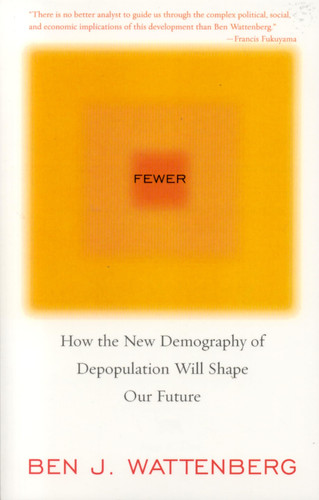
Fewer How the New Demography of Depopulation Will Shape Our Future

Ben J. Wattenberg
For at least 650 years, since the time of the Black Plague, the world's population has headed in only one direction: up. But within a few decades the number of people on earth will level off and then will likely decline over an extended period of time. In Fewer, the author explains how and why birthrates and fertility rates are now falling at an alarming rate in countries throughout the world--both modern and less developed. And he explores the major implications--for world politics, the environment, and the international economy--of this momentous shift. Illustrated with 23 clarifying charts.
Bloomsbury Academic 2004 241 pages

Winter blues survival guide: a workbook for overcoming SAD

Rosenthal, Norman E.,Benton, Christine M.
"Using the engaging tools in this skillfully crafted workbook, sufferers of seasonal affective disorder (SAD) can create their own blueprint for greater well-being all year long. Simple checklists, fill-in-the-blank forms, and nuggets of information help readers monitor their symptoms; determine which treatments to try (including light therapy, meditation, and other self-help options, as well as antidepressants and psychotherapy); and keep track of what works. Readers can download and print additional copies of the worksheets and forms. Individuals with SAD will return to this book repeatedly as they test out Dr. Rosenthal's proven strategies for overcoming low moods, fatigue, sleep problems, and food cravings. See also Dr. Rosenthal's Winter Blues, Fourth Edition, which provides a comprehensive overview of SAD and its treatment"--
The Guilford Press 2014 275 pages

Case studies in rational emotive behavior therapy with children and adolescents

Ellis, Albert
Preeminent psychologist Dr. Albert Ellis combines forces with other renowned therapists to create this rare and inclusive book that captures the realities of counseling with children. Rather than using a traditional case study approach, this work features verbatim transcripts that convey real issues ranging from anger management and self-esteem to peer pressure and bed-wetting. For child therapists and counselors.
Merrill/Prentice Hall 2002 152 pages

Phoenix Without Ashes

Harlan Ellison,Edward Bryant
Written as a collaboration between the multi-Nebula Award winning Ed Bryant and Harlan Ellison, one of the Grand Masters of science fiction and a multiple Hugo-, Nebula-, and Edgar Award-winner, PHOENIX WITHOUT ASHES is the novel edition of Harlan's famous, award-winning teleplay. (Please note this book is the novel edition, not the graphic novel.) The year is 2785, and Devon, a farmer banished for challenging his community's Elders, discovers a secret that changes everything he knew about the world, leading him on a quest to solve a mystery beyond his understanding before his entire world is destroyed in a cataclysm. With a Harlanesque introduction by Harlan Ellison. Harlan is very graciously donating his author's income to Ed for this book. THANK YOU, HARLAN! Because of Ed's financial needs, almost all the profits from this book go directly to Ed. Donations to help with Ed's medical and other financial needs are also most appreciated via www.FriendsOfEd.org. Thank you! About the Author Edward Bryant is the multi-Nebula Award winning author of over a hundred short stories, over a thousand essays and reviews, and one novel with Harlan Ellison, PHOENIX WITHOUT ASHES.
CreateSpace Independent Publishing Platform 2014-01-22 246 pages

Everything is miscellaneous: the power of the new digital disorder

Weinberger, David
From A to Z, Everything Is Miscellaneous will completely reshape the way you think - and what you know - about the world. Includes information on alphabetical order, Amaxon.com, animals, Aristotle, authority, Bettmann Archive, blogs (weblogs), books, broadcasting, British Broadcasting Corporation (BBC), business, card catalog, categories and categorization, clusters, companies, Colon Classification, conversation, Melvil Dewey, Dewey Decimal Classification system, Encyclopaedia Britannica, encyclopedia, essentialism, experts, faceted classification system, first order of order, Flickr.com, Google, Great Books of the Western World, ancient Greeks, health and medical information, identifiers, index, inventory tracking, knowledge, labels, leaf and leaves, libraries, Library of Congress, links, Carolus Linnaeus, lumping and splitting, maps and mapping, marketing, meaning, metadata, multiple listing services (MLS), names of people, neutrality or neutral point of view, New York Public Library, Online Computer Library Center (OCLC), order and organization, people, physical space, everything having place, Plato, race, S.R. Ranganathan, Eleanor Rosch, Joshua Schacter, science, second order of order, simplicity, social constructivism, social knowledge, social networks, sorting, species, standardization, tags, taxonomies, third order of roder, topical categorization, tree, Uniform Product Code (UPC), users, Jimmy Wales, web, Wikipedia, etc. Philosopher Weinberger shows how the digital revolution is radically changing the way we make sense of our lives. Human beings constantly collect, label, and organize data--but today, the shift from the physical to the digital is mixing, burning, and ripping our lives apart. In the past, everything had its one place--the physical world demanded it--but now everything has its places: multiple categories, multiple shelves. Everything is suddenly miscellaneous. Weinberger charts the new principles of digital order that are remaking business, education, politics, science, and culture. He examines how Rand McNally decides what information not to include in a physical map (and why Google Earth is winning that battle), how Staples stores emulate online shopping to increase sales, why your children's teachers will stop having them memorize facts, and how the shift to digital music stands as the model for the future. --
Holt 2008-04-29 277 pages

The Prolongation Of Life

Elie Metchnikoff
This work has been selected by scholars as being culturally important, and is part of the knowledge base of civilization as we know it. This work is in the "public domain in the United States of America, and possibly other nations. Within the United States, you may freely copy and distribute this work, as no entity (individual or corporate) has a copyright on the body of the work. Scholars believe, and we concur, that this work is important enough to be preserved, reproduced, and made generally available to the public. We appreciate your support of the preservation process, and thank you for being an important part of keeping this knowledge alive and relevant.
Creative Media Partners, LLC 2022-10-26 380 pages

Atom and archetype: the Pauli/Jung letters, 1932-1958

Pauli, Wolfgang,Jung, C. G.,Meier, C. A.
In 1932, world-renowned physicist Wolfgang Pauli had already done the work that would win him the 1945 Nobel Prize. He was also suffering after a series of troubling personal events. He was drinking heavily, quarrelling frequently, and experiencing powerful, disturbing dreams. Pauli turned to C. G. Jung for help, forging an extraordinary intellectual conjunction not just between a physicist and a psychologist but between physics and psychology. As their acquaintance developed, Jung and Pauli discussed the nature of dreams and their relation to reality, finding surprising common ground between depth psychology and quantum physics and profoundly influencing each other's work. This portrait of an incredible friendship will fascinate readers interested in psychology, science, creativity, and genius.
Princeton University Press 2014-07-21 320 pages

Methods in neuronal modeling

Christof Koch,Idan Segev
Methods in Neuronal Modeling is the first technical handbook on computational neuroscience. Written for researchers and theoreticians alike, it outlines methods and techniques used for simulating on digital computers the functional properties of single neurons from synapses, dendrites, single cells; and small invertebrate networks to large scale neural networks in the mammalian nervous system. The use of new experimental tools such as selective staining methods, membrane patch electrodes, voltage and calcium-dependent dyes, and multielectrode recordings, together with the, advent of universally available powerful computing, makes it possible to construct detailed and realistic models of neuronal systems. Methods in Neuronal Modeling addresses such questions as what can and should be simulated and what techniques should be used; what experimental parameters are crucial for such simulations, and whether these models may be verified experimentally. Chapters cover simulation of passive dendritic trees, compartmental models of single cells including neurons with a number of different ionic channels, calcium current dynamics, simulations of small invertebrate networks, simulations of the mammalian cortex, connectionists' models, and the use of parallel computers in modeling neural networks. Although the chapters were written by several authors, they are uniform in structure and notation. Detailed examples are given to clarify the different approaches. Each chapter concludes with a description of the model discussed and the details of its implementation on the computer. Christof Koch is an Assistant Professor of Computation and Neural Systems at the California Institute of Technology. Idan Segev is a Lecturer in Neurobiology at the Institute of Life Science, Hebrew University of Jerusalem. Methods in Neuronal Modeling inaugurates the new series in Computational Neuroscience, edited by Terrence J. Sejnowski and Tomaso Poggio. A Bradford Book.
MIT Press 1989-01 524 pages

Slanted Truths: Essays on Gaia, Symbiosis and Evolution

Margulis, Lynn,Sagan, Dorion
This enticing collection is as devoted to the profound power of figures of speech as any oration of old Hellas. Metaphor reigns as we encounter the identification of our Earth as a Single, integrative organism, a tale told in image and passion. The discoveries and conjectures upon which this grand view rest are here as well. I have enjoyed these two dozen pieces hugely. No family tree of animal life but must somewhere disclose a cousinly infolding. We are compact of life past, and the looped handing down is more complex than the Mendel-Morgan dance of chromosomes and genes. That dance is essential, certainly, but it is the vital editing of an epic and many-rooted work, a book more like the Bible than like one great artists Remembrance of Things Past. We follow a few old shelves of bound DNA, not just a single book. Our major biochemical package for oxidative metabolism was de scribed in a small DNA manual, somehow engulfed to become an or ganelle within a lucky ancient ancestral anaerobe, and passed ever since viii FOREWORD from mother to offspring outside of the chromosome shuffie. The sperm do carry half the compact genetic message of the human DNA, but they are too small to transfer this equally essential symbiotic one that comes down from the mothers, within roomy egg after roomy egg.
Copernicus 2011-11-25 396 pages

Seeing the Insane

Sander L. Gilman
Seeing the Insane is a richly detailed cultural history of madness and art in the Western world, showing how the portrayal of stereotypes has both reflected and shaped the perception and treatment of the mentally disturbed. Covering the Middle Ages through the end of the nineteenth century, Sander L. Gilman explores the depictions of mental illness as seen in manuscripts, sculptures, lithographs, and photography. With artistic renderings and medical illustrations side-by-side, this volume includes over 250 visual displays of the mentally ill. These images capture society's reliance on visual motifs to assign concrete qualities to abstract ailments in an attempt to understand the marginalized. Gilman's collection of images demonstrates how society has relegated the mentally ill to a state of "otherness" and portrays how society's perceived realities concerning the insane have morphed and evolved over centuries. Sander L. Gilman, PhD, is a distinguished professor of the Liberal Arts and Sciences as well as Professor of Psychiatry at Emory University. A respected educator, he has served as Old Dominion Visiting Professor of English at Princeton; Northrop Frye Visiting Professor of Comparative Literature at the University of Toronto; Mellon Visiting Professor of Humanities at Tulane University; Goldwin Smith Professor of Humane Studies at Cornell University; and Professor of the History of Psychiatry at Cornell Medical College. He has written and edited several books including The Face of Madness and Sexuality: An Illustrated History . " Seeing the Insane is a visual history of the stereotypes that have shaped the perception of the mentally ill from medieval through modern times. The result is nearly as heartbreaking as a visual history of the Holocaust. In picture after picture, the book portrays centuries of intolerance for deviance, mindless cruelty, unthinking prejudice, and self-righteous abuse of the weak and ill." - American Journal of Psychiatry "As extraordinary in concept as it is in its execution. . . . This remarkable book helps laymen as well as specialists to see the insane, but it does far more. When we study the past, we understand the present. When we see the conventional stereotype images of insanity, we find they still color our concepts of madness. Through these pictures of the insane, we see all humanity. We look, not through a glass darkly, but through a multiplicity of media, brightly." - Antiquarian Bookman Readers interested in related titles from Sander L. Gilman will also want to see: Face of Madness: Hugh W. Diamond and the Origin of Psychiatric Photography (ISBN: 9781626549234), Sexuality: An Illustrated History (ISBN: 9781626549227).
Echo Point Books & Media 2014-04 256 pages

Animal machines

Harrison, Ruth
This is the long-awaited reprint of the classic work of ground-breaking importance on animal welfare. Ruth Harrison's classic Animal Machines, had a profound impact on public opinion and the quality of life of farmed animals when it was published in 1964. Reprinted in its entirety, it gives an accurate, and sometimes shocking, account of intensive farming in the 1960's, still current in large parts of the world today. Harrison's work greatly increased public awareness of animal welfare and led to legal reforms, shaping our better understanding of farm conditions today. It provides a fascinating insight into the system we continue to live with as the global population increases. It includes new chapters by international experts in animal welfare including Marion Stamp Dawkins, discussing the book's significant legacy and impact today. It is suitable for animal welfare researchers, academics and students, welfare associations and charities, veterinary schools, agricultural colleges, agriculturalists, farmers, food quality professionals, farm inspection professionals and the general public.
CABI 2013-03-05 211 pages

Frege's puzzle

Salmon, Nathan U.
The nature of the information content of declarative sentences is a central topic in the philosophy of language. The natural view that a sentence like "John loves Mary" contains information in which two individuals occur as constituents is termed the naive theory, and is one that has been abandoned by most contemporary scholars. This theory was refuted originally by philosopher Gottlob Frege. His argument that the naive theory did not work is termed Frege's puzzle, and his rival account of information content is termed the orthodox theory. In this detailed study, Nathan Salmon defends a version of the naive theory and presents a proposal for its extension that provides a better picture of information content than the orthodox theory gives. He argues that a great deal of what has generally been taken for granted in the philosophy of language over the past few decades is either mistaken or unsupported, and consequently, much current research is focused on the wrong set of questions. Salmon dissolves Frege's puzzle as it is usually formulated and demonstrates how it can be reconstructed and strengthened to yield a more powerful objection to the naive theory. He then defends the naive theory against the new Frege puzzle by presenting an idea that yields both a surprisingly rich and powerful extension of the naive theory and a better picture of information content than that of the original orthodox theory. Nathan Salmon is Professor of Philosophy, University of California at Santa Barbara. A Bradford Book.
Ridgeview Publ. Comp 1991 189 pages