128 results for "Psychology"

Toxic People 10 Ways of Dealing with People Who Make Your Life Miserable

Lillian Glass
Some people really can make you sick Is there anyone in your life-a relative, boss, friend, even a lover or spouse-who drives you crazy? Are there people who make you feel inadequate, unworthy, or just plain miserable? If there's someone who is not supportive and does not wish you well, then you've got a "toxic" person in your life. Do you recognize any of these toxic terrors? -The opportunistic user -The control freak -The meddler -The arrogant know-it-all -The me, myself, and I narcissist -The instigator -The emotional refrigerator -The liar Dr. Glass not only helps you identify the "toxic" people in your life, she also provides ten techniques for successfully dealing with them, including: -Tension-blowout -Unplugging -Direct confrontation -Humor
Your Total Image Publishing 2015-10 283 pages

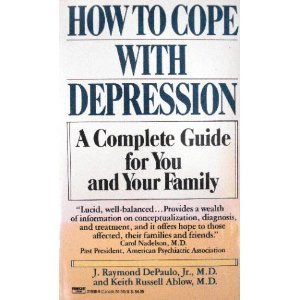
How to Cope with Depression A Complete Guide for You and Your Family

J. Raymond DePaulo,Keith Russell Ablow
Depression can be treated with remarkable results. Here, you will find ground-breaking research and clinical advances in a complete and authoritative guide that includes compelling case histories and concrete examples; practical everyday prescriptions for patients and their families, a look at treatment options, and much more.
Ballantine Books 1991 216 pages

Madness on the Couch Blaming the Victim in the Heyday of Psychoanalysis

Edward Dolnick
In the golden age of "talk therapy," the 1950s and 1960s, psychotherapists saw no limit to what they could do. Believing they had already explained the origins of war, homosexuality, anti-Semitism, and a host of neurotic ailments, they set out to conquer one of mankind's oldest and fiercest foes, mental illness. In Madness on the Couch, veteran science writer Edward Dolnick tells the tragic story of that confrontation. It is a vivid, compelling tale that is told here for the first time. Dolnick focuses on three battles in an epic war: against schizophrenia, autism, and obsessive-compulsive disorder. Schizophrenia, the most dreaded mental illness, strikes its young victims without warning and torments them with hallucinations and mocking voices. Autism claims its victims even younger, at age one or two, and locks them away, cut off from the rest of us by invisible walls. Obsessive-compulsive disorder strikes at any age and entraps its hapless victims in endless rituals. Inspired by their hero, Freud, but bolder even than he, psychoanalysts set out to vanquish those enemies. Armed with only words and the best of intentions, they achieved the worst of outcomes. The symptoms of disease were symbols, these therapists believed, and diseases could be interpreted, like dreams. The ranting of a schizophrenic on a street corner, the retreat of an autistic child from human contact, the endless hand-washing of an obsessive-compulsive were not simply acts but messages. And the message psychoanalysts decoded and delivered to countless families was that parents themselves -- through their subtle hostility -- had driven their children mad. That verdict was not overturned for more than a generation. Clear, dramatic, and authoritative, Madness on the Couch uses the voices of therapists as well as those of patients and their loved ones to describe the controversial methods used to treat the mentally ill, and their heartbreaking consequences. We see the leading lights of psychotherapy at work, including tiny, grandmotherly Frieda Fromm-Reichmann; gawky Gregory Bateson, either a genius or a charlatan, depending on whom one asked; and birdlike R. D. Laing, a slender figure with dark, deep-set eyes and the charisma of a rock star. We meet, too, scientists and family members who fought the reigning dogma of the day. Bernard Rimland, for example, set out to refute the claim that autism was caused by "refrigerator" parents whose coldness had turned their children into zombies. Rimland's only "credential" in his battle with the experts was the fact that his son was autistic. A gripping tale of hubris, arrogant pride, and terrible heartbreak, Madness on the Couch combines the immediacy of superb joumalism with the depth of scrupulous history. It shows us convincingly that in attempting to cure mental illness through talk therapy, psychoanalysis did infinitely more harm than good.
Simon & Schuster 2007-09-21 368 pages

Why Men Won't Commit Getting What You Both Want Without Playing Games

George Weinberg
A provocative book that explains why men are so afraid of commitment -- and what women can do about it. Why is it so hard for a man to say "I love you"? Why is it so hard for a man to ask a woman to marry him, even if this is exactly what he wants? Women work hard at relationships but all too often, just when things seem to be going well, men tend to pull away, cheating themselves out of the happiness they really want...and leaving women feeling hurt and confused. It doesn't have to be that way. In Why Men Won't Commit, celebrated psychologist Dr. George Weinberg explains the secret fears that make men run away from relationships and the simple things that women can do to overcome them. Men want lasting relationships just as much as women do, but they fear that commitment means loss -- most of all, the loss of masculinity. Men are far more fearful and insecure than most women imagine, with the same basic needs dictating their behavior: • The need to be special. • The need to travel light -- to minimize obligations and maximize independence. • The need for loyalty. • The need to be close emotionally, whether or not they can ask for it. Once women understand these needs, they can help men see that commitment is a strength, and not a weakness. Why Men Won't Commit will show women how to enter places where her man has not allowed any other woman to go...and stay there in a loving, committed relationship.
Simon and Schuster 2002 224 pages

Emotional Literacy Intelligence with a Heart

Claude Steiner
This step-by-step program opens the door to achieving emotional power. Instructions are given on how emotional literacy -- intelligence with a heart -- can be learned through practising specific exercises that foster the awareness of emotion in oneself and others, by increasing capacities to love others and oneself while developing honesty, and by taking responsibility for one's actions. Provided are instructions on how to reverse the dangerous self-destructive emotional patterns that can rule a person's life. This program shows individuals how to open their hearts and minds to honest and effective communication, how to survey the emotional landscape, and ultimately how to take responsibility for their emotional lives.
Personhood Press 2003 275 pages

Life's Too Short! Pull The Plug On Self-Defeating Behavior And Turn On The Power Of Self-Esteem

Abraham J. Twerski
In this practical and supportive guide to self-esteem, Dr. Abraham Twerski explains how most self-defeating behavior stems from a sense of inferiority and that practically no one is immune to its hazards. Through his patients' life stories and the humor of cartoons, Dr. Twerski shows that people are far more capable than they consider themselves to be. His advice comes from his experience in helping over 40,000 patients create better lives. Let Dr. Twerski show you how to: * Recognize the symptoms of low esteem-- such as workaholism, anxiety, and depression-- and how to avoid these emotional pitfalls. * Form groups to create a network of comfort and support. * Identify negative behavior patterns and build the confidence to overcome them. * Defeat the self-image delusions that affect everyone. Life's Too Short offers the solutions to problems of inadequacy, shame, and poor self-image. Dr. Twerski's down-to-earth program and optimistic outlook is essential for anyone who feels that life is too short not to live to its fullest.
Macmillan 1997-04-15 208 pages

The Virtue of Inner Strength Developing Extraordinary Resilience Through the Power of Self-Esteem

Nathaniel Branden
Discover T he Virtue of Inner Strength by renowned self-esteem pioneer Nathaniel Branden, a compelling new work that reinvigorates his foundational insights while introducing a powerful new chapter: Self-Esteem as a Spiritual Discipline. Branden--who authored nearly 20 transformative books, including The Psychology of Self-Esteem and The Six Pillars of Self-Esteem --was among the first psychologists to rigorously define self-esteem as the experience of being competent to cope and worthy of happiness. In this essential new volume, Branden blends his hallmark psychological clarity with a fresh spiritual lens, showing how self-esteem is not only a path to personal wellbeing but also a deeper quest of consciousness and integrity. In The Virtue of Inner Strength, you'll: Learn why self-esteem is your most important right--and how defending it is essential for genuine happiness. Understand Branden's classic insight: "Self-esteem is the reputation you get with yourself," developed through competent, confident, courageous action--while misguided actions chip away at your inner strength. Explore his practical self-esteem methods--living consciously, accepting responsibility, integrity, purposefulness, assertiveness, and self acceptance--each building deep psychological resilience. The benefits for the reader: A renewed sense of personal agency: build trust in your mind and expand confidence that you deserve success, love, and fulfillment. Emotional resilience: confront self-doubt, face fears, and channel discomfort as fuel for personal growth. Spiritual clarity: deepen your connection to reality and develop a consciousness rooted in truth, purpose, and integrity. Life affirming habits: cultivate lifelong practices--living consciously, self-responsibly, and with integrity--that protect your inner strength even when challenged. Holistic balance: integrate psychological insight with spiritual discipline to emerge as a whole, self-empowered person. New in this edition: Self-Esteem as a Spiritual Discipline Branden elevates self-esteem from a psychological need to a spiritual practice --a disciplined way of orienting your awareness, truthfulness, and personal integrity. You'll discover: How self-esteem differs from fleeting self-image--a deep container for your thoughts, feelings, and responses. * Why self-esteem is more than "feel good"; when grounded in reality and built through the "six pillars," it transforms into a spiritual achievement. “/li> In a culture that often confuses self-esteem with vanity or entitlement, Branden's work stands firm: true self-esteem is earned, grounded, and crucial for navigating life's complexities. The Virtue of Inner Strength is your comprehensive guide to building an unshakable foundation of inner power--both practical and profound--rooted in psychological insight and spiritual depth.
Ascent Audio 2026-05-12 200 pages

Who am I? personality types for self-discovery

Robert Frager
Carl G. Jung, Sigmund Freud, Deepak Chopra, Claudio Naranjo, Liz Greene, John Lilly, Erik Erikson, Ram Dass, Alexander Lowen, Karen Horney y otros Edición a cargo de Robert Frager A la pregunta esencial "¿quién soy yo?" han dado diversas respuestas las distintas culturas, y, en cada cultura, las distintas escuelas. Es imprescindible conocer estas respuestas, los diversos "mapas" de la psique humana, la profusión de tipologías. El presente libro constituye una fascinante antología donde expertos mundiales en la materia van describiendo los más fundamentales sistemas tipológicos de la personalidad humana. Así vemos desfilar modelos tan famosos como los arquetipos junguianos, los tipos psicológicos freudianos, las estructuras bioenergéticas, tipologías fisiológicas, arquetipos masculinos y femeninos, tipos según la dominancia de la parte derecha o izquierda del cerebro...; pero también sistemas tan antiguos como la astrología, el Tarot, los chakras, los eneagramas, la medicina ayurvédica, etc. A través de todo ello, el lector descubre que existen unos patrones universales en el género humano, y que cabe aplicar dichos patrones a un mejor conocimiento de uno mismo; más aú a desvelar las propias carencias, las zonas atrofiadas de nuestra personalidad, y, en consecuencia, a conseguir un mayor equilibrio físico y mental.
Aquarian 1994-12-02 352 pages

The Treehouse Eccentric Wisdom from My Father on How to Live, Love, and See

Naomi Wolf
Leonard Wolf, a retired professor now in his early eighties, is the kind of person who likes to use a medieval astrolabe, dress in Basque shepherd's clothing, and convince otherwise sensible people to quit their jobs and follow their passions. Leonard believes that inside everyone is an artist, and that happiness in life depends on valuing and acting upon one's creative impulse. In The Treehouse, her most personal book yet, Naomi Wolf outlines her father's lessons in creating lasting success and happiness, and offers inspiration for the artist in all of us. Drawn from Leonard's lecture notes, the chapters of The Treehouse remind us to "Be Still and Listen," "Use Your Imagination," and "Do Nothing Without Passion," and that "Your Only Wage Will Be Joy" and "Mistakes Are Part of the Draft." This is a journey of self-discovery in which the creative endeavor is paramount. The Treehouse is a stirring personal history, a meditation on fathers and daughters, an argument for honoring the creative impulse, and a unique instruction in the art of personal happiness.
Simon and Schuster 2006-05-03 288 pages

Attracting Terrific People How To Find - And Keep - The People Who Bring Your Life Joy

Lillian Glass
Do you recognize these Twenty Types of Terrific People? -The Feel-Gooders -The You, You, and You Anti-Narcissists -The Generous Givers -The Non-Judgers -The Good Mouthers -The Self-Respecters -The Class Acts -The Honest Abes -The Lightened-Ups -The Cheerleaders -The Completely Conscious -The Keep-On-Goers -The Emotionators -The Win-Winners -The Loyalists -The Immediate Doers -The Calculated-Risk Takers -The Non-Victims -The Life Livers -The Enlisters If not, you need to learn about Attracting Terrific People
Macmillan 1998-02-15 224 pages

Mental Health Through Will-Training

Abraham Adolph Low,Abraham a Low M. D.
The Recovery Method was developed by Dr. Abraham Low to prevent relapses and alleviate chronic conditions in people suffering from mental illness or emotional problems. This self-help technique provides cognitive behavioral tools that have helped millions of people manage their symptoms for more than 80 years. Hundreds of peer leaders operate support groups throughout the United States, Puerto Rico, Canada and Ireland. For more information, visit www.recoveryinternational.org
Amazon Digital Services LLC - Kdp 2019-03-18 450 pages

The Extra-Sex Factor

Lewis Yablonsky
Extramarital sex has long defied serious examination. Kinsey was unable to get his subjects to fully cooperate on this critical aspect of their sexual life. Noted sociologist Dr. Lewis Yablonsky has conducted the first major survey, in which he probes the intimate feelings, motivations and reactions of over 1000 men to establish the many provocative questions raised by and about "extra-sex." The vivid, in-depth case histories in The Extra-Sex Factor detail in the men's own words why they decide to have affairs, how they conduct them, and how they relate them to their marriage. The candor of the men is matched by Yablonsky's startling conclusions, which reveal the degree to which society has ignored the realities of male sexuality.
iUniverse 2009-12 316 pages

The Jewish Book of Grief and Healing A Spiritual Companion for Mourning

Stuart M. Matlins
Wisdom, solace and inspiration from Jewish tradition to bring you hope and healing after loss. "Mourning can open doors you may not have imagined before your life was shaken by loss. This book provides keys to those doors and a way into the rooms beyond them. Whether you stand at grief's threshold or give counsel to someone who does, this book can offer guidance.... With words of wisdom, ranging from comforting to provocative, each author stands at the entrance to one of mourning's doors, extending a hand to offer the key you will need, inviting you into one of these deep conversations." --from the Preface by Rabbi Anne Brener, LCSW Beloved and respected spiritual leaders from across the Jewish denominational spectrum share insights from their experience, Jewish tradition and their personal encounters with grief and healing. This wide range of perspectives, offered with grace and compassion, will be a treasured resource in your time of grief. Whether mourning a recent loss or experiencing pain from old scars, you will be encouraged and challenged to be fully, vulnerably present to your emotions; forgive your own shortcomings and those of others; and remain open to love despite pain and uncertainty. Contributors: Rabbi Bradley Shavit Artson, DHL - Rabbi Anne Brener, LCSW - Dr. Norman J. Cohen - Rabbi Mike Comins - Rabbi David A. Cooper - Rabbi Rachel Cowan - Rabbi Edward Feinstein - Rabbi Nancy Flam - Rabbi Lori Forman-Jacobi - Rabbi Dayle A. Friedman, MSW, MA, BCC - Debbie Friedman - Rabbi Nancy Fuchs-Kreimer, PhD - Nan Fink Gefen, PhD - Rabbi Neil Gillman, PhD - Rabbi Edwin Goldberg, DHL - Rabbi Arthur Green, PhD - Dr. David Hartman - Rabbi Lawrence A. Hoffman, PhD - Rabbi Margaret Holub - Rabbi Karyn D. Kedar - Rabbi Lawrence Kushner - Rabbi Maurice Lamm - Rabbi Naomi Levy - Rabbi David Lyon - Rabbi Joseph B. Meszler - Rabbi James L. Mirel - Rabbi Kerry M. Olitzky - Rabbi Daniel F. Polish, PhD - Rabbi Sandy Eisenberg Sasso - Rabbi Harold M. Schulweis - Rabbi Dannel I. Schwartz - Rabbi Elie Kaplan Spitz - Rabbi Rami Shapiro - Rachel Josefowitz Siegel - Rabbi Shira Stern, DMin, BCC - Rabbi Nancy Wechsler-Azen - Karen Bonnell Werth - Rabbi Nancy H. Wiener, DMin - Dr. Ron Wolfson - Rabbi Sheldon Zimmerman For use by individuals as well as in groups or counseling settings.
LongHill Partners, Incorporated 2016-03-25 176 pages

The Art Of Thinking

Dagobert D. Runes
The Art of Thinking by Dagobert D. Runes is a comprehensive guide to developing critical thinking skills. The book covers a wide range of topics, including logic, reasoning, problem-solving, decision-making, and creativity. Runes explores the importance of clear and concise communication, and provides practical techniques for improving one's ability to express ideas effectively.The Art of Thinking is divided into three main sections. The first section focuses on the foundations of critical thinking, including the nature of thought and the principles of logic. The second section delves into specific thinking skills, such as analysis, synthesis, and evaluation. The final section explores the practical applications of critical thinking in various contexts, including business, education, and personal relationships.Throughout the book, Runes provides numerous examples and exercises to help readers develop and apply their critical thinking skills. He also emphasizes the importance of self-reflection and continuous learning, encouraging readers to regularly evaluate their own thinking processes and seek out new information and perspectives.Overall, The Art of Thinking is a valuable resource for anyone looking to improve their critical thinking skills and become a more effective and thoughtful communicator.This scarce antiquarian book is a facsimile reprint of the old original and may contain some imperfections such as library marks and notations. Because we believe this work is culturally important, we have made it available as part of our commitment for protecting, preserving, and promoting the world's literature in affordable, high quality, modern editions, that are true to their original work.
Literary Licensing, LLC 2011-05 96 pages

Psychology of Handwriting

SAUDEK, Robert.
This scarce antiquarian book is a facsimile reprint of the original. Due to its age, it may contain imperfections such as marks, notations, marginalia and flawed pages. Because we believe this work is culturally important, we have made it available as part of our commitment for protecting, preserving, and promoting the world's literature in affordable, high quality, modern editions that are true to the original work.
- 1925 300 pages