457 results for "Science"

The Great American Broadcast A Celebration of Radio's Golden Age

Leonard Maltin
The popular authority on movies, television, and video now tunes in to the Golden Age of Radio. This fascinating and long-overdue celebration of the way things were includes... -- Behind the scenes stories about Orson Welles, Lucille Ball, Jack Benny, Bob Hope, Kirk Douglas, Joan Crawford, Bette Davis, and many, many others -- The history of radio soap operas, westerns, variety shows, comedies, and thrillers -- Hundreds of revealing personal interviews with radio legends -- More than 125 rare photographs and illustrations
Penguin Publishing Group 2000 324 pages

Law and the Modern Mind

Jerome Frank,Brian H. Bix
Law and the Modern Mind first appeared in 1930 when, in the words of Judge Charles E. Clark, it "fell like a bomb on the legal world." In the generations since, its influence has grown-today it is accepted as a classic of general jurisprudence.The work is a bold and persuasive attack on the delusion that the law is a bastion of predictable and logical action. Jerome Frank's controversial thesis is that the decisions made by judge and jury are determined to an enormous extent by powerful, concealed, and highly idiosyncratic psychological prejudices that these decision-makers bring to the courtroom.
Taylor & Francis Group 2017-10-12 448 pages

The postmodern turn: new perspectives on social theory

Steven Seidman
Counter The Postmodern Turn gathers together in one volume some of the most important statements of the postmodern approach to human studies. In addressing postmodern social theory and emphasising the social role of knowledge, this book abandons the disciplinary boundaries separating the sciences and the humanities. The first collection of its kind, it provides the classic essays of authors such as Lyotard, Haraway, Foucault and Rorty. Contributors include well-known theorists in the fields of sociology, anthropology, women's and gay studies, philosophy, and history.
Cambridge University Press 1994-11-25 312 pages

As a Jew: reclaiming our story from those who blame, shame, and try to erase us

Hurwitz, Sarah
"At thirty-six, Sarah Hurwitz was a typical lapsed Jew. On a whim, she attended an introduction to Judaism class and was astonished by what she discovered: thousands of years of wisdom from her ancestors about what it means to be human. That class sparked a journey of discovery that transformed her life. Years later, as Hurwitz wrestled with what it means to be Jewish at a time of rising antisemitism, she wondered: Where had the Judaism she discovered as an adult been all her life? Why hadn't she seen the beauty and depth of her tradition in those dull synagogue services and Hebrew school classes she'd endured as a kid? And why had her Jewish identity consisted of a series of caveats and apologies: I'm Jewish, but not that Jewish . . . I'm just a cultural Jew . . . I'm just like everyone else but with a fun ethnic twist-a dash of neurosis, a touch of gallows humor-a little different, but not in a way that would make anyone uncomfortable. Seeking answers, she went back through time to discover how hateful myths about Jewish power, depravity, and conspiracy have worn a neural groove deep into the world's psyche, shaping not just how others think about Jews, but how Jews think about themselves. She soon realized that the Jewish identity she'd thought was freely chosen was actually the result of thousands of years of antisemitism and two centuries of Jews erasing parts of themselves and their tradition in the hope of being accepted and safe. In As a Jew, Hurwitz documents her quest to take back her Jewish identity, how she stripped away the layers of antisemitic lies that made her recoil from her own birthright and unearthed the treasures of Jewish tradition. With antisemitism raging worldwide, Hurwitz's defiant account of reclaiming the Jewish story and learning to live as a Jew, without apology, has never been timelier or more necessary"-- Provided by publisher.
HarperOne, an imprint of HarperCollins Publishers 2025 308 pages

American scream: Allen Ginsberg's Howl and the making of the Beat Generation

Raskin, Jonah
Written as a cultural weapon and a call to arms, Howl touched a raw nerve in Cold War America and has been controversial from the day it was first read aloud nearly fifty years ago. This first full critical and historical study of Howl brilliantly elucidates the nexus of politics and literature in which it was written and gives striking new portraits of Allen Ginsberg, Jack Kerouac, and William Burroughs. Drawing from newly released psychiatric reports on Ginsberg, from interviews with his psychiatrist, Dr. Philip Hicks, and from the poet's journals, American Scream shows how Howl brought Ginsberg and the world out of the closet of a repressive society. It also gives the first full accounting of the literary figures―Eliot, Rimbaud, and Whitman―who influenced Howl, definitively placing it in the tradition of twentieth-century American poetry for the first time. As he follows the genesis and the evolution of Howl, Jonah Raskin constructs a vivid picture of a poet and an era. He illuminates the development of Beat poetry in New York and San Francisco in the 1950s--focusing on historic occasions such as the first reading of Howl at Six Gallery in San Francisco in 1955 and the obscenity trial over the poem's publication. He looks closely at Ginsberg's life, including his relationships with his parents, friends, and mentors, while he was writing the poem and uses this material to illuminate the themes of madness, nakedness, and secrecy that pervade Howl. A captivating look at the cultural climate of the Cold War and at a great American poet, American Scream finally tells the full story of Howl―a rousing manifesto for a generation and a classic of twentieth-century literature.
University of California Press 2004-04-07 295 pages

A hunter-gatherer's guide to the 21st century: evolution and the challenges of modern life

Heying, Heather,Weinstein, Bret
A bold, provocative exploration of the tension between our evolutionary history and our modern woes - and what we can do about it We are living through the most prosperous age in all of human history, yet we are listless, divided and miserable. Wealth and comfort are unparalleled, but our political landscape is unmoored, and rates of suicide, loneliness and chronic illness continue to skyrocket. How do we explain the gap between these truths? And how should we respond? For evolutionary biologists Heather Heying and Bret Weinstein, the cause of our woes is clear: the modern world is out of sync with our ancient brains and bodies. We evolved to live in clans, but today many people don't even know their neighbours' names. Survival in our earliest societies depended on living in harmony with nature, but today the food we eat, the work we do - even the light we absorb - is radically different from what our minds and bodies evolved to expect. In this book, Heying and Weinstein draw on decades of their work teaching in college classrooms and exploring earth's most biodiverse ecosystems to confront today's pressing social ills - from widespread sleep deprivation and dangerous diets to damaging parenting styles and backward education practices. A Hunter-Gatherer's Guide to the 21st Century outlines a science-based worldview that will empower you to live a better, wiser life.
Swift Press 2022-09 301 pages

Dangerous Offenders The Elusive Target of Justice

Hauser Professor of Nonprofit Organizations Mark H Moore,Mark H. Moore,Susan R. Estrich,Robert Kingsley Professor of Law and Political Science Susan R Estrich,Daniel McGillis,William Spelman
Americans rank crime among the most urgent of social concerns. Overflowing prisons and public outcry have led many to propose that the criminal justice system could control crime more effectively by focusing on dangerous offenders. Recent social studies have suggested that serious criminality is highly concentrated and that high-rate offenders can be distinguished from others on the basis of prior criminal conduct, drug abuse, and employment record. Such studies urge judges to shift from rehabilitative sentencing to selective incapacitation, with longer prison sentences for convicted criminals who are deemed unusually dangerous. In response to these recommendations, some prosecutors' offices have established career criminal units designed to assure that repeat offenders will be prosecuted to the full measure of the law. Some police departments are experimenting with "perpetrator-oriented patrols" targeted on suspected high-rate offenders. The authors of this major book in criminal jurisprudence describe and analyze the intellectual and social challenge posed to public officials by this new thrust in criminal justice policy. They develop a framework for evaluating policies that focus on dangerous offenders. They first examine the general issues that arise as society considers the benefits and risks of concentrating on a particular category of criminals. They then outline how that approach might work at each stage of the criminal justice system--sentencing, pretrial detention, prosecution, and investigation. This cogently argued book provides much needed guidance on the crucial questions of whether sharpened attention to dangerous offenders is just, whether such a policy can be effective in managing the problem of crime, which applications seem particularly valuable, what the long-term risks to social institutions are, and what uncertainties must be monitored and resolved as the policy evolves.
Harvard University Press 2013-10 258 pages

Objective Knowledge An Evolutionary Approach

Karl Popper
'We are workers who are adding to the growth of objective knowledge as masons work on a cathedral.' - Karl Popper, Objective Knowledge The extent and scope of human knowledge is arguably one of humankind's greatest achievements. Since Descartes, however, the theory of human knowledge has been mainly what philosophers call subjectivist: even scientific knowledge was regarded as a special kind of human belief, but human nonetheless. In Objective Knowledge , which contains some of his most important writings on epistemology, Karl Popper breaks decisively and controversially with this view of human knowledge. A realist and a fallibilist, he argues that human knowledge, stated in human language, is no longer part of ourselves but open to objective criticism. Above all, Popper argues that human knowledge grows through a process of conjecture, testing and criticism. Such objective knowledge has significance also for us as individuals, as critical interaction with problem-situation and the constant process of trial and error playing a role in all walks of life, from philosophy and science to music and art. A brilliant exposition of Popper's theory of knowledge, this Routledge Classics edition includes a new Introduction by Jeremy Shearmur, which provides some helpful context to Objective Knowledge and Popper's philosophy in general.
Routledge, Chapman & Hall, Incorporated 2026-02-16 432 pages

A Preface to Politics

Walter Lippmann
Walter Lippmann (September 23, 1889 - December 14, 1974) was an American writer, reporter, and political commentator famous for being among the first to introduce the concept of Cold War, coining the term "stereotype" in the modern psychological meaning, and critiquing media and democracy in his newspaper column and several books, most notably his 1922 book Public Opinion.
CreateSpace Independent Publishing Platform 2016-03-07 120 pages

Keep the River on Your Right

Tobias Schneebaum
The author of the classic Keep the River on Your Right here tells the remarkable story of his four years among the Asmat of New Guinea, a jungle-dwelling people rumored to have killed Michael Rockefeller. Instead of ferocious cannibals, Schneebaum found a regal, loving, gentle people who freely accepted him and initiated him into a way of life no outsider had ever seen before. Adopted into an Asmat family in the village whose people were said to have killed Rockefeller, he crossed the boundaries into another culture and another age, learning secrets no other outsider had been allowed to see before. But it wasn't until Schneebaum met Akatpitsjin, a handsome married man with five children, that he entered the erotic world of the Asmat, when the two became "exchange friends' and lovers, a practice basic to the sexual life of the village. Schneebaum's encounter with the Asmat ultimately became something more intimate and liberating for him than the mere discovery of tribal secrets. He confronted himself. His odyssey is as much the record of a journey into himself as it is a unique and sensitively observed account of a vanishing society, written with a shimmering sensuality that has no equal in the literature of anthropology or self-confession.
Grove Press 1988 184 pages

The Integral Urban House Self Reliant Living in the City

Sim Van Der Ryn,Helga Olkowski,Tom Javits,Farallones Institute
The Integral Urban House: Self Reliant Living in the City is a comprehensive guide to achieving a completely sustainable urban lifestyle by creating a mini-ecosystem where residents grow their own fruits and vegetables, raise chickens, rabbits, and fish, recycle 90% of their waste, solar heat their hot water, and use a variety of other alternative technologies-all on a 1/8-acre city lot. Long considered the bible of urban homesteading, this book is the result of four years of living with and refining the systems of the Integral Urban House in Berkeley, California-a collaborative project which combined the collective skills of the members of the Farallones Institute to develop a center for creating and testing experimental, ecologically stable and resource-conserving living systems. With its vision of an intimate connection between the urban habitat and ecological principles The Integral Urban House will inspire and empower people to act within their own communities to create places where they can live more sustainably. The Integral Urban House: Self-Reliant Living in the City is a magnificent, inspiring record of eco-technically effective intelligent human cooperation... This is magnificent news for humanity. We are on our way. -- R. Buckminster Fuller Civilized cities, nourishing food, renewable energy, closed nutrient cycles, -- these form the vision of this pioneering guidebook. With it we can start to build a new urban culture that is practical, sustainable, inviting and exciting. -- Amory Lovins
New Society Publishers, Limited 2008 508 pages

Microtrends The Small Forces Behind Tomorrow's Big Changes

Mark Penn
The adviser to Senator Hillary Clinton, Bill Gates, and President Bill Clinton proves that small is big by identifying 75 hidden-in-plain-sight trends that are moving America, revealing that the nation is no longer a melting pot but a collection of communities with many individual tastes and lifestyles. "The ideas in his book will help you see the world in a new way." --Bill Clinton "Mark Penn has a keen mind and a fascinating sense of what makes America tick, and you see it on every page of Microtrends ." --Bill Gates In 1982, readers discovered Megatrends . In 2000, The Tipping Point entered the lexicon. Now, in Microtrends , one of the most respected and sought-after analysts in the world articulates a new way of understanding how we live. Mark Penn, the man who identified "Soccer Moms" as a crucial constituency in President Clinton's 1996 reelection campaign, is known for his ability to detect relatively small patterns of behavior in our culture-microtrends that are wielding great influence on business, politics, and our personal lives. Only one percent of the public, or three million people, is enough to launch a business or social movement. Relying on some of the best data available, Penn identifies more than 70 microtrends in religion, leisure, politics, and family life that are changing the way we live. Among them: People are retiring but continuing to work. Teens are turning to knitting. Geeks are becoming the most sociable people around. Women are driving technology. Dads are older than ever and spending more time with their kids than in the past. You have to look at and interpret data to know what's going on, and that conventional wisdom is almost always wrong and outdated. The nation is no longer a melting pot. We are a collection of communities with many individual tastes and lifestyles. Those who recognize these emerging groups will prosper. Penn shows readers how to identify the microtrends that can transform a business enterprise, tip an election, spark a movement, or change your life. In today's world, small groups can have the biggest impact.
Grand Central Publishing 2007-09 448 pages

Boots of Leather, Slippers of Gold The History of a Lesbian Community

Elizabeth Lapovsky Kennedy,Madeline D. Davis
Boots of Leather, Slippers of Gold traces the evolution of the lesbian community in Buffalo, New York from the mid-1930s up to the early 1960s. Drawing upon the oral histories of 45 women, it is the first comprehensive history of a working-class lesbian community. These poignant and complex stories show how black and white working-class lesbians, although living under oppressive circumstances, nevertheless became powerful agents of historical change. Based on 13 years of research, Boots of Leather, Slippers of Gold ranges over such topics as sex, relationships, coming out, butch-fem roles, motherhood, aging, racism, work, oppression and pride. Kennedy and Davis provide a unique insider's perspective on butch-fem culture and argue that the roots of gay and lesbian liberation are found specifically in the determined resistance of working-class lesbians.
Taylor & Francis Group 1993-04-19 464 pages

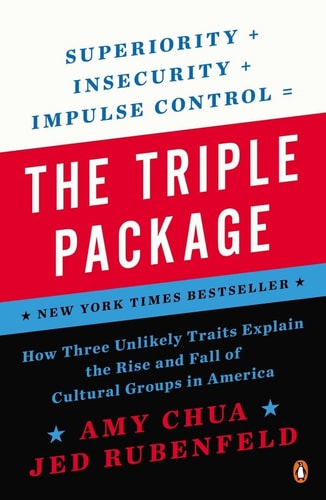
The Triple Package How Three Unlikely Traits Explain the Rise and Fall of Cultural Groups in America

Amy Chua,Jed Rubenfeld
"That certain groups do much better in America than others — as measured by income, occupational status, test scores, and so on — is difficult to talk about. In large part this is because the topic feels racially charged. The irony is that the facts actually debunk racial stereotypes. There are black and Hispanic subgroups in the United States far outperforming many white and Asian subgroups. Moreover, there’s a demonstrable arc to group success — in immigrant groups, it typically dissipates by the third generation — puncturing the notion of innate group differences and undermining the whole concept of 'model minorities.'" Mormons have recently risen to astonishing business success. Cubans in Miami climbed from poverty to prosperity in a generation. Nigerians earn doctorates at stunningly high rates. Indian and Chinese Americans have much higher incomes than other Americans; Jews may have the highest of all. Why do some groups rise? Drawing on groundbreaking original research and startling statistics, The Triple Package uncovers the secret to their success. A superiority complex, insecurity, impulse control—these are the elements of the Triple Package, the rare and potent cultural constellation that drives disproportionate group success. The Triple Package is open to anyone. America itself was once a Triple Package culture. It’s been losing that edge for a long time now. Even as headlines proclaim the death of upward mobility in America, the truth is that the old-fashioned American Dream is very much alive—but some groups have a cultural edge, which enables them to take advantage of opportunity far more than others. • Americans are taught that everyone is equal, that no group is superior to another. But remarkably, all of America’s most successful groups believe (even if they don’t say so aloud) that they’re exceptional, chosen, superior in some way. • Americans are taught that self-esteem—feeling good about yourself—is the key to a successful life. But in all of America’s most successful groups, people tend to feel insecure, inadequate, that they have to prove themselves. • America today spreads a message of immediate gratification, living for the moment. But all of America’s most successful groups cultivate heightened discipline and impulse control. But the Triple Package has a dark underside too. Each of its elements carries distinctive pathologies; when taken to an extreme, they can have truly toxic effects. Should people strive for the Triple Package? Should America? Ultimately, the authors conclude that the Triple Package is a ladder that should be climbed and then kicked away, drawing on its power but breaking free from its constraints. Provocative and profound, The Triple Package will transform the way we think about success and achievement.
Penguin 2015-01-27 352 pages

Toward a General Theory of Action

Talcott Parsons,Edward Shils
This work has been selected by scholars as being culturally important and is part of the knowledge base of civilization as we know it. This work is in the public domain in the United States of America, and possibly other nations. Within the United States, you may freely copy and distribute this work, as no entity (individual or corporate) has a copyright on the body of the work. Scholars believe, and we concur, that this work is important enough to be preserved, reproduced, and made generally available to the public. To ensure a quality reading experience, this work has been proofread and republished using a format that seamlessly blends the original graphical elements with text in an easy-to-read typeface. We appreciate your support of the preservation process, and thank you for being an important part of keeping this knowledge alive and relevant.
Creative Media Partners, LLC 2018-10-15 520 pages