619 results for "Social Media"

Writing for television, radio, and new media

Hilliard, Robert L.
Writing for Television, Radio, and New media has been the leading work in its field for more than fifty years. Its frequently updated revisions, including the eleventh edition, combine the best principles and examples of the past with those of contemporary practice. Its thorough coverage of concepts, approaches, and techniques concentrates on the key media formats of commercials; news and sports; documentaries; reality programs; talk shows; interviews; music programs; corporate, educational, and children's formats; and drama and sitcoms. The text also presents basic information that writers need to know about production techniques, demographics, copyrights, and career opportunities. New material on social media allows today's students to understand the continued importance of clear writing and shows them how their digital skills can transfer to career opportunities.
Cengage Learning 2015 503 pages

Bad news: how woke media is undermining democracy

Ungar-Sargon, Batya
"Bad News is a response to Thomas Frank's 2004 book "What's the Matter with Kansas." I ask the same question he asked about the right, but about the left: Why is the media obsessed with racism, even though it's getting objectively better by every measure we have? I argue that the liberal media is mainstreaming a woke culture war based on ideas that were relegated to the academic fringe as recently as a decade ago because it's in their economic interests to do so. It explores how digital media and social media supplied journalists, now part of the American elite, with an alternative way to feel like heroes while further consolidating power and wealth in the hands of the few rather than the many. The book then explores the larger context of the great American class divide, and how journalism has been both a product and accelerator of inequality"--
Encounter Books 2021 301 pages

A time to build: from family and community to Congress and the campus, how recommitting to our institutions can revive the American dream

Levin, Yuval
"A moving call to recommit to the great project of our common life." ( Wall Street Journal ) Americans are living through a social crisis. Our politics are polarized and bitterly divided. Culture wars rage on campuses, social media, and sometimes in the streets and public squares. And for too many Americans, alienation can descend into despair, weakening families and communities. Left and right alike have responded with anger at our institutions, and use only metaphors of destruction to describe the path forward: cancelling, defunding, draining the swamp. But, as Yuval Levin argues, this is a misguided prescription, rooted in a defective diagnosis. The social crisis we confront is defined not by an oppressive presence but by a debilitating absence of the forces that unite us and militate against alienation. In A Time to Build , now updated with a new epilogue, Levin argues that today is not a time to tear down, but rather to build and rebuild by committing ourselves to the institutions around us. From the military to churches, from families to schools, these institutions provide the forms and structures we need to be free. By taking concrete steps to help them be more trustworthy, we can renew the ties that bind Americans to one another.
Basic Books 2023-11-14 272 pages

Things a little bird told me

Stone, Biz
A fresh, entertaining book about the power of creativity and how to harness it, from co-founder of Twitter Biz Stone. Biz Stone, the co-founder of Twitter, discusses innovation, creativity and the secrets of being a successful entrepreneur, through stories from his remarkable life and career. THINGS A LITTLE BIRD TOLD ME. From GQ's 'Nerd of the Year' to one of Time's most influential people in the world, Biz Stone represents different things to different people. But he is known to all as the creative, effervescent, funny, charmingly positive and remarkably savvy co-founder of Twitter -- the social media platform that singlehandedly changed the way the world works. Now, Biz tells fascinating, pivotal, and personal stories from his early life and his careers at Google and Twitter, sharing his knowledge about the nature and importance of ingenuity today. In Biz's world: From GQ's 'Nerd of the Year' to one of Time's most influential people in the world, Biz Stone represents different things to different people. But he is known to all as the creative, effervescent, funny, charmingly positive and remarkably savvy co-founder of Twitter -- the social media platform that singlehandedly changed the way the world works. Now, Biz tells fascinating, pivotal, and personal stories from his early life and his careers at Google and Twitter, sharing his knowledge about the nature and importance of ingenuity today. In Biz's world: ▪Opportunity can be manufactured ▪Great work comes from abandoning a linear way of thinking ▪Creativity never runs out ▪Asking questions is free ▪Empathy is core to personal and global success. In this book, Biz also addresses failure, the value of vulnerability, ambition, and corporate culture. Whether seeking behind-the-scenes stories, advice, or wisdom and principles from one of the most successful businessmen of the new century, THINGS A LITTLE BIRD TOLD ME will satisfy every reader.
Macmillan 2014-04-24 222 pages

The death of the artist: how creators are struggling to survive in the age of billionaires and big tech

Deresiewicz, William
"Over the last twenty years, art has become more accessible than ever before. A painter can post their latest creation on Instagram and wait as the likes pile up; a budding filmmaker can shoot a clip on their iPhone, then upload it to YouTube for thousands to view. The digital landscape has fundamentally altered what it means to be creative, as well as how consumers interact with artistic production both economically and curatorially. William Deresiewicz, a leading critic of contemporary culture in America, argues that we are in the midst of an epochal transformation within art. Whereas the nineteenth century considered artists to be craftsmen and the twentieth century treated them as professionals, artists today are uniquely dependent upon themselves. The internet, along with decreases in art funding and the growing prevalence of gig economies, has forced artists to become responsible for every aspect of their work, from conception to promotion, from sales to legacy. In The Death of the Artist, Deresiewicz profiles those struggling to make a living through the arts, from the twenty-something college novelist with a multi-hyphenated job title to the midlife painter who must utilize social media to stay relevant. Deresiewicz shows what the birth of the "creative entrepreneur" signifies about our evolving society at large and what might be done to keep artists thriving, because we need them"--
Henry Holt and Company 2020 355 pages

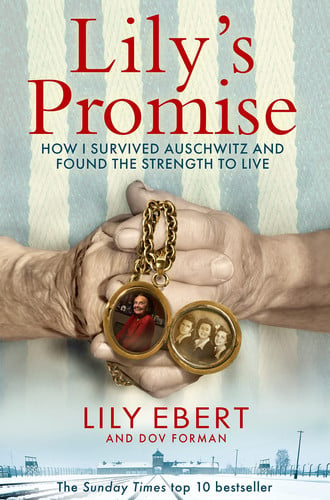
LILY'S PROMISE : HOW I SURVIVED AUSCHWITZ AND FOUND THE STRENGTH TO LIVE

EBERT, LILY
Zusammenfassung: "When Holocaust survivor Lily Ebert was liberated in 1945, a Jewish-American soldier gave her a banknote on which he'd written 'Good luck and happiness'. And when her great-grandson, Dov, decided to use social media to track down the family of the GI, 96-year-old Lily found herself making headlines round the world. Lily had promised herself that if she survived Auschwitz she would tell everyone the truth about the camp. Now was her chance. In Lily's Promise she writes movingly about her happy childhood in Hungary, the death of her mother and two youngest siblings on their arrival at Auschwitz in 1944 and her determination to keep her two other sisters safe. She describes the inhumanity of the camp and the small acts of defiance that gave her strength. From there she and her sisters became slave labour in a munitions factory, and then faced a death march that they barely survived. Lily lost so much, but she built a new life for herself and her family, first in Israel and then in London. It wasn't easy; the pain of her past was always with her, but this extraordinary woman found the strength to speak out in the hope that such evil would never happen again"--Publisher's description.
MACMILLAN 2021 303 pages

Lily's promise: how I survived Auschwitz and found the strength to live

Ebert, Lily,Forman, Dov
Zusammenfassung: "When Holocaust survivor Lily Ebert was liberated in 1945, a Jewish-American soldier gave her a banknote on which he'd written 'Good luck and happiness'. And when her great-grandson, Dov, decided to use social media to track down the family of the GI, 96-year-old Lily found herself making headlines round the world. Lily had promised herself that if she survived Auschwitz she would tell everyone the truth about the camp. Now was her chance. In Lily's Promise she writes movingly about her happy childhood in Hungary, the death of her mother and two youngest siblings on their arrival at Auschwitz in 1944 and her determination to keep her two other sisters safe. She describes the inhumanity of the camp and the small acts of defiance that gave her strength. From there she and her sisters became slave labour in a munitions factory, and then faced a death march that they barely survived. Lily lost so much, but she built a new life for herself and her family, first in Israel and then in London. It wasn't easy; the pain of her past was always with her, but this extraordinary woman found the strength to speak out in the hope that such evil would never happen again"--Publisher's description.
Macmillan 2021 303 pages

Lily's promise: how I survived Auschwitz and found the strength to live

Ebert, Lily,Forman, Dov
"When Holocaust survivor Lily Ebert was liberated in 1945, a Jewish-American soldier gave her a banknote on which he'd written 'Good luck and happiness'. And when her great-grandson, Dov, decided to use social media to track down the family of the GI, 96-year-old Lily found herself making headlines round the world. Lily had promised herself that if she survived Auschwitz she would tell everyone the truth about the camp. Now was her chance. In Lily's Promise she writes movingly about her happy childhood in Hungary, the death of her mother and two youngest siblings on their arrival at Auschwitz in 1944 and her determination to keep her two other sisters safe. She describes the inhumanity of the camp and the small acts of defiance that gave her strength. From there she and her sisters became slave labour in a munitions factory, and then faced a death march that they barely survived. Lily lost so much, but she built a new life for herself and her family, first in Israel and then in London. It wasn't easy; the pain of her past was always with her, but this extraordinary woman found the strength to speak out in the hope that such evil would never happen again"--
Pan Books 2022 303 pages

How to make it in the new music business: practical tips on building a loyal following and making a living as a musician

Herstand, Ari
"Hailed as an "indispensable" guide (Forbes), How to Make It in the New Music Business returns in this extensively revised and expanded edition. When How to Make It in the New Music Business hit shelves in 2016, it instantly became the go-to resource for musicians eager to make a living in a turbulent industry. Widely adopted by music schools everywhere and considered "the best how- to book of its kind" (Music Connection), it inspired thousands to stop waiting around for that "big break." Now trusted as the leading expert for "do it yourself" artists, Ari Herstand returns with this second edition, maintaining that a stable career can be built by taking advantage of the many tools at our fi ngertips: conquering social media, mastering the art of merchandising, embracing authentic fan connection, and simply learning how to persevere. Comprehensively updated to include the latest online trends and developments, it offers inspiring success stories across media such as Spotify and Instagram. The result is a must- have for anyone hoping to navigate the increasingly complex yet advantageous landscape that is the modern music industry"--
Liveright Publishing Corporation 2019-11-05 502 pages

Traffic: genius, rivalry, and delusion in the billion-dollar race to go viral

Smith, Ben (Journalist)
"The origin story of the Age of Disinformation: the candid inside tale of two online media rivals, Jonah Peretti of HuffPost and Buzzfeed and Nick Denton of Gawker Media, whose delirious pursuit of attention at scale in the first two decades of the 21st century helped release the dark forces that would overtake the internet and American society. If attention is the new oil, Ben Smith's Traffic is the story of the time between the first gusher and the impact of climate change. The curtain opens in Soho in the early 2000's, in that brief moment after the first dotcom crash and before Google, Apple, and Facebook exploded, when it seemed that New York City rather than Silicon Valley might become tech's center of gravity. There, within a few square blocks, Nick Denton's merry band of nihilists at his growing Gawker empire and Jonah Peretti's sunnier crew at HuffPost and Buzzfeed were building the foundations of click-bait media. It was tech's age of innocence: the old establishment might have been discredited by the Iraq War, but digital news would facilitate the spread of truth. Progressive activists were first to the scene, and for a while it seemed they were the scene. After all, didn't they get Barack Obama elected? Ben Smith, who would go on to earn a controversial reputation as Buzzfeed's editor-in-chief, was either there or talked to everyone who was, and in his trademark fashion, he chronicles it all with marvelous lucidity scored with dark wit, sparing no one--and certainly not himself. Denton and Gawker were seen at the time as the black hats, but in Smith's hands the story is much more nuanced: yes, Denton's ideology of radical transparency was problematic, but at least he had an ideology. Jonah Peretti survived long after Denton's Gawker perished because his focus on clicks was relentlessly content-agnostic. But as with the proverbial sorcerer's apprentice, unintended consequences began to gain momentum. At the heart of Traffic is one of the great ironies of our time: the internet, which was going to help the left remake the world in its image, has become the motive force of right populism. As Smith and his colleagues and rivals thought they were inventing digital media, other figures, flickering around the margins of their story, had different designs. People like Steve Bannon and Andrew Breitbart and Gavin McInnes and Chris Poole, the creator of 4chan, all seemed like minor characters in the narrative in which Nick and Jonah and crew were the stars. By 2020, any reasonable observer might wonder if the opposite wasn't the case. To understand how we got here, Traffic is essential and enthralling reading"--
Penguin Press 2024 343 pages

Fault lines: a history of the United States since 1974

Kruse, Kevin Michael,Zelizer, Julian E.
Two award-winning historians explore the origins of a divided America. If you were asked when America became polarized, your answer would likely depend on your age: you might say during Barack Obama’s presidency, or with the post-9/11 war on terror, or the culture wars of the 1980s and 1990s, or the “Reagan Revolution” and the the rise of the New Right. For leading historians Kevin M. Kruse and Julian E. Zelizer, it all starts in 1974. In that one year, the nation was rocked by one major event after another: The Watergate crisis and the departure of President Richard Nixon, the first and only U.S. President to resign; the winding down of the Vietnam War and rising doubts about America’s military might; the fallout from the OPEC oil embargo that paralyzed America with the greatest energy crisis in its history; and the desegregation busing riots in South Boston that showed a horrified nation that our efforts to end institutional racism were failing. In the years that followed, the story of our own lifetimes would be written. Longstanding historical fault lines over income inequality, racial division, and a revolution in gender roles and sexual norms would deepen and fuel a polarized political landscape. In Fault Lines , Kruse and Zelizer reveal how the divisions of the present day began almost five decades ago, and how they were widened thanks to profound changes in our political system as well as a fracturing media landscape that was repeatedly transformed with the rise of cable TV, the internet, and social media. How did the United States become so divided? Fault Lines offers a richly told, wide-angle history view toward an answer.
W.W. Norton & Company 2019 428 pages

Age of Propaganda: The Everyday Use & Abuse of Persuasion

Anthony Pratkanis,Elliott Aronson
Amer. consume 57% of the world's advertising while representing only 6% of the population, & half of our waking hours are spent immersed in the mass media. Drawing on the history of propaganda as well as on contemporary res. in social psychol., this book shows how the tactics used by political campaigners, sales agents, advertisers, televangelists, demagogues, & others often take advantage of our emotions by appealing to our deepest fears & most irrational hopes, creating a distorted vision of the world we live. This updated ed. includes coverage of the Clinton/Lewinsky scandal, recent election campaigns, talk radio, teen suicide, UFO abductions, the Columbine shootings, & novel propaganda tactics based on hypocrisy & false allegations.
Diane Pub Co 2001-01-01 416 pages

Mind change: how digital technologies are leaving their mark on our brains

Greenfield, Susan
"Google. Facebook. Twitter. Repeat. We live in a world unimaginable even a few decades ago, one like no other in human history. It's a parallel world where we can be on the move in the real world, yet always hooked into an alternative time and place. And although it's a two-dimensional world of sight and sound, it offers instant information, connected identities, and constant novelty. In this world, our screen technologies are increasingly where we work, where we unwind, where we relieve our boredom and where we learn. The subsequent transformation in how we live and think is a vitally important issue, perhaps even the most important issue of our time. When toddlers are given iPads, and adults spend ten hours a day staring at a screen, can we afford to assume that our brave new screen technologies are harmless tools? Blending a wide range of scientific studies, news events, and cultural criticism with brio and verve, Mind Change presents an incisive snapshot of the global 'now.' Greenfield examines how the dawn of the Digital Age has already altered our cultural landscape, fueled an epidemic of oversharing, and transformed how we learn, remember and spread information -- and how these innovations are changing our physical brains. A warning cry, a shot across the bow, and a call to action, Mind Change explores the social, cultural and physiological ramifications of our new digital lifestyle"--
Random House 2015-02-10 348 pages

Hollywood vs. America: popular culture and the war on traditional values

Medved, Michael
Why does our popular culture seem so consistently hostile to the values that most Americans hold dear? Why does the entertainment industry attack religion, glorify brutality, undermine the family, and deride patriotism? In this explosive book, one of the nation's best known film critics examines how Hollywood has broken faith with its public, creating movies, television, and popular music that exacerbate every serious social problem we face, from teenage pregnancies to violence in the streets. Michael Medved powerfully argues that the entertainment business follows its own dark obsessions, rather than giving the public what it wants: In fact, the audience for feature films and network television has demonstrated its profound disillusionment in recent years, with disastrous consequences for many entertainment companies.^
HarperCollins 1992 386 pages

100 people who are screwing up America

Goldberg, Bernard
The number one New York Times bestselling author of Bias delivers another bombshell—this time aimed at . . . 100 People Who Are Screwing Up America No preaching. No pontificating. Just some uncommon sense about the things that have made this country great—and the culprits who are screwing it up. Bernard Goldberg takes dead aim at the America Bashers (the cultural elites who look down their snobby noses at "ordinary" Americans) . . . the Hollywood Blowhards (incredibly ditzy celebrities who think they're smart just because they're famous) . . . the TV Schlockmeisters (including the one whose show has been compared to a churning mass of maggots devouring rotten meat) . . . the Intellectual Thugs (bigwigs at some of our best colleges, whose views run the gamut from left wing to far left wing) . . . and many more. Goldberg names names, counting down the villains in his rogues' gallery from 100 all the way to 1—and, yes, you-know-who is number 37. Some supposedly "serious" journalists also made the list, including the journalist-diva who sold out her integrity and hosted one of the dumbest hours in the history of network television news. And there are those famous miscreants who have made America a nastier place than it ought to be—a far more selfish, vulgar, and cynical place. But Goldberg doesn't just round up the usual suspects we have come to know and detest. He also exposes some of the people who operate away from the limelight but still manage to pull a lot of strings and do all sorts of harm to our culture. Most of all, 100 People Who Are Screwing Up America is about a country where as long as anything goes, as one of the good guys in the book puts it, sooner or later everything will go. This is serious stuff for sure. But Goldberg will also make you laugh as he harpoons scoundrels like the congresswoman who thinks there aren't enough hurricanes named after black people, and the environmentalist to the stars who yells at total strangers driving SUVs—even though she tools around the country in a gas-guzzling private jet. With Bias, Bernard Goldberg took us behind the scenes and exposed the way Big Journalism distorts the news. Now he has written a book that goes even further. This time he casts his eye on American culture at large—and the result is a book that is sure to become the voice of all those Americans who feel that no one is speaking for them on perhaps the most vital issue of all: the kind of country in which we want to live.
HarperCollins 2005-07-05 305 pages

Getting Past the Pain Between Us Healing and Reconciliation Without Compromise

Marshall B. Rosenberg
In this important and insightful work, Marshall B. Rosenberg, PhD, demonstrates the powerful healing potential of the Nonviolent Communication (NVC) process. You can transform emotional pain, depression, shame, and conflict into empowering connections. Rosenberg shares that behind all emotional pain are unmet needs. He provides simple steps to create the heartfelt presence necessary for healing to occur. Learn how to transform your relationships, find satisfying reconciliation, and move beyond pain to a place of clear, honest communication. Through role-play dialogues and every-day examples, Rosenberg demonstrates the keys to healing pain and conflict without compromise. The healing power of NVC provides practical and effective tools for individuals, mental health practitioners, mediators, families and couples.
PuddleDancer Press 2004-09 48 pages

The dream life: movies, media, and the mythology of the sixties

Hoberman, J.
A witty and penetrating look at the celluloid culture of the 1960s by the Village Voice 's celebrated film critic. In The Dream Life , Village Voice film critic J. Hoberman turns his attention to the 1960s, the era when politics and culture became one. With wildly entertaining reinterpretations of key Hollywood movies (such as Dr. Strangelove, Bonnie and Clyde, The Wild Bunch , and Shampoo ), Hoberman reconstructs the hidden political history of 1960s cinema. Meanwhile, against the pageantry of four national elections1960 to 1972he describes the formation of America's spectacular, image-laden political culture. In the era when the missile gap, the sexual revolution, and the Vietnam War became inseparable from the triumph of television, the development of political image-making, and the advent of Pop Art, American politics, mass media, and publicity became the new social spectacle. Through meditations on the personas of Che Guevara, John Wayne, Patty Hearst, Jane Fonda, Ronald Reagan, and Dirty Harry, Hoberman moves deftly between the political backgrounds of movies and the fantastic dimensions of politics, producing a brilliant and comic cultural history of the rise of our mass-mediated politics.
New Press 2003 461 pages

What this comedian said will shock you

Maher, Bill
The hilarious and controversial host of HBO’s Real Time with Bill Maher has written his funniest, most opinionated, and most necessary book ever—a brilliantly astute and acerbically funny vivisection of American life, politics, and culture. Some of the smartest commentary about what’s happening in America is coming from a comedian—this comedian being Bill Maher. If you want to understand what’s wrong with this country, it turns out that one of the best informed and most thought-provoking analysts is this very funny pothead. The book was inspired by the “editorial” Bill delivers at the end of each episode of Real Time. These editorials are direct-to-camera sermons about culture, politics, and what’s happening in the world. To put this book together, Maher reviewed more than a decade of his editorials, rewriting, reimagining, and updating them, and adding new material to speak exactly to the moment we’re in. Free speech, cops, drugs, race, religion, the generations, cancel culture, the parties, the media, show biz, romance, health—Maher covers it all. The result is a hugely entertaining work of commentary about American culture in the tradition of Mark Twain, Will Rogers, and H. L. Mencken.
Simon & Schuster 2024-05-21 378 pages