4101 results for "Novel"

G.

Berger, John
"In this Booker Prize-winning classic, a Casanova-esque young man searches for philosophical and sexual fulfillment as he seduces his way across Europe on the eve of World War I. John Berger's picaresque work, one of the author's best novels, is an inspired exploration of intimacy and loneliness set at the turn of the 20th century. In this luminous novel about a modern Don Juan, John Berger relates the story of G., a young man forging an energetic sexual career in Europe during the early years of the last century as Europe teeters on the brink of war. With profound compassion, Berger explores the hearts and minds of both men and women, and what happens during sex, to reveal the conditions of the libertine's success: his essential loneliness, the quiet cumulation in each of his sexual experiences of all of those that precede it, the tenderness that infuses even the briefest of his encounters, and the way women experience their own extraordinariness through their liaisons with him. Set against the turbulent backdrop of Garibaldi's attempt to unite Italy, the failed revolution of Milanese workers in 1898, the Boer War, and the dramatic first flight across the Alps, G. is a brilliant novel about the search for intimacy in the turmoil of history"-- Provided by publisher.
New York Review Books 2026-06-16 366 pages

I'll catch you

Kellerman, Jesse
Arthur Pfefferkorn, is a middle-aged college professor with long dead literary aspirations. When his oldest friend, successful thriller writer William de Vallee, is lost at sea, Pfefferkorn is torn between envy and grief, for de Vallee not only outshone Pfefferkorn professionally, but married the woman Pfefferkorn loved. He struggles with his failed ambitions while reflecting on his late friend's successes and marriage. He decides to take the best-selling author's latest manuscript and publish it as his own. Although the novel brings him great success, his life soon spirals into a series of betrayals and double-crosses torn straight from the pages of his plagiarized work. His decision to reconnect with de Vallee's widow sets in motion a surreal chain of events, plunging him into a shadowy realm of intrigue, a world where no one can be trusted, and nothing can be taken seriously.
Sphere 2012 397 pages

Blind Date

Jerzy N. Kosinski,Jerzy Kosinski
Blind Date is a spectacular and erotically charged psychological novel that shows Jerzy Kosinski, author of Being There and The Painted Bird, at the height of his power. George Levanter is an idea man, a small investor, an international playboy, and a ruthless deal-maker whose life is delivered in a series of scorching encounters, each more incredible than the last. From Moscow to Paris, from a Manhattan skyscraper to a California mass murder, Blind Date is a dizzying vision of life among the beautiful people and the thrill-seekers.
Bantam Books 1978 269 pages

Iphigenia in Forest Hills: anatomy of a murder trial

Malcolm, Janet
Prizewinning journalist Janet Malcolm discovers the elements of Greek tragedy in a sensational New York City murder trial "Astringent and absorbing. . . . Iphigenia in Forest Hills casts, from its first pages, a genuine spell -- the kind of spell to which Ms. Malcolm's admirers (and I am one) have become addicted."--Dwight Garner, New York Times "This is shrewd and quirky crime reporting at its irresistible and disabused best."--Louis Begley, Wall Street Journal "She couldn't have done it and she must have done it." This is the enigma at the heart of Janet Malcolm's riveting book about a murder trial in the insular Bukharan-Jewish community of Forest Hills, Queens, that captured national attention. The defendant, Mazoltuv Borukhova, a beautiful young physician, is accused of hiring an assassin to kill her estranged husband, Daniel Malakov, a respected orthodontist, in the presence of their four-year old child. The prosecutor calls it an act of vengeance: just weeks before Malakov was killed in cold blood, he was given custody of Michelle for inexplicable reasons. It is the "Dickensian ordeal" of Borukhova's innocent child that drives Malcolm's inquiry. With the intellectual and emotional precision for which she is known, Malcolm looks at the trial--"a contest between competing narratives"--from every conceivable angle. It is the chasm between our ideals of justice and the human factors that influence every trial--from divergent lawyering abilities to the nature of jury selection, the malleability of evidence, and the disposition of the judge--that is perhaps most striking. Surely one of the most keenly observed trial books ever written, Iphigenia in Forest Hills is ultimately about character and "reasonable doubt." As Jeffrey Rosen writes, it is "as suspenseful and exciting as a detective story, with all the moral and intellectual interest of a great novel." " Iphigenia in Forest Hills is another dazzling triumph from Janet Malcolm. Here, as always, Malcolm's work inspires the best kind of disquiet in a reader--the obligation to think." --Jeffrey Toobin, author of The Nine: Inside the Secret World of the Supreme Court "A remarkable achievement that ranks with Malcolm's greatest books. Her scrupulous reporting and interviews with protagonists on both sides of the trial make her own narrative as suspenseful and exciting as a detective story, with all the moral and intellectual interest of a great novel." --Jeffrey Rosen, author of The Supreme Court: The Personalities and Rivalries that Defined America
Yale University Press 2012 155 pages

The love verb

Green, Jane
Number one best-seller Jane Green - author of The Beach House and Spellbound - explores changes in relationships when a family member is struck with illness in her heartbreaking novel The Love Verb . Love means being there - through everything. Everyone in Callie's family is busy; her sister is a free-spirited Manhattan chef, her best friend Lila is coping with the vitriol of her new man's ex-wife, and her parents, Walter and Honor, have rich though separate lives. But when Callie discovers the breast cancer she thought she'd beaten has returned, they all find that their lives shift to focus on caring for Callie. 'A beautifully written and intensely sad lesson in what it really means to love someone you know you're going to lose' Daily Telegraph 'Stylish, wickedly insightful . . . family, friends and love is truly, heartwrenchingly tested' Mirror 'A moving account of a family faced with a heartbreaking situation. I defy anyone to get through to the end without crying' Sunday Express Jane Green's internationally best-selling novels, including The Other Woman , Jemima J. , Babyville , The Patchwork Marriage (published as Another Piece of My Heart in the USA) Girl Friday ( Dune Road ), Life Swap ( Swapping Lives ), Second Chance , Straight Talking , Mr. Maybe , and Bookends , are moving and true to life. The Love Verb is published as Promises to Keep in the USA.
Penguin Books 2011 404 pages

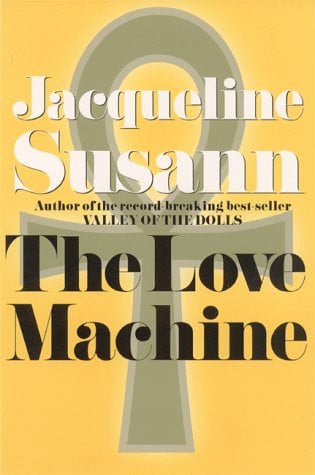
The love machine

Susann, Jacqueline
In a time when steak, vodka, and Benzedrine were the three main staples of a healthy diet, when high-powered executives called each other "baby" and movie stars wore wigs to bed, network tycoons had a name for the TV set: they called it "the love machine." But to supermodel Amanda, socialite Judith, and journalist Maggie, "the love machine" meant something else: Robin Stone, "a TV-network titan around whom women flutter like so many moths. . . . The novel deals with his rise and fall as he makes the international sex scene (orgying in London, transvestiting in Hamburg), drinks unlimited quantities and checks out the latest Nielsens." (Newsweek)
Grove Press 1997 511 pages

Shadows on the Hudson

Isaac B. Singer
Serialized in the late 1950s, "Shadows on the Hudson" was translated from Yiddish and published posthumously as a complete novel in 1998, receiving widespread literary acclaim. From the Upper West Side to Miami's pastel resorts, Shadows on the Hudson traces the intertwined destiny of survivors in the aftermath of the Holocaust. Nobel Prize-winning author Isaac Bashevis Singer has created a vibrant, resonant, and provocative cast of characters in search of answers to life's greatest dilemmas, challenges, and ironies.
Farrar, Straus And Giroux 1999

The fires of autumn

Némirovsky, Irène
This panoramic exploration of French life between the wars reads like a prequel to Irène Némirovsky’s international bestseller Suite Française. At the end of the First World War, Bernard Jacquelain returns from the trenches a changed man. Broken by the unspeakable horrors he has witnessed, he becomes addicted to the lure of wealth and success. He wallows in the corruption and excess of post-war Paris, but when his lover abandons him, Bernard turns to a childhood friend for comfort. For ten years, he lives the good bourgeois life, but when the drums of war begin to sound again, everything around which he has rebuilt himself starts to crumble, and the future—of his marriage and of his country—suddenly becomes terribly uncertain. Written after Némirovsky fled Paris in 1940, just two years before her death, and first published in France in 1957, The Fires of Autumn is a coruscating, tragic novel of war and its aftermath, and of the ugly color it can turn a man's soul.
Vintage Books 2015-03-17 229 pages

Le Bal

Irene Nemirovsky
From the acclaimed author of Suite Française comes Némirovsky’s third novel, a masterpiece of French literature, available for the first time in Canada. Le Bal is a penetrating and incisive book set in early twentieth century France. At its heart is the tension between mother and daughter. The nouveau-riche Kampfs, desperate to become members of the social elite, decide to throw a ball to launch themselves into high society. For selfish reasons Mrs. Kampf forbids her teenage daughter, Antoinette, to attend the ball and banishes her to the laundry room. In an unpremeditated fury of revolt and despair, Antoinette takes a swift and horrible revenge. A cruel, funny and tender examination of class differences, Le Bal describes the torments of childhood with rare accuracy. Also included in this volume is Snow in Autumn , in which Némirovsky pays homage to Chekov and chronicles the life of a devoted servant following her masters as they flee Revolutionary Moscow and emigrate to a life of hardship in Paris.
National Geographic Books 2007-11-13 112 pages

Island life: inspirational interiors

Hicks, India
The very idea of life on a tropical island appeals to popular fantasy: the sea, the sky, the sand, the tranquillity, the escape-from-it-all...Mental images abound at the mere mention: white linen and straw hats; hibiscus and palm trees; languid cocktails taken on the verandah; the intensity of colours and the sound of the sea. This fantasy is reality to India Hicks, David Flint Wood and their two children. Over the past five years, India and David have impeccably restored, built or redecorated three houses and one hotel on the island. Each interior reflects India's keen sense of colour and style, inherited in part from her father, David Hicks, and influenced by her travels with David Flint Wood to India and Africa, and from the wealth of Caribbean style that surrounds them. 'Island Life' celebrates India's unique style, which mixes classic European and Caribbean influences, and their houses and the island are beautifully portrayed by leading photographer David Loftus. Following a unique design influenced by the authors' meticulously made sketchbooks and journals, a mix of tracing paper (used innovatively to recreate some of India's designs), gloss and uncoated papers are combined to give the book a novel approach. This is the first book to reveal the secrets of India's style which have long been championed by style gurus such as Ralph Lauren, who shot his catalogue at their home, and Martha Stewart.
Pavilion 2003-10-08 192 pages

Fatelessness

Imre Kertész
At the age of 14 Georg Koves is plucked from his home in a Jewish section of Budapest and without any particular malice, placed on a train to Auschwitz. He does not understand the reason for his fate. He doesn't particularly think of himself as Jewish. And his fellow prisoners, who decry his lack of Yiddish, keep telling him, You are no Jew. In the lowest circle of the Holocaust, Georg remains an outsider. The genius of Imre Kertesz's unblinking novel lies in its refusal to mitigate the strangeness of its events, not least of which is Georg's dogmatic insistence on making sense of what he witnesses-or pretending that what he witnesses makes sense. Haunting, evocative, and all the more horrifying for its rigorous avoidance of sentiment, Fatelessness is a masterpiece in the traditions of Primo Levi, Elie Wiesel, and Tadeusz Borowski.
San Val 2004-08-01

Lives of houses

Kate Kennedy,Hermione Lee
A group of notable writers--including UK poet laureate Simon Armitage, Julian Barnes, Margaret MacMillan, and Jenny Uglow--celebrate our fascination with the houses of famous literary figures, artists, composers, and politicians of the past What can a house tell us about the person who lives there? Do we shape the buildings we live in, or are we formed by the places we call home? And why are we especially fascinated by the houses of the famous and often long-dead? In Lives of Houses, a group of notable biographers, historians, critics, and poets explores these questions and more through fascinating essays on the houses of great writers, artists, composers, and politicians of the past. Editors Kate Kennedy and Hermione Lee are joined by wide-ranging contributors, including Simon Armitage, Julian Barnes, David Cannadine, Roy Foster, Alexandra Harris, Daisy Hay, Margaret MacMillan, Alexander Masters, and Jenny Uglow. We encounter W. H. Auden, living in joyful squalor in New York's St. Mark's Place, and W. B. Yeats in his flood-prone tower in the windswept West of Ireland. We meet Benjamin Disraeli, struggling to keep up appearances, and track the lost houses of Virginia Woolf and Elizabeth Bowen. We visit Benjamin Britten in Aldeburgh, England, and Jean Sibelius at Ainola, Finland. But Lives of Houses also considers those who are unhoused, unwilling or unable to establish a home--from the bewildered poet John Clare wandering the byways of England to the exiled Zimbabwean writer Dambudzo Marechera living on the streets of London. With more than forty illustrations, Lives of Houses illuminates what houses mean to us and how we use them to connect to and think about the past. The result is a fresh and engaging look at house and home. Featuring Alexandra Harris on moving house; Susan Walker on Morocco's ancient Roman House of Venus; Hermione Lee on biographical quests for writers' houses; Margaret Macmillan on her mother's Toronto house; a poem by Maura Dooley, "Visiting Orchard House, Concord, Massachusetts"--the house in which Louisa May Alcott wrote and set her novel Little Women; Felicity James on William and Dorothy Wordsworth's Dove Cottage; Robert Douglas-Fairhurst at home with Tennyson; David Cannadine on Winston Churchill's dream house, Chartwell; Jenny Uglow on Edward Lear at San Remo's Villa Emily; Lucy Walker on Benjamin Britten at Aldeburgh, England; Seamus Perry on W. H. Auden at 77 St. Mark's Place, New York City; Rebecca Bullard on Samuel Johnson's houses; a poem by Simon Armitage, "The Manor"; Daisy Hay at home with the Disraelis; Laura Marcus on H. G. Wells at Uppark; Alexander Masters on the fear of houses; Elleke Boehmer on sites associated with Zimbabwean writer Dambudzo Marechera; Kate Kennedy on the mental asylums where World War I poet Ivor Gurney spent the last years of his life; a poem by Bernard O'Donoghue, "Safe Houses"; Roy Foster on W. B. Yeats and Thoor Ballylee; Sandra Mayer on W. H. Auden's Austrian home; Gillian Darley on John Soane and the autobiography of houses; Julian Barnes on Sibelius and Ainola.
Princeton University Press 2020-03-24 297 pages

The lawgiver

Wouk, Herman
For more than 50 years, Herman Wouk has dreamed of writing a novel about the life of Moses Finally, at the age of 96, he has found an ingeniously witty way to tell the tale of The Lawgiver, a romantic and suspenseful epistolary novel about a group of people trying to make a movie about Moses in the present day. At its centre is Margo Solovei, a brilliant young writer-director who has rejected her father's strict Jewish upbringing to pursue a career in the arts. When an Australian multi-billionaire promises to finance a movie about Moses, Margo does everything she can to land the job, including a reunion with her estranged first love, an influential lawyer with whom she has unfinished business.
Simon & Schuster 2013 234 pages

Sailor and fiddler: reflections of a 100-year-old author

Wouk, Herman
"In an unprecedented literary accomplishment, Herman Wouk, one of America's most beloved and enduring authors, reflects on his life and times from the remarkable vantage point of 100 years old. Many years ago, the great British philosopher Sir Isaiah Berlin urged Herman Wouk to write his autobiography. Wouk responded, "Why me? I'm nobody." Berlin answered, "No, no. You've traveled. You've known many people. You have interesting ideas. It would do a lot of good." Now, in the same year he has celebrated his hundredth birthday, Herman Wouk finally reflects on the life experiences that inspired his most beloved novels. Among those experiences are his days writing for comedian Fred Allen's radio show, one of the most popular shows in the history of the medium; enlisting in the US Navy during World War II; falling in love with Betty Sarah Brown, the woman who would become his wife (and literary agent) for sixty-six years; writing his Pulitzer Prize-winning novel, The Caine Mutiny; as well as a big hit Broadway play The Caine Mutiny Court Martial; and the surprising inspirations and people behind such masterpieces as The Winds of War, War and Remembrance, Marjorie Morningstar, and Youngblood Hawke. Written with the wisdom of a man who has lived through two centuries and the wit of someone who began his career as professional comedy writer, the first part of Wouk's memoir ("Sailor") refers to his Navy experience and writing career, the second ("Fiddler") to what he's learned from living a life of faith. Ultimately, Sailor and Fiddler is an unprecedented reflection from a vantage point few people have lived to experience"-- Provided by publisher.
Simon & Schuster 2016-10-18 137 pages

The biological basis of personality

Eysenck, H. J.
This classic is one of the most cited and novel approaches to psychology ever written. Hans Eysenck presents a descriptive and causal model of human personality in accord with the major concepts of experimental psychology and the physiological and neurological mechanisms that form the biological basis of behavior patterns. His proposal for an alliance between personality and physiology represented a major innovation in the field of psychology, distinguished his research from his contemporaries, and set the stage for a wealth of research to come. Before this foundational work, Eysenck had initially constructed a model of personality in such works as Dimensions of Personality and The Experimental Study of Personality, but these were primarily descriptive in nature. A second phase of research included his Dynamics of Anxiety and Hysteria and Experiments with Drugs, where he provided causal analysis by reference to concepts then current in experimental psychology. The Biological Basis of Personality represents Eysenck's third phase, when he dug deeper to find biological causes underlying the psychological concepts of emotion, excitation, and inhibition--which had formed the building blocks of his earlier efforts. In this work, the causal links he postulates between personality variables and neurological and physiological discoveries establish a realistic model that takes theory out of the field of mere speculation. As Sybil Eysenck makes clear in her new preface, this book paved the way for a "marriage" of the experimental and individual difference approach in personality psychology. As Sybil Eysenck makes clear in her new preface, this book paved the way for a "marriage" of the experimental and individual difference approach in personality psychology.
Transaction Publishers 2006 399 pages

The stars are not yet bells

Assadi, Hannah Lillith
"A story of secrets, loss, and the betrayals of memory: a lyrical novel of an aging woman confronting her romantic past under the mysterious skies of her island home Off the coast of Georgia, near Savannah, generations have been tempted by strange blue lights in the sky near an island called Lyra. At the height of WWII, impressionable young Elle Ranier comes to the island when her new husband, Simon, is dispatched by his industrialist father to find the source of the mysterious lights. There they will live for decades, raising a family while employing much of the island's population in a quixotic campaign to find and exploit the elusive minerals rumored to lurk offshore. Fifty years later, as Simon's business is shuttered in disarray, Elle looks back at her life on the mysterious island--and at a secret she herself has guarded for decades. As her memory recedes, her life seems a tangle of questions: How did the business survive so long without ever finding the legendary Lyra stones? How did her own life crumble under treatment for depression? And what became of the other man they brought to the island--handsome, raffish Gabriel, who risked everything to follow the light to its source? With echoes of We Are Not Ourselves and even Jean Rhys's Wide Sargasso Sea, The Stars Are Not Yet Bells is a darkly romantic story of the tantalizing, faithless relationship between ourselves and the lives and souls we leave behind"--
Riverhead Books 2022 224 pages

Alpha

Greg Rucka
Graphic novel star Greg Rucka's new series featuring ex-Delta Force operative Jad Bell defending the most alarming terrorist target since 9/11: a summer theme park. For the visitors to Wilsonville, the largest theme park in the world, the day began with a smile. By the end, they wonder-will they be able to escape with their lives? Retired Delta Force operator, Master Sergeant Jonathan "Jad" Bell, is Wilsonville's lead undercover security officer. The threat begins with the announcement of a hidden dirty bomb, but quickly becomes something far, far worse. Trained since the age of seventeen to save innocent victims from impossible hostage situations, Jad scrambles to assess the threat and protect the visitors. He will come face to face with a villain whose training matches his in every way-and presents a threat Jad may not be able to stop.
Little, Brown 2014-01-28 368 pages