58,196 results in 0.08 seconds

Lovehead

Collins, Jackie
POWERFUL MEN, BEAUTIFUL WOMEN AND EXQUISITE REVENGE... Beth, Lara and Rio -- three exotic women with a common cause and vengeance in their hearts. They're out to avenge a murder and they'll go to any lengths. Their the heirs of the Bassalino crime family. Their sex. The a bloodbath of sexual mayhem through the lethal corridors of organized crime. Three beautiful women set out to prove that when it comes to revenge, the female is far deadlier than the male -- especially when they're THE LOVE KILLERS. . .
Pan 1984 160 pages

The Lucky Santangelo cookbook

Collins, Jackie
"Bold, wildly beautiful, and totally her own woman, Lucky Santangelo needs no introduction. The sizzling, glamorous, sometimes dangerous daughter of former gangster Gino, Lucky is the most popular character in Jackie Collins's wild world of lust, intrigue, violence, and redemption. A true Italian/American woman of the world, Lucky likes to shake it up in the kitchen--from traditional Italian dishes to sumptuous desserts, and crazy cocktails. The Lucky Santangelo Cookbook features the kind of bold and audacious flavors that characterize Lucky herself. From zesty meatballs to sweet and spicy spare ribs, this book is packed with recipes suitable for everything from big family dinners to lavish cocktail parties to romantic dinners for two. The Lucky Santangelo Cookbook is certain to broaden any home cook's repertoire in new and excitingly delicious directions. Fully illustrated and peppered throughout with fun and delightfully provocative scenes written just for this book, readers will enjoy seeing Lucky--and Jackie--in action. So--if you want a little taste of Lucky Santangelo in your life--get into the kitchen and start getting Lucky!"--
St. Martin's Press 2014-04-08 162 pages

Undaunted: surviving Jonestown, summoning courage, and fighting back

Speier, Jackie
An inspiring and powerful memoir of surviving the Jonestown massacre and becoming a fearless voice against injustice and inequality by California congresswoman Jackie Speier. Jackie Speier was twenty-eight when she joined Congressman Leo Ryan's delegation to rescue defectors from cult leader Jim Jones's Peoples Temple in Jonestown, Guyana. Ryan was killed on the airstrip tarmac. Jackie was shot five times at point-blank range. While recovering from what would become one of the most harrowing tragedies in recent history, Jackie had to choose: Would she become a victim or a fighter? The choice to survive against unfathomable odds empowered her with a resolve to become a vocal proponent for human rights. From the formative nightmare that radically molded her perspective and instincts to the devastating personal and professional challenges that would follow, Undaunted reveals the perseverance of a determined force in American politics. Deeply rooted in Jackie's experiences as a widow, a mother, a congresswoman, and a fighter, hers is a story of true resilience, one that will inspire other women to draw strength from adversity in order to do what is right--no matter the challenges ahead.
Little A 2018 198 pages

Science And Human Values

Jacob Bronowski
Science and Human Values is a thought-provoking book by Jacob Bronowski that explores the relationship between science and human values. The author argues that science is not just a collection of facts and theories, but a way of thinking that shapes our understanding of the world and our place in it. He contends that science and human values are intimately connected, and that science has the power to transform our understanding of ourselves and the world around us.The book is divided into five chapters, each of which explores a different aspect of the relationship between science and human values. The first chapter discusses the nature of scientific inquiry and the role of imagination in scientific discovery. The second chapter examines the relationship between science and art, arguing that both are essential to our understanding of the world. The third chapter explores the ethical implications of scientific research, particularly in the areas of genetics and nuclear physics.The fourth chapter examines the role of science in shaping our understanding of human nature, while the final chapter discusses the implications of scientific progress for our future as a species. Throughout the book, Bronowski emphasizes the importance of human values in shaping scientific research and the need for scientists to be mindful of the ethical implications of their work.Overall, Science and Human Values is a thought-provoking and insightful book that challenges readers to think deeply about the relationship between science and human values. It is a must-read for anyone interested in the role of science in our lives and the ethical implications of scientific research.The Impact Of Science On Ethics And Human Values.This scarce antiquarian book is a facsimile reprint of the old original and may contain some imperfections such as library marks and notations. Because we believe this work is culturally important, we have made it available as part of our commitment for protecting, preserving, and promoting the world's literature in affordable, high quality, modern editions, that are true to their original work.
Literary Licensing, LLC 2011-09 98 pages

How a Game Lives

Geller, Jacob
The first of two volumes: How a Game Lives, Vol. 1 is an artfully packaged must-have book for the devoted and casual fans alike, inviting readers to look at gaming and video games from an intellectual, psychological, and emotional perspective as a major part of our cultural fabric. Jacob Geller has 1 million subscribers to his YouTube channel, where he shares in-depth videos on modern gaming and analysis of the games themselves-- interwoven with conversations about politics, art, history and popular culture. Placing video games into the larger media, cultural and artistic context, How a Game Lives, Vol.1 will be a stunning four-color collection that takes Geller's most popular YouTube essays, puts them into print for the first time, and updates them with full annotation by Geller himself and commentary by other writers. Illustrated throughout with original artwork inspired by the games, How a Game Lives, Vol. 1 is truly unique. The games covered in this volume include: The Legend of Zelda series Shadow of the Colossus Returnal Control Call of Duty and more... Geller has taught audiences how to think about video games as art, and how that art has affected them.
HarperCollins Publishers LLC 2025-11-18 208 pages

Who says you're dead? medical & ethical dilemmas for the curious and concerned

Appel, Jacob M.
“An original, compelling, and provocative exploration of ethical issues in our society, with thoughtful and balanced commentary. I have not seen anything like it.” —Alan Lightman, author of Einstein’s Dreams Drawing upon the author’s two decades teaching medical ethics, as well as his work as a practicing psychiatrist, this profound and addictive little book offers up challenging ethical dilemmas and asks readers, What would you do? A daughter gets tested to see if she’s a match to donate a kidney to her father. The test reveals that she is not the man’s biological daughter. Should the doctor tell the father? Or the daughter? A deaf couple prefers a deaf baby. Should they be allowed to use medical technology to ensure they have a child who can’t hear? Who should get custody of an embryo created through IVF when a couple divorces? Or, when you or a loved one is on life support, Who says you’re dead? In short, engaging scenarios, Dr. Appel takes on hot-button issues that many of us will confront: genetic screening, sexuality, privacy, doctor-patient confidentiality. He unpacks each hypothetical with a brief reflection drawing from science, philosophy, and history, explaining how others have approached these controversies in real-world cases. Who Says You’re Dead? is designed to defy easy answers and to stimulate thought and even debate among professionals and armchair ethicists alike.
Algonquin Books of Chapel Hill 2019-10-08 327 pages

A rabbi talks with Jesus

Neusner, Jacob
"In this book I explain in a very straightforward and unapologetic way why, if I had been in the Land of Israel in the first century, I would not have joined the circle of Jesus's disciples." Imagine yourself transported two thousand years back in time to Galilee at the moment of Jesus' Sermon on the Mount. After hearing it, would you abandon your religious beliefs and ideology to follow him, or would you hold on to your own beliefs and walk away? In A Rabbi Talks with Jesus, Jacob Neusner considers just such a spiritual journey. Placing himself within the context of the Gospel of Matthew, Neusner imagines himself in a dialogue with Jesus of Nazareth and pays him the supreme Judaic gesture of respect: making a connection with him through an honest debate about the nature of God's One Truth. Neusner explains why the Sermon on the Mount would not have convinced him to follow Jesus and why, by the criterion of the Torah of Moses, he would have continued to follow the teachings of Moses. He explores the reasons Christians believe in Jesus Christ and the Kingdom of Heaven, while Jews continue to believe in the Torah of Moses and a kingdom of priests and holy people on earth. This revised and expanded edition, with a foreword by Donald Akenson, creates a thoughtful and accessible context for discussion of the most fundamental question of why Christians and Jews believe what they believe. - Publisher.
McGill-Queen's University Press 2000 161 pages

American amnesia: how the war on government led us to forget what made America prosper

Hacker, Jacob S.,Pierson, Paul
In the past, government and business were as much partners as rivals, resulting in broad-based growth and healthy social development. But advocates of anti-government market fundamentalism are intent on scrapping the instrument of nearly a century of unprecedented economic and social progress. Hacker and Pierson examine why what's good for American business elites and what's good for Americans have become misaligned.
Simon & Schuster Paperbacks 2017-02-14 455 pages

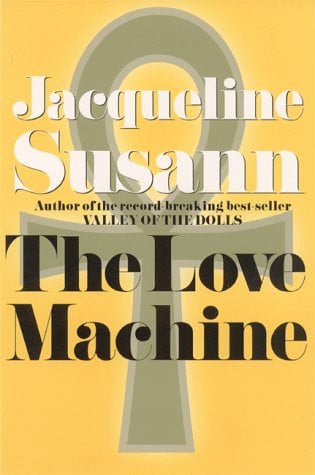
The love machine

Susann, Jacqueline
In a time when steak, vodka, and Benzedrine were the three main staples of a healthy diet, when high-powered executives called each other "baby" and movie stars wore wigs to bed, network tycoons had a name for the TV set: they called it "the love machine." But to supermodel Amanda, socialite Judith, and journalist Maggie, "the love machine" meant something else: Robin Stone, "a TV-network titan around whom women flutter like so many moths. . . . The novel deals with his rise and fall as he makes the international sex scene (orgying in London, transvestiting in Hamburg), drinks unlimited quantities and checks out the latest Nielsens." (Newsweek)
Grove Press 1997 511 pages

Noise: the political economy of music

Attali, Jacques
“Noise is a model of cultural historiography. . . . In its general theoretical argument on the relations of culture to economy, but also in its specialized concentration, Noise has much that is of importance to critical theory today.” SubStance“For Attali, music is not simply a reflection of culture, but a harbinger of change, an anticipatory abstraction of the shape of things to come. The book’s title refers specifically to the reception of musics that sonically rival normative social orders. Noise is Attali’s metaphor for a broad, historical vanguardism, for the radical soundscapes of the western continuum that express structurally the course of social development.” EthnomusicologyJacques Attali is the author of numerous books, including Millennium: Winners and Losers in the Coming World Order and Labyrinth in Culture and Society.
University of Minnesota Press 1985 179 pages

Archive fever: a Freudian impression

Derrida, Jacques
In Archive Fever , Jacques Derrida deftly guides us through an extended meditation on remembrance, religion, time, and technology--fruitfully occasioned by a deconstructive analysis of the notion of archiving. Intrigued by the evocative relationship between technologies of inscription and psychic processes, Derrida offers for the first time a major statement on the pervasive impact of electronic media, particularly e-mail, which threaten to transform the entire public and private space of humanity. Plying this rich material with characteristic virtuosity, Derrida constructs a synergistic reading of archives and archiving, both provocative and compelling. "Judaic mythos, Freudian psychoanalysis, and e-mail all get fused into another staggeringly dense, brilliant slab of scholarship and suggestion."-- The Guardian "[Derrida] convincingly argues that, although the archive is a public entity, it nevertheless is the repository of the private and personal, including even intimate details."-- Choice "Beautifully written and clear."--Jeremy Barris, Philosophy in Review "Translator Prenowitz has managed valiantly to bring into English a difficult but inspiring text that relies on Greek, German, and their translations into French."-- Library Journal
The University of Chicago Press 2017 113 pages

Glas

Derrida, Jacques
Jacques Derrida is probably the most famous European philosopher alive today. The University of Nebraska Press makes available for the first English translation of his most important work to date, Glas . Its appearance will assist Derrida's readers pro and con in coming to terms with a complex and controversial book. Glas extensively reworks the problems of reading and writing in philosophy and literature; questions the possibility of linear reading and its consequent notions of theme, author, narrative, and discursive demonstration; and ingeniously disrupts the positions of reader and writer in the text. Glas is extraordinary in many ways, most obviously in its typography. Arranged in two columns, with inserted sections within these, the book simultaneously discusses Hegel’s philosophy and Jean Genet’s fiction, and shows how two such seemingly distinct kinds of criticism can reflect and influence one another. The customary segregation of philosophy, rhetoric, psychoanalysis, linguistics, history, and poetics is systematically subverted. In design and content, the books calls into question “types” of literature (history, philosophy, literary criticism), the ownership of ideas and styles, the glorification of literary heroes, and the limits of literary representation.
University of Nebraska Press 1986 262 pages

Specters of Marx - The State of the Debt, the Work of Mourning and the New International

Jacques Derrida
Published shortly after the fall of Communism in Eastern Europe and the dissolution of the Soviet regime, Specters of Marx is one of Derrida's most interesting and prophetic books. Whilst many in the West heralded the triumph of liberal democracy and "the end of history", Derrida takes several steps back to argue that whilst Communism may have disappeared in much of the world, the questions posed by Marx continue to haunt us. In his customary provocative style, he asks some uncomfortable questions: after the fall of Communism, can we preserve Marx's legacy of radicalism? How do we continue his philosophy of responsibility? Uncannily anticipating many of the challenges facing us today, Derrida argues that the capitalist system is plagued by a multitude of ills, including aggression, trade wars, debt, the exploitation of migrant labour and ethnic conflict. This Routledge Classics edition is a translation of the revised French edition and includes a debate between Derrida and Étienne Balibar on Marx and Marxism, published here in English for the first time. It also includes new corrections and additions to the text and footnotes made by Derrida after the book's initial publication in French. Translated by Peggy Kamuf and with a new Foreword by Peter Salmon, this Routledge Classics edition retains the original Editors' Introduction by Bernd Magnus and Stephen Cullenberg.
Routledge, Chapman & Hall, Incorporated 2026-02-16 320 pages

40 Alternatives to College

James Altucher
Don't want to go to college? Don't want crushing student loan debt? Afraid you won't be able to get a job otherwise? 40 Alternatives to College will save you money, geet you greater experience than college would have, give you adventures along the way that you will remember forever, and grant you the satisfaction of having chosen the life you want to lead.
CreateSpace Independent Publishing Platform 2012-09-16 52 pages