14302 results for "History"

The Cambridge companion to science fiction

Edward James,Farah Mendlesohn
Science fiction is at the intersection of numerous fields. It is literature which draws on popular culture, and engages in speculation about science, history, and all varieties of social relations. This volume brings together essays by scholars and practitioners of science fiction, which look at the genre from different angles. It examines science fiction from Thomas More to the present day; and introduces important critical approaches (including Marxism, postmodernism, feminism and queer theory).
Cambridge University Press 2003-11-20 295 pages

The battles of Armageddon: Megiddo and the Jezreel valley from the bronze age to the nuclear age

Cline, Eric H.
WINNER > Best Popular Book on Archaeology --Biblical Archaeology Society Apocalypse. Judgment Day. The End Time. Armageddon. Students of the Bible know it as the place where the cataclysmic battle between the forces of good and the forces of evil will unfold. Many believe that this battle will take place in the very near future. But few know that Armageddon is a real place--one that has seen more fighting and bloodshed than any other spot on earth. The name Armageddon is a corruption of the Hebrew phrase Har Megiddo, and it means "Mount of Megiddo." More than thirty bloody conflicts have been fought at the ancient site of Megiddo and adjacent areas of the Jezreel Valley during the past four thousand years. Egyptians, Israelites, Greeks, Muslims, Crusaders, Mongols, British, Germans, Arabs, and Israelis have all fought and died here. The names of the warring leaders reverberate throughout history: Thutmose III, Deborah, Gideon, Saul and Jonathan, Jezebel, Saladin, Napoleon, and Allenby, to name but the most famous. Throughout history Megiddo and the Jezreel Valley have been ground zero for battles that determined the very course of civilization. No wonder that the author of Revelation believed Armageddon, the penultimate battle between good and evil, would also take place here! The Battles of Armageddon introduces readers to a rich cast of ancient and modern warriors, while bringing together for the first time the wide range of conflicts that have been fought at Megiddo and the Jezreel Valley from the Bronze Age to the Nuclear Age. Eric H. Cline has participated in more than seventeen seasons of excavation and survey in Israel, Egypt, Jordan, Greece, and the United States. He is currently a Senior Staff Archaeologist at the ongoing excavations of Megiddo.
The University of Michigan Press 2000 239 pages

A little book of language

Crystal, David
"With a language disappearing every two weeks and neologisms springing up almost daily, understanding the origins and currency of language has never seemed more relevant. In this charming volume, expert linguist David Crystal proves why the story of language deserves retelling. From an infant's first words to the peculiar dialect of text messaging, A Little Book of Language ranges widely, revealing language's myriad intricacies and quirks. Crystal delves into the development of unique linguistic styles, the origins of obscure accents and the search for the first written word. He discusses the plight of endangered languages, as well as successful cases of linguistic revitalisation. Much more than a history, this book also turns to the future of language, exploring the effect of technology on our day-to-day reading, writing and speech. Through enlightening diagrams and quizzes, as well as Crystal's avuncular and entertaining style, A Little Book of Language reveals the story of language to be a captivating tale for all ages"--Inside front flap.
Yale University Press 2025-04-04 272 pages

How to Ruin the United States of America

Ben Stein
On the heels of his very successful books, How to Ruin Your Life, How to Ruin Your Love Life, and How to Ruin Your Financial Life, Ben Stein, in collaboration with his pal Phil DeMuth, has tongue firmly in cheek once again as he comes up with surefire ways to ruin the greatest nation in the history of the human race. Try a few of these on for size: Trust the United Nations to protect us and our security. Make it unlawful to worship God or even to show images of the Ten Commandments. Convert our universities into fortresses of anti-Americanism, hatred of freedom, and centers of confusion and ignorance. Encourage contempt for the family and for the community. Allow Hollywood to brainwash us into believing that only suckers and criminals fight for their country. Treat the military, the police, firefighters, and teachers as losers and pay them starvation wages. Hey, does any of this sound familiar? Maybe that's because it's already happening! Ben and Phil give you all the information you'll ever need in order to successfully ruin the USA even further! Sardonic, humorous, but also angrily emphatic, this is a book every old-fashioned patriot really needs to read!
ReadHowYouWant.com 2010-06-21 168 pages

Crooked

Austin Grossman
Acclaimed novelist Austin Grossman reimagines the ultimate American antihero. Richard Milhous Nixon lived one of the most improbable lives of the twentieth century. Our thirty-seventh president's political career spanned the button-down fifties, the Mad Men sixties, and the turbulent seventies. He faced down the Russians, the Chinese, and ultimately his own government. The man went from political mastermind to a national joke, sobbing in the Oval Office, leaving us with one burning question: how could he have lost it all? Here for the first time is the tale told in his own words: the terrifying supernatural secret he stumbled upon as a young man, and the truth behind the Cold War. What if the man we call our worst president was, in truth, our greatest? Combining Lovecraftian suspense and international intrigue, Crooked is a masterwork of alternative history, equal parts mesmerizing character study and nail-biting Faustian thriller.
Little, Brown 2016-08-02 368 pages

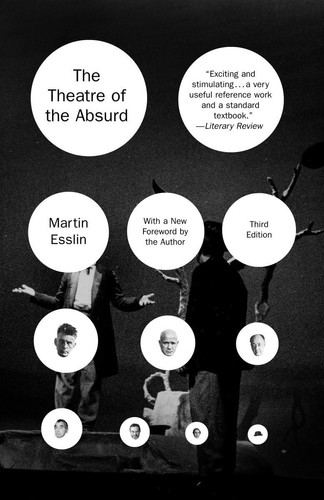
The theatre of the absurd

Esslin, Martin
In 1953, Samuel Beckett’s Waiting for Godot premiered at a tiny avant-garde theatre in Paris; within five years, it had been translated into more than twenty languages and seen by more than a million spectators. Its startling popularity marked the emergence of a new type of theatre whose proponents—Beckett, Ionesco, Genet, Pinter, and others—shattered dramatic conventions and paid scant attention to psychological realism, while highlighting their characters’ inability to understand one another. In 1961, Martin Esslin gave a name to the phenomenon in his groundbreaking study of these playwrights who dramatized the absurdity at the core of the human condition. Over four decades after its initial publication, Esslin’s landmark book has lost none of its freshness. The questions these dramatists raise about the struggle for meaning in a purposeless world are still as incisive and necessary today as they were when Beckett’s tramps first waited beneath a dying tree on a lonely country road for a mysterious benefactor who would never show. Authoritative, engaging, and eminently readable, The Theatre of the Absurd is nothing short of a classic: vital reading for anyone with an interest in the theatre.
Vintage Books 2004-01-06 480 pages

Putinism: Russia and its future with the West

Laqueur, Walter
"A timely, topical book grounding Russia's recent turn towards conservativism in pre-1917 culture and explaining what this shift could mean for the rest of the world" ; "There is no question that tensions between Russia and America are on the rise. The forced annexation of Crimea, the downing of Malaysia Airlines flight 17, and the Russian government's treatment of homosexuals have created diplomatic standoffs and led to a volley of economic sanctions. Much of the blame for Russia's recent hostility towards the West has fallen on steely-eyed President Vladimir Putin, and Americans have begun to wonder if they are witnessing the rebirth of Cold War-style dictatorship. Not so fast, argues veteran historian Walter Laqueur. For two decades Laqueur has been ahead of the curve, predicting events in post-Soviet Russia with uncanny accuracy. In Putinism, he deftly demonstrates how three long-standing pillars of Russian ideology: a strong belief in the Orthodox Church, a sense of Eurasian 'manifest destiny, ' and a fear of foreign enemies, continue to exert a powerful influence on the Russian populace. As a result, Putin may well be much more a servant of his people than we think. Topical and provocative, Putinism contains much more than historical analysis. Looking to the future, Laqueur explains how the tendency to view Russia as a Cold War relic is dangerous and premature. Russia can, and will, continue to challenge the West so it is in our best interest to figure out exactly who it is we are facing--and what they want--before it is too late"
Thomas Dunne Books 2015-06-30 271 pages

There's No Bones in Ice Cream Sylvain Sylvain's Story of the New York Dolls

Sylvain Sylvain
There's No Bones in Ice Cream, by Sylvain Sylvain, is the inside story of glam heroes the New York Dolls - outrageous, defiant, sleaze kings, transgender posers, drug casualties and victims, not just of their own excess but of an unsympathetic music industry that simply didn't know how to process them. Sylvain, one of only two surviving members of the original New York Dolls, offers a fly-on-the-wall, sincere and often hilarious account of the rise and fall of the Dolls, the group that flew so close to the sun that they exploded in a fireball that lit the touch paper under punk rock. Though their brief, sensation-filled yet doomed career produced just two albums, the Dolls exerted an influence on rock that changed it forever. A cross between the Rolling Stones and the Sex Pistols, the Dolls became the link in the chain between them, offering a crash course in mischief, cross-dressing and anarchy, but like unheralded prophets of Biblical times they were cast aside until the world finally caught up. "Other people turned the New York Dolls into legends. We just went along for the ride."
Omnibus Press 2018 256 pages

You don't know me but you don't like me: Phish, Insane Clown Posse, and my misadventures with two of music's most maligned tribes

Rabin, Nathan
One of Rolling Stone ’s 20 Best Music Books of 2013 When memoirist and head writer for The A.V. Club Nathan Rabin first set out to write about obsessed music fans, he had no idea the journey would take him to the deepest recesses of both the pop culture universe and his own mind. For two very curious years, Rabin, who Mindy Kaling called “smart and funny” in The New Yorker , hit the road with two of music’s most well-established fanbases: Phish’s hippie fans and Insane Clown Posse’s notorious “Juggalos.” Musically or style-wise, these two groups could not be more different from each other, and Rabin, admittedly, was a cynic about both bands. But once he gets deep below the surface, past the caricatures and into the essence of their collective cultures, he discovers that both groups have tapped into the human need for community. Rabin also grapples with his own mental well-being—he discovers that he is bipolar—and his journey is both a prism for cultural analysis and a deeply personal exploration, equal parts humor and heart.
Scribner 2013-06-11 261 pages

The Unanswered Question Six Talks at Harvard

Leonard Bernstein
The varied forms of Leonard Bernstein's musical creativity have been recognized and enjoyed by millions. These lectures, Mr. Bernstein's most recent venture in musical explication, will make fascinating reading as well. Virgil Thomson says of the lectures: "Nobody anywhere presents this material so warmly, so sincerely, so skillfully. As musical mind-openers they are first class; as pedagogy they are matchless". Mr. Bernstein considers music ranging from Hindu ragas through Mozart and Ravel, to Copland, suggesting a worldwide, innate musical grammar. Folk music, pop songs, symphonies, modal, tonal, atonal, well-tempered and ill-tempered works all find a place in these discussions. Each, Mr. Bernstein suggests, has roots in a universal language central to all artistic creation. Using certain linguistic analogies, he explores the ways in which this language developed and can be understood as an aesthetic surface. Drawing on his insights as a master composer and conductor, Mr. Bernstein also explores what music means below the surface: the symbols and metaphors which exist in every musical piece, of whatever sort. And, finally, Mr. Bernstein analyzes twentieth century crises in the music of Schoenberg and Stravinsky, finding even here a transformation of all that has gone before, as part of the poetry of expression, through its roots in the earth of human experience. Phonograph records are included in this book, with Mr. Bernstein's own speaking and playing of certain sections, in which musical sounds are crucial for understanding. These talks, written and delivered when Leonard Bernstein was Charles Eliot Norton Professor of Poetry at Harvard University, are the newest of the author's literary achievements. In addition to a distinguished career as conductor, pianist, and composer, Mr. Bernstein is the recipient of many television Emmys for the scripts of his Young People's Concerts, Omnibus programs, and others, and is the author of The Infinite Variety of Music and The Joy of Music, for which he received the Christopher Award.
Harvard University Press 1976 428 pages

Social Choice and Individual Values

Kenneth Joseph Arrow
2012 Reprint of 1951 Edition. Exact facsimile of the original edition, not reproduced with Optical Recognition Software. Kenneth Arrow's monograph "Social Choice and Individual Values" and a theorem within it created modern social choice theory, a rigorous melding of social ethics and voting theory with an economic flavor. The work culminated in what Arrow called the "General Possibility Theorem," better known thereafter as Arrow's (impossibility) theorem. The theorem states that, absent restrictions on either individual preferences or neutrality of the constitution to feasible alternatives, there exists no social choice rule that satisfies a set of plausible requirements. The result generalizes the voting paradox, which shows that majority voting may fail to yield a stable outcome.
Martino Fine Books 2012-09 110 pages

The God of the Way A Journey Into the Stories, People, and Faith That Changed the World Forever

Kathie Lee Gifford,Rabbi Jason Sobel
New York Times Bestseller! Kathie Lee Gifford and Rabbi Jason Sobel the authors of the New York Times best seller The Rock, the Road, and the Rabbi bring you an exciting new life-changing message that will help you read the Bible with new eyes and take you into the heart of God's people in Scripture - from Abraham to Ruth to Jesus and His early followers. In The God of the Way, Rabbi Jason shares wisdom from his Jewish heritage and helps us read Scripture in the cultural context of biblical times. Kathie Lee adds personal stories and reflections from her spiritual journey and studies, serving as a companion as you go deeper in your own relationship with God. You will experience: The God of the How and When: When you don't know the details...God does. The God of His Word: When you can't see God...trust His heart and the promises in His Word. The God Who Sees: When you feel abandoned and forgotten...God knows and cares about you. The God of the Other Side: When you feel overwhelmed and unworthy...God never passes by but crosses over and brings freedom. Journey into God's word, from the creation of the world through the desert and empty places, the Hebrew nation, and meet Jesus, the disciples, and his followers. As you do, you will see how you are part of God's epic story of redemption - a radiant testimony to the truth that belief in God's promises is never wasted.
Thomas Nelson Incorporated 2022-08-30 288 pages

None of This Rocks

Joe Trohman
None of This Rocks is a memoir by Joe Trohman - lead guitarist and cofounder of Fall Out Boy - that reads like a double album full of revealing stories from his youth and his experiences of modern rock and roll stardom. With wit and wisdom, and maybe a little bit of whining, Trohman grapples with depression, his mother's brain cancer, antisemitism, pills, petty larceny, side hustles, and pop punk at the turn of the century. None of This Rocks chronicles a turbulent life that has informed Trohman's music and his worldview. His mother suffered from mental illness and multiple brain tumors that eventually killed her. His father struggled with that tragedy, but was ultimately a supportive force in Trohman's life who fostered his thirst for knowledge. Trohman faced antisemitism in small-town Ohio, and he witnessed all levels of misogyny, racism, and violence amid the straight edge hardcore punk scene in Chicago. Then came Fall Out Boy. From the guitarist's very first glimpses of their popular ascension, to working with his heroes like Anthrax's Scott Ian, to writing for television with comedian Brian Posehn, Trohman takes readers backstage, into the studio, and onto his couch. He shares his struggles with depression and substance abuse in a brutally honest and personal tone that readers will appreciate. Not much of this rocks, perhaps, but it all adds up to a fascinating music memoir unlike any you've ever read.
Headline Publishing Group 2022-09-13 304 pages