58,196 results in 0.07 seconds

Other People's Money and How The Bankers Use It

Louis D. Brandeis
Louis D. Brandeis was a Supreme Court Justice and a patriot. He wrote "Other People's Money and How Bankers Use It" to warn the American people about the greedy bankers that control the United States and drive us into financial ruin. The book attacked the use of investment funds to promote the consolidation of various industries under the control of a small number of corporations, which Brandeis alleged were working in concert to prevent competition. Brandeis harshly criticized investment bankers who controlled large amounts of money deposited in their banks by middle-class people. The heads of these banks, Brandeis pointed out, routinely sat on the boards of railroad companies and large industrial manufacturers of various products, and routinely directed the resources of their banks to promote the interests of their own companies. These companies, in turn, sought to maintain control of their industries by crushing small businesses and stamping out innovators who developed better products to compete against them. Brandeis supported his contentions with a discussion of the actual dollar amounts--in millions of dollars--controlled by specific banks, industries, and industrialists such as J. P. Morgan, noting that these interests had recently acquired a far larger proportion of American wealth than corporate entities had ever had before. He extensively cited testimony from a Congressional investigation performed by the Pujo Committee, named after Louisiana Representative Arsène Pujo, into self-serving and monopolistic business dealing. Chapter V of the book ("What Publicity Can Do") contains in its opening section a well-known line that has frequently been cited in support of regulation through disclosure obligations: "Sunlight is said to be the best of disinfectants; electric light the most efficient policeman."
Brian Westland 1914 108 pages

Unlocked The Life and Crimes of a Mafia Insider

Louis Ferrante
Louis Ferrante began hijacking delivery trucks at age seventeen, and New York's infamous Gambino crime family took notice. By twenty-one, Ferrante's Mafia connections had enabled him to pull off some of the most lucrative heists in history. But betrayals by close friends brought Ferrante a slew of federal indictments, and he would spend the next decade as an inmate in some of America's most notorious penitentiaries—with ample time to ponder life's essential questions: Who am I? What makes me this way? Do I have a purpose? In the prison library he embarked on an extraordinary journey of the mind that took him from history to philosophy to major world religions, from the art of writing to the law. And after successfully appealing his own conviction—in a case now cited in courtrooms across the country—Ferrante walked away from prison a writer and a profoundly changed man. Unlocked is a remarkable memoir of personal transformation—a true story that is shocking, brutal, inspiring, and unforgettable.
HarperCollins 2009-02-24 320 pages

Meadowlands

Glück, Louise
Louise Glück interweaves in this book-length sequence an account of the dissolution of a contemporary marriage with the story of Homer's Odyssey. Myth and modern life have a lot to teach each other in terms of irony and clarification. Penelope, Circe, the son Telemachus and Odysseus himself emerge compellingly real and quite distinct from the dusty figures they sometimes seem to be. Glück's poems are by turns bracingly comic, expansive, tolerant and, finally, heartbreaking. The trivia of daily life break across underlying dramas which the dialogues disclose. Dream and actuality, choice and compulsion, collide. She also explores the notion of the nostos, the homecoming, source of the momentum of Homer's poem. 'We look at the world once, in childhood./The rest is memory.'
Carcanet 1998 61 pages

The new spirit of capitalism

Boltanski, Luc,Chiapello, Eve
New edition of this major work examining the development of neoliberalism In this major work, sociologists Luc Boltanski and Eve Chiapello go to the heart of the changes in contemporary capitalism. Via an unprecedented analysis of the latest management texts that have formed the thinking of employers in their reorganization of business, the authors trace the contours of a new spirit of capitalism. They argue that from the middle of the 1970s onwards, capitalism abandoned the hierarchical Fordist work structure and developed a new network-based form of organization that was founded on employee initiative and autonomy in the workplace-a "freedom" that came at the cost of material and psychological security. The authors connect this new spirit with the children of the libertarian and romantic currents of the late 1960s (as epitomised by dressed-down, cool capitalists such as Bill Gates and "Ben and Jerry") arguing that they practice a more successful and subtle-form of exploitation. Now a classic work charting the sociological structure of neoliberalism, Boltanski and Chiapello show how the new spirit triumphed thanks to a remarkable recuperation of the left's critique of the alienation of everyday life that simultaneously undermined their "social critique." In this new edition, the two authors reflect on the reception of the book and the debates it has stimulated.
Verso 2018-01-16 619 pages

Lucian Freud Portraits

Lucian Freud
"'Everything is autobiographical and everything is a portrait, even if it's only a chair.' Portraits were central to the work of Lucian Freud. Working only from life, the artist claimed 'I could never put anything into a picture that wasn't actually there in front of me.' Lucian Freud Portraits surveys his portraits and figure paintings from across his long career. Drawing together the finest portraits from public and private collections around the world, the book explores Freud's stylistic development and technical virtuosity. A series of previously unpublished interviews conducted by Michael Auping between May 2009 and January 2011 reveal the artist's thoughts on the complex relationship between artist and sitter, the particular challenges of painting nudes and self-portraits, and his views on other painters he admired. Freud's psychological portraits are often imbued with a mood of alienation. A private man, the artist's close relationship with his sitters was played out behind the closed door of the studio. Frequently there is the sense of an emotionally charged drama unfolding, but his subjects remain elusive. Sitters represented in the book include family members, particularly his mother, Lucie, and artists such as Frank Auerbach, Francis Bacon and David Hockney. In the early 1990s Freud produced a series of monumental paintings of the performance artist Leigh Bowery and Bowery's friend Sue Tilley, the 'benefits supervisor', examples of which are reproduced in this book."--Publisher description.
National Portrait Gallery 2012 256 pages

Bemerkungen über die Farben

Wittgenstein, Ludwig
This book comprises material on colour which was written by Wittgenstein in the last eighteen months of his life. It is one of the few documents which shows him concentratedly at work on a single philosophical issue. The principal theme is the features of different colours, of different kinds of colour (metallic colour, the colours of flames, etc.) and of luminosity--a theme which Wittgenstein treats in such a way as to destroy the traditional idea that colour is a simple and logically uniform kind of thing. This edition consists of Wittgenstein's basic German text, together with an English translation.
University of California Press 1977 126 pages

Symbiotic planet: a new look at evolution

Margulis, Lynn
Although Charles Darwin's theory of evolution laid the foundations of modern biology, it did not tell the whole story. Most remarkably, The Origin of Species said very little about, of all things, the origins of species. Darwin and his modern successors have shown very convincingly how inherited variations are naturally selected, but they leave unanswered how variant organisms come to be in the first place.In Symbiotic Planet, renowned scientist Lynn Margulis shows that symbiosis, which simply means members of different species living in physical contact with each other, is crucial to the origins of evolutionary novelty. Ranging from bacteria, the smallest kinds of life, to the largest—the living Earth itself—Margulis explains the symbiotic origins of many of evolution's most important innovations. The very cells we're made of started as symbiotic unions of different kinds of bacteria. Sex—and its inevitable corollary, death—arose when failed attempts at cannibalism resulted in seasonally repeated mergers of some of our tiniest ancestors. Dry land became forested only after symbioses of algae and fungi evolved into plants. Since all living things are bathed by the same waters and atmosphere, all the inhabitants of Earth belong to a symbiotic union. Gaia, the finely tuned largest ecosystem of the Earth's surface, is just symbiosis as seen from space. Along the way, Margulis describes her initiation into the world of science and the early steps in the present revolution in evolutionary biology; the importance of species classification for how we think about the living world; and the way “academic apartheid” can block scientific advancement. Written with enthusiasm and authority, this is a book that could change the way you view our living Earth.
Basic Books 1998 147 pages

Chasing Homer

László Krasznahorkai
In this thrilling chase narrative, a hunted being escapes certain death at breakneck speed--careening through Europe, heading blindly South. Faster and faster, escaping the assassins, our protagonist flies forward, blending into crowds, adjusting to terrains, hopping on and off ferries, always desperately trying to stay a step ahead of certain death: the past did not exist, only what was current existed--a prisoner of the instant, rushing into this instant, an instant that had no continuation... Krasznahorkai--celebrated for the exhilarating energy of his prose--outdoes himself in Chasing Homer. And this unique collaboration boasts beautiful full-color paintings by Max Neumann and--reaching out of the book proper--the wildly percussive music of Szilveszter Miklós scored for each chapter (to be accessed by the reader via QR codes).
New Directions Publishing Corporation 2026-02-24 96 pages

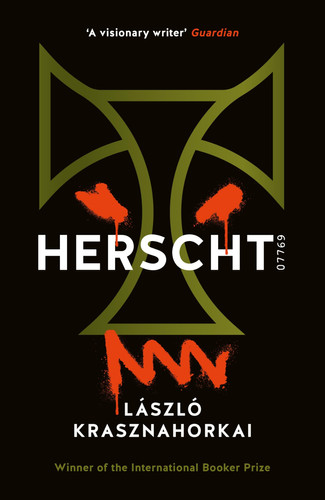
Herscht 07769

Krasznahorkai, László
Gentle giant Florian Hescht has a problem: having attended Herr Köhler's adult education classes in physics, he can see that the world might end at any moment. And so he won't stop posting letters to Chancellor Angela Merkel until she addresses the urgent and perilous situation. Florian is an orphan, adopted by the Boss, a neo-Nazi who has apprenticed him as a graffiti cleaner. Someone is spraying wolf emblems across monuments to Johann Sebastian Bach in their east German town and the Boss in enraged. A Bach fanatic and director of an amateur orchestra, he is determined to punish the culprit, and Florian has no choice but to join his gang as they devise a plan to catch him.
Tuskar Rock 2024 406 pages