

2180 results for "Business"

Sweet and Low
Sweet and Low is the amazing, bittersweet, hilarious story of an American family and its patriarch, a short-order cook named Ben Eisenstadt who, in the years after World War II, invented the sugar packet and Sweet'N Low, converting his Brooklyn cafeteria into a factory and amassing the great fortune that would destroy his family. It is also the story of immigrants to the New World, sugar, saccharine, obesity, and the health and diet craze, played out across countries and generations but also within the life of a single family, as the fortune and the factory passed from generation to generation. The author, Rich Cohen, a grandson (disinherited, and thus set free, along with his mother and siblings), has sought the truth of this rancorous, colorful history, mining thousands of pages of court documents accumulated in the long and sometimes corrupt life of the factor, and conducting interviews with members of his extended family. Along the way, the forty-year family battle over the fortune moves into its titanic phase, with the money and legacy up for grabs. Sweet and Low is the story of this struggle, a strange comic farce of machinations and double dealings, and of an extraordinary family and its fight for the American dream.

Public sector employment: cases and materials

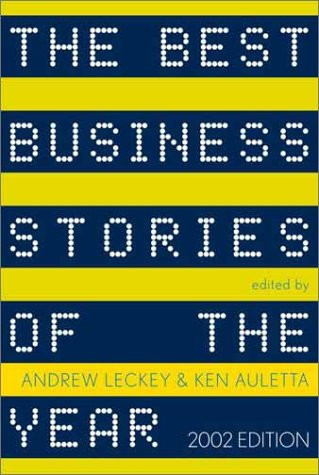
The Best Business Stories of the Year
"[The editors] cast their net wide, picking up some excellent stories from nontraditional sources that even avid readers of the business press may have missed."-"USA Today," on the 2001 edition Series editor Andrew Leckey and guest editor Ken Auletta have scoured the print media, consulted with the editors of major business and general interest publications, and surveyed journalism school deans to find the best business stories from the last twelve months. Among those selected: Michael Lewis on teenage stock trader Jonathan Lebed, from "The New York Times Magazine"; James B. Stewart on the irrepressible Michael Milken, from "The New Yorker"; and many others from the pages of "The Wall Street Journal, Rolling Stone, Fortune, Rocky Mountain News, "and" Wired. " The second annual edition continues the excellence and comprehensive range of this fascinating anthology series.
How women mean business: a step by step guide to profiting from gender balanced business
Why Women Mean Business showed you why business needs to change. Now Avivah Wittenberg-Cox’s new book shows you how to achieve a healthy and profitable balance. We know that business needs more women. Gender balance has been proven time and time again to lead to more innovation, better business performance and corporate governance. The only question is, how can business leaders make this happen? Avivah Wittenberg-Cox, an acknowledged world authority on women and business, points the way. In four simple steps she provides guidance on how to bring about real change: • Audit – where are you really at with gender balance now? • Awareness – Opening your eyes to what better gender balance could mean for your company • Alignment – Ensuring the buy-in that will bring about real results and change • Sustain – Building gender diversity into corporate DNA This lively, hands-on guide is packed with research and case-studies showing how some of the world’s biggest blue-chip firms have done it. Women are most of the talent and much of the market – you need this book.

My life at Liz Claiborne: how we broke the rules and built the largest fashion company in the world : a business memoir
Mr. Chazen is known as an innovator and even a revolutionary, whose ideas changed the face of the apparel industry and retailing forever. The book will provide lessons for everyone in business, as it shows how he and his executives at Liz broke the rules time after time in their pursuit of success -- Pioneering overseas production by American corporations Making consumer choice easier by creating coordinated clothing collections Offering women alternatives to traditional, male-oriented business styles Popularizing designer branding and quality on affordable merchandise Focusing on the end consumer rather than the middleman (in this case the department stores) Growing without advertising Many of his innovations are reflected today in the shopping experience of millions of people around the world: specialized boutiques within larger stores, upscale outlet malls, designer branding on everything, and more. Mr. Chazen's penchant for rule breaking is not limited to business practices but rather extends to career and retirement ideas. For example, he shows how careers are often better nurtured and built up in the hinterlands and away from the New York spotlight. His ideas on a satisfying retirement reflect a "never stop working" approach, and on estate planning a "die broke" philosophy. The book will captivate fashion industry insiders, intrigue general business readers, and enlighten anyone interested in devoting themselves to the entrepreneurial life. In this business memoir, Jerome A. Chazen, tells an extraordinary success story - how, together with designer Liz Claiborne, he took a small startup business and grew it into the largest apparel company in the world. Chazen is one of the most celebrated fashion executives of all time. Through his inventive management of Liz Claiborne, Inc., he created a company beloved by generations of women who enthusiastically dressed themselves for both the workplace and leisure time in Liz Claiborne clothing and accessories. In this book, for the first time, Chazen tells the inside story of the founding of the company, the management tactics and strategies he utilized to propel it into the Fortune 500, the internal struggles and tensions that marked the business' phenomenal growth, an inside look at the processes that made Liz a "rock star" in her time, and revealing insights into what it takes to navigate successfully in one of the most competitive industries in the world. Mr. Chazen shows readers how design and creativity is never enough to ensure success. Only by joining the creative processes to savvy marketing and sales strategies can any company achieve great success. He illustrates how he did it at Liz and shows by example how other companies can do the same and flourish as well.

The art of giving: where the soul meets a business plan
"An honest assessment for how to determine your individual relationship with charitable giving in today's world. From world-renowned philanthropists Charles Bronfman and Jeffrey Solomon of the Andrea and Charles Bronfman Philanthropies comes a comprehensive guide on how to be a canny, street-smart, effective philanthropist, regardless of your income level. It is also a perfect companion for nonprofit program and development executives who would like to introduce donors to their work and their organizations. Despite their critical importance to philanthropy, donors have few resources for solid information about making their gifts-deciding what type of gift to give, how to structure it, the tax implications, what level of follow-up and transparency they should ask for and expect, and countless other complexities. This book fills that vacuum and helps you gain a special understanding of philanthropy as a business undertaking as well as a deeply personal, reflective process. Drawing on decades of experience, the authors offer a fresh, enlivening approach to the nonprofit enterprise that, too often, is undervalued and thought of as the province of the burnt-out and the overwhelmed. Along with its many candid insights and memorable anecdotes, The Art of Giving also offers instruction on how to create a business plan for giving that works for you"--Provided by publisher.

By Amir Aczel Complete Business Statistics 8/E with CD by Amir Aczel [Hardcover]
This clear and engaging business statistics textbook is designed to help students understand how to think statistically while providing a statistical tool kit that they can use for solving the applications, and making the business decisions, that they will subsequently encounter in their careers. Bundled with this version of the textbook, at no additional charge, is a CD with a comprehensive set of Excel templates that allow for easy computation, so that students do not have to develop themselves the Excel formulas needed for solving the problems in the book. Non-platform specific, the templates can be used regardless of the operating system of the computer, and includes full instructions for using the template and the accompanying data sets in the Student Guide to Using Excel, which is also included on the CD that is bundled with the book.

Business civilization in decline

World view: global strategies for the new economy
How to Globalize to Survive in the New Economy At a time in which globalization impacts corporate strategy as never before, corporate leaders are challenged to consider all the implications of a new global economy. Characterized by a myriad of competing forces, this new global economy is highlighted by unprecedented advances in technology of all kinds. With such unrelenting change blurring the view, corporate leaders need the benefit of the best thinking in order to focus on the right global strategies. World View offers just such thinking, featuring examples of strategies and best practices used by successful companies worldwide in moving toward global markets. In his introduction to this collection of Harvard Business Review articles, editor Jeffrey Garten pinpoints five emerging themes: * Operating in a global market requires CEOs to rethink every aspect of their strategies. * The best strategies require that organizations gather massive amounts of information and process it effectively. * Companies that succeed on a global scale are constant innovators, learning and implementing simultaneously. * Great global companies create cultures conducive to extensive internal and external collaboration and networking. * Radical change brings unprecedented opportunity to capture markets and enhance shareholder value. Seeing globalization through the eyes of leading thinkers and executives who have mastered its challenges, World View presents forward-thinking insights for corporate leaders determined to succeed in the always-new and uncertain global economy. A Harvard Business Review Book.

Bullies, Tyrants, and Impossible People How to Beat Them Without Joining Them
The impossible people who make life’s journey so difficult are everywhere—at the office, in restaurants, on airplanes, living next door, members of your own family. They’re . . . • your “nothing is ever good enough” boss • the “no price is ever low enough” client • the next-door neighbor who redefines the meaning of paranoia • the maître d’ who looks through you as if you don’t exist • the father-in-law who you know is always thinking about how much better a life his Janey or Joey would have if only married to someone other than you Ron Shapiro and Mark Jankowski give you a simple and highly effective 4-point plan for dealing with all of them and more—N.I.C.E. Their system shows you how to neutralize your emotions so you don’t just react but act purposefully and wisely. It enables you to identify the type of bully, tyrant, or impossible person you’re facing—the situationally difficult (something has happened that turns an otherwise reasonable person into a temporary terror); the strategically difficult (she has empirical evidence that being difficult is a strategy that gets results); or simply difficult (being difficult is his 24/7 M.O.). Then you’ll learn how to shape the outcome by controlling the encounter and, finally, how to get “unstuck” by exploring your options. Using colorful stories from all walks of life— “He called me the scum of the earth and it went downhill from there,” “First, lock all your vendors in a small room,” and “The boss from hell”—the authors bring their lessons to life, from business life to family life.

The end of employer-provided health insurance: why it's good for you, your family, and your company
"The future of employer-provided health insurance is a #1 concern for business owners, financial executives and insurance professionals. Existing "health insurance" books focus only on public policy or consumers. Using the techniques outlined in this book, employers and their workers learn to save money on health insurance by migrating from group to individual plans at a total cost that is 20-60% lower for the same coverage (That's a savings of $4,000-$12,000 per year for a family of four). We are at the beginning of a huge transformation in the health insurance industry in which 120 million people are expected to move from group to individual insurance by 2025. Similar to the shift from defined benefit pensions to defined contribution 401(k) plans, the end of employer-provided health insurance will create opportunities for new entrants the way 401(k) plans led to the massive growth of Schwab, Fidelity and Vanguard"--

America's Great Depression
Rothbard opens with a theoretical treatment of business cycle theory, showing how an expansive monetary policy generates imbalances between investment and consumption. He proceeds to examine the Fed's policies of the 1920s, demonstrating that it was quite inflationary even if the effects did not show up in the price of goods and services. He showed that the stock market correction was merely one symptom of the investment boom that led inevitably to a bust. The Great Depression was not a crisis for capitalism but merely an example of the downturn part of the business cycle, which in turn was generated by government intervention in the economy. Had the book appeared in the 1940s, it might have spared the world much grief. Even so, its appearance in 1963 meant that free-market advocates had their first full-scale treatment of this crucial subject. The damage to the intellectual world inflicted by Keynesian- and socialist-style treatments would be limited from that day forward.--Amazon.com

Optimum Quantity of Money A Comprehensive Presentation of the Body of Monetary Thought of One of the World's Leading Monetary Economists
This classic set of essays by Nobel Laureate and leading monetary theorist Milton Friedman presents a coherent view of the role of money, focusing on specific topics related to the empirical analysis of monetary phenomena and policy. The early chapters cover factors determining the real quantity of money held in a community and the welfare implications of policies that affect the quantity held. The following chapters formally restate why quantity analysis has become central to the science of economics. Friedman's presidential address to the American Economic Association, included here, provides a general summary of his views on the role of monetary policy, with an emphasis on its limitations and its possibilities. This theoretical framework is used in examining a number of empirical the demand for money, the explanation of price changes in wartime periods, and the role of money in business cycles. These essays summarize some of the most important results of Friedman's extensive research over the course of his lifetime. The chapters on policy that follow survey the positions of earlier economists and deal with the importance of lags and the implications of destabilizing speculation in foreign markets. Taken as a whole, The Optimum Quantity of Money provides a comprehensive view of the body of monetary theory developed in leading centers of monetary analysis. This work is essential reading for economists and graduate students in the field. The volume will be no less important for practicing business and banking personnel as well. The new statement by Michael Bordo, a student of Friedman's and an expert in the field, provides a sense of where the field now stands in the economy and academy.

The education of millionaires: it's not what you think and it's not too late
The myth: If you get into a good college, study hard, and graduate with excellent grades, you will be pretty much set for a successful career. The reality: The biggest thing you won't learn in college is how to succeed professionally. Some of the smartest, most successful people in the country didn't finish college. None of them learned their most critical skills at an institution of higher education. And like them, most of what you'll need to learn to be successful you'll have to learn on your own, outside of school. Michael Ellsberg set out to fill in the gaps by interviewing a wide range of millionaires and billionaires who don't have college degrees, including fashion magnate Russell Simmons, Facebook co-founder Dustin Moskovitz and founding president Sean Parker, WordPress creator Matt Mullenweg, and Pink Floyd songwriter and lead guitarist David Gilmour. Among the fascinating things he learned: How fashion designer Marc Ecko started earning $1000 a week in high school with his own clothing business, and later grew it into an empire. How billionaire Phillip Ruffin went from lowly department store employee with no college degree, to owner of Treasure Island on the Vegas Strip. How John Paul DeJoria went from homelessness to billionaire as founder of John Paul Mitchell Systems Hair Care Products. This book is your guide to developing practical success skills in the real world. Even if you've already gone through college, the most important skills weren't in the curriculum-how to find great mentors, build a world-class network, learn real-world marketing and sales, make your work meaningful (and your meaning work), build the brand of you, master the art of bootstrapping, and more. Learning the skills in this book well is a necessary addition to any education. This book shows you the way, whether you're a high school dropout or a graduate of Harvard Law School.

Better, Stronger, Faster The Myth of American Decline . . . and the Rise of a New Economy
Daniel Gross, Yahoo! financial columnist and author of Dumb Money , offers a refreshingly optimistic take on our nation’s economic prospects, examining the positive trends that point to a better, stronger future. Financial meltdown, a deep recession, and political polarization—combined with strong growth outside the U.S.—have led to a global bubble of pessimism surrounding the U.S. and its economic prospects. Bloated with debt, outpaced by China, India, and other emerging markets, the U.S. has been left for dead as an economic force. But, Daniel Gross, widely respected for his Newsweek and Slate coverage of the crash and the recovery, shows that much of the talk about decline is misplaced. In the wake of the crash, rather than accept the inevitability of a Japan-style lost decade, America’s businesses and institutions tapped into the very strengths that built the nation’s economy into the global powerhouse in the first place: speed, ingenuity, adaptability, pragmatism, entrepreneurship, and, most significantly, an ability to engage with the world. As the U.S. wallowed in self-pity, the world continued to see promise in what America has to offer—buying exports, investing in the U.S., and adapting American companies and business models as their own. Global growth, it turns out, is not a zero-sum game. These same attributes can propel the world’s largest economy forward through the significant headwinds it faces. Better, Stronger, Faster is a narrative of the remarkable reconstruction and reorientation that started in March 2009, a period that Gross compares to March 1933. Both marked the start of unexpected recoveries and monumental shifts in our nation’s history. As Gross explains, through stories of innovative solutions devised by policymakers, businesses, investors, and consumers, America has the potential to emerge from this period, not as the unrivaled ruler of the global economy, but as a leader and enabler of growth.

Studies in Public Finance
This collection of Seligman's articles and addresses on fiscal theory and policy includes "Comparative Tax Burdens in the Twentieth Century," "Income Taxes and the Price Level," "Are Stock Dividends Income," "The Sales Tax," "The Problem of Tax-exempt Securities," and "The Reform of Municipal Taxation."

Doing capitalism in the innovation economy: reconfiguring the three-player game between markets, speculators and the state
"Legendary economist Hyman Minsky identified author William H. Janeway as a 'theorist-practitioner' of financial economics; this book is an expression of that double life. Interweaving his unique professional perspective with political and financial history, Janeway narrates the dynamics of the innovation economy from the standpoint of a seasoned practitioner of venture capital, operating on the frontier where financial speculation intersects with novel technology. In this fully revised and updated edition, Janeway develops his theory that asset bubbles play a central role in financing technological innovation and that state investment in national goals enable the innovation process. Now, the Digital Revolution, sponsored by the state and funded by speculation, has matured to attack the authority, and even the legitimacy, of governments. The populist response in the West, especially in the United States, opens the door for China to seize leadership of the innovation economy from America"--

Putting poor people to work: how the work-first idea eroded college access for the poor
Today, a college education is increasingly viewed as the gateway to the American Dream—a necessary prerequisite for social mobility. Yet recent policy reforms in the United States effectively steer former welfare recipients away from an education that could further their career prospects, forcing them directly into the workforce where they often find only low-paying jobs with little opportunity for growth. In Putting Poor People to Work, Kathleen Shaw, Sara Goldrick-Rab, Christopher Mazzeo, and Jerry A. Jacobs explore this troubling disconnect between the principles of "work-first" and "college for all." Using comprehensive interviews with government officials and sophisticated data from six states over a four year period, Putting Poor People to Work shows how recent changes in public policy have reduced the quantity and quality of education and training available to adults with low incomes. The authors analyze how two policies encouraging work—the federal welfare reform law of 1996 and the Workforce Investment Act of 1998—have made moving people off of public assistance as soon as possible, with little regard to their long-term career prospects, a government priority. Putting Poor People to Work shows that since the passage of these "work-first" laws, not only are fewer low-income individuals pursuing postsecondary education, but when they do, they are increasingly directed towards the most ineffective, short-term forms of training, rather than higher-quality college-level education. Moreover, the schools most able and ready to serve poor adults—the community colleges—are deterred by these policies from doing so. Having a competitive, agile workforce that can compete with any in the world is a national priority. In a global economy where skills are paramount, that goal requires broad popular access to education and training. Putting Poor People to Work shows how current U.S. policy discourages poor Americans from seeking out a college education, stranding them in jobs with little potential for growth. This important new book makes a powerful argument for a shift in national priorities that would encourage the poor to embrace both work and education, rather than having to choose between the two. Institute for Research on Poverty Affiliated Books on Poverty and Public Policy">An Institute for Research on Poverty Affiliated Book on Poverty and Public Policy

The labor market as a social institution
Book by Solow, Robert M.
