14302 results for "History"

The coalition and the constitution

Bogdanor, Vernon
`England', Benjamin Disraeli famously said, `does not love coalitions'. But 2010 saw the first peace-time coalition in Britain since the 1930s. The coalition, moreover, may well not be an aberration. For there are signs that, with the rise in strength of third parties, hung parliaments are more likely to recur than in the past. Perhaps, therefore, the era of single-party majority government, to which we have become accustomed since 1945, is coming to an end. But is the British constitution equipped to deal with coalition? Are alterations in the procedures of parliament or government needed to cope with it? The inter-party agreement between the coalition partners proposes a wide ranging series of constitutional reforms, the most important of which are fixed-term parliaments and a referendum on the alternative vote electoral system, to be held in May 2011. The coalition is also proposing measures to reduce the size of the House of Commons, to directly elect the House of Lords and to strengthen localism. These reforms, if implemented, could permanently alter the way we are governed. This book analyses the significance of coalition government for Britain and of the momentous constitutional reforms which the coalition is proposing. In doing so it seeks to penetrate the cloud of polemic and partisanship to provide an objective analysis for the informed citizen.
Hart Pub 2011-03-25 148 pages

Larkswood

Mendes, Valerie
Larkswood House. The very name suggests birdsong, peace and elegance. It is home to the Hamilton children - Edward, Cynthia and Harriet - who enjoy the freedom and excitement of privilege. But in the glorious summer of 1896, with absent parents and a departed governess, disaster strikes the family, leaving it cruelly divided. More than 40 years later, on the eve of the Second World War, Louisa Hamilton, newly presented at court but struck down with glandular fever, is sent to Larkswood to recuperate. There, for the first time, she meets her grandfather, Edward, home after decades in India. But as Louisa begins to fall under the spell of Larkswood, she realises it holds the key to the mystery that shattered her family two generations before. Will she find the courage to unravel the dark secrets of the past?
W F Howes Ltd 2014-01-12 517 pages

Liberation by oppression: a comparative study of slavery and psychiatry

Szasz, Thomas
"The book is readable and challenging; readers will never see psychiatry in the same way again." -- Choice Reviews Originally called mad-doctoring, psychiatry began in the seventeenth century with the establishing of madhouses and the legal empowering of doctors to incarcerate persons denominated as insane. Until the end of the nineteenth century, every relationship between psychiatrist and patient was based on domination and coercion, as between master and slave. Psychiatry, its emblem the state mental hospital, was a part of the public sphere, the sphere of coercion. The advent of private psychotherapy, at the end of the nineteenth century, split psychiatry in two: some patients continued to be the involuntary inmates of state hospitals; others became the voluntary patients of privately practicing psychotherapists. Psychotherapy was officially defined as a type of medical treatment, but actually was a secular-medical version of the cure of souls. Relationships between therapist and patient, Thomas Szasz argues, was based on cooperation and contract, as is relationships between employer and employee, or, between clergyman and parishioner. Psychotherapy, its emblem the therapist's office, was a part of the private sphere, the contract. Through most of the twentieth century, psychiatry was a house divided-half-slave, and half-free. During the past few decades, psychiatry became united again: all relations between psychiatrists and patients, regardless of the nature of the interaction between them, are now based on actual or potential coercion. This situation is the result of two major "reforms" that deprive therapist and patient alike of the freedom to contract with one another: Therapists now have a double duty: they must protect all mental patients-involuntary and voluntary, hospitalized or outpatient, incompetent or competent-from themselves. They must also protect the public from all patients. Persons designated as mental patients may be exempted from responsibility for the deleterious consequences of their own behavior if it is attributed to mental illness. The radical differences between the coercive character of mental hospital practices in the public sphere, and the consensual character of psychotherapeutic practices in the private sphere, are thus destroyed. At the same time, as the scope of psychiatric coercion expands from the mental hospital to the psychiatrist's office, its reach extends into every part of society, from early childhood to old age. Thomas Szasz is professor of psychiatry emeritus at the State University of New York Health Science Center in Syracuse, New York and Adjunct Scholar at the Cato Institute, Washington, DC. He is the author of over two dozen books in fifteen languages, including The Myth of Mental Illness and most recently, Pharmacracy: Medicine and Politics in America . "The book is readable and challenging; readers will never see psychiatry in the same way again."-- Choice "Szasz now appears to have been transformed into an ally rather than an enemy of the National Health Service general adult psychiatrist. Szasz's project has always been to argue passionately for a boundry of demarcation around the responsibility and power of psychiatry....But what saves this book from being just another mugging of psychiatry is that Szasz does raise a fundamental question at the core of our discipline. If we restricted our attention only to those clients who wanted to see a psychiatrist, and disengaged from all those who really didn't, how different might our professional practice and experience be?"-- The British Journal of Psychiatry
Transaction Publishers 2002 237 pages

Theodore Bikel's the city of light

Bikel, Theodore,Bikel, Aimee Ginsburg
"A young Jewish boy strolls through Vienna and witnesses acts of anti-Semitism during the Jewish holiday of Hanukkah. At night he dreams of a superhero, Judah Maccabee, who appears to defend Vienna's Jews. When he awakes, he knows there will be no Maccabean rescue and he weeps. Years pass, the boy, now an old man, returns to Vienna and sees the Jewish community and the Temple have been restored. He looks for the eternal light in his Temple and can't find it. Then suddenly it becomes clear to him: The light was there all the time; it was in his own heart"--
MomentBooks 2019 62 pages

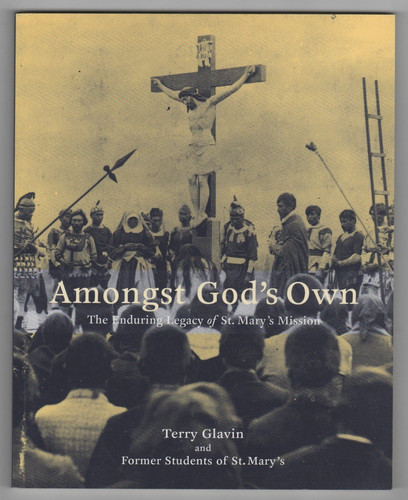
Amongst God's own: the enduring legacy of St. Mary's Mission

Glavin, Terry
For over 100 years, the Oblates of Mary Immaculate operated St. Mary's Mission, a residential school near Mission, BC. Now the stories of its former students are told for the first time. In Amongst God's Own, acclaimed writer Terry Glavin has woven the accounts of 35 native elders into a bold, uncompromising narrative of life at St. Mary's. Sitting with the Oblates' arrival and their establishment of the Mission on the Fraser River, Glavin tracks the chronology of St. Mary's through the 20th century, revealing the Order's religious, political, and social underpinnings. Native voices recount the realities of day-to-day life at the school. Moving beyond the prevalent discourse of oppression and victimhood, the result is a ground-breaking portrait of this place and time that illuminates 200 years of Native-white interaction in BC. Enhancing the stories are 60 photos culled from personal and archival collections. Amongst God's Own is a unique record of a people at a crossroads, caught in a clash between government and religious authority whose consequences reverberate to this day.
Longhouse Publishing 2002 95 pages

Shaking the pillars of exile: 'Voice of a fool,' an early modern Jewish critique of rabbinic culture

Fishman, Talya
This book explores a heretical blueprint for Jewish modernization written by a Venetian rabbi (under cover of pseudonym) in the early seventeenth century, almost two centuries before political emancipation. The analysis of this text, Kol Sakhal ("Voice of a Fool"), highlights the ways in which it harnessed concepts and methods drawn from the texts of rabbinic Judaism itself in order to reform Jewish culture from within. This book thus challenges the assumption that pre-modern Jewish society was culturally monolithic and unquestioningly obedient to rabbinic authority. In so doing, it raises fresh and unsettling questions about the periodization of Jewish history. Like the contemporaneous political and religious struggle that the Republic of Venice was waging against papal Rome, this remarkable Jewish attack on rabbinic authority targets—and revises—both the traditional historiography of sacred institutions and the legal canon itself. The text's very iconoclasm is shown to derive from the corpus of rabbinic Judaism, for the preservation of certain strains of inquiry in traditional sources makes them a virtual repository of tolerated dissent. Conjecture about the possible influence that a recently discovered work by a heretical Iberian Jewish convert to Catholicism may have had on the composition of "Voice of a Fool" leads to a discussion of the types of heterodoxy that threatened rabbinic Jewish communities in Italy and elsewhere in the early modern period. Reflections on the significance of the mask adopted by the text's author and on his (false) claim that the work was composed in 1500 in Spain facilitate speculation about his motives in trying to reinvent history. The second half of the book presents the first annotated English translation of "Voice of a Fool." Three appendixes analyze evidence concerning the date and place of the text's composition, the identification of its author, and its various manuscripts.
Stanford University Press 1997 362 pages

Children Of Destiny: A Play In Four Acts...

Rosenfeld, Sydney
This is a reproduction of a book published before 1923. This book may have occasional imperfections such as missing or blurred pages, poor pictures, errant marks, etc. that were either part of the original artifact, or were introduced by the scanning process. We believe this work is culturally important, and despite the imperfections, have elected to bring it back into print as part of our continuing commitment to the preservation of printed works worldwide. We appreciate your understanding of the imperfections in the preservation process, and hope you enjoy this valuable book. ++++ The below data was compiled from various identification fields in the bibliographic record of this title. This data is provided as an additional tool in helping to ensure edition identification: ++++ <title> Children Of Destiny: A Play In Four Acts <author> Sydney Rosenfeld <publisher> G. W. Dillingham Company, 1910 <subjects> Drama; General; Drama / American; Drama / General
Nabu Press 2011 134 pages

Autonomy and conflict: ethnoterritoriality and separatism in the South Caucasus : cases in Georgia

Cornell, Svante E.
"Autonomy and Conflict: Ethnoterritoriality and Separatism in the South Caucasus – Cases in Georgia" is Svante E. Cornell's doctoral dissertation, published in 2002 by the Department of Peace and Conflict Research at Uppsala University. The work examines the role of territorial autonomy in fostering violent ethnic conflicts in the South Caucasus, focusing specifically on Georgia. Cornell analyzes the historical and political development of Georgia, exploring how autonomy arrangements have influenced separatist movements and ethnoterritorial disputes. The study is structured into chapters that address the roots of ethnopolitical conflict, the impact of communism and nationalism on ethnicity within the Soviet context, and the factors contributing to conflict in the region. The dissertation concludes with an analysis of the political development in Georgia and offers explanations for the emergence of ethnopolitical conflicts. This comprehensive analysis provides valuable insights into the complexities of autonomy and separatism in the South Caucasus.
[s.n.] 2002 248 pages

After the Black Death: plague and commemoration among Iberian Jews

Einbinder, Susan L.
The Black Death of 1348-50 devastated Europe. With mortality estimates ranging from thirty to sixty percent of the population, it was arguably the most significant event of the fourteenth century. Nonetheless, its force varied across the continent, and so did the ways people responded to it. Surprisingly, there is little Jewish writing extant that directly addresses the impact of the plague, or even of the violence that sometimes accompanied it. This absence is particularly notable for Provence and the Iberian Peninsula, despite rich sources on Jewish life throughout the century. In After the Black Death , Susan L. Einbinder uncovers Jewish responses to plague and violence in fourteenth-century Iberia and Provence. Einbinder's original research reveals a wide, heterogeneous series of Jewish literary responses to the plague, including Sephardic liturgical poetry; a medical tractate written by the Jewish physician Abraham Caslari; epitaphs inscribed on the tombstones of twenty-eight Jewish plague victims once buried in Toledo; and a heretofore unstudied liturgical lament written by Moses Nathan, a survivor of an anti-Jewish massacre that occurred in Tàrrega, Catalonia, in 1348. Through elegant translations and masterful readings, After the Black Death exposes the great diversity in Jewish experiences of the plague, shaped as they were by convention, geography, epidemiology, and politics. Most critically, Einbinder traces the continuity of faith, language, and meaning through the years of the plague and its aftermath. Both before and after the Black Death, Jewish texts that deal with tragedy privilege the communal over the personal and affirm resilience over victimhood. Combined with archival and archaeological testimony, these texts ask us to think deeply about the men and women, sometimes perpetrators as well as victims, who confronted the Black Death. As devastating as the Black Death was, it did not shatter the modes of expression and explanation of those who survived it--a discovery that challenges the applicability of modern trauma theory to the medieval context.
University of Pennsylvania Press 2022-01-25 240 pages

England and Europe in the sixteenth century

Doran, Susan
This is a thematic survey of English foreign policy in the 16th century, focusing on the influence of the concept of honour, security concerns, religious ideology and commercial interests on the making of policy. It draws attention to aspects of continuity with the late medieval past but argues, too, that the European Reformation brought new challenges which forced a rethinking of policy. Far from treating the 16th century as the period when England began its rise as a Great Power, the author emphasizes the structural weaknesses of the English armed forces and demonstrates that dangers and insecurities did more to mould foreign policy than the energy and confidence of the Tudor rulers.
Macmillan 1998 145 pages

Roller derby rivals

Macy, Sue
New York City, 1948. Midge "Toughie" Brasuhn is scrappy and lightning-quick. Gerry Murray is a gutsy glamour girl--and Toughie's chief adversary. Their legendary high-speed, hard-hitting rivalry on the Roller Derby track is about to be witnessed by a packed arena and for the first time, thousands of television viewers. This fast-paced book tells the story of two remarkable athletes at the dawn of televised sports.
Holiday House 2019-03-19 32 pages

An investigation into early desert pastoralism: excavations at the Camel site, Negev

Rosen, Steven A.
Negev focuses on two primary purposes, one theoretical/methodological and the second substantive. Briefly stated, the book comprises a case study of excavations at an early (ca. 2800 B.C.) pastoral site in the Negev, providing detailed analyses and a synthetic overview of a seasonal encampment from this early period in the evolution of desert pastoral societies. It thus both demonstrates the feasibility of an archaeology of early mobile pastoralism and grapples with the basic anthropological and methodological issues surrounding the subject. Substantively, both the architectural and material culture assemblages uncovered constitute the first detailed analysis of this early desert culture and include materials previously unreported for the region and period. Historically, the Camel Site is placed in a larger perspective of the beginnings of multiresource nomadism in relation to the rise of complex societies.
Cotsen Institute of Archaeology Press 2011 220 pages