2604 results for "World History"

Rediscovering Russia in Asia: Siberia and the Russian Far East

Stephen Kotkin,David Wolff
In 1581 a Cossack raider crossed the Ural Mountains to plunder and claim for Tsar Ivan IV the land called "Sibir" by its Tatar inhabitants. Within half a century, Moscow's reach would extend nearly six thousand miles to the east. Thus Russia has a long history as part of Asia. Does it have a future there as well? Rediscovering Russia in Asia takes the reader on a trans-Siberian expedition to encounter the peoples, cultures, and riches of Russia's eastern expanses. The expert guides are scholars with the language skills and the sense of adventure to explore a "crossroads of civilizations" at long last reopened to the world.
M.E. Sharpe 1995 356 pages

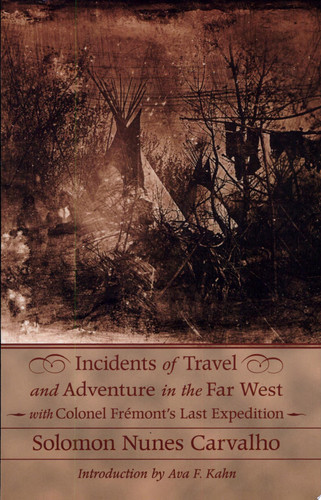
Incidents of travel and adventure in the Far West: with Colonel Fremont's last expedition across the Rocky Mountains, including three months' residence in Utah, and a perilous trip across the great American desert to the Pacific

Carvalho, Solomon Nunes
n August 1853, an American-born Sephardic Jew, Solomon Nunes Carvalho, accepted John Fremont's invitation to join his fifth expedition to find the best overland route to California. A Baltimore artist, inventor, and daguerreotypist, Carvalho was given the job of creating a photographic record of the lands and peoples along the way. Fremont's party left the Missouri on September 14, 1853, traveled up the Kansas River, overland to the Arkansas, upriver past Bent's Fort to the Huerfano, and traversed the Sandhill Pass into the Rocky Mountains. Beset by heavy snows and intense cold, they were reduced to eating their horses and mules and the occasional beaver or porcupine while making their way in midwinter across the Grand, Green, and Sevier Rivers. Suffering from frostbite, scurvy, and dysentery, Carvalho left the expedition in Utah; spent four months among the Mormons in Salt Lake City, where he observed with keen interest their system of spiritual wives; and reached California in 1854. Carvalho became the first Jewish writer to publish accounts of the Great American West and was also one of the first people to photograph the American West. Although only one of his plates is known to survive, others became the models for wood and steel engravings that broadcast the image of the West throughout the world. This Bison Books edition restores the discourses on Mormon doctrine omitted from previous twentieth-century editions. Ava F. Kahn is a visiting scholar at the California Studies Center, University of California, Berkeley. Her books include Jewish Voices of the California Gold Rush: A Documentary History, 1849-1880; Jewish Life in the American West: Perspectives on Migration, Settlement, and Community; and California Jews (coedited with Marc Dollinger).
University of Nebraska Press 2004-01-01 130 pages

Day One

Peter H. Wyden
From the author of Bay of Pigs and Betrayal and Survival in Hitler’s Germany comes a full scope look at the bombing of Hiroshima, from the race to create the bomb to its detrimental dropping on Japan and the terrifying consequences that are still affecting the world over seventy years later. Hiroshima was an event of such magnitude that it divided history into two periods: before and after the bomb. It led to the first day of a new age in which all life would be at risk. Almost seventy years later, as Peter Wyden began this book, the world was still dealing with the fallout of the bomb’s creation. Wyden draws on eyewitness accounts, interviews, and documents never before published in order to trace the nuclear state of the modern world to the historical roots of Hiroshima. Skillfully weaving together all the strands, stories, and characters, including the scientific, political, moral, military, and human viewpoints, Wyden provides a full understanding of how the bomb was created, why it was used, and what the aftermath of those decisions has been.
Simon & Schuster 2014-04-09 456 pages

Al Smith and his America

Handlin, Oscar
The legendary image of America as a land of opportunity was challenged in 1928 by Al Smith's race for the presidency. Could the governor from New York, a Catholic from the Lower East Side, really become president? His candidacy began a dark episode in American history as Al Smith found himself a victim of the very society that, ironically, gave him his greatest opportunity. p This sympathetic account of Smith's political career demonstrates that a changing society in the decades after World War I propelled Americans toward isolationism and a reassertion of comfortable verities about religion and ethnicity. Oscar Handlin notes that Americans were fundamentalists in 1928, and their anti-Catholicism affected the outcome of the presidential election. But religion was only one symptom of the American anxiety that prejudiced attitudes toward the city, toward foreigners, toward the League of Nations and Prohibition. Disillusioned and betrayed by an unsuccessful peace, Americans searched for external causes on which to lay blame, and Al Smith seemed to epitomize the alien forces that were undermining the nation.
Northeastern University Press 1987-10-30 207 pages

Flags Over the Warsaw Ghetto

Moshe Arens
The Warsaw Ghetto Uprising has become a symbol of heroism throughout the world. A short time before the uprising began, Pawel Frenkel addressed a meeting of the Jewish Military fighters: Of course we will fight with guns in our hands, and most of us will fall. But we will live on in the lives and hearts of future generations and in the pages of their history.... We will die before our time but we are not doomed. We will be alive for as long as Jewish history lives! On the eve of Passover, April 19, 1943, German forces entered the Warsaw ghetto equipped with tanks, flame throwers, and machine guns. Against them stood an army of a few hundred young Jewish men and women, armed with pistols and Molotov cocktails. Who were these Jewish fighters who dared oppose the armed might of the SS troops under the command of SS General Juergen Stroop? Who commanded them in battle? What were their goals? In this groundbreaking work, Israel s former Minister of Defense, Prof. Moshe Arens, recounts a true tale of daring, courage, and sacrifice that should be accurately told out of respect for and in homage to the fighters who rose against the German attempt to liquidate the Warsaw ghetto, and made a last-ditch fight for the honor of the Jewish people. The generally accepted account of the Warsaw Ghetto Uprising is incomplete. The truth begins with the existence of not one, but two resistance organizations in the ghetto. Two young men, Mordechai Anielewicz of the Jewish Fighting Organization (ZOB), and Pawel Frenkel of the Jewish Military Organization (ZZW), rose to lead separate resistance organizations in the ghetto, which did not unite despite the desperate battle they were facing. Included is the complete text of The Stroop Report translated into English.
Amazon Digital Services LLC - Kdp 2019-04-16 416 pages

Theatres in Los Angeles

Suzanne Tarbell Cooper,Amy Ronnebeck Hall,Marc Wanamaker
Los Angeles and the movies grew up together, and a natural extension of the picture business was the premium presentation of the product--the biggest, best, and brightest theatres imaginable. The magnificent movie palaces along Broadway in downtown Los Angeles still represent the highest concentration of vintage theatres in the world. With Hollywood and the movies practically synonymous, the theatres in the studios' neighborhood were state-of-the-art for showbiz, whether they were designed for film, vaudeville, or stage productions. From the elegant Orpheum and the exotic Grauman's Chinese to the modest El Rey, this volume celebrates the architecture and social history of Los Angeles's unique collection of historic theatres past and present. The common threads that connect them all, from the grandest movie palace to the smallest neighborhood theatre, are stories and the ghosts of audiences past waiting in the dark for the show to begin.
Arcadia Publishing Library Editions 2008-01-16 130 pages

Cochinchine

Werth, Leon
"Cochinchine" is a vivid and penetrating account of the author's travels through French Indochina in the early 20th century. Written by the acclaimed journalist and critic Léon Werth, this work stands as a landmark of anti-colonial literature, offering a stark contrast to the romanticized depictions of the East common during the era. Werth's observations are both sharp and empathetic, providing a detailed look at the social, political, and economic realities of Southern Vietnam under colonial rule. The narrative delves into the complexities of the relationship between the French administration and the local population, highlighting the tensions and inequalities inherent in the colonial system. Through a series of sketches and reflections, Werth captures the essence of the landscape, the bustle of the cities, and the quiet dignity of the people he encounters. "Cochinchine" is not merely a travelogue but a profound social commentary that questions the ethics of imperialism and the impact of cultural displacement. This book remains a vital resource for readers interested in the history of Southeast Asia, French colonial studies, and the development of political consciousness in modern literature. This work has been selected by scholars as being culturally important, and is part of the knowledge base of civilization as we know it. This work was reproduced from the original artifact, and remains as true to the original work as possible. Therefore, you may see the original copyright references, library stamps (as most of these works have been housed in our most important libraries around the world), and other notations in the work. This work is in the public domain in the United States of America, and possibly other nations. Within the United States, you may freely copy and distribute this work, as no entity (individual or corporate) has a copyright on the body of the work. As a reproduction of a historical artifact, this work may contain missing or blurred pages, poor pictures, errant marks, etc. Scholars believe, and we concur, that this work is important enough to be preserved, reproduced, and made generally available to the public. We appreciate your support of the preservation process, and thank you for being an important part of keeping this knowledge alive and relevant.
Tradd Street Press 2026-02-14 290 pages

The Saga Of The Jomsvikings

Lee Milton Hollander
The Saga Of The Jomsvikings is a book written by Lee Milton Hollander, which tells the story of the legendary Jomsvikings, a group of Viking warriors who lived in the 10th century. The book is a translation of the original Icelandic saga, which is one of the most famous and important sagas of the Viking Age.The Jomsvikings were a group of elite warriors who lived in a fortress on the island of Jomsborg, located in modern-day Poland. They were known for their bravery, skill in battle, and strict code of honor, which included loyalty to their leader and fellow warriors.The book follows the story of the Jomsvikings, from their origins as a group of mercenaries to their rise as one of the most feared and respected warrior groups in the Viking world. It also explores the relationships between the Jomsvikings and their allies and enemies, including the Danish king Harald Bluetooth and the Norwegian king Olaf Tryggvason.Throughout the book, the reader is taken on a journey through the Viking Age, with vivid descriptions of battles, raids, and political intrigue. The Saga Of The Jomsvikings is a fascinating and exciting read for anyone interested in Viking history and culture.This scarce antiquarian book is a facsimile reprint of the old original and may contain some imperfections such as library marks and notations. Because we believe this work is culturally important, we have made it available as part of our commitment for protecting, preserving, and promoting the world's literature in affordable, high quality, modern editions, that are true to their original work.
Literary Licensing, LLC 2011-08 116 pages

Political thought and political thinkers

Shklar, Judith N.
Ethics described Judith Shklar as "a towering presence" at Harvard for decades, an "influential teacher and mentor to many of the best known political theorists working today in the United States." One of this century's most important liberal scholars, she is remembered for her "sharp intellect, forceful personality, and passionate intellectual honesty and curiosity." Political Thought and Political Thinkers makes startlingly clear her role in the reinvigoration of liberal theory that has been taking place over the last two decades. This second volume of Shklar's work—which follows the 1997 publication of Redeeming American Political Thought —brings together heretofore uncollected (and several unpublished) essays on a number of themes, including the place of the intellect in the modern political world and the dangers of identity politics. While many of these essays have been previously published, they remain far from accessible. In collecting the work scattered over the past forty years in journals and other publications, noted political theorist Stanley Hoffmann provides an essential guide to Shklar's thought, complemented by George Kateb's comprehensive introduction to her work. Hoffmann's selection, which includes Shklar's classic essay "The Liberalism of Fear," showcases her distinctive defense of liberalism and follows her explorations in this history of moral and political thought as she engages with Bergson, Arendt, and Rousseau. Political Thought and Political Thinkers displays one of the century's most compelling and flexible intellects in action and is the definitive collection of her work on European history and thinkers. "Shklar's legacy is an inspiring example of liberal thought at its arresting best, unflinchingly courageous and unmoved by the dreary and unmeaning harmonies conjured up by theories of justice and rights."—John Gray, Times Literary Supplement Judith N. Shklar (1928-1992) was Cowles Professor of Government at Harvard University and the author of nine books in political theory.
University of Chicago Press 1998-03-28 402 pages

How we forgot the Cold War: a historical journey across America

Wiener, Jon
Hours after the USSR collapsed in 1991, the U.S. Congress began making plans to establish the official memory of the Cold War. Conservatives dominated the proceedings, spending millions of dollars to portray the conflict as a clash of good vs. evil, ending in a defeat of totalitarianism equal in significance to the outcome of World War II. In this book, the author visits Cold War monuments, museums, and memorials across the United States to find out how the era is remembered today. His journey provides a history of the Cold War that turns many conventional notions on their heads
University of California Press 2012 376 pages

The Border Canada, the US and Dispatches From the 49th Parallel

James Laxer
Insightful, prescient and often funny, The Border explores what it means to be Canadian and what Canada means to the giant to our south. If good fences make good neighbours, do we have the sort of fence that will allow us to maintain neighbourly relations with the world’s only superpower? In The Border , well-known political scientist and journalist James Laxer explores this question by taking the reader on a compelling 5000-mile journey into culture, politics, history, and the future of Canadian sovereignty. Long ignored (or celebrated) as “the world’s longest undefended border,” the line between us and the US is now a stress point. The attacks on the World Trade Center announced to the world that North America is no longer a quiet neighbourhood and made our relationship with the US one of the most pressing questions facing Canadians. The porousness of the border is sure to be more problematic as the world becomes more troubled. Canadian officials complain of American pornography, drugs, untaxed cigarettes and, especially, guns moving northwards. For their part, the FBI and US Customs Service blame Canada for the infiltration of Chinese gangs smuggling immigrants and, more urgently, third-world terrorist cells based north of the border. Drawing deeply from history and anecdote, Laxer shows that for all our neighbourly good will, the Canada-US border has been contentious since the American War of Independence. In the mid-1800s the Americans tried to seize the west coast up to the 54th parallel. On the other hand, until 1931 the Canadian Army’s “Defence Scheme Number One” was to launch a surprise attack on the US with Mexico and Japan as allies. But beyond the fraught politics of the border, Laxer discovers another legacy as well. Travelling the country from Campobello island in the east to Richmond BC in the west all the way up to the Alaska panhandle in the north, Laxer meets people who live within a stone’s throw of the foreigners on the other side, and who share with him tales of friendship and rivalry, smuggling and trade that have shaped the character of their communities.
National Geographic Books 2004-09-21 400 pages

The Adventures of the Communist Manifesto

Hal Draper
Few documents have had more of an impact on the course of history as has the Communist Manifesto. From its famous opening lines--"A specter is haunting Europe: the specter of Communism"--to its final rallying cry--"Workers of the world unite!"--the words of Marx and Engels have moved millions to join in the struggle against capitalism. But they have also inspired a legion of critics, detractors, and even a few despots to intentionally distort their meanings so as to sow confusion and justify untold horrors. According to Hal Draper, these mis-readings have, in part, been made possible by the enduring prevalence of translations from the original German that fail to accurately capture the intended meaning of certain key phrases. In this magisterial volume, Draper assembles the original German text, the first English translation, the officially authorized English translation--providing enlightening commentary throughout--as well as his own new translation of the pamphlet.
Haymarket Books 2019-12-03 366 pages

Zionism: an emotional state

Penslar, Derek Jonathan
"Emotion lies at the heart of all national movements, and Zionism is no exception. For those who identify as a Zionist, the word connotates liberation and redemption, uniqueness and vulnerability. Yet for many, Zionism is a source of distaste if not disgust, and those who reject it are no less passionate than those who embrace it. The power of such emotions helps explain why a word originally associated with territorial aspiration has survived for so many years after the establishment of the Israeli State. Zionism: An Emotional State expertly demonstrates how the energy propelling the Zionist project originates from bundles of feelings whose elements have varied in volume, intensity, and durability across space and time. Beginning with an original typology of Zionism and a new take on its relationship to colonialism, Penslar then examines the emotions that have shaped Zionist sensibilities and practices over the course of the movement's history. The resulting portrait of Zionism reconfigures how we understand Jewish Identity amidst continuing debates on the role of nationalism in the modern world"--
Rutgers University Press 2023 321 pages

Going out: the rise and fall of public amusements

Nasaw, David
There was a time not very long ago when "going out" was only for the rich and the reckless. At the turn of the century, "going out" became part of everyday life as vaudeville halls, photograph parlors, penny arcades, nickelodeons, nightclubs, dance halls, world's fair midways, amusement parks, ballparks, and movie palaces opened their doors to the people of the city. The new amusement centers welcomed women, men, and children, native-born and immigrant, rich, poor, and middling. Only African Americans were excluded or segregated in the audience, though they were overrepresented on stage. Going Out chronicles the twentieth-century entertainment revolution that changed forever the ways we live, work, and play. In a matter of decades, a new public world of amusements was created where ethnic, class, and neighborhood differences were subordinated to the common pursuit of a good time. Clerks and bankers, sales girls and society ladies "turkey trotted" to ragtime in nightclubs and dance halls; "shot the chute" and clutched one another in "barrels of love"; visited "Darkest Africa" on the world's fair midways; and sat together in the dark watching pictures move on a screen. In Going Out, we meet the colorful characters who invented show business: Thomas Alva Edison, who was astonished when his phonograph made money playing music (he had designed it to take business dictation); Benjamin Franklin Keith, the circus grifter who opened a dime museum in Boston in the 1880s and within a decade owned the world's largest vaudeville theater circuit; Adolph Zukor and Marcus Loew, the New York furriers who made millions in the early picture-show business; and the dozens of small-time show businessmen who rode the rails with their "shows" in their trunks. And we hear the stories of the early black performers and their struggles to maintain their dignity and livelihood while audiences demanded their public humiliation. Going Out is a history of twentieth-century show business and of the new American public that assembled in the city's wondrous pleasure palaces, parks, and theaters. The book concludes with an account of the fall or relocation of this entertainment world, as central city amusement parks, movie palaces, and ballparks were uprooted and transported to the suburbs in the decades following World War II.
Harvard University Press 1999-04-15 312 pages

The Italian city republics

Waley, Daniel Philip,Dean, Trevor
"Now in its fifth edition, The Italian City Republics illustrates how, from the eleventh century onwards, many Italian towns achieved independence as political entities, unhindered by any centralising power. Until the fourteenth century, when the regimes of individual 'tyrants' took over in most towns, these communes were the scene of a precocious, and very well-documented, experiment in republican self-government. In this new edition, Trevor Dean has expanded the book's treatment of women and gender, the early history of the communes and the lives of non-élites. Focusing on the typical medium-sized towns rather than the better-known cities, the authors draw on a rich variety of contemporary material, both documentary and literary, to portray the world of the communes, illustrating the patriotism and public spirit as well as the equally characteristic factional strife which was to tear them apart. Discussion of the artistic and social lives of the inhabitants shows how these towns were the seedbed of the cultural achievements of the early Renaissance. The bibliography has been updated with the latest scholarship for students to continue their studies. Both students and the general reader interested in Italian history, literature and art will find this accessible book a rewarding and fascinating read"--
Routledge 2023 213 pages

Rogues, writers & whores: dining with the rich & infamous

Rogov, Daniel
Throughout history, numerous famous and infamous men and women have contributed in their sometimes perverted but always intriguing ways to the world of gastronomy. The stories of those people--their culinary habits and the dishes created by them, named after them or cherished by them--are the subject of this book. Kings and queens, dukes and duchesses, chefs and restaurateurs, novelists and composers, generals and courtesans--all have had dishes named after them. Follow the fortunes and discover the recipes of almost seventy rogues, writers, and whores, from Apicius to Zola, or if you prefer chronologically, Lucullus through Hemingway.
Toby Press 2007 335 pages

This man's pill: reflections on the 50th birthday of the pill

Djerassi, Carl
October 15, 1951 marks the birthday of one of the key episodes in 20th century social history: the first synthesis of a steroid oral contraceptive in a small laboratory in Mexico City - an event that triggered the development of the Pill. Carl Djerassi has been honoured worldwide for that accomplishment, which ultimately changed the life of women and the nature of human reproduction in ways that were not foreseeable. On the 50th anniversary of this pivotal event, Djerassi weaves a compelling personal narrative full of self-reflection and occasional humour on the impact this invention has had on the world at large and on him personally. He credits the Pill with radically altering his academic career at Stanford University to become one of the few American chemists writing novels and plays. This Man's Pill presents a forcefully revisionist account of the early history of the Pill, debunking many of the journalistic and romantic accounts of its scientific origin. Djerassi does not shrink from exploring why we have no Pill for men or why Japan only approved the Pill in 1999 (together with Viagra). Emphasizing that development of the Pill occurred during the post-War period of technological euphoria, he believes that it could not be repeated in today's climate. Would the sexual revolution of the 1960s or the impending separation of sex ("in bed") and fertilization ("under the microscope") still have happened? This Man's Pill answers such questions while providing a uniquely authoritative account of a discovery that changed the world.
Oxford University Press 2003 308 pages

Animals in the Third Reich

Boria Sax
This important book explores the relationship between the Third Reich and animals -- as symbols, as myths, and as living creatures. From a review in Choice: "Rarely does a book contribute to two fields so significantly as this one. Sax, an independent scholar and consultant to various human rights organizations, has written the first book to explore thoroughly the Nazi cult of animals. In a way, this book reads like a mystery novel, as it uncovers some of the chief paradoxes of Nazi ideology. The Nazis promoted vegetarianism and passed the most progressive anti-cruelty laws the world has ever known. Yet they also developed a mystical technocracy that reduced morality to the crudest version of a biological struggle for survival...This book is a must for all collections in German history and in animal rights. It is a deep and profound reflection on the complex and perplexing ways that animals can shape human culture and politics." (S.H. Webb). This second, expanded edition includes a new essay on "Nazi Totemism."
Yogh & Thorn Press 2013-10 234 pages

The true Herod

Vermès, Géza
Who was Herod the Great? How did he come to govern one of the most politically tumultuous regions in the world? Was he the heartless baby-killer of Matthew's Gospel, or does this popular tale do Herod a great disservice? Geza Vermes, whose work on the Historical Jesus and the Dead Sea Scrolls has made him one of the most recognisable names in Biblical and Jewish studies, provides a new portrait of Herod. Vermes examines Herod's legacy as a political leader, and a potentate, a man of culture, and an all-round smooth operator. Vermes opens up the fascinating character of Herod, from his sizable and fragile ego to his devastation at the execution of his beloved wife, an execution that Herod ordered himself. Beginning with the key historical sources (notably Josephus) Vermes moves on to consider Herod's greatest legacy and testament - his extensive building works, which include the Temple in Jerusalem, Masada and Herodium. Colour images, combined with Vermes' lively prose make this new picture of Herod an enticing and informative guide to one of ancient history's most misunderstood figures.
Bloomsbury T & T Clark 2014-05-22 181 pages