58,196 results in 0.08 seconds

Basic Chess Endings

Fine, Reuben
Basic Chess Endings, written by International Grandmaster Reuben Fine, is the most authoritative reference on the endgame. Serious students of the game find the work unmatched in its depth and range. Now, Grandmaster Pal Benko has revised this classic with the latest innovations in the endgame and adapted the book to algebraic notation. The result is what chess aficionados have been eagerly waiting for--a thoroughly modern bible on basic chess endings. A handy guide for the practical player, Basic Chess Endings focuses on the aspects of the ending that occur most frequently in the course of play. With clear language, it reinforces knowledge of the standard position and tried-and-tested rules. Hundreds of diagrams make examples easy to follow. An indispensable reference for every chess player.
Random House Puzzles & Games 1979-05-12 592 pages

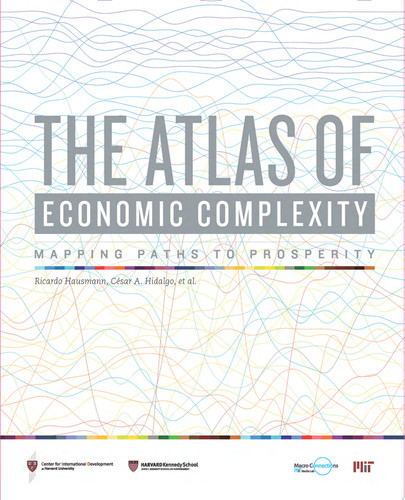
The atlas of economic complexity: mapping paths to prosperity

Ricardo Hausmann,Cesar A. Hidalgo,Sebastian Bustos,Michele Coscia,Alexander Simoes
Maps capture data expressing the economic complexity of countries from Albania to Zimbabwe, offering current economic measures and as well as a guide to achieving prosperity Why do some countries grow and others do not? The authors of The Atlas of Economic Complexity offer readers an explanation based on "Economic Complexity," a measure of a society's productive knowledge. Prosperous societies are those that have the knowledge to make a larger variety of more complex products. The Atlas of Economic Complexity attempts to measure the amount of productive knowledge countries hold and how they can move to accumulate more of it by making more complex products. Through the graphical representation of the "Product Space," the authors are able to identify each country's "adjacent possible," or potential new products, making it easier to find paths to economic diversification and growth. In addition, they argue that a country's economic complexity and its position in the product space are better predictors of economic growth than many other well-known development indicators, including measures of competitiveness, governance, finance, and schooling. Using innovative visualizations, the book locates each country in the product space, provides complexity and growth potential rankings for 128 countries, and offers individual country pages with detailed information about a country's current capabilities and its diversification options. The maps and visualizations included in the Atlas can be used to find more viable paths to greater productive knowledge and prosperity.
The MIT Press 2013 367 pages

The sun & the moon & the Rolling Stones

Cohen, Rich
Rich Cohen enters the Stones epic as a young journalist on the road with the band and quickly falls under their sway -- privy to the jokes, the camaraderie, the bitchiness, the hard living. Inspired by a lifelong appreciation of the music that borders on obsession, Cohen's chronicle of the band is informed by the rigorous views of a kid who grew up on the music and for whom the Stones will always be the greatest rock roll band of all time.
Spiegel & Grau 2016 381 pages

A failure of capitalism: the crisis of '08 and the descent into depression

Posner, Richard A.
"The financial and economic crisis that began in 2008 is the most alarming of our lifetime because of the warp-speed at which it is occurring. How could it have happened, especially after all that we've learned from the Great Depression? Why wasn't it anticipated so that remedial steps could be taken to avoid or mitigate it? What can be done to reverse a slide into a full-blown depression? Why have the responses to date of the government and the economics profession been so lackluster? Richard Posner presents a concise and non-technical examination of this mother of all financial disasters and of the, as yet, stumbling efforts to cope with it. No previous acquaintance on the part of the reader with macroeconomics or the theory of finance is presupposed. This is a book for intelligent generalists that will interest specialists as well. Among the facts and causes Posner identifies are: excess savings flowing in from Asia and the reckless lowering of interest rates by the Federal Reserve Board; the relation between executive compensation, short-term profit goals, and risky lending; the housing bubble fueled by low interest rates, aggressive mortgage marketing, and loose regulations; the low savings rate of American people; and the highly leveraged balance sheets of large financial institutions. Posner analyzes the two basic remedial approaches to the crisis, which correspond to the two theories of the cause of the Great Depression: the monetarist-that the Federal Reserve Board allowed the money supply to shrink, thus failing to prevent a disastrous deflation-and the Keynesian-that the depression was the product of a credit binge in the 1920's, a stock-market crash, and the ensuing downward spiral in economic activity. Posner concludes that the pendulum swung too far and that our financial markets need to be more heavily regulated".-- Provided by the publisher.
Harvard University Press 2011-05-31 346 pages

Sex and reason

Posner, Richard A.
How much of a say do we have in our own sexuality? More than is commonly assumed, Richard Posner asserts in this intellectually sweeping and compulsively readable account of sexuality and its social control. While acknowledging that sexual drives and orientations are formed in a fundamentally biological matrix, Posner contends that they are also subject to self-interested choice constrained by perceived costs and benefits. With this approach, he explores numerous puzzles presented by sexual history. Why, for instance, are "macho" cultures generally more tolerant of sexual deviance than their otherwise more sexually liberal Anglo-Saxon counterparts? Why were women in Victorian England less free sexually than women a century earlier? Why might the AIDS epidemic have reduced the ratio of illegitimate to legitimate births? Why is marital rape increasingly criminalized? Economics provides Sex and Reason with its unifying perspective, but Posner also draws heavily on biology, law, psychology, anthropology, history, philosophy, sociology, theology, and women's studies. The scope of his analysis is broad, ranging from ancient Greece to modern Sweden, from African tribal societies to the American Catholic priesthood, from Islamic sexual regulation to the sexual jurisprudence of the U.S. Supreme Court, from polygamy and homosexuality to abortion, surrogate motherhood, and pornography. In all these areas, Posner argues, the rational choice approach can illuminate temporal and cultural variance in sexual norms and practices and point the way to enlightened reform. A widely respected judge and legal scholar, Posner seeks to dispel the clouds of ignorance, prejudice, shame, and hypocrisy that befog the public discussion of sex. His effort is especially timely, coming as it does at a juncture when the American legal system is strained to its limits by such phenomena as the AIDS epidemic, the abortion controversy, the homosexual rights movement, battles over the federal funding of erotic art, and growing attention to sexual harassment and abuse. Lucid, informative, eclectic, and nontechnical, Sex and Reason offers a fresh approach to issues that fascinate, perplex, and ultimately shape society in its most private moments and public gestures
Harvard University Press 1992 458 pages

Madoff The Final Word

Richard Behar
Renowned investigative journalist Richard Behar delivers the definitive account of history’s largest—and longest-running—financial fraud, “the scale of the deception…beggars belief” ( New York Post ). Some $68 billion evaporated during Bernie Madoff’s epic confidence game. Two people were driven to suicide in the wake of the Ponzi Scheme’s exposure. Others went to prison. But there has never been a satisfying accounting for how Bernie got away with so much, for so long. Until now. Richard Behar’s relationship with Madoff began in 2011 with a simple email request from the conman. By the time Madoff died in 2021, he had sent Behar more than 300 emails and dozens of handwritten letters, participated in some fifty phone conversations, and sat for three in-person jailhouse interviews—a level of access provided to no other reporter. Behar also established relationships with hundreds of regulators, prosecutors, FBI agents, investors, Wall Street experts, ex-employees of Madoff’s, family members, school classmates, and others. The result is the final word on the criminal behind history’s most enduring fraud—and on those who believed him, covered for him, or locked him up. Behar illuminates not only the fraud’s origins—decades earlier than Madoff claimed in his confession—but also the complicity of investors, Wall Street insiders, family members, and some of the largest banks in the US and Europe. Shocking, infuriating, riveting (and at times absurdly funny), Madoff shows us how Bernie ensnared thousands of investors. As Behar’s dogged reporting over the last fifteen years makes clear, however, there aren’t many innocents left standing by the end of this tale. Just about everyone involved is guilty, at a minimum, of humanity’s most consistent weakness: greed.
Avid Reader Press / Simon & Schuster 2025-07 384 pages

I Am Not a Cop!

Richard Belzer
IN THIS CAPTIVATING, OFTEN HILARIOUS DEBUT MYSTERY, ONE OF THE GREAT COMEDIANS OF OUR TIME BLENDS FACT WITH FICTION, AS "LAW & ORDER: SVU'S" RICHARD BELZER'S OFF-CAMERA PERSONA COMES TO LIFE ON THE PAGE, EMPLOYING INVESTIGATIVE KNOW-HOW AND COMEDIC TIMING IN EQUAL MEASURE TO SOLVE THE MYSTERY SURROUNDING THE DISAPPEARANCE OF A TRUSTED FRIEND. When Richard Belzer meets Rudy Markovich, nyc medical examiner, for dinner in Brighton Beach, he has little reason to expect anything more than a friendly bull session. But in the next twenty-four hours Belzer finds himself in the middle of a vicious street brawl, splashed across the tabloid headlines as an out-of-control celeb, and fearing for the life of his good pal Rudy -- who police assume is sleeping at the bottom of the East River. As Belzer finds himself increasingly required to call upon the resources he taps to portray Detective Munch on nbc, he maintains his sense of humor and carries us along on a rollicking ride through the underworld of New York City. With Rudy kidnapped, or worse, it falls to The Belz to track him down and solve the riddle to the vanishing act. The lives of Detective Munch and Richard Belzer collide and mesh in "I Am Not a Cop!" as one of America's great comics and TV cops brings all of his talents to bear in book form and provides a triumph of the mystery genre.
Thorndike Press 2009 451 pages

The dialectical biologist

Levins, Richard,Lewontin, Richard
Scientists act within a social context and from a philosophical perspective that is inherently political. Whether they realize it or not, scientists always choose sides. The Dialectical Biologist explores this political nature of scientific inquiry, advancing its argument within the framework of Marxist dialectic. These essays stress the concepts of continual change and codetermination between organism and environment, part and whole, structure and process, science and politics. Throughout, this book questions our accepted definitions and biases, showing the self-reflective nature of scientific activity within society.
Harvard University Press 1985 303 pages

Making history: the storytellers who shaped the past

Cohen, Richard
THE HISTORY MAKERS is an epic exploration of who writes about the past and how the biases of certain storytellers - whether Julius Caesar, William Shakespeare or Simon Schama -continue to influence our ideas about history (and about who we are) today. There are many stories we can spin about years gone by, but which accounts come to be told, and by whom? A single author can deeply shape our understanding through the prism of his or her own beliefs. Richard Cohen reveals how professional historians and other equally significant witnesses (such as the writers of the Bible, major novelists, dramatists, journalists and political propagandists) influence what become the accepted records of human experience. Is there, he asks, even such a thing as "objective" history? And what is it to call someone a historian in the first place?The depth of Cohen's inquiry and the delight he takes in his subjects - even the practitioners of what he calls "Bad History," those thieves of history who twist reality to glorify themselves and conceal their or their country's behaviour - make this an unusually authoritative and supremely entertaining volume. Cohen investigates the published works and private utterances of our greatest historical thinkers to discover the agendas that informed their views of the world, and which in so many ways have informed ours. From the origins of history-writing, when such an idea seemed itself revolutionary, through to television and the digital age, THE HISTORY MAKERS abounds in captivating figures brought to vivid life, from Thucydides and Tacitus to Voltaire and Gibbon, from Winston Churchill to Mary Beard. Rich in character, complex truths and surprising anecdotes, the result is a unique exploration of both the aims and craft of history-making that will lead us to think anew about our past and ourselves.
Weidenfeld & Nicolson 2023-03-16 784 pages

Dynamic Programming

Bellman, Richard
A multi-stage allocation process; A stochastic multi-stage decision process; The structure of dynamic programming processes; Existence and uniqueness theorems; The optimal inventory equation; Bottleneck problems in multi-stage production processes; Bottleneck problems; A continuous stochastic decision process; A new formalism in the calculus of variations; Multi-stages games; Markovian decision processes.
Princeton University Press 1972 339 pages

Presidential power and the modern presidents: the politics of leadership from Roosevelt to Reagan

Neustadt, Richard E.
Neustadt presents a reexamination of his seminal theory of presidential power, and includes extensive material on Ronald Reagan. His understanding of the presidency is based on the belief that all presidential decisions influence the events they aim at and also impact the future possibilities of presidential power. Less interested in the presidency as an institution than as an office constructed by an individual, he focuses mainly on the personal exercise of power. He defines the office as one chiefly characterized by weakness. He believes that this is less the result of personal failure on the part of the President and more the product of a great gap between what is expected of a man and his assured capacity to carry through. ISBN 0-02-922795-X: $22.95.
Free Press 1991-03 371 pages

Philosophy made simple

Popkin, Richard H.
For almost four decades, Made Simple books have set the standard for continuing education and home study. In answer to the changing needsof today's marketplace, the Made Simple series for the '90s presents a thoroughly up-to-the-minute portfolio of skills, information, and experience, with revised and updated editions of bestselling titles, plus a whole range of new subjects from personal finance to office management to desktop publishing. B & W illustrations throughout
Doubleday 1993-07-01 332 pages