58,196 results in 0.07 seconds

Lincoln's Grave Robbers (Scholastic Focus)

Steve Sheinkin
A true-crime thriller -- the first book for teens to tell the nearly unknown tale of the brazen attempt to steal Abraham Lincoln's body. Reissued in Scholastic Focus, with an exciting new cover. The action begins in October of 1875, as Secret Service agents raid the Fulton, Illinois, workshop of master counterfeiter Ben Boyd. Soon after Boyd is hauled off to prison, members of his counterfeiting ring gather in the back room of a smoky Chicago saloon to discuss how to spring their ringleader. Their plan: grab Lincoln's body from its Springfield tomb, stash it in the sand dunes near Lake Michigan, and demand, as a ransom, the release of Ben Boyd -- and $200,000 in cash. From here, the action alternates between the conspirators, the Secret Service agents on their trail, and the undercover agent moving back and forth between them. Along the way readers get glimpses into the inner workings of counterfeiting, grave robbing, detective work, and the early days of the Secret Service. The plot moves toward a wild climax as robbers and lawmen converge at Lincoln's tomb on election night: November 7, 1876.A dynamic and thrilling tale from critically acclaimed author Steve Sheinkin.
Scholastic, Incorporated 2018-09-11 224 pages

Which Way to the Wild West? Everything Your Schoolbooks Didn't Tell You About Westward Expansion

Steve Sheinkin
History--with the good bits put back. Discover the drama, discoveries, dirty deeds and derring-do that won the American West. With a storyteller's voice and attention to the details that make history real and interesting, Steve Sheinkin's Which Way to the Wild West? delivers America's greatest adventure. From the Louisiana Purchase (remember: if you're negotiating a treaty for your country, play it cool.) to the gold rush (there were only three ways to get to California--all of them bad) to the life of the cowboy, the Indian wars, and the everyday happenings that defined living on the frontier.
Macmillan 2010-07-06 272 pages

After: how America confronted the September 12 era

Brill, Steven
The critics unanimously agree that brilliant, award-winning reporter and bestselling author Steven Brill has written a powerful and sweeping narrative of the country in the first year of the September 12 era. As "the pages flutter" -- marvels one critic -- "in a race to learn the rest of the story we thought we knew so well," Brill takes us from the White House Situation Room to the living rooms of victims' families, from courtrooms to boardrooms, from border crossings to airport tarmacs. We watch as a Customs inspector struggles to protect New York harbor from a dirty bomb; a storekeeper at Ground Zero rebuilds his shoe repair shop; a Silicon Valley entrepreneur lobbies to get his baggage screening systems into every airport; Homeland Security Director Tom Ridge battles the bureaucratic minefields of Washington; a New Jersey widow struggles to help her three children cope with the loss of their father; and John Ashcroft seizes the moment to become the most powerful and controversial attorney general in a generation, while the head of the ACLU tries to block him. The result is a gritty narrative -- and trailblazing journalism -- that inspires us all as it tells the real story of how Americans moved to defend and rebuild their lives and their country.
Simon & Schuster 2003-09-02 723 pages

Can You Outsmart an Economist? 100+ Puzzles to Train Your Brain

Steven E. Landsburg
"Will delight and inform anyone who enjoys rigorous thinking and the unexpected conclusions it delivers." -- Jamie Whyte, author of Crimes Against Logic "This ingenious gallop through the mind of Steven Landsburg enables you to think like an economist without incurring a Keynesian headache or a huge student loan. You may even end up 'smarter than Google.' But you will not readily put down this exhilarating adventure in ideas." -- George Gilder, author of Knowledge and Power and Life After Google Can you outsmart an economist? Steven Landsburg, acclaimed author and professor of economics, dares you to try. In this whip-smart, entertaining, and entirely unconventional economics primer, he brings together over one hundred puzzles and brain teasers that illustrate the subject's key concepts and pitfalls. From warm-up exercises to get your brain working, to logic and probability problems, to puzzles covering more complex topics like inferences, strategy, and irrationality, Can You Outsmart an Economist? will show you how to do just that by expanding the way you think about decision making and problem solving. Let the games begin "Entertaining as well as edifying. Read it, expand your mind, and have fun "-- N. Gregory Mankiw, Robert M. Beren Professor of Economics, Harvard University
Houghton Mifflin Harcourt 2018 304 pages

Wrestling with god and men: homosexuality in the Jewish tradition

Greenberg, Steven
For millennia, two biblical verses have been understood to condemn sex between men as an act so abhorrent that it is punishable by death. Traditionally Orthodox Jews, believing the scripture to be the word of God, have rejected homosexuality in accordance with this interpretation. In 1999, Rabbi Steven Greenberg challenged this tradition when he became the first Orthodox rabbi ever to openly declare his homosexuality. Wrestling with God and Men is the product of Rabbi Greenberg’s ten-year struggle to reconcile his two warring identities. In this compelling and groundbreaking work, Greenberg challenges long held assumptions of scriptural interpretation and religious identity as he marks a path that is both responsible to human realities and deeply committed to God and Torah. Employing traditional rabbinic resources, Greenberg presents readers with surprising biblical interpretations of the creation story, the love of David and Jonathan, the destruction of Sodom, and the condemning verses of Leviticus. But Greenberg goes beyond the question of whether homosexuality is biblically acceptable to ask how such relationships can be sacred. In so doing, he draws on a wide array of nonscriptural texts to introduce readers to occasions of same-sex love in Talmudic narratives, medieval Jewish poetry and prose, and traditional Jewish case law literature. Ultimately, Greenberg argues that Orthodox communities must open up debate, dialogue, and discussion—precisely the foundation upon which Jewish law rests—to truly deal with the issue of homosexual love. This book will appeal not only to members of the Orthodox faith but to all religious people struggling to resolve their belief in the scriptures with a desire to make their communities more open and accepting to gay and lesbian members. 2005 Finalist for the Lambda Literary Awards, for Religion/Spirituality
Univ. of Wiskonsin Press 2004 316 pages

Wrestling with God and men: homosexuality in the Jewish tradition

Greenberg, Steven
Wrestling with God and Men is the product of Rabbi Steven Greenberg's ten-year struggle to reconcile his homosexuality with Orthodox Judaism. Employing traditional rabbinic resources, Greenberg presents readers with surprising biblical interpretations of the creation story, the love of David and Jonathan, the destruction of Sodom, and the condemning verses of Leviticus. But Greenberg goes beyond the question of whether homosexuality is biblically acceptable to ask how such relationships can be sacred. In so doing, he draws on a wide array of nonscriptural texts to introduce readers to occasions of same-sex love in Talmudic narratives, medieval Jewish poetry and prose, and traditional Jewish case law literature. Ultimately, Greenberg argues that Orthodox communities must open up debate, dialogue, and discussion-precisely the foundation upon which Jewish law rests-to truly deal with the issue of homosexual love. This book will appeal to all people of faith struggling to merge their belief in the scriptures with a desire to make their communities more open and accepting to gay and lesbian members. -- From the back cover
University of Wisconsin Press 2004 304 pages

Becoming a digital designer: a guide to careers in Web, video, broadcast, game, + animation design

Heller, Steven
From the author of the bestselling Becoming a Graphic Designer and the editor of Adobe Think Tank comes this clear overview of the field of digital design This complete guide to the evolving digital design disciplines opens the door to today’s most sought-after job opportunities in Web, video, broadcast, game, and animation design. Featuring over 45 interviews with leading digital designers and more than 225 illustrations, the book covers everything from education and training, design specialties, and work settings to preparing an effective portfolio and finding a job. This is an ideal starting point for anyone considering a career in the digital design world. Steven Heller (New York, NY) is the co-chair of the MFA Designer As Author program and co-founder of the MFA in Design Criticism program at the School of Visual Arts, New York. He is the author or editor of over 100 books on design and popular culture, including Becoming a Graphic Designer (0-471-71506-9). David Womack (New York, NY) writes about trends in design and technology for numerous publications and consults on digital strategy for leading organizations. He is the editor of Adobe Think Tank.
John Wiley & Sons 2008 334 pages

Tomorrowland: our journey from science fiction to science fact

Kotler, Steven
New York Times , Wired , Atlantic Monthly , Discover bestselling author Steven Kotler has written extensively about those pivotal moments when science fiction became science fact...and fundamentally reshaped the world. Now he gathers the best of his best, updated and expanded upon, to guide readers on a mind-bending tour of the far frontier, and how these advances are radically transforming our lives. From the ways science and technology are fundamentally altering our bodies and our world (the world's first bionic soldier, the future of evolution) to those explosive collisions between science and culture (life extension and bioweapons), we're crossing moral and ethical lines we've never faced before. As Kotler writes, "Life is tricky sport--and that's the emotional core of this story, the real reason we can't put Pandora back in the box. When you strip everything else away, technology is nothing more than the promise of an easier tomorrow. It's the promise of hope. And how do you stop hope?" Join Kotler in this fascinating exploration of our incredible next: a deep dive into those future technologies happening now--and what it means to be a part of this brave new world.
Amazon Publishing 2022-02 306 pages

Revolution and dictatorship: the violent origins of durable authoritarianism

Levitsky, Steven,Way, Lucan
"Revolution and Dictatorship explores why dictatorships born of social revolution--such as those in China, Cuba, Iran, the Soviet Union, and Vietnam--are extraordinarily durable, even in the face of economic crisis, large-scale policy failure, mass discontent, and intense external pressure. Few other modern autocracies have survived in the face of such extreme challenges. Drawing on comparative historical analysis, Steven Levitsky and Lucan Way argue that radical efforts to transform the social and geopolitical order trigger intense counterrevolutionary conflict, which initially threatens regime survival, but ultimately fosters the unity and state-building that supports authoritarianism. Although most revolutionary governments begin weak, they challenge powerful domestic and foreign actors, often bringing about civil or external wars. These counterrevolutionary wars pose a threat that can destroy new regimes, as in the cases of Afghanistan and Cambodia. Among regimes that survive, however, prolonged conflicts give rise to a cohesive ruling elite and a powerful and loyal coercive apparatus. This leads to the downfall of rival organizations and alternative centers of power, such as armies, churches, monarchies, and landowners, and helps to inoculate revolutionary regimes against elite defection, military coups, and mass protest--three principal sources of authoritarian breakdown. Looking at a range of revolutionary and nonrevolutionary regimes from across the globe, Revolution and Dictatorship shows why governments that emerge from violent conflict endure." -- Page 2 of cover
Princeton University Press 2022 638 pages

A book forged in hell: Spinoza's scandalous treatise and the birth of the secular age

Nadler, Steven M.
The story of one of the most important—and incendiary—books in Western history When it appeared in 1670, Baruch Spinoza's Theological-Political Treatise was denounced as the most dangerous book ever published—"godless," "full of abominations," "a book forged in hell . . . by the devil himself." Religious and secular authorities saw it as a threat to faith, social and political harmony, and everyday morality, and its author was almost universally regarded as a religious subversive and political radical who sought to spread atheism throughout Europe. Yet Spinoza's book has contributed as much as the Declaration of Independence or Thomas Paine's Common Sense to modern liberal, secular, and democratic thinking. In A Book Forged in Hell , Steven Nadler tells the fascinating story of this extraordinary book: its radical claims and their background in the philosophical, religious, and political tensions of the Dutch Golden Age, as well as the vitriolic reaction these ideas inspired. It is not hard to see why Spinoza's Treatise was so important or so controversial, or why the uproar it caused is one of the most significant events in European intellectual history. In the book, Spinoza became the first to argue that the Bible is not literally the word of God but rather a work of human literature; that true religion has nothing to do with theology, liturgical ceremonies, or sectarian dogma; and that religious authorities should have no role in governing a modern state. He also denied the reality of miracles and divine providence, reinterpreted the nature of prophecy, and made an eloquent plea for toleration and democracy. A vivid story of incendiary ideas and vicious backlash, A Book Forged in Hell will interest anyone who is curious about the origin of some of our most cherished modern beliefs.
Princeton University Press 2013-11-24 279 pages

The other Victorians: a study of sexuality and pornography in mid-nineteenth-century England

Marcus, Steven
"Taking as his point of departure the authors, the audience, and the texts of Victorian writings on sex in general and of Victorian pornography in particular, Steven Marcus offers a startling and revolutionary perspective on the underside of Victorian culture. The way these subjects were regarded--and the way our notions of the Victorians continue to change, as the efforts of contemporary scholarship restore them to their full historical dimensions--are matters today of some surprise and wonder. Marcus first examines the writings of Dr. William Acton, who may be said to represent the "official views" of sexuality held by Victorian society, and Henry Spencer Ashby, the first and most important bibliographer-scholar of pornography. He then turns to the most significant work of its kind from the period, the eleven-volume anonymous autobiography My Secret Life. There follows an analysis of four pornographic Victorian novels--an analysis that throws an oblique but fascinating light on the classics of Victorian literature--and a review of the odd flood of Victorian publications devoted to flagellation. The books concludes with a chapter propounding a general theory of pornography as a sociological phenomenon. Most of the writers and writing being discussed by Marcus belong to Victorian sub-literature rather than to literature proper; in this way the work remains connected to a consideration of the exotic sub-literature. A brilliantly written book in its own right, this work transformed the study of the Victorian period as did no other." -- Provided by publisher
Transaction Publishers 2009 292 pages

Think Least of Death Spinoza on How to Live and How to Die

Steven Nadler
From Pulitzer Prize-finalist Steven Nadler, an engaging guide to what Spinoza can teach us about life's big questions. In 1656, after being excommunicated from Amsterdam's Portuguese-Jewish community for 'abominable heresies' and 'monstrous deeds,' the young Baruch Spinoza abandoned his family's import business to dedicate his life to philosophy. He quickly became notorious across Europe for his views on God, the Bible, and miracles, as well as for his uncompromising defense of free thought. Yet the radicalism of Spinoza's views has long obscured that his primary reason for turning to philosophy was to answer one of humanity's most urgent questions: How can we lead a good life and enjoy happiness in a world without a providential God? In Think Least of Death , Pulitzer Prize-finalist Steven Nadler connects Spinoza's ideas with his life and times to offer a compelling account of how the philosopher can provide a guide to living one's best life. In the Ethics, Spinoza presents his vision of the ideal human being, the 'free person' who, motivated by reason, lives a life of joy devoted to what is most important-improving oneself and others. Untroubled by passions such as hate, greed, and envy, free people treat others with benevolence, justice, and charity. Focusing on the rewards of goodness, they enjoy the pleasures of this world, but in moderation. ' The free person thinks least of all of death,' Spinoza writes, ' and his wisdom is a meditation not on death but on life. ' 'A helpful explication of [Spinoza's] ideas about ethics, the afterlife, and human nature.' -- Kirkus Reviews
Princeton University Press 2020-12 234 pages

Can American capitalism survive? why greed is not good, opportunity is not equal, and fairness won't make us poor

Pearlstein, Steven
Pulitzer Prize-winning economics journalist Steven Pearlstein argues that our thirty year experiment in unfettered markets has undermined core values required to make capitalism and democracy work. Thirty years ago, 'greed is good' and 'maximizing shareholder value' became the new mantras woven into the fabric of our business culture, economy, and politics. Although, around the world, free market capitalism has lifted more than a billion people from poverty, in the United States most of the benefits of economic growth have been captured by the richest 10%, along with providing justification for squeezing workers, cheating customers, avoiding taxes, and leaving communities in the lurch. As a result, Americans are losing faith that a free market economy is the best system. In Can American Capitalism Survive', Pulitzer Prize-winning journalist Steven Pearlstein chronicles our descent and challenges the theories being taught in business schools and exercised in boardrooms around the country. We're missing a key tenet of Adam Smith's wealth of nations: without trust and social capital, democratic capitalism cannot survive. Further, equality of incomes and opportunity need not come at the expense of economic growth. Pearlstein lays out bold steps we can take as a country: a guaranteed minimum income paired with universal national service, tax incentives for companies to share profits with workers, ending class segregation in public education, and restoring competition to markets. He provides a path forward that will create the shared prosperity that will sustain capitalism over the long term ; Thirty years ago, 'greed is good' and 'maximizing shareholder value' became the new mantras woven into the fabric of our business culture, economy, and politics. Pearlstein argues that our thirty year experiment in unfettered markets has undermined core values required to make capitalism and democracy work. He challenges the theories being taught in business schools and in boardrooms, believing that we're missing a key tenet of Adam Smith's wealth of nations: without trust and social capital, democratic capitalism cannot survive. -- adapted from jacket
St. Martin's Press 2018 244 pages

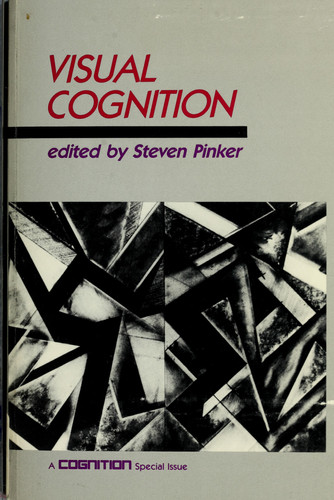
Visual cognition

Steven Pinker
These essays tackle some of the central issues in visual cognition, presentingexperimental techniques from cognitive psychology, new ways of modeling cognitive processes oncomputers from artificial intelligence, and new ways of studying brain organization fromneuropsychology, to address such questions as: How do we recognize objects in front of us? How do wereason about objects when they are absent and only in memory? How do we conceptualize the threedimensions of space? Do different people do these things in different ways? And where are theseabilities located in the brain?While this research, which appeared as a special issue of the journalCognition, is at the cutting edge of cognitive science, it does not assume a highly technicalbackground on the part of readers. The book begins with a tutorial introduction by the editor,making it suitable for specialists and nonspecialists alike.Steven Pinker is Associate Professor,Department of Psychology and Center for Cognitive Science at MIT.
MIT Press 1985 280 pages

Alas, poor Darwin: arguments against evolutionary psychology

Hilary Rose,Steven Rose
Today, genes are called upon to explain almost every aspect of our lives, from social inequalities to health, sexual preference and criminality. Based on Darwin's theory of evolution and natural selection, Evolutionary Psychology with its claim that 'it's all in our genes' has become the most popular scientific theory of the late 20th century. Books such as Richard Dawkins's The Selfish Gene, Edward O.Wilson's Consilience and Steven Pinker's The Language Instinct have become bestsellers and frame the public debate on human life and development- we can see their influence as soon as we open a Sunday newspaper. In recent years, however, many biologists and social scientists have begun to contest this new biological determinism and shown that Evolutionary Psychology rests on shaky empirical evidence, flawed premises and unexamined political presuppositions. In this provocative and ground-breaking book, Hilary and Steven Rose have gathered together the most eminent and outspoken critics of this fashionable ideology, ranging from Stephen Jay Gould and Patrick Bateson to Mary Midgley, Tim Ingold and Annette Karmiloff-Smith. What emerges is a new perspective on human development which acknowledges the complexity of life by placing at its centre the living organism rather than the gene.
Vintage 2001 292 pages

Half Past Dead/Spanish Subtitled

Seagal,Steven Vvco 08783
Alcatraz, "The Rock", has just re-opened. The first criminal to go to the electric chair is also sitting on a secret worth $200 million. An invading group of commandos isn't about to let that fortune go up in smoke. Already having an undercover FBI agent in Alcatraz, the situation has to be neutralized and he has to rescue a Supreme Court Justice held hostage. Now, he has to convince his convict "partner" and the other inmates to fight on the right side of the law
COLUMBIA/TRI-STAR 2003 88 pages