58,196 results in 0.08 seconds

Black-body theory and the quantum discontinuity, 1894-1912

Kuhn, Thomas S.
"A masterly assessment of the way the idea of quanta of radiation became part of 20th-century physics. . . . The book not only deals with a topic of importance and interest to all scientists, but is also a polished literary work, described (accurately) by one of its original reviewers as a scientific detective story."—John Gribbin, New Scientist "Every scientist should have this book."—Paul Davies, New Scientist
University of Chicago Press 1987-01-15 378 pages

Emperors and gladiators

Wiedemann, Thomas
Wiedemann presents an original and comprehensive study of the changing significance of gladiatoral contests to Roman culture.Of all aspects of Roman coulture, the gladiatorial contests for which the Romans built their amphitheatres are at once the most fascinating and the most difficult for us to come to terms with. A number of theories have been put forward to explain their importance: they have been seen as sacrifices to the gods or, at funerals, to the souls of the deceased; as a mechanism for introducing young Romans to the horrors of fighting; and as a direct substitute for warfare after the impostion of peace. Thomas Wiedeman considers why these theories cannot by themselves explain the importance of the 'Games' , their association with the emperors, and their decline as the Roman world became Christian. He argues that gladiators were part of the mythical struggle of order and civilisation against the forces of nature, barbarism and law breaking, representing the possibility of a return to new life from the point of death. And that, rather than Christian Romans rejecting gladitorial games on a humanitarian basis, it was because they were a rival representation of the possibility of resurrection: Easter and Christmas replaced gladiators.
Routledge 1992 198 pages

Silences

Olsen, Tillie
First, published in 1978, Tulle Olsen's 'Silences' revolutionised literary studies and inspired an explosion of new creative voices. By exploring the social and economic conditions that make creativity possible, Olsen sheds new light into the gaps in the literary landscape and the canon. She reveals that working-class people, people of colour, and all women have in fact always written -- though their work has been officially ignored -- and she examines the forces they struggled against in order to create, forces that led in many cases to premature silence. With fascinating testimony from authors' diaries and letters, Olsen takes us inside the artistic process, examining the effects of poverty, family duties (especially motherhood), political and religious censorship, and rigid literary norms on writers ranging from Thomas Hardy and Herman Melville to Willa Cather, Virginia Woolf, and Sylvia Plath. For those disadvantaged by gender, class, or race, these obstacles loom even larger.In particular, Olsen makes the case that women writers have faced crushing odds, their talents underestimated, their achievements ignored, the themes of their writing scorned, their very attempt to write condemned as a breach of family duty -- and of feminine nature. And yet, as she shows, they have written. This special 25th anniversary edition includes an introduction tracing the impact of Silences on women's studies, women's writing, and women's publishing. It also provides a key document of Olsen's work: the famous reading lists that she assembled from her years of research in public libraries.
Feminist Press at the City University of New York 2003 320 pages

Affirmative action: racial preference in black and white

Wise, Tim J.
Affirmative Action examines the larger structure of institutional white privilege in education, and compares the magnitude of white racial preference with the policies typically envisioned when the term "racial preference" is used. In doing so, the book demonstrates that the American system of education is both a reflection of and a contributor to a structure of institutionalized racism and racial preference for the dominant majority.
Routledge 2005 196 pages

Kosovo: what everyone needs to know

Judah, Tim
On February 17, 2008, Kosovo declared its independence, becoming the seventh state to emerge from the break-up of the former Yugoslavia. A tiny country of just two million people, 90% of whom are ethnic Albanians, Kosovo is central - geographically, historically, and politically - to the future of the Western Balkans and, in turn, its potential future within the European Union. But the fate of both Kosovo, condemned by Serbian leaders as a "fake state" and the region as a whole, remains uncertain. In Kosovo: What Everyone Needs to Know, Tim Judah provides a straight-forward guide to the complicated place that is Kosovo. Judah, who has spent years covering the region, offers succinct, penetrating answers to a wide range of questions: Why is Kosovo important? Who are the Albanians? Who are the Serbs? Why is Kosovo so important to Serbs? What role does Kosovo play in the region and in the world? Judah reveals how things stand now and presents the history and geopolitical dynamics that have led to it. The most important of these is the question of the right to self-determination, invoked by the Kosovo Albanians, as opposed to right of territorial integrity invoked by the Serbs. For many Serbs, Kosovo's declaration of independence and subsequent recognition has been traumatic, a savage blow to national pride. Albanians, on the other hand, believe their independence rights an historical wrong: the Serbian conquest (Serbs say "liberation") of Kosovo in 1912. For anyone wishing to understand both the history and possible future of Kosovo at this pivotal moment in its history, this book offers a wealth of insight and information in a uniquely accessible format.
Oxford University Press 2008-10-23 184 pages

The folly and the glory: America, Russia, and political warfare, 1945-2020

Weiner, Tim
"With vivid storytelling and access to insider accounts, Weiner sets out to trace the roots of Russian-American political warfare--conflict waged without weapons--over the last seven decades to understand how a president landed in the White House with the help of an expansive, covert Russian campaign. Russia's modern revival of Soviet-era intelligence operations constitutes one of the most significant threats to democracy in the United States and around the world, and yet the US has not engaged its own political warfare methods in defense, even as our own justice department has concluded unequivocally that Russia influenced the 2016 election. To get to the heart of what's at stake and find potential solutions, Weiner examines long-running twentieth century CIA operations, political machinations by the Soviet KGB around the world, the erosion of American political warfare after the Cold War, and why twenty-first century Russia has returned to the practice while the US has not. Weiner takes us behind closed doors and into the deliberation rooms of past and present Russian and American intelligence operations that directly led to-and help illuminate-the current administration and the future of American democracy"--
Henry Holt and Company 2020-09-22 325 pages

Dispatches from the race war

Wise, Tim
"In this collection of essays, renowned social-justice advocate Tim Wise confronts racism in contemporary America. Seen through the lens of major flashpoints during the Obama and Trump years, Dispatches from the Race War faces the consequences of white supremacy in all its forms. This includes a discussion of the bigoted undertones of the Tea Party's backlash, the killing of Trayvon Martin, current day anti-immigrant hysteria, the rise of openly avowed white nationalism, the violent policing of African Americans, and more. Wise devotes a substantial portion of the book to explore the racial ramifications of COVID-19, and the widespread protests which followed the police murder of George Floyd"--
City Lights Publishers 2020 335 pages

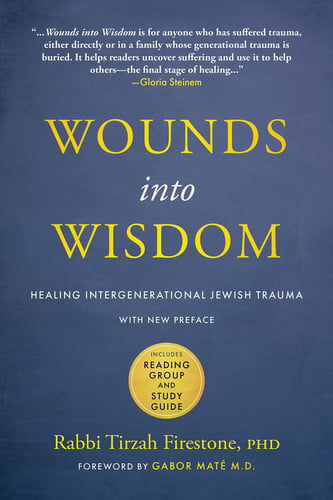
Wounds into wisdom: healing intergenerational Jewish trauma

Firestone, Tirzah
"Our past does not simply disappear. The painful history of our ancestors and their rich cultural wisdom intertwine within us to create the patterns of our future. Even when past trauma remains unspoken or has long been forgotten, it becomes part of us and our children-a legacy of both strength and woundedness that shapes our lives. In this book, Tirzah Firestone brings to life the profound impact of protracted historical trauma through the compelling narratives of those whose lives were marred by racial persecution and displacement. The tragic story of Firestone's own family lays the groundwork for these revealing testimonies of recovery, forgiveness, and moral leadership. Throughout, Firestone interweaves their voices with neuroscientific and psychological findings, as well as relevant and inspiring Jewish teachings. Seven principles emerge from these wise narratives-powerful prescriptive tools that speak to anyone dealing with the effects of past traumatic injury. At the broadest level, these principles are directives for staying morally awake in a world rife with terror"--
Monkfish Book Publishing Company 2022 258 pages

Masquerade: the incredible true story of how George Soros' father outsmarted the Gestapo

Soros, Tivadar
The Nazis came late to Hungary because, until early 1944, Germany and Hungary were allies. But when they did arrive, their orders were to put the "Final Solution" into effect with deliberate speed. Soros, a Jewish lawyer in Budapest, secured fake Christian identities for himself, his wife, and his two sons following the German invasion of Hungary on March 19, 1944. In a narrative reminiscent of the great Primo Levi, Soros recounts his experiences with a beguiling humor, deep humanity, and a wisdom that is humbling. Superbly translated by Humphrey Tonkin, Masquerade is.
Arcade Pub 2011-03-15 275 pages

Gangster nation

Goldberg, Tod
"Gangster Nation is a razor. It will slice you open and reveal your insides. And like the best of Tod Goldberg's work, it'll show you everything you are at your core."--Brad Meltzer, New York Times bestselling author of The President's Shadow It's been two years since the events of Gangsterland, when legendary Chicago hitman Sal Cupertine disappeared into the guise of Vegas Rabbi David Cohen. It's September of 2001 and for David, everything is coming up gold: Temple membership is on the rise, the new private school is raking it in, and the mortuary and cemetery--where Cohen has been laundering bodies for the mob--is minting cash. But Sal wants out. He's got money stashed in safe-deposit boxes all over the city. He's looking at places to escape to, Mexico or maybe Argentina. He only needs to make it through the High Holidays, and he'll have enough money to slip away, grab his wife and kid, and start fresh. Across the country, former FBI agent Matthew Drew is now running security for an Indian Casino outside of Milwaukee, spending his off-time stalking members of The Family, looking for vengeance for the murder of his former partner. So when Sal's cousin stumbles into the casino one night, Matthew takes the law into his own hands--again--touching off a series of events that will have Rabbi Cohen running for his life, trapped in Las Vegas, with the law, society, and the post-9/11 world closing in around him. Gangster Nation is a thrilling follow-up to Gangsterland, an unexpected, page-turning examination of the seedy foundations of American life. With the wit and gritty glamor that defines his writing, Goldberg traces how the things we most value in our lives--home, health, even our spiritual lives--have been built on the enterprises of criminals.
No Exit Press 2018-06-27 352 pages

Only Way Out: A Novel

Goldberg, Tod
A luckless thief’s wrong turn becomes a crooked cop’s fortune in a wild ride of a thriller by a New York Times bestselling author. Failed lawyer Robert Green has such a good plan: Crack three hundred safe-deposit boxes and sail off to South America with his brilliant, morally flexible sister, Penny. If it weren’t for the damned freezing rain. In the dying resort town of Granite Shores, cop Jack Biddle is self-appointed king―mostly of bad decisions. Between his family’s crumbling legacy, a wife who just joined the city council, and life-threatening gambling debts, Jack’s looking for a way out. Then he spots a van spinning off a mountain road into the valley below. In the wreckage, Jack finds a very dead Robert, millions in heisted loot…and opportunity. All Jack has to do is clean up the mess, disappear Robert’s body, make off with the fortune, and not get caught. One hitch is Penny. Another is Mitch Diamond, a wild card ex-con who knows more about the missing fortune than he lets on. Jack, Penny, and Mitch each have an endgame. But there’s only one way out, and they’re crashing headlong toward it.
Thomas & Mercer 2025-12-01 367 pages

Media unlimited: how the torrent of images and sounds overwhelms our lives

Gitlin, Todd
In this original look at our electronically glutted, speed-addicted world, Todd Gitlin evokes a reality of relentless sensation, instant transition, and nonstop stimulus, which he argues is anything but progress. He shows how all media, all the time fuels celebrity worship, paranoia, and irony, and how attempts to ward off the onrush become occasion for yet more media. Far from bringing about a "new information age," Gitlin argues, the digital torrent has fostered a society of disposable emotions and casual commitments, and threatens to make democracy a sideshow. In a new afterword, Gitlin takes measure of the most recent wave of inundation in the form of iPods, blogs, and YouTube. Both a startling analysis and a charged polemic, Media Unlimited reveals the unending stream of manufactured images and sounds as a defining feature of our civilization and a perverse culmination of Western hopes for freedom
Metropolitan Books 2007 264 pages

Media unlimited: how the torrents of images and sounds overwhelms our lives

Gitlin, Todd
Everyone knows that the media surround us, but no one quite understands what this means for our lives. In Media Unlimited , a remarkable and original look at our media-glutted, speed-addicted world, Todd Gitlin makes us stare, as if for the first time, at the biggest picture of all. From video games to elevator music, action movies to reality shows, Gitlin evokes a world of relentless sensation, instant transition, and nonstop stimulus. He shows how all media, all the time fuels celebrity worship, paranoia, and irony; and how attempts to ward off the onrush become occasions for yet more media. Far from signaling a "new information age," the media torrent, as Gitlin argues, encourages disposable emotions and casual commitments, and threatens to make democracy a sideshow. Both a startling analysis and a charged polemic, Media Unlimited reveals the unending stream of manufactured images and sounds as a defining feature of our civilization and a perverse culmination of Western hopes for freedom.
Owl books 2003-01-06 260 pages

Revenge: Meghan, Harry, and the war between the Windsors

Bower, Tom
After a childhood spent on Hollywood film sets, Meghan Markle fought hard for stardom. But even when she landed her breakthrough role on Suits, her dream of worldwide celebrity remained elusive until she met the man who would change her life--Prince Harry. Their whirlwind romance culminated with Meghan's ultimate fairy tale ending: their 2018 wedding at Windsor Castle. Finally, the world was her stage. It seemed that the dizzying success of the wedding between the new Duke and Duchess of Sussex marked the beginning of a fresh era for the British Royal Family. Yet, within one tumultuous year, the dream became a nightmare. Now, with extensive research and exclusive insider interviews, Britain's leading investigative biographer unravels the tangled web of courtroom drama, courtier politics, and thwarted childhood dreams to reveal this story of love, betrayal, secrets, deceit, and revenge.
Atria Books 2022 452 pages

The hard problem

Stoppard, Tom
"Hilary, a young psychology researcher at the Krohl Institute for Brain Science, is nursing a private sorrow and a troubling question. She and other researchers at the institute are grappling with what science calls the 'hard problem'--if there is nothing but matter, what is consciousness? What Hilary discovers puts her fundamentally at odds with her colleagues, who include her first mentor and onetime lover, Spike; her boss, Leo; and the billionaire founder of the institute, Jerry. Hilary needs a miracle, and she is prepared to pray for one."--Back cover.
Grove Press 2015 76 pages

Voyage

Stoppard, Tom
"The Coast of Utopia is Tom Stoppard's long-awaited and monumental trilogy that explores a group of friends who came of age under the Tsarist autocracy of Nicholas I, and for whom the term intelligentsia was coined. Among them are the anarchist Michael Bakunin, who was to challenge Marx for the soul of the masses; Ivan Turgenev, author of some of the most enduring works in Russian literature; the brilliant, erratic young critic Vissarion Belinsky; and Alexander Herzen, a nobleman's son and the first self-proclaimed socialist in Russia, who becomes the main focus of this drama of politics, love, loss, and betrayal. In The Coast of Utopia, Stoppard presents an inspired examination of the struggle between romantic anarchy, utopian idealism, and practical reformation in this chronicle of romantics and revolutionaries caught up in a struggle for political freedom in an age of emperors."--Publisher's description.
Grove Press 2003 114 pages