152 results for "American History"

The Blood libel legend: a casebook in anti-Semitic folklore

Alan Dundes
Alan Dundes, in this casebook of an anti-Semitic legend, demonstrates the power of folklore to influence thought and history. According to the blood libel legend, Jews murdered Christian infants to obtain blood to make matzah. Dundes has gathered here the work of leading scholars who examine the varied sources and elaborations of the legend. Collectively, their essays constitute a forceful statement against this false accusation. The legend is traced from the murder of William of Norwich in 1144, one of the first reported cases of ritualized murder attributed to Jews, through nineteenth-century Egyptian reports, Spanish examples, Catholic periodicals, modern English instances, and twentieth-century American cases. The essays deal not only with historical cases and surveys of blood libel in different locales, but also with literary renditions of the legend, including the ballad “Sir Hugh, or, the Jew’s Daughter” and Chaucer’s “The Prioress’s Tale.” These case studies provide a comprehensive view of the complex nature of the blood libel legend. The concluding section of the volume includes an analysis of the legend that focuses on Christian misunderstanding of the Jewish feast of Purim and the child abuse component of the legend and that attempts to bring psychoanalytic theory to bear on the content of the blood libel legend. The final essay by Alan Dundes takes a distinctly folkloristic approach, examining the legend as part of the belief system that Christians developed about Jews. This study of the blood libel legend will interest folklorists, scholars of Catholicism and Judaism, and many general readers, for it is both the literature and the history of anti-Semitism.
University of Wisconsin Press 1991-10-15 385 pages

In the days of Simon Stern: a novel

Cohen, Arthur A.
Nathan, a blind Jewish scribe, tells the story of the coming of the Messiah in the person of one Simon Stern—from his birth on the Lower East Side, through his career as a millionaire dealer in real estate, to his building of a refuge for the Jewish remnant of World War II. "A majestic work of fiction that should stand world literature's test of time, to be read and reread. A masterpiece."— Commonweal "This book ensnares one of the most extraordinarily daring ideas to inhabit an American novel in a number of years. For one thing, it is that risky devising, dreamed of only by the Thomas Manns of the world, a serious and vastly conceived fiction bled out of the theological imagination. For another, it is clearly an 'American' novel—altogether American, despite its Jewish particularity: it is not so much about the history of the Jews as it is about the idea of the New World as haven. . . . In its teeming particularity every vein of this book runs with a brilliance of Jewish insight and erudition to be found in no other novelist. Arthur Cohen is the first writer of any American generation to compose a profoundly Jewish fiction on a profoundly Western theme."—Cynthia Ozick, New York Times Book Review "This stately, ambitious amalgam of Jewish myth, history, theology, and speculations on the Jewish soul is like an enormous Judaic archeological ruin—often hard for the uninitiated to interpret, but impressive. . . . Intelligent, inventive, fascinating."— New Yorker
University of Chicago Press 1988 464 pages

The New standard Jewish encyclopedia

Geoffrey Wigoder
Since its original publication in 1958, The New Standard Jewish Encyclopedia has been acknowledged as the authoritative sourcebook of information about all aspects of Jewish life. Its entries cover not only Jewish history and religion, but also current political events, personalities, traditions, archaeological findings and culture. This is the most comprehensive, one-volume Jewish reference book available, spanning all things Jewish from Biblical times to the present era. In the three decades that have passed since the first publication of The New Standard Jewish Encyclopedia, major world events, such as the Six Day War, the Camp David Accords and the dissolution of the Soviet Union, have wrought changes that affect Jewish life everywhere. This edition has been continually and thoroughly updated to incorporate this new information. Its timeliness is best illustrated by the inclusion of articles on the mass exodus of Ethiopian and Soviet Jews to Israel, and the latest statistics available about Jewish populations in the Commonwealth of Independent States. Here also is a wealth of information about Jews who have affected our cultural lives: Woody Allen, Leonard Bernstein, Albert Einstein, Chaim Potok, to name but a few of the more than 8,000 entries that comprise this massive endeavor. The revisions of existing entries and the inclusion of new articles make The New Standard Jewish Encyclopedia not only one of the most comprehensive reference works available but also the most current. This edition also contains a complete list of Jewish Nobel Prize winners. Prepared in Jerusalem by a team of 200 scholars and the staff of the Encyclopedia Hebraica, this edition was completed by an editorial board headed by the highly regarded Geoffrey Wigoder, also general editor of the universally acclaimed Encylopaedia Judaica, working in concert with the American Advisory Board headed by I.J. Carmin Karpman, chief editor of Who's Who in World Jewry. Authoritative, comprehensive and up-to-date, this work belongs on the shelves of everyone who is interested in all things Jewish.
Facts on File 1992 1001 pages

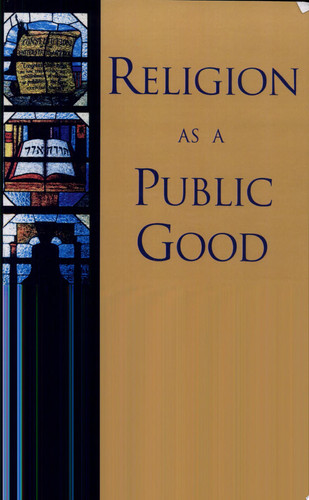
Religion as a public good: Jews and other Americans on religion in the public square

Alan Mittleman
Religion as a Public Good: Jews and Other Americans on Religion in the Public Square explores the often controversial topic of how religion ought to relate to American public life. The sixteen distinguished contributors, both Jewish and Christian, reflect on the topic out of their own disciplines-social ethics, political theory, philosophy, law, history, theology, and sociology. and take a stand based on their religious convictions and political beliefs. The volume is at once scholarly and committed, polemic and civil, reflective and activist. Written in the shadow of 9/11, it invites a new consideration of how religion enhances democratic public life with full awareness of the dangers that religion can sometimes pose. The volume is polemical, as befits the topic, but also civil, as befits a dialogue about an issue of profound significance for democratic citizenship.
Rowman & Littlefield 2003-12-09 336 pages

Prologue to annihilation: ordinary American and British Jews challenge the Third Reich

Norwood, Stephen H.
"American and British appeasement of Nazism during the early years of the Third Reich went far beyond territorial concessions. In Prologue to Annihilation: Ordinary American and British Jews Challenge the Third Reich, Stephen H. Norwood examines the numerous of ways that the two nations' official position of tacit acceptance of Jewish persecution enabled the policies that ultimately led to the Final Solution and how Nazi annihilationist intentions were clearly discernible even during the earliest years of Hitler's rule. Further, Norwood looks at the nature and impact of American and British Jewish resistance to Nazi persecution and the efforts of Jews at the grassroots level to press Jewish organizations to respond more forcefully to the Nazi menace. He examines the worldwide protest and boycott movements against Germany and German goods as well as mass demonstrations by working-class and lower-middle-class Jews in many American and British cities. Prologue to Annihilation details how the events of 1930-1936 tested American and British societies' willingness to accept Nazism and its anti-Jewish philosophy and illuminates the divisions that existed even within the Jewish community about how best to challenge Nazi antisemitic policies and atrocities"--
Indiana University Press 2021 347 pages

Hybrid hate: conflations of antisemitism and anti-black racism from the Renaissance to the Third Reich

Parfitt, Tudor
"The study of western racism has tended to concentrate either on the hatred and murder of Jews or the hatred and enslavement of black people. As chief objects of racism Jews and Blacks have been linked together for centuries, peoples apart from the general run of humanity. In medieval Europe Jews were often perceived as Blacks, and the conflation of Jews and Blacks continued throughout the period of the Enlightenment. With the discovery of a community of Black Jews in Loango in west Africa in 1777, and later of black Jews in India, the Middle East and other parts of Africa, the figure of the hybrid black Jew was thrust into the maelstrom of evolving theories about race hierarchies and taxonomies. The new hybrid played a particular role in the great battle between monogenists and polygenists as they sought to establish the unitary or disparate origins of humankind. From the mid-nineteenth century to the period of the Third Reich Jews and Blacks were increasingly conflated in a racist discourse which combined the two fundamental racial hatreds of the west. While Hitler considered Jews 'Negroid parasites', in Nazi Germany as in Fascist Italy, through texts, laws and cartoons, Jews and Blacks were combined in the figure of the Black/Jew, the mortal foe of the Aryan race"-- Provided by publisher
Oxford University Press 2025 290 pages

An American Orthodox dreamer: Rabbi Joseph B. Soloveitchik and Boston's Maimonides School

Farber, Seth
Rabbi Joseph B. Soloveitchik, born in 1903 and scion of a preeminent Lithuanian Orthodox family, was one of the most towering intellectual figures of American Orthodoxy in the twentieth century. After receiving rabbinic ordination and completing his studies toward a Ph.D., he immigrated to America where he served as the Rosh Yeshiva at the Rabbi Isaac Elchanan Theological Seminary of Yeshiva University. As the leader of centrist Orthodoxy in America for more than fifty years, his many accomplishments included his founding of the Maimonides School in Boston in 1937. Rabbi Soloveitchik served as the intellectual and spiritual force behind the Maimonides School from its founding and was responsible for its innovative curriculum. Synthesizing American educational methodologies and European Orthodox approaches to education, the Maimonides School became a prototype for an American Orthodox educational institution. Unique among contemporary Orthodox day schools, the coeducational nature of the classes at Maimonides, and to some extent the curriculum, was groundbreaking. Characterized by academic excellence in both Judaic studies and other subjects, the school offered boys and girls exactly the same education. Rabbi Soloveitchik’s school was particularly innovative by offering Talmud classes to girls on the same level as boys. The Maimonides School became a paradigm for the fledgling Orthodox Jewish day school movement nationwide. The character of the education there influenced later developments in the Orthodox community, such as the emphasis on higher level Torah study for women. By articulating a philosophy that advocated both traditional Orthodoxy as well as modernism and Americanism, the school gradually affected Boston’s Orthodox community, which came to be guided by its principles. As Seth Farber points out, the school, once rejected by the Jewish establishment in Boston, was eventually embraced by it. A community that saw no contradiction between democratic values and traditional Orthodox lifestyle emerged in Boston. This modern Orthodox community ultimately represented a significant voice in Boston’s Jewish and America's Orthodox cultures.
University Press of New England 2004 201 pages

Identity papers: contemporary narratives of American Jewishness

Meyers, Helene
Identity Papers argues that contemporary Jewish American literature revises our understanding of Jewishness and Jewish difference. Moving beyond the reductive labeling of texts and authors as “too Jewish” or “not Jewish enough,” and focusing instead on narratives that portray Jewish regeneration through feminist Orthodoxy, queerness, off-whiteness, and intermarriage, Helene Meyers resists a lachrymose view of contemporary Jewish American life. She argues that such gendered, sexed, and raced debates about Jewish identity become opportunities rather than crises, signs of creative potential rather than symptoms of assimilation and deracination. Thus, feminist debates within Orthodoxy are allied to Jewish continuity by Rebecca Goldstein, Allegra Goodman, and Tova Mirvis; the geography of Jewish identity is racialized by Alfred Uhry, Tony Kushner, and Philip Roth; and the works of Jyl Lynn Felman, Judith Katz, Lev Raphael, and Michael Lowenthal queer the Jewish family as they reveal homophobia to be an abomination. Even as Identity Papers expands Jewish literary horizons and offers much-needed alternatives to the culture wars between liberal and traditional Jews, it argues that Jewish difference productively troubles dominant narratives of feminist, queer, and whiteness studies. Meyers demonstrates that the evolving Jewish American literary renaissance is anything but provincial; rather, it is engaged with categories of difference central to contemporary academic discourses and our national life.
SUNY Press 2012-07-02 239 pages

The dispersion of Egyptian Jewry: culture, politics, and the formation of a modern diaspora

Beinin, Joel
Egypt's indigenous Jewish population comprised Arabic-speaking Rabbanite and Karaite Jews, some of whom had been in the country since the early Islamic era. Jews expelled from Spain in 1492 took refuge in Egypt, and their numbers were augmented in the mid-nineteenth century by Sephardic immigrants. Originally welcomed elsewhere in the Ottoman Empire, these Spanish Jews came to Egypt seeking economic opportunity in the era of Suez Canal construction and the cotton boom. The late nineteenth century brought Ashkenazi Jews fleeing persecution in Eastern Europe. The different groups formed a heterogeneous community of cosmopolitan hybrids, which was both an element of strength and a factor in its eventual demise. The Dispersion of Egyptian Jewry examines the history of the Egyptian Jewish community after 1948, focusing on three major areas: the life of the majority of the community, which remained in Egypt from the1948 Arab-Israeli War until the aftermath of the 1956 Suez/Sinai War; the dispersion and reestablishment of Egyptian Jewish communities in the United states, France, and Israel; and contested memories of Jewish life in Egypt since President Anwar al-Sadat's visit to Jerusalem in 1977. Beinin argues that the experiences of Egyptian Jews cannot be adequately accounted for by either Egyptian nationalist or Zionist narratives. Fusing history, ethnography, literary analysis, and autobiography, Joel Beinin conducts an interdisciplinary investigation into identity, dispersion, and the retrieval of identity that is relevant for anyone interested in Egypt, the Jewish diaspora, or the formation of cultures and identities.
American University in Cairo Press 2005 329 pages

Aerograms across the ocean: a love story in letters

Biale, David,Biale, Rachel
"In August 1970, David Biale, a 21-year-old American Jewish student, arrived at Kibbutz Kfar Ruppin in Israel's Bet She'an Valley as a volunteer. There, he met Rachel Korati, nine days shy of her eighteenth birthday. They began an intense dialogue about how a secular Jew might be Jewish and what the role of Israel and kibbutz ought to be in modern Jewish life. They also found a common language in the counter-culture of the 1960s to which both were drawn. Upon David's return to university studies in Berkeley and Rachel's first steps into independent adulthood - living in a town near Tel Aviv and working as a youth movement counselor -- the two commenced a correspondence in which they continued their intellectual and ideological discussions from the summer, engaging Jewish sources on the one hand, and contemporary events on the other. Gradually, the letters became more intimate and so began an epistolary romance, which one might associate more with the nineteenth century and which would be inconceivable in today's world of texting and email. Over the next two years, the correspondence continued, often on a daily basis. Twice, David's plans to come to Israel were dashed. The two struggled to hold onto a relationship composed primarily of written words. In the fall of 1971, Rachel was drafted into the Israeli Army and David had his own brush with the American draft in the last phase of the Vietnam War. Aerograms Across the Ocean: A Love Story in Letters opens a rare window into the lives and thoughts of two passionate young people, trying to find their identities and life trajectories in the tumultuous early 1970s. By turns philosophical and playful, poetic and prosaic, idealistic and uncertain, pensive and erotic, this jointly-written memoir is a coming-of-age story in Israel after the Six Day War and in America in the shadow of the Vietnam War. The book is organized around the 258 letters the authors exchanged, a correspondence that takes readers back into a different age, half a century ago." --
Wildcat Books 2021-12-15 232 pages

From tragedy to triumph: the politics behind the rescue of Ethiopian Jewry

Bard, Mitchell Geoffrey
Examines the political aspects of the rescue of Ethiopian Jewry in the 1980s-90s, focusing on the factors at work in the U.S. and in Israel. In the 1970s, Israel was reluctant to accept Ethiopian refugees, but changed its policy due to a large extent to a group of Jewish activists in the U.S. who prodded Israel to take action. The American Association for Ethiopian Jews (AAEJ) was founded in 1974 and became the principal American organization advocating on behalf of the Beta Israel. Relates the suffering of Ethiopian Jews, which is attributed to a combination of discrimination, hostility on the part of local Christians, and the Jews being caught in a crossfire between the government and the rebels. Jews were persecuted for attempting to flee the country in order to reach Israel. Ch. 10 (177-188), "The Holocaust Analogy", discusses how the AAEJ compared the situation of Jews in Ethiopia with that of Jews facing the Holocaust in order to stir Israel and America to action.
Praeger 2002 217 pages

Dominican haven: the Jewish refugee settlement in Sosúa, 1940-1945

Kaplan, Marion A.
Discusses the generous proposal of the Dominican government to the Jewish refugees from Germany and Austria to settle in Sosúa against the background of the reluctance of most American countries to take in Jewish refugees. Notes that the USA not only put up "paper walls" in the way of Jewish refugees eager to enter the country, but from April-May 1940 (when the war broke out in Europe) tried to impede Jewish immigration into the Dominican Republic.
Museum of Jewish Heritage 2008 255 pages

New York klezmer in the early twentieth century: the music of Naftule Brandwein and Dave Tarras

Rubin, Joel
The music of clarinetists Naftule Brandwein and Dave Tarras is iconic of American klezmer music. Their legacy has had an enduring impact on the development of the popular world music genre. Since the 1970s, klezmer music has become one of the most popular world music genres, at the same time influencing musical styles as diverse as indie rock, avant-garde jazz, and contemporary art music. Klezmer is the celebratory instrumental music that developed in the Jewish communities of eastern Europe over the course of centuries and was performed especially at weddings. Brought to North America in the immigration wave in the late nineteenth century, klezmer thrived and developed in the Yiddish-speaking communities of New York and other cities during the period 1880-1950. No two musicians represent New York klezmer more than clarinetists Naftule Brandwein (1884-1963)and Dave Tarras (1897-1989). Born in eastern Europe to respected klezmer families, both musicians had successful careers as performers and recording artists in New York. Their legacy has had an enduring impact and helped to spurthe revival of klezmer since the 1970s. Using their iconic recordings as a case study, New York Klezmer in the Early Twentieth Century looks at the inner workings of klezmer dance music, from its compositional aspects to the minutiae of style. Making use of historical and ethnographic sources, the book places the music within a larger social and cultural context stretching from eastern Europe of the nineteenth century to the United Statesof the present. JOEL E. RUBIN is Associate Professor of Music at the University of Virginia and an acclaimed performer of traditional klezmer music.
University of Rochester Press 2020 466 pages

Rupture and reconstruction: the transformation of contemporary orthodoxy

Soloveitchik, Haym
"The essay that forms the core of this book is an attempt to understand the developments that have occurred in Orthodox Jewry in America in the last seventy years, and to analyse their implications. The prime change is what is often described as 'the swing to the right', a marked increase in ritual stringency, a rupture in patterns of behaviour that has had major consequences not only for Jewish society but also for the nature of Jewish spirituality. For Haym Soloveitchik, the key feature at the root of this change is that, as a result of migration to the 'New Worlds' of England, the US, and Israel and acculturation to its new surroundings, American Jewry--indeed, much of the Jewish world-- had to reconstruct religious practice from normative texts: observance could no longer be transmitted mimetically, on the basis of practices observed in home and street. In consequence, behaviour once governed by habit is now governed by rule. This new edition allows the author to deal with criticisms raised since the essay, long established as a classic in the field, was originally published, and enables readers to gain a fuller perspective on a topic central to today's Jewish world and its development."
Littman Library of Jewish Civilization, in association with Liverpool University Press 2021 132 pages

And you shall know us by the trail of our vinyl: the Jewish past as told by the records we have loved and lost

Bennett, Roger
What started out as a mutual affinity for kitschy Jewish album covers-think Neil Diamond baring his chest hair on the cover of "Hot August Night "or Barbra Streisand in hot pants on the cover of "Streisand Superman"-soon became a quest for identity, history, and culture between the grooves of LPs. Together, Roger Bennett and Josh Kun embarked on a thrilling journey, scouring the world to collect thousands of vinyl LPs from attics, garage sales, and dusty archives. Pieced together, these scratched, once-loved and now-forgotten audio gems tell a vibrant tale: the story of Jews in America. "And You Shall Know Us by the Trail of Our Vinyl" spans the history of Jewish recorded music from the 1940s to the 1980s, weaving an account that begins with sacred songs and ends with the holy trinity of Neil, Barbra, and Barry. The LPs found here are also a love letter to forgotten moments in Jewish American pop history, celebrating well-dressed cantors singing Christmas tunes, Long Island suburbanites dancing the mambo, and Chassidic prog-rockers. The music, much of which is no longer available in any format, is brought to life through commentary from writers Aimee Bender, Etgar Keret, Michael Wex, and Shalom Auslander; performers Sandra Bernhard and Motown legend Lamont Dozier; music critics Oliver Wang and Anne Powers; and TV pioneer Norman Lear. A gateway to a forgotten kingdom of sound, the good, the bad, and the ugly of Jewish vinyl gives this aspect of Jewish culture the attention it so richly deserves.
Crown Publishers 2008 217 pages