329 results for "Biology"

Ecology and evolution of communities

Martin L. Cody,Jared M. Diamond
In recent times, the science of ecology has been rejuvenated and has moved to a central position in biology. This volume contains eighteen original, major contributions by leaders in the field, all associates of the late Robert MacArthur, whose work has stimulated many of the recent developments in ecology. The intellectual ferment of the field is reflected in these papers, which offer new models for ecological processes, new applications of theoretical and quantitative techniques, and new methods for analyzing and interpreting a wide variety of empirical data. The first five chapters explore the evolution of species abundance and diversity (R. Levins, E. Leigh, J. MacArthur, R. May, and M. Rosenzweig). The theory of loop analysis is newly applied to understanding stability of species communities under both mendelian and group selection. Species abundance relations, population fluctuations, and continental patterns of species diversity are illustrated and interpreted theoretically. The next section examines the competitive strategies of optimal resource allocation variously employed in plant life histories (W. Schaffer and M. Gadgil), bird diets and foraging techniques (H. Hespenheide), butterfly seasonal flights (A. Shapiro), and forest succession examined by the theory of Markov processes (H. Horn). The seven chapters of the third section study the structure of species communities, by comparing different natural communities in similar habitats (M. Cody, J. Karr and F. James, E. Pianka, J. Brown, J. Diamond), or by manipulating field situations experimentally (R. Patrick, J. Connell). The analyses are of communities of species as diverse as freshwater stream organisms, desert lizards and rodents, birds, invertebrates, and plants. These studies yield insights into the assembly of continental and insular communities, convergent evolution of morphology and of ecological structure, and the relative roles of predation, competition, and harsh physical conditions in limiting species ranges. Finally, the two remaining chapters illustrate how ecological advances depend on interaction of theory with field and laboratory observations (G. E. Hutchinson), and how ecological studies such as those of this volume may find practical application to conservation problems posed by man's accelerating modification of the natural world (E. Wilson and E. Willis).
Belknap Press of Harvard University Press 1975 545 pages

Neural Darwinism: the theory of neuronal group selection

Edelman, Gerald M.
Already the subject of considerable pre-publication discussion, this magisterial work by one of the nation's leading neuroscientists presents a radically new view of the function of the brain and nervous system. Its central idea is that the nervous system in each individual operates as a selective system resembling natural selection in evolution, but operating by different mechanisms. By providing a fundamental neural basis for categorization of the things of this world it unifies perception, action, and learning. The theory also completely revises our view of memory, which it considers to be a dynamic process of recategorization rather than a replicative store of attributes. This has deep implications for the interpretation of various psychological states from attention to dreaming. Neural Darwinism ranges over many disciplines, focusing on key problems in developmental and evolutionary biology, anatomy, physiology, ethology, and psychology. This book should therefore prove indispensable to advanced undergraduate and graduate students in these fields, to students of medicine, and to those in the social sciences concerned with the relation of behavior to biology. Beyond that, this far-ranging theory of brain function is bound to stimulate renewed discussions of such philosophical issues as the mind-body problem, the origins of knowledge, and the perceptual basis of language.
Basic Books 1987-12-06 371 pages

The Prokaryotes: Prokaryotic Communities and Ecophysiology

Edward F. DeLong,Stephen Lory,Erko Stackebrandt,Fabiano Thompson,Eugene Rosenberg
Product Description The Prokaryotes is a comprehensive, multi-authored, peer reviewed reference work on Bacteria and Achaea. This fourth edition of The Prokaryotes is organized to cover all taxonomic diversity, using the family level to delineate chapters. Different from other resources, this new Springer product includes not only taxonomy, but also prokaryotic biology and technology of taxa in a broad context. Technological aspects highlight the usefulness of prokaryotes in processes and products, including biocontrol agents and as genetics tools. The content of the expanded fourth edition is divided into two parts: Part 1 contains review chapters dealing with the most important general concepts in molecular, applied and general prokaryote biology; Part 2 describes the known properties of specific taxonomic groups. Two completely new sections have been added to Part 1: bacterial communities and human bacteriology. The bacterial communities section reflects the growing realization that studies on pure cultures of bacteria have led to an incomplete picture of the microbial world for two fundamental reasons: the vast majority of bacteria in soil, water and associated with biological tissues are currently not culturable, and that an understanding of microbial ecology requires knowledge on how different bacterial species interact with each other in their natural environment. The new section on human microbiology deals with bacteria associated with healthy humans and bacterial pathogenesis. Each of the major human diseases caused by bacteria is reviewed, from identifying the pathogens by classical clinical and non-culturing techniques to the biochemical mechanisms of the disease process. The 4th edition of The Prokaryotes is the most complete resource on the biology of prokaryotes. Review From the book reviews:“This book … edited and written by great scientists covers essential contributions on different types of prokaryotic communities as well as on the prokaryotic functions in different environments. … This volume, as well as the whole series, should be available in every large scientific library.” (Ioan I. Ardelean, Bulletin of Micro and Nanoelectrotechnologies, Vol. 5 (3-4), December, 2014) About the Author Eugene Rosenberg, Professor of Microbiology at Tel Aviv University, Israel Edward F. DeLong, Professor at Department of Civil and Environmental Engineering & Department of Biological Engineering, Massachusetts Institute of Technology, Cambridge, MA, USA Stephen Lory, Professor at Department of Microbiology and Molecular Genetics, Harvard Medical School, Boston, MA, USA Erko Stackebrandt, German Collection of Microorganisms and Cell Cultures GmbH, DSMZ, Braunschweig, Germany Fabiano Thompson, Professor at Center of Health Sciences, Federal University of Rio de Janeiro, Brazil
Springer 2013 548 pages

Team human

Rushkoff, Douglas
"Team Human is a manifesto--a fiery distillation of preeminent digital theorist Douglas Rushkoff's most urgent thoughts on civilization and human nature. In one hundred lean and incisive statements, he argues that we are essentially social creatures, and that we achieve our greatest aspirations when we work together--not as individuals. Yet today society is threatened by a vast antihuman infrastructure that undermines our ability to connect. Money, once a means of exchange, is now a means of exploitation; education, conceived as way to elevate the working class, has become another assembly line; and the internet has only further divided us into increasingly atomized and radicalized groups. Team Human delivers a call to arms. If we are to resist and survive these destructive forces, we must recognize that being human is a team sport. In Rushkoff's own words: "Being social may be the whole point." Harnessing wide-ranging research on human evolution, biology, and psychology, Rushkoff shows that when we work together we realize greater happiness, productivity, and peace. If we can find the others who understand this fundamental truth and reassert our humanity--together--we can make the world a better place to be human."--Page [1].
W.W. Norton and Company 2019-01-22 243 pages

Scientific Conversations Interviews on Science from The New York Times

Claudia Dreifus
In these thirty-eight interviews, originally published in the weekly Science Times section of The New York Times , Claudia Dreifus brings all of her colorful personality to bear on her subjects, as well as an arsenal of philosophy, literature, and current events, and an unmistakable curiosity. As each conversation unfolds, we learn surprising and fascinating things about some of the most intriguing figures and issues in science today. Dreifus's outsider status in the world of science is perhaps one of her greatest interviewing strengths. A political journalist for much of her career, she stumbled into a position at the Science Times section. With little more scientific background than the average person, she scrambled to prepare for her meetings with some of the greatest minds in a broad range of disciplines-from astronomy to geology, from biology and medicine to computer science and mathematics. She soon found herself in a refreshingly candid environment, so unlike the one she had known on the political beat. It is from this perspective that she makes science tangible, accessible, and entertaining.
Henry Holt and Company 2002-11-01 272 pages

The farther reaches of human nature

Maslow, Abraham H.
Abraham H. Maslow was one of the foremost spokespersons of humanistic psychology. In The Farthest Reaches of Human Nature , an extension of his classic Toward a Psychology of Being , Maslow explores the complexities of human nature by using both the empirical methods of science and the aesthetics of philosophical inquiry. With essays on biology, synergy, creativity, cognition, self-actualization, and the hierarchy of needs, this posthumous work is a wide-ranging synthesis of Maslow's inspiring and influential ideas.
Penguin 1976-08-26 407 pages

The Prolongation Of Life

Elie Metchnikoff
This work has been selected by scholars as being culturally important, and is part of the knowledge base of civilization as we know it. This work is in the "public domain in the United States of America, and possibly other nations. Within the United States, you may freely copy and distribute this work, as no entity (individual or corporate) has a copyright on the body of the work. Scholars believe, and we concur, that this work is important enough to be preserved, reproduced, and made generally available to the public. We appreciate your support of the preservation process, and thank you for being an important part of keeping this knowledge alive and relevant.
Creative Media Partners, LLC 2022-10-26 380 pages

Methods in neuronal modeling

Christof Koch,Idan Segev
Methods in Neuronal Modeling is the first technical handbook on computational neuroscience. Written for researchers and theoreticians alike, it outlines methods and techniques used for simulating on digital computers the functional properties of single neurons from synapses, dendrites, single cells; and small invertebrate networks to large scale neural networks in the mammalian nervous system. The use of new experimental tools such as selective staining methods, membrane patch electrodes, voltage and calcium-dependent dyes, and multielectrode recordings, together with the, advent of universally available powerful computing, makes it possible to construct detailed and realistic models of neuronal systems. Methods in Neuronal Modeling addresses such questions as what can and should be simulated and what techniques should be used; what experimental parameters are crucial for such simulations, and whether these models may be verified experimentally. Chapters cover simulation of passive dendritic trees, compartmental models of single cells including neurons with a number of different ionic channels, calcium current dynamics, simulations of small invertebrate networks, simulations of the mammalian cortex, connectionists' models, and the use of parallel computers in modeling neural networks. Although the chapters were written by several authors, they are uniform in structure and notation. Detailed examples are given to clarify the different approaches. Each chapter concludes with a description of the model discussed and the details of its implementation on the computer. Christof Koch is an Assistant Professor of Computation and Neural Systems at the California Institute of Technology. Idan Segev is a Lecturer in Neurobiology at the Institute of Life Science, Hebrew University of Jerusalem. Methods in Neuronal Modeling inaugurates the new series in Computational Neuroscience, edited by Terrence J. Sejnowski and Tomaso Poggio. A Bradford Book.
MIT Press 1989-01 524 pages

The Hologenome Concept: Human, Animal and Plant Microbiota

Eugene Rosenberg,Ilana Zilber-Rosenberg
Groundbreaking research over the last 10 years has given rise to the hologenome concept of evolution. This concept posits that the holobiont (host plus all of its associated microorganisms) and its hologenome (sum of the genetic information of the host and its symbiotic microorganisms), acting in concert, function as a unique biological entity and therefore as a level of selection in evolution. All animals and plants harbor abundant and diverse microbiota, including viruses. Often the amount of symbiotic microorganisms and their combined genetic information far exceed that of their host. The microbiota with its microbiome, together with the host genome, can be transmitted from one generation to the next and thus propagate the unique properties of the holobiont. The microbial symbionts and the host interact in a cooperative way that affects the health of the holobiont within its environment. Beneficial microbiota protects against pathogens, provides essential nutrients, catabolizes complex polysaccharides, renders harmful chemicals inert, and contributes to the performance of the immune system. In humans and animals, the microbiota also plays a role in behavior. The sum of these cooperative interactions characterizes the holobiont as a unique biological entity. Genetic variation in the hologenome can be brought about by changes in either the host genome or the microbial population genomes (microbiome). Evolution by cooperation can occur by amplifying existing microbes, gaining novel microbiota and by acquiring microbial and viral genes. Under environmental stress, the microbiome can change more rapidly and in response to more processes than the host organism alone and thus influences the evolution of the holobiont. Prebiotics, probiotics, synbiotics and phage therapy are discussed as applied aspects of the hologenome concept.
Springer International Publishing 2016-08-27 178 pages

An introduction to systems biology: design principles of biological circuits

Alon, Uri
Thorough and accessible, this book presents the design principles of biological systems, and highlights the recurring circuit elements that make up biological networks. It provides a simple mathematical framework which can be used to understand and even design biological circuits. The textavoids specialist terms, focusing instead on several well-studied biological systems that concisely demonstrate key principles. An Introduction to Systems Biology: Design Principles of Biological Circuits builds a solid foundation for the intuitive understanding of general principles. It encourages the reader to ask why a system is designed in a particular way and then proceeds to answer with simplified models.
Chapman & Hall/CRC 2007 301 pages

How We Live and why We Die The Secret Lives of Cells

Lewis Wolpert
Everything about our existence-movement and memory, imagination and reproduction, birth, and ultimately death-is governed by our cells. They are the basis of all life in the universe, from bacteria to the most complex animals. In the tradition of the classic Lives of a Cell, but with the benefit of the latest research, Lewis Wolpert demonstrates how human life grows from a single cell into a body, an incredibly complex society of billions of cells. Wolpert goes on to examine the science behind topics that are much discussed but rarely understood stem-cell research, cloning, DNA, cancer and explains how all life on earth evolved from just one cell. Lively and passionate, this is an accessible guide to understanding the human body and life itself."
W.W. Norton & Company 2011 240 pages

The maladapted mind: classic readings in evolutionary psychopathology

Simon Baron-Cohen
Newly available in paperback, this is the first book to bring together classic and contemporary readings illustrating the new subdiscipline, evolutionary psychopathology. Each chapter demonstrates how evolutionary arguments are being brought to bear on the study of a different psychiatric condition or pathalogical behaviour. The Maladapted Mind is aimed primarily at primarily at advanced students and researchers in the fields of psychiatry, abnormal psychology, biological anthropology, evolutionary biology and cognitive science.
Psychology 1999 286 pages

The Genetic Code

Asimov, Isaac
From the Introduction: "...Sixty years...seems to be the typical time interval from scientific breakthrough to full flower. Since scientists studies in 1944 a substance which they called DNA, and since this undoubtedly revolutionized the life sciences with full breakthrough force,...the year 2004 will see molecular biology introducing triumphs that can barely be imagined.... This book is an attempt, then, to explain the background of the breakthrough; the full meaning of the breakthrough and its immediate consequences; and finally, a forecast of what the breakthrough may bring about in the future - what the world of 2004 may be like, as seen through my own wishful eyes."
Orion Press 1962

The rise of scientific philosophy

Reichenbach, Hans
This book represents a new approach to philosophy. It treats philosophy as not a collection of systems, but as a study of problems. It recognizes in traditional philosophical systems the historical function of having asked questions rather than having given solutions. Professor Reichenbach traces the failures of the systems to psychological causes. Speculative philosophers offered answers at a time when science had not yet provided the means to give true answers. Their search for certainty and for moral directives led them to accept pseudo-solutions. Plato, Descartes, Spinoza, Kant, and many others are cited to illustrate the rationalist fallacy: reason, unaided by observation, was regarded as a source of knowledge, revealing the physical world and "moral truth." The empiricists could not disprove this thesis, for they could not give a valid account of mathematical knowledge. Mathematical discoveries in the early nineteenth century cleared the way for modern scientific philosophy. Its advance was furthered by discoveries in modern physics, chemistry, biology, and psychology. These findings have made possible a new conception of the universe and of the atom. The work of scientists thus altered philosophy completely and brought into being a philosopher with a new attitude and training. Instead of dictating so-called laws of reason to the scientist, this modern philosopher proceeds by analyzing scientific methods and results. He finds answers to the age-old questions of space, time, causality, and life; of the human observer and the external world. He tells us how to find our way through this world without resorting to unjustifiable beliefs or assuming a supernatural origin for moral standards. Philosophy thus is no longer a battleground of contradictory opinions, but a science discovering truth step by step. Professor Reichenbach, known for his many contributions to logic and the philosophy of science, addresses this book to a wider audience. He writes for those who do not have the leisure or preparation to read in the fields of mathematics, symbolic logic, or physics. Besides showing the principal foundations of the new philosophy, he has been careful to provide the necessary factual background. He has written a philosophical study, not a mere popularization. It contains within its chapters all the necessary scientific material in an understandable form—and, therefore, conveys all the information indispensable to a modern world-view. The late Hans Reichenbach was Professor of Philosophy at the University of California, Los Angeles. His previous books include
University of California Press 1951 333 pages

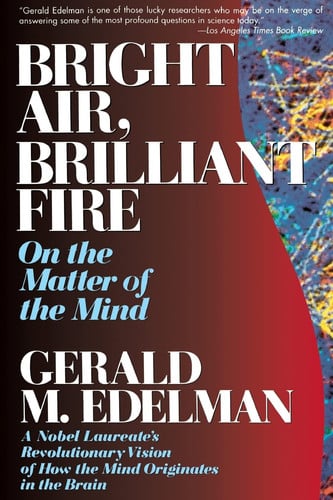
Bright air, brilliant fire: on the matter of the mind

Edelman, Gerald Maurice
We are on the brink of understanding ancient mysteries: how we know, what governs our nature, what makes a person different from a thing. In the last decade, more than twenty disciplines dealing with every aspect of the brain have contributed to a revolution in the neurosciences--a revolution as significant, in the view of many observers, as the Galilean and Copernican revolutions in mathematics and physics or the Darwinian revolution in biology. In this book, one of the world's foremost brain scientists gives us a glimpse into the workings of the human brain--the most complex material object in the universe. A match head's worth of the brain contains about a billion connections that can combine in ways which can only be described as hyperastronomical--on the order of ten followed by millions of zeros (there are only about ten followed by eighty zeros' worth of positively charged particles in the whole known universe).^
BasicBooks 1992 280 pages