150 results for "Business"

Moguls, monsters and madmen: an uncensored life in show business

Avrich, Barry
A sharp and witty expose of show business and notorious characters Barry Avrich is a Montreal - born, self - made film producer/director, flamboyant advertising executive, and legendary biographer and connector of moguls and stars. For over three decades he has relentlessly produced films on some of the most notorious show - business titans and also found the time to market and promote feature films, concerts, and the biggest shows on Broadway. In his memoir, Moguls, Monsters and Madmen, Barry takes readers from his early days, shaping his brand as a creative adman with the infamous Garth Drabinsky and witnessing the genius of legendary Rolling Stones promoter Michael Cohl, to his acclaimed documentaries on Harvey Weinstein, Lew Wasserman, Bob Guccione, and many others. Go behind the scenes on his most provocative films - like The Last Mogul, Unauthorized, and Filthy Gorgeous - and follow Barry as he moves from the power rooms of Hollywood to the launches of incredible brands while hanging around with royalty, rogues, clients, and confidants. An extraordinary raconteur, Barry spares no one, least of all himself, as he details his extraordinary relationships and encounters with everyone from Frank Sinatra, Quincy Jones, and Vanity Fair columnist Dominick Dunne to Mick Jagger and Keith Richards."
Read How You Want 2016-05 568 pages

An accidental sportswriter: a memoir

Lipsyte, Robert
Growing up, Robert Lipsyte was the smart-aleck fat kid, the bully magnet who went to the library instead of the ballpark. As the perpetual outsider, even into adulthood, his alienation from Jock Culture made him a rarity in the press box: the sportswriter who wasn't a sports fan. This feeling of otherness has colored Lipsyte's sports writing for fifty years, much of it spent as a columnist for the New York Times. He didn't follow particular athletes or teams; he wasn't awed by the access afforded by his press pass or his familiarity with the players in the locker room. The experience and insight earned over a half-century infuse An Accidental Sportswriter . Going beyond the usual memoir, Lipsyte has written "a memory loop, a circular search for lost or forgotten pieces in the puzzle of a life." In telling his own story, Lipsyte grapples with American sports and society—from Mickey Mantle to Bill Simmons—arguing that Jock Culture has seeped into our business, politics, and family life, and its definitions have become the standard to measure value. Full of wisdom and an understanding of American sports that contextualizes rather than celebrates athletes, An Accidental Sportswriter is the crowning achievement of a rich career and a book that will speak to us for years to come.
Ecco 2011 246 pages

Preminger: an autobiography

Preminger, Otto
"With the same candor that has characterized his life, Otto Preminger--actor, director, producer, and now writer--exposes himself (in writing) as well as an impressive line-up of show business folk in this engrossing memoir. As one of Hol1ywood's pre-eminent directors with 36 films and 32 stage productions to his credit, Preminger reveals the funny, outrageous, and often exasperating moments of his career, and his association with the eccentric, the gracious, the wealthy, the egomaniacal--'the stars.' Beginning his career as an apprentice of Max Reinhardt, Preminger became an instant success as an actor and then as a director. Hollywood called and he went there in 1935. His outspoken manner clashed with the autocratic studio moguls. He was forced to return to New York and find work directing plays on Broadway. He rebounded in 1944 to begin his stormy and remarkably creative period in Hollywood with Laura, his first all-out hit, starring Gene Tierney, Clifton Webb, and Dana Andrews. Preminger gives an inside glimpse at shooting such films as Daisy Kenyon with Joan Crawford (whom he considers a remarkable, independent, and generous woman); River of No Return, starring Marilyn Monroe; the all-black productions of Carmen Jones and Porgy and Bess, both accused of being racist; The Man With the Golden Arm, with Frank Sinatra and Kim Novak; plus such legendary films as Anatomy of a Murder (James Stewart, Lee Remick, and George C. Scott), Exodus (Paul Newman, Eva Marie Saint), Advise and Consent (Henry Fonda and Charles Laughton), The Cardinal (Tom Tryon, Romy Schneider), Hurry Sundown (Jane Fonda, Michael Caine, Diahann Carroll and Faye Dunaway), and In Harm's Way (John Wayne). Making no bones about naming enemies or exalting his friends, Preminger elaborates on the blacklisting during the fifties and includes his own critique of the critics. Preminger gives us a little more insight into his friend Tallulah Bankhead and her affinity for shocking behavior (with a few choice examples), as well as his opinion of Howard Hughes (a fascinating man, but not all that eccentric). He sets the record straight on a number of his love affairs and marriages, and divulges the story of his relationship with Gypsy Rose Lee and their child, who after Gypsy's death emerged as Erik Preminger. Leaving few stones unturned, this unique "Otto-biography" zooms in on Hollywood through the eyes of one of its most active and highly creative personalities--Preminger!"--Jacket.
Doubleday 1977 245 pages

Back lot: growing up with the movies

Rapf, Maurice
Son of pioneer movie producer Harry Rapf, Maurice Rapf grew up in Hollywood in that city's golden age. After moving from independent filmmaking to Warner Bros., in 1924 the senior Rapf joined Louis Mayer and became one of the founding members of MGM. Hence, movies were a huge influence in Maurice Rapf's early life. After graduating from college, Rapf worked as a screenwriter for major Hollywood studios, but, in 1947, he left Hollywood, never to work for a major studio again. On numerous occasions, he was called before the House Un-American Activities Committee as an alleged communist, although he never made a public confession or denial. As a result he was blacklisted from the industry and forced to begin a new career in the East. He eventually became a movie critic and film studies professor. Maurice Rapf knows movies and the movie business as an insider, from first-hand experience, not from books. His autobiography is the story of one person's interaction with an evolving Hollywood. Rapf witnessed the historical progression of movie production: from silents to sound, from a fun-loving frontier community to a huge and fiercely competitive industry, from an apolitical never-never land to a community very much aware of-and nervous about-its social responsibility in a period of economic depression and in a period of world peace seriously threatened by the aggression of fascism. Of interest to students and teachers of film studies, of American history, and of American popular culture, as well as anyone who loves movies.
Scarecrow Press 1999-01-28 211 pages

Impromptu man: J.L. Moreno and the origins of psychodrama, encounter culture, and the social network

Moreno, Jonathan D.
""Impromptu Man captures the remarkable impact of a singular genius, J.L. Moreno, whose creations-the best-known being psychodrama-have shaped our culture in myriad ways, many unrecognized. The record will be set straight for all time by this can't-put-down biography, a tribute by Jonathan D. Moreno to his father's masterly legacy." -DANIEL GOLEMAN, author of Emotional Intelligence: Why It Can Matter More Than IQ J.L. Moreno (1889-1974), the father of psychodrama, was an early critic of Sigmund Freud, wrote landmark works of Viennese expressionism, founded an experimental theater where he discovered Peter Lorre, influenced Martin Buber, and became one of the most important psychiatrists and social scientists of his time. ?? A mystic, theater impresario and inventor in his youth, Moreno immigrated to America in 1926, where he trained famous actors, introduced group therapy, and was a forerunner of humanistic psychology. As a social reformer, he reorganized schools and prisons, and designed New Deal planned communities for workers and farmers. Moreno's methods have been adopted by improvisational theater groups, military organizations, educators, business leaders, and trial lawyers. His studies of social networks laid the groundwork for social media like Twitter and Facebook. ?? Featuring interviews with Clay Shirky, Gloria Steinem, and Werner Erhard, among others, original documentary research, and the author's own perspective growing up as the son of an innovative genius, Impromptu Man is both the study of a great and largely unsung figure of the last century and an epic history, taking readers from the creative chaos of early twentieth-century Vienna to the wired world of Silicon Valley. Jonathan D. Moreno, called the "most interesting bioethicist of our time" by the American Journal of Bioethics, is a professor at the University of Pennsylvania and a Senior Fellow at the Center for American Progress. "--
Bellevue Literary Press 2014 319 pages

Hollywood undercover: revealing the sordid secrets of Tinseltown

Halperin, Ian
Ian Halperin is no stranger to undercover investigations. He posed as a model in 2001 to expose the fashion industry, his resulting in the expos� Shut Up and Smile . In Hollywood Undercover , he gives us a unique and scandalous glimpse behind the scenes of the movie business. This time he poses as an aspiring actor and soon finds himself with an agent, a job offer (admittedly in a hardcore porn film) and ultimately a part in The Aviator , directed by Martin Scorcese. In the interim, he is surprised to uncover anti-Semitism in Hollywood; infiltrates the Church of Scientology, whose celebrity stable includes Tom Cruise and John Travolta; and meets numerous A-listers, including Brad Pitt, Barbra Streisand, and Leonardo DiCaprio, who give him the inside track on what life in Hollywood is really like.
Mainstream 2007 221 pages

Cue the bunny on the rainbow: tales from TV's most prolific sitcom director

Rafkin, Alan
For director Alan Rafkin, television is probably the silliest and most volatile business in the world. Yet whether he was catching a pie in the face or working with an array of eccentric and talented stars, Rafkin was addicted to television from day one. In this autobiography, Rafkin recounts his behind-the-scenes experience working in over 80 different television series. Some of the most beloved sitcoms of all time, such as The Andy Griffith Show, The Dick Van Dyke Show, M*A*S*H, Murphy Brown, and Coach adorn his directorial resume and illuminate Rafkin's ability to change with the times and persevere in the young world of show business. He recounts how directing strung-out actors and dodging their blows made life on the set a world unto itself. Rafkin further describes how having a good sense of humor helped him survive three divorces and three open-heart surgeries.
Syracuse University Press 1998 179 pages

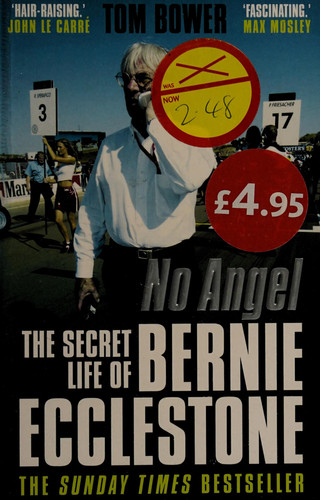
No angel: the secret life of Bernie Ecclestone

Bower, Tom
'I'm no angel.' Bernie Ecclestone Born into poverty, Bernie Ecclestone has made himself a billionaire by developing the world's second most popular sport - Formula One racing. Private, mysterious and some say sinister, the eighty-year-old criss-crosses the globe in his private jet, mixing with celebrities, statesmen and sporting heroes. His success is not just in creating a multibillion-pound global business but in resisting repeated attempts to snatch the glittering prize from his control. Ecclestone has never before revealed how he graduated from selling second-hand cars in London's notorious Warren Street to become the major player he is today. He has finally decided to reveal his secrets: the deals, the marriages, the disasters and the successes in Formula One racing, in Downing Street, in casinos, on yachts and in the air. Surprisingly, he has granted access to his inner circle to Tom Bower, described by Ecclestone as 'The Undertaker' - the man who buries reputations - and has given him access to all his friends and enemies. All have been told by Ecclestone, 'Tell him the truth, good or bad.' No Angel is a classic rags-to-riches story, the unique portrayal of a unique man and an intriguing insight into Formula One racing, business and the human spirit. Tom Bower is the author of nineteen books, including biographies of Robert Maxwell, Mohamed Fayed, Gordon Brown, Richard Branson, Conrad Black and more recently, Simon Cowell.
Faber 2012 433 pages

Black by design: a 2-tone memoir

Black, Pauline
"The best voice that ever graced 2-Tone."-- Rolling Stone "The iconic queen of ska. . . . It's gritty, witty, and compelling."-- Elle Lead singer for platinum-selling 2-Tone band The Selecter, Pauline Black has been in the music business for over thirty years. The only woman in a movement dominated by men, she was very much the Queen of British Ska. She saw The Specials, Madness, Dexy's Midnight Runners, and all the other top bands of that generation at their very best . . . and worst. Black was born in 1953 of Anglo-Jewish/Nigerian parents. Adopted by a white, working class family in the fifties, Pauline was always made to feel different, both by the local community and members of her extended family, who saw her at best as a curiosity, at worst as an embarrassing inconvenience. Weaving her rise to fame and recollections of the 2-Tone phenomenon with her moving search for her birth parents, Black By Design is a funny and enlightening memoir of music and roots. Pauline Black is a singer and actress who gained fame as the lead singer of seminal 2-Tone band The Selecter. The band's new album was released in September 2011.
Serpent's Tail 2011 389 pages

So much to do: a full life of business, politics, and confronting fiscal crises

Ravitch, Richard
Every city and every state needs a Richard Ravitch. In sixty years on the job, whether working in business or government, he was the man willing to tackle some of the most complex challenges facing New York. Trained as a lawyer, he worked briefly for the House of Representatives, then began his career in his family's construction business. He built high-profile projects like the Whitney Museum and Citicorp Center but his primary energy was devoted to building over 40,000 units of affordable housing including the first racially integrated apartment complex in Washington, D.C. He dealt with architects, engineers, lawyers, bureaucrats, politicians, union leaders, construction workers, bankers, and tenants—virtually all of the people who make cities and states work. It was no surprise that those endeavors ultimately led to a life of public service. In 1975, Ravitch was asked by then New York Governor Hugh Carey to arrange a rescue of the New York State Urban Development Corporation, a public entity that had issued bonds to finance over 30,000 affordable housing units but was on the verge of bankruptcy. That same year, Ravitch was at Carey's side when New York City's biggest banks said they would no longer underwrite its debt and he became instrumental to averting the city's bankruptcy. Throughout his career, Ravitch divided his time between public service and private enterprise. He was chairman of the Metropolitan Transportation Authority from 1979 to 1983 and is generally credited with rebuilding the system. He turned around the Bowery Savings Bank, chaired a commission that rewrote the Charter of the City of New York, served on two Presidential Commissions, and became chief labor negotiator for Major League Baseball. Then, in 2008, after Governor Eliot Spitzer resigned in a prostitution scandal and New York State was in a post-financial-crisis meltdown, Spitzer's successor, David Paterson, appointed Ravitch Lieutenant Governor and asked him to make recommendations regarding the state's budgeting plan. What Ravitch found was the result of not just the economic downturn but years of fiscal denial. And the closer he looked, the clearer it became that the same thing was happening in most states. Budgetary pressures from Medicaid, pension promises to public employees, and deceptive budgeting and borrowing practices are crippling our states' ability to do what only they can do—invest in the physical and human infrastructure the country needs to thrive. Making this case is Ravitch's current public endeavor and it deserves immediate attention from both public officials and private citizens.
PublicAffairs 2014-04-29 254 pages

The glass closet: why coming out is good business

Browne, John
'I wish I had been brave enough to come out earlier in my tenure as CEO of BP. I regret it to this day. I know that if I had done so I would have made more of an impact for other gay men and women. With The Glass Closet , I hope to give some of them the courage to make an impact of their own.' Whether you're lesbian, gay, transgender or straight, John Browne's message is simple and clear, it's better for you and it's better for business when you bring your authentic self to work. Drawing on his personal experiences and the experience of other gay and lesbian business leaders, and by investigating the research and the social contexts, The Glass Closet strives to give courage and inspire the LGBT community that despite the risks involved, self-disclosure is best for employees and for the businesses that support them. Every CEO, every HR Manager, every team leader - anyone who is responsible for the culture and success of their business should read The Glass Closet . And for anyone fearful or lacking the confidence to bring their true self into work every day, this book was written for you.
WH Allen 2015 240 pages

Honest, Abe: is there really no business like show business?

Burrows, Abe
In 1980, Abe Burrows published his memoir, Honest, Abe: Is There Really No Business Like Show Business?, in which he recalls the meat of his career, including his mentoring of several comedy writers including future M*A*S*H writer Larry Gelbart (who was once a Duffy's Tavern writer), Nat Hiken, Dick Martin and Woody Allen, the latter a distant cousin of Burrows'.
Little, Brown 1980 369 pages

Maxwell, the outsider

Bower, Tom
Robert Maxwell was driven by an obsession to be remembered by posterity, to create and re-create his own life in order to become part of the Establishment. Tom Bower's compelling portrait, the subject of numerous libel suits brought by Maxwell in Britain before his death, is now published for the first time--in a thoroughly updated edition--in the United States. It provides a fascinating look at the man who was relentless in his attempts to obtain media power and respectability, attempts that would eventually destroy him. Born into a life of poverty, an outsider forever trying to get in, Robert Maxwell was plagued by a deep sense of alienation. His career as publisher, printer, politician, financier, industrialist, and tycoon extraordinary was charged with both magnificent coups and controversial setbacks. He built his fortune on a mixture of engineered leaks and secrecy at the expense of long-term stability. Accused of everything from creative bookkeeping to outright fraud, Maxwell withstood each debacle until the end, surviving troubles that would have felled a less determined personality. Bower describes the many suspect strategies of Maxwell's business dealings while he was alive and the disintegration of his empire after his death, focusing along the way on Maxwell's often nebulous business dealings and his immense skills at bullying and deception. Beginning with Maxwell's early years, Bower describes in depth the period after World War II during which Maxwell made a fortune out of barter deals and the export of scientific journals from Germany, which became the basis for his Pergamon Press flagship; the Pergamon-Leasco affair in the late 1960s (involving two millionaires, Maxwelland Saul Steinberg), an ill-fated takeover deal that fell apart with Maxwell declared unfit to hold office in a public company; and his revival of the loss-making British Printing Corporation. The author explains Maxwell's numerous acquisitions and his competitive obsession with Rupert Murdoch. We learn of the mysteries surrounding Maxwell's private banking in Liechtenstein, his strange links with the Soviet Union and Eastern Europe, the notorious "Mirrorgate" affair and Maxwell's close relationship with Israel. Going beyond recent media coverage, the author provides up-to-the-minute facts on missing corporate assets and pension funds as well as the nefarious share-support schemes. In this powerful biography, Tom Bower comes as close as anyone ever will to understanding Robert Maxwell and his demons.
Viking 1992 539 pages