833 results for "Environment"

100 people who are screwing up America

Goldberg, Bernard
The number one New York Times bestselling author of Bias delivers another bombshell—this time aimed at . . . 100 People Who Are Screwing Up America No preaching. No pontificating. Just some uncommon sense about the things that have made this country great—and the culprits who are screwing it up. Bernard Goldberg takes dead aim at the America Bashers (the cultural elites who look down their snobby noses at "ordinary" Americans) . . . the Hollywood Blowhards (incredibly ditzy celebrities who think they're smart just because they're famous) . . . the TV Schlockmeisters (including the one whose show has been compared to a churning mass of maggots devouring rotten meat) . . . the Intellectual Thugs (bigwigs at some of our best colleges, whose views run the gamut from left wing to far left wing) . . . and many more. Goldberg names names, counting down the villains in his rogues' gallery from 100 all the way to 1—and, yes, you-know-who is number 37. Some supposedly "serious" journalists also made the list, including the journalist-diva who sold out her integrity and hosted one of the dumbest hours in the history of network television news. And there are those famous miscreants who have made America a nastier place than it ought to be—a far more selfish, vulgar, and cynical place. But Goldberg doesn't just round up the usual suspects we have come to know and detest. He also exposes some of the people who operate away from the limelight but still manage to pull a lot of strings and do all sorts of harm to our culture. Most of all, 100 People Who Are Screwing Up America is about a country where as long as anything goes, as one of the good guys in the book puts it, sooner or later everything will go. This is serious stuff for sure. But Goldberg will also make you laugh as he harpoons scoundrels like the congresswoman who thinks there aren't enough hurricanes named after black people, and the environmentalist to the stars who yells at total strangers driving SUVs—even though she tools around the country in a gas-guzzling private jet. With Bias, Bernard Goldberg took us behind the scenes and exposed the way Big Journalism distorts the news. Now he has written a book that goes even further. This time he casts his eye on American culture at large—and the result is a book that is sure to become the voice of all those Americans who feel that no one is speaking for them on perhaps the most vital issue of all: the kind of country in which we want to live.
HarperCollins 2005-07-05 305 pages

Eating

Singer, Peter
Written with investigative vigour, provocative and controversial but always accessible, Eating is a hard-hitting exploration of our eating habits, making us look at what we eat as a moral issue. Organic foods are the fastest growing section of the food industry, and it is estimated that vegans are now almost as common as vegetarians. Veal consumption in the US has fallen by more than 75% since 1975, and in the UK, sales of free-range eggs have now passed in value sales of eggs from caged hens. Evidently we are concerned. But how concerned should we be about where our food comes from? Does the food we buy really affect the world around us? And what can we do? In Eating , philosopher Peter Singer and environmentalist Jim Mason follow three families with varying eating habits, from fast-food eaters to vegans, to explore how the food we eat makes its way to the table, and at what expense. The authors peel back each layer of food production, and examine how they ought to factor into our buying choices. Recognising that we are not all likely to become vegetarian or vegan, they go on to offer ways to make the most ethical choices within the framework of a diet that includes animal products.
Arrow 2006 329 pages

Vultures' picnic: a Greg Palast investigation

Palast, Greg
The New York Times bestselling author of Armed Madhouse offers a globetrotting, Sam Spade-style investigation that blows the lid off the oil industry, the banking industry, and the governmental agencies that aren't regulating either. This is the story of the corporate vultures that feed on the weak and ruin our planet in the process-a story that spans the globe and decades. For Vultures' Picnic , investigative journalist Greg Palast has spent his career uncovering the connection between the world of energy (read: oil) and finance. He's built a team that reads like a casting call for a Hollywood thriller-a Swiss multilingual investigator, a punk journalist, and a gonzo cameraman-to reveal how environmental disasters like the Gulf oil spill, the Exxon Valdez, and lesser-known tragedies such as Tatitlek and Torrey Canyon are caused by corporate corruption, failed legislation, and, most interestingly, veiled connections between the financial industry and energy titans. Palast shows how the International Monetary Fund, World Bank, World Trade Organization, and Central Banks act as puppets for Big Oil. With Palast at the center of an investigation that takes us from the Arctic to Africa to the Amazon, Vultures' Picnic shows how the big powers in the money and oil game slip the bonds of regulation over and over again, and simply destroy the rules that they themselves can't write-and take advantage of nations and everyday people in the process.
Dutton 2011 404 pages

The ecology of human development: experiments by nature and design

Bronfenbrenner, Urie
Here is a book that challenges the very basis of the way psychologists have studied child development. According to Urie Bronfenbrenner, one of the world’s foremost developmental psychologists, laboratory studies of the child’s behavior sacrifice too much in order to gain experimental control and analytic rigor. Laboratory observations, he argues, too often lead to “the science of the strange behavior of children in strange situations with strange adults for the briefest possible periods of time.” To understand the way children actually develop, Bronfenbrenner believes that it will be necessary to observe their behavior in natural settings, while they are interacting with familiar adults over prolonged periods of time. This book offers an important blueprint for constructing such a new and ecologically valid psychology of development. The blueprint includes a complete conceptual framework for analysing the layers of the environment that have a formative influence on the child. This framework is applied to a variety of settings in which children commonly develop, ranging from the pediatric ward to daycare, school, and various family configurations. The result is a rich set of hypotheses about the developmental consequences of various types of environments. Where current research bears on these hypotheses, Bronfenbrenner marshals the data to show how an ecological theory can be tested. Where no relevant data exist, he suggests new and interesting ecological experiments that might be undertaken to resolve current unknowns. Bronfenbrenner’s groundbreaking program for reform in developmental psychology is certain to be controversial. His argument flies in the face of standard psychological procedures and challenges psychology to become more relevant to the ways in which children actually develop. It is a challenge psychology can ill-afford to ignore.
Harvard University Press 1981 330 pages

The spirit of green: the economics of collisions and contagions in a crowded world

Nordhaus, William D.
"From a Nobel Prize-winning pioneer in environmental economics, an innovative account of how and why "green thinking" could cure many of the world's most serious problems-from global warming to pandemics Solving the world's biggest problems-from climate catastrophe and pandemics to wildfires and corporate malfeasance-requires, more than anything else, coming up with new ways to manage the powerful interactions that surround us. For carbon emissions and other environmental damage, this means ensuring that those responsible pay their full costs rather than continuing to pass them along to others, including future generations. In The Spirit of Green, Nobel Prize-winning economist William Nordhaus describes a new way of green thinking that would help us overcome our biggest challenges without sacrificing economic prosperity, in large part by accounting for the spillover costs of economic collisions. In a discussion that ranges from the history of the environmental movement to the Green New Deal, Nordhaus explains how the spirit of green thinking provides a compelling and hopeful new perspective on modern life. At the heart of green thinking is a recognition that the globalized world is shaped not by isolated individuals but rather by innumerable interactions inside and outside the economy. He shows how rethinking economic efficiency, sustainability, politics, profits, taxes, individual ethics, corporate social responsibility, finance, and more would improve the effectiveness and equity of our society. And he offers specific solutions-on how to price carbon, how to pursue low-carbon technologies, how to design an efficient tax system, and how to foster international cooperation through climate clubs. The result is a groundbreaking new vision of how we can have our environment and our economy too"--
Princeton University Press 2021-05-18 355 pages

Inconspicuous consumption: the environmental impact you don't know you have

Schlossberg, Tatiana
"As we become a more digital society, the gains that have been made for the environment by moving toward a paperless world with more and more efficient devices will soon be or already have been offset by the number of devices in our lives that are always using energy. But many don't think about the impact on the environment of the "Internet of things." Whether it's a microwave connected to the internet, use of Netflix, or online shopping, these technological advances have created new impacts that the people who are most well-versed in these issues haven't considered. In INCONSPICUOUS CONSUMPTION, Tatiana Schlossberg reveals the complicated, confounding and even infuriating ways that we all participate in a greenhouse gas-intensive economy and society, and how some of the biggest and most consequential areas of unintended emissions and environmental impacts are unknowingly part of our daily activities. She will empower people to make the best choices that they can, while allowing them to draw their own conclusions"--
Grand Central Publishing 2019 277 pages

Questions of Life

Nicky Gumbel
From "Why am I here?" to "What's next?" in this international bestseller, Alpha pioneer Nicky Gumbel addresses some of the foundational questions that challenge us all. Questions of Life is a step-by-step guide to the basics of the Christian faith by one of the world's most respected Christian leaders. This book contains the talks that are given on Alpha, and in it Nicky explores key themes, questions, and objections to faith, leading us on an engaging, personal journey of discovery. Alpha creates an environment of hospitality where people can bring their friends, family, and work colleagues to explore the Christian faith, ask questions, and share their point of view. Alpha makes it easy to invite friends to have spiritual conversations which explore life's biggest questions in a safe and respectful way. Alpha's approach to hospitality, faith, and discussion is designed to welcome everyone, especially those who might not describe themselves as Christians or church-goers. Each session includes time for a large group meal, short teaching, and small group discussion.
HarperChristian Resources 2017-12-19 224 pages

Against the web: a cosmopolitan answer to the new right

Brooks, Michael
Brooks takes on the new 'Intellectual Dark Web.' As the host of The Michael Brooks Show and co-host of the Majority Report, Brooks was a progressive fighter whose work brought people together from around the world. In this, his first book, he lets his understanding of the digital media environment direct his analysis of the "conservative rebels" who had taken YouTube by storm in 2018. Brooks provides a critique of the most prominent "renegades" including Sam Harris, Jordan Peterson, and Brett Weinstein while also examining the social, political and media environment that such rebels thrive in. --From publisher description.
Zero Books 2020-04-24 82 pages

Yeah baby! the modern mama's breakthrough guide to mastering pregnancy, having a healthy baby, and bouncing back better than ever

Michaels, Jillian,Adamson, Eve
"What every mother needs to know. You know Jillian Michaels as the world's leading fitness expert and a renowned nutritionist; but she's also a proud mother of two. In Yeah Baby!, Jillian, along with her team of top-notch experts, will change everything you think you know about pregnancy, arming you with the most cutting-edge information available, so you can make the right choices for you and your little one. They will help you navigate the hidden dangers in your immediate environment; understand the check-ups, tests, and treatments your doctor recommends; and provide powerful solutions for all your issues, from heartburn and swollen feet to more serious medical concerns. Also learn how to optimize every facet of your child's development, from IQ and long-term earning potential to future level of physical fitness and even taste preferences! Yeah Baby! also features a complete meal plan with delicious, nutrition-packed recipes, and a one-of-a-kind, trimester-specific fitness program, to ensure you bounce back stronger and better than ever. Expert Dream Team: · Suzanne Gilberg-Lenz, MD is an Ob-Gyn, a Clinical Ayurvedic Specialist, and board certified in Integrative and Holistic Medicine. · Andrea Orbeck is a PregnancyFitness Specialist who holds an advanced degree in Kinesiology and Intracellular Physiology. · Katja VanHerle, MD is one of America's Top Physicians in Endocrinology as named by Consumer Research Council of America. · Cheryl Forberg, RD is an award-winning registered dietitian, chef, and New York Times bestselling author. · Jay Gordon, MD, FAAP is a pediatrician who specializes in infant nutrition and breastfeeding. JILLIAN MICHAELS is the foremost fitness expert in the world and a renowned life coach. From her hit televisions shows, extensively successful fitness DVDs and exercise streaming platform fitfusion.com, 8 New York Times best-selling books, live speaking engagements, award-winning podcast, a soon-to-be-released iPhone app (which will allow users to train with Jillian both in preset and dynamic workouts), social media channels and her personal website jillianmichaels.com she has built an international community of followers 100 million + strong. Jillian's company, Empowered Media, which she co-owns with business partner Giancarlo Chersich, has become a monumental wellness empire dedicated to providing people with accessible and affordable solutions for all their wellness needs from fitness video gaming to athletic apparel and healthy foods. Her overwhelming success stems from her unique connection with her audience that was born from her own personal journey toward health and happiness. "--
Rodale 2016-11-15 366 pages

Earth in human hands: shaping our planet's future

Grinspoon, David Harry
For the first time in Earth's history, our planet is experiencing a confluence of rapidly accelerating changes prompted by one species: humans. Climate change is only the most visible of the modifications we've made--up until this point, inadvertently--to the planet. And our current behavior threatens not only our own future but that of countless other creatures. By comparing Earth's story to those of other planets, astrobiologist David Grinspoon shows what a strange and novel development it is for a species to evolve to build machines, and ultimately, global societies with world-shaping influence. Without minimizing the challenges of the next century, Grinspoon suggests that our present moment is not only one of peril, but also great potential, especially when viewed from a 10,000-year perspective. Our species has surmounted the threat of extinction before, thanks to our innate ingenuity and ability to adapt, and there's every reason to believe we can do so again. Our challenge now is to awaken to our role as a force of planetary change, and to grow into this task. We must become graceful planetary engineers, conscious shapers of our environment and caretakers of Earth's biosphere. This is a perspective that begs us to ask not just what future do we want to avoid, but what do we seek to build? What kind of world do we want? Are humans the worst thing or the best thing to ever happen to our planet? Today we stand at a pivotal juncture, and the answer will depend on the choices we make.
Grand Central Publishing 2016-12-06 522 pages

The Fractal Geometry of Nature

Benoit Mandelbrot
The Essential Guide that Introduced Fractals to the World Explore the wondrously complex repeating shapes of the natural world in The Fractal Geometry of Nature. Written in a style that is accessible to a wide audience, computer scientist, professor, mathematician, economist, and visionary Benoit B Mandelbrot's fascinating work has inspired popular interest in the geometry inherent in the natural world. Unlike the squares, circles, spheres, and cones of fundamental geometry, nature has rough edges and no straight lines or perfect curves. Mandelbrot observed that, even with this roughness, there still exists a kind of symmetry, which he dedicated his work to document and study. This became the basis for his development of a new kind of geometry; indeed, he coined the term "fractal." Mandelbrot spent 35 years with IBM, which allowed him access to the level of computing power that would enable him to manipulate computer-generated images and develop his theory of a geometry found throughout our natural environment. He was among the first to use computer graphics to illustrate and test these kinds of concepts, demonstrating that natural phenomena which appear to be rough or chaotic actually have a certain degree of order and predictability. This definitive overview builds on Mandelbrot's 1977 work, Fractals: Form, Chance and Dimension (also published by Echo Point Books), revealing an in depth look at this still-emerging field. Richly illustrated and presented in an engaging manner which embraces geometric and visual dimensions interspersed with aspects of theory, this book will inspire curiosity and wonder in artists, mathematicians and naturalists alike. This book is also available from Echo Point Books in hardcover (ISBN 1648370403). Be sure to check out Benoit Mandelbrot's other definitive work, also availabe from Echo Point books: Fractals: Form, Chance and Dimension (use the web address https: //www.amazon.com/dp/1635619025/).
Echo Point Books & Media, LLC. 2021-07-16 500 pages

The Wild Vegetarian Cookbook

Steve Brill
Brill follows his Identifying and Harvesting Edible and Medicinal Plants in Wild (And Not So Wild) Places with this specialist volume aimed at cooking found and gathered produce. Stressing the need to forage safely and not eat any plant unless completely certain of its identification and that it's free of pesticides and herbicides, the author explains 'what makes wild food special' before describing methods of preparation and food types, winemaking and the wild food seasons. Main courses and desserts are intermingled so much so that it becomes hard to tell whether the ingredient is a main component or an enhancer. Filled with humorous anecdotes and small descriptions, almost every recipe relies on at least one foraged ingredient, though where possible Brill offers health store alternatives (while Monsieur Wildman's French Dressing calls for wild spearmint, he does suggest cultivated mint; unsweetened apple juice can be substituted for wild apples in Spiced Wild Apple Cider). In the end, the book will appeal to those who enjoy foraging in the wild as well as the vegetarian who is not only health- but also environmentally conscious.
ReadHowYouWant.com 2011-07-13 628 pages

All That Is Solid Melts Into Air

Berman Marshall
"A bubbling caldron of ideas . . . Enlightening and valuable." —Mervyn Jones, New Statesman. The political and social revolutions of the nineteenth century, the pivotal writings of Goethe, Marx, Dostoevsky, and others, and the creation of new environments to replace the old—all have thrust us into a modern world of contradictions and ambiguities. In this fascinating book, Marshall Berman examines the clash of classes, histories, and cultures, and ponders our prospects for coming to terms with the relationship between a liberating social and philosophical idealism and a complex, bureaucratic materialism. From a reinterpretation of Karl Marx to an incisive consideration of the impact of Robert Moses on modern urban living, Berman charts the progress of the twentieth-century experience. He concludes that adaptation to continual flux is possible and that therein lies our hope for achieving a truly modern society.
Touchstone 1983-02

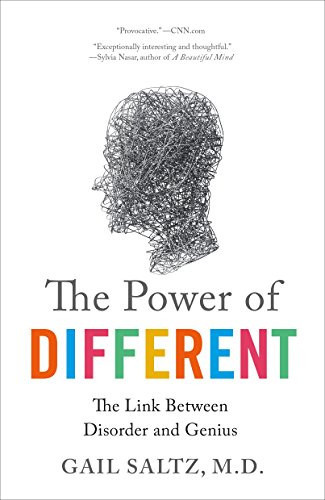
The power of different: the link between disorder and genius

Saltz, Gail
A powerful and inspiring examination of the connection between the potential for great talent and conditions commonly thought to be “disabilities,” revealing how the source of our struggles can be the origin of our greatest strengths. In The Power of Different , psychiatrist and bestselling author Gail Saltz examines the latest scientific discoveries, profiles famous geniuses who have been diagnosed with all manner of brain “problems”—including learning disabilities, ADD, anxiety, Depression, Bipolar disorder, schizophrenia, and Autism—and tells the stories of lay individuals to demonstrate how specific deficits in certain areas of the brain are directly associated with the potential for great talent. Saltz shows how the very conditions that cause people to experience difficulty at school, in social situations, at home, or at work, are inextricably bound to creative, disciplinary, artistic, empathetic, and cognitive abilities. In this pioneering work, readers will find engaging scientific research and stories from historical geniuses and everyday individuals who have not only made the most of their conditions, but who have flourished because of them. They are leaning into their brain differences to: *Identify areas of interest and expertise *Develop work arounds *Create the environments that best foster their talents *Forge rewarding interpersonal relationships Enlightening and inspiring, The Power of Different proves that the unique wiring of every brain can be a source of strength and productivity, and contributes to the richness of our world.
Flatrion Books 2018-03-06 247 pages

Out of gas: the end of the age of oil

Goodstein, David L.
Our rate of oil discovery has reached its peak and will never be exceeded; rather, it is certain to decline - perhaps rapidly - forever forward. Meanwhile, in the 20th century we have developed lifestyles firmly rooted in the promise of an endless, cheap supply. inevitable fossil fuel shortage we face and our most urgent environmental policy decisions. He outlines the drastic effects a fossil fuel shortage will bring down on us and shows us that there is an important silver lining to the need to switch to other sources of energy, for when we have burned up all the available oil, the earth's climate will have moved toward a truly life-threatening state.
W.W. Norton 2004 140 pages

The geography of nowhere: the rise and decline of America's man-made landscape

Kunstler, James Howard
Eighty percent of everything ever built in America has been built since the end of World War II. This tragic landscape of highway strips, parking lots, housing tracts, mega-malls, junked cities, and ravaged countryside is not simply an expression of our economic predicament, but in large part a cause. It is the everyday environment where most Americans live and work, and it represents a gathering calamity whose effects we have hardly begun to measure." "In The Geography of Nowhere, James Howard Kunstler traces America's evolution from a nation of Main Streets and coherent communities to a land where everyplace is like noplace in particular, where the city is a dead zone and the countryside a wasteland of cars and blacktop. Now that the great suburban build-out is over, Kunstler argues, we are stuck with the consequences: a national living arrangement that destroys civic life while imposing enormous social costs and economic burdens. Kunstler explains how our present zoning laws impoverish the life of our communities, and how all our efforts to make automobiles happy have resulted in making human beings miserable. He shows how common building regulations have led to a crisis in affordable housing, and why street crime is directly related to our traditional disregard for the public realm." "Kunstler takes the reader on a historical journey to understand how Americans came to view their landscape as a commodity for exploitation rather than a social resource. He explains why our towns and cities came to be wounded by the abstract dogmas of Modernism, and reveals the paradox of a people who yearn for places worthy of their affection, yet bend their efforts in an economic enterprise of destruction that degrades and defaces what they most deeply desire." "Kunstler proposes sensible remedies for this American crisis of landscape and townscape: a return to sound principles of planning and the lost art of good place-making, an end to the tyranny of compulsive commuting, the unreality of the suburb, the alienation and violence of downtown, the vulgarity of the highway strip, and the destruction of our countryside. The Geography of Nowhere puts the issue of how we actually live squarely at the center of our ongoing debate about the nation's economy and America's future.
Simon & Schuster 1993 303 pages

On Bird Hill

Jane Yolen
WINNER of Mass Books Early Reader Must Reads/Picture Books! "An imaginative and original depiction of one of life's everyday miracles." -- KIRKUS STARRED REVIEW From award-winning and NY Times bestselling children's and beloved birder, Jane Yolen, and award-winning illustrator, Bob Marstall, comes On Bird Hill the first in a series created for bird-lovers and dreamers alike! On Bird Hill is first in a new Jane Yolen series developed for the Cornell Lab, the world's leading authority on bird's. Loosely based on "The Green Grass Grew All Around," a nursery rhyme first published as a song in 1912, this whimsical version follows a boy and his dog as they find a bird in a nest on a hill in a strange valley. This beautiful and enchanting story is perfect for young minds taking flight. 35% of the net proceeds from every Cornell Lab Publishing Group book purchase will support projects such as children's educational and community programs. About the ON BIRD HILL & BEYOND SERIES The ON BIRD HILL & BEYOND series invites children to reclaim the freedom to explore, wander and adventure outdoors. Created especially for the Cornell Lab of Ornithology - the world leader in the study, appreciation, and conservation of birds - by New York Times bestselling author Jane Yolen and renowned illustrators Bob Marstall and Elizabeth Dulemba. The series artfully engages the senses to see, feel, hear, and touch the natural world and the life within. Back matter contains information on birds and wildlife depicted with full-color photos and "How You Can Help" suggestions for budding naturalists and birders. RAVE REVIEWS FOR ON BIRD HILL... "Expressively captures a luminous moment of discovery in the natural world. On Bird Hill leaves space for the imagination and underscores the surprising wonder found in everyday moments." -- School Library Journal "It's a sweetly surreal meditation on the everyday wonders that await in the wild."--Publisher's Weekly "...opens your eyes to the extraordinary in the ordinary of nature. I look forward to more books in the series..."--NC Teacher Stuff
WunderMill, Incorporated 2017-08-27 32 pages

Nowhere in Africa: an autobiographical novel

Zweig, Stefanie
Nowhere in Africa is the extraordinary tale of a Jewish family who flees the Nazi regime in 1938 for a remote farm in Kenya. Abandoning their once-comfortable existence in Germany, Walter Redlich, his wife Jettel, and their five-year-old daughter, Regina, each deal with the harsh realities of their new life in different ways. Attorney Walter is resigned to working the farm as a caretaker; pampered Jettel resists adjustment at every turn; while the shy yet curious Regina immediately embraces the country—learning the local language and customs, and finding a friend in Owuor, the farm's cook. As the war rages on the other side of the world, the family’s relationships with their strange environment become increasingly complicated as Jettel grows more self-assured and Walter more haunted by the life they left behind. In 1946, with the war over, Regina's fondest dream comes true when her brother Max is born. Walter's decision, however, to return to his homeland to help rebuild a new Germany puts his family into turmoil again. Visit the Web site for the film at www.nowhereinafrica.com
Terrace Books 2004 291 pages

Saul Leiter

Leiter, Saul
The classic Photofile series brings together the best work of the world's greatest photographers in an attractive format and at a reasonable price. Handsome and collectible, the books are produced to the highest standards. Each volume contains reproductions printed in superb duotone, together with a critical introduction and a full bibliography. Saul Leiter (b. 1923) is one of those photographers who seek neither fame nor commercial success, despite their talent for imagemaking. Born in Pittsburgh, he spent the 1940s and 1950s in New York, in an intensely creative environment where ideas from Europe and America came together and intermingled. There he encountered Rothko and the Abstract Expressionists, and discovered street photography and the work of Cartier-Bresson. His mastery of color is displayed in unconventional cityscapes in which reflections, transparency, complex framing and mirroring effects are married to a very personal printing style, creating a unique urban view.
Thames & Hudson 2008 144 pages