911 results for "History"

How to win an information war: the propagandist who outwitted Hitler

Pomerantsev, Peter
"From one of our leading experts on disinformation, this inventive biography of the rogue WWII propagandist Thomas Sefton Delmer confronts hard questions about the nature of information war: what if you can't fight lies with truth? Can a propaganda war ever be won? In the summer of 1941, Hitler ruled Europe from the Atlantic to the Black Sea. Britain was struggling to combat his powerful propaganda machine, crowing victory and smearing his enemies as liars and manipulators over his frequent radio speeches, blasted out on loudspeakers and into homes. British claims that Hitler was dangerous had little impact against this wave of disinformation. Except for the broadcasts of someone called Der Chef, a German who questioned Nazi doctrine. He had access to high-ranking German military secrets and spoke of internal rebellion. His listeners included German soldiers and citizens, as well as politicians in Washington DC who were debating getting into the war. And--most importantly--Der Chef was a fiction. He was a character created by the British propagandist Thomas Sefton Delmer, a unique weapon in the war. Then, as author Peter Pomerantsev seeks to tell Delmer's story, he is called into a wartime propaganda effort of his own: the US response to the invasion of Ukraine. In flashes forward to the present day, Pomerantsev weaves in what he's learning from Delmer as he seeks to fight against Vladimir Putin's tyranny and lies. This book is the story of Delmer and his modern investigator, as they each embark on their own quest to manipulate the passions of supporters and enemies, and to turn the tide of an information war, an extraordinary history that is informing the present before our eyes"--
PublicAffairs 2024-03 277 pages

Out of this century: confessions of an art addict

Guggenheim, Peggy
This is the fascinating autobiography of a society heiress who became the bohemian doyenne of the art world. Written in her own words it is the frank and outspoken story of her life and loves: her stormy relationships with such men as Max Ernst and Jackson Pollock, and her discovery of new artists. Known as 'the mistress of modern art', Peggy Guggenheim was a passionate collector and major patron. She amassed one of the most important collections of early twentieth century European and American art embracing cubism, surrealism and expressionism. A must read for anyone with an interest in these major-league artists, this seminal period of art history, and the ultimate self-invented woman.
Andre Deutsch 2018 464 pages

I'm supposed to protect you from all this: a memoir

Spiegelman, Nadja
"A memoir of mothers and daughters -- and mothers as daughters -- traced through four generations, from Paris to New York and back again. For a long time, Nadja Spiegelman believed her mother was a fairy. More than her famous father, Mauscreator Art Spiegelman, and even more than most mothers, hers -- French-born New Yorker art director Françoise Mouly -- exerted a force over reality that was both dazzling and daunting. As Nadja's body changed and "began to whisper to the adults around me in a language I did not understand," their relationship grew tense. Unwittingly, they were replaying a drama from her mother's past, a drama Nadja sensed but had never been told. Then, after college, her mother suddenly opened up to her. Françoise recounted her turbulent adolescence caught between a volatile mother and a playboy father, one of the first plastic surgeons in France. The weight of the difficult stories she told her daughter shifted the balance between them. It had taken an ocean to allow Françoise the distance to become her own person. At about the same age, Nadja made the journey in reverse, moving to Paris determined to get to know the woman her mother had fled. Her grandmother's memories contradicted her mother's at nearly every turn, but beneath them lay a difficult history of her own. Nadja emerged with a deeper understanding of how each generation reshapes the past in order to forge ahead, their narratives both weapon and defense, eternally in conflict. Every reader will recognize herself and her family in this gorgeous and heartbreaking memoir, which helps us to see why sometimes those who love us best hurt us most"--
Riverhead Books, an imprint of Penguin Random House LLC 2017-08 372 pages

Reagan: his life and legend

Boot, Max
"Son of the Midwest, movie star, and mesmerizing politician--America's fortieth president comes to three-dimensional life in this gripping and profoundly revisionist biography. In this "monumental and impressive" biography, Max Boot, the distinguished political columnist, illuminates the untold story of Ronald Reagan, revealing the man behind the mythology. Drawing on interviews with over one hundred of the fortieth president's aides, friends, and family members, as well as thousands of newly available documents, Boot provides "the best biography of Ronald Reagan to date" (Robert Mann). The story begins not in star-studded Hollywood but in the cradle of the Midwest, small-town Illinois, where Reagan was born in 1911 to Nelle Clyde Wilson, a devoted Disciples of Christ believer, and Jack Reagan, a struggling, alcoholic salesman. Boot vividly creates a portrait of a handsome young man, indeed a much-vaunted lifeguard, whose early successes mirrored those of Horatio Alger. And contextualizing Reagan's life against American history, Boot re-creates the world in which Reagan transitioned from local Iowa sportscaster to budding screen actor. The world of Hollywood from the 1930s to the 1950s would prove significant, not only in Reagan's coming-of-age in such classics as Knute Rockne and Kings Row but during the twilight of his film career, when he played opposite a chimpanzee in Bedtime for Bonzo, and then his eventual emergence as a television host of General Electric Theater, which established his bona fides as one of the leading conservative voices of the time. Indeed, the leap to California governor in 1966 seemed almost preordained, in which Reagan became a bellwether for a nation in the throes of a generational shift. Reagan's 1980 presidential election augured a shift that continues into this century. Boot writes not as a partisan but as a historian seeking to set the story straight. He explains how Reagan was an ideologue but also a supreme pragmatist who signed pro-abortion and gun control bills as governor, cut deals with Democrats in both Sacramento and Washington, and befriended Mikhail Gorbachev to end the Cold War. A master communicator, Reagan revived America's spirits after the traumas of Vietnam and Watergate. But Boot also shows how Reagan was armored in obliviousness. He traces Reagan's opposition to civil rights over forty years, reveals how he neglected the exploding AIDS epidemic, and details how America experienced a level of income inequality not seen since the Gilded Age. With its revelatory insights, Reagan: His Life and Legend is no apologia, depicting a man with a good-versus-evil worldview derived from his moralistic upbringing and Hollywood westerns. Providing fresh examinations of "trickle-down economics," the Cold War's end, the Iran-Contra affair, as well as a nuanced portrait of Reagan's family, this definitive biography is as compelling a presidential biography as any in recent decades."--
Liveright Publishing Corporation 2024 836 pages

Attempting normal

Maron, Marc
NATIONAL BESTSELLER Marc Maron is “a master of spinning humor out of anguish” ( Bookforum ), even when that anguish is pretty clearly self-inflicted. In Attempting Normal, he threads together twenty-five stories from his life and near-death, from his first comedy road trips (with a fugitive junkie comic with a missing tooth) to his love affair with feral animals (his cat rescues are bloody epics) to his surprisingly moving tales of lust, heartbreak, and hope. The stories are united by Maron’s thrilling storytelling style—intensely smart, disarmingly honest, and explosively funny. Together, they add up to a hilarious and moving tale of failing, flailing, and finding a way. Praise for Attempting Normal “I laughed so hard reading this book.” —David Sedaris “Funny . . . surprisingly deep . . . laced with revelatory insights.” —Los Angeles Times “Superb . . . A reason that [it] is a superior example of an overcrowded genre—the comedian memoir—is Mr. Maron’s hardheaded approach to his history, the wisdom of experience.” — The New York Times “Marc Maron is a legend because he is both a great comic and a brilliant mind. Attempting Normal is a deep, hilarious megashot of feeling and truth as only this man can administer.” —Sam Lipsyte Praise for Marc Maron and WTF “The stuff of comedy legend.” — Rolling Stone “Marc Maron is a startlingly honest, compelling, and hilarious comedian-poet. Truly one of the greatest of all time.” —Louis C.K. “I’ve known Marc for years and I can tell you first hand that he’s passionate, fearless, honest, self-absorbed, neurotic, and screamingly funny.” —David Cross “Revered among his peers . . . raw and unflinchingly honest.” — Entertainment Weekly “Devastatingly funny.” — Los Angeles Times “For a comedy nerd, this show is nirvana.” —Judd Apatow
Spiegel & Grau 2014-04-08 210 pages

Stan Lee: a life in comics

Leibovitz, Liel
Few artists have had as much of an impact on American popular culture as Stan Lee. The characters he created-Spider-Man and Iron Man, the X-Men and the Fantastic Four-occupy Hollywood's imagination and production schedules, generate billions at the box office, and come as close as anything we have to a shared American mythology. This illuminating biography focuses as much on Lee's ideas as it does on his unlikely rise to stardom. It surveys his cultural and religious upbringing and draws surprising connections between celebrated comic book heroes and the ancient tales of the Bible, the Talmud, and Jewish mysticism. Was Spider-Man just a reincarnation of Cain? Is the Incredible Hulk simply Adam by another name? From close readings of Lee's work to little-known anecdotes from Marvel's history, the book paints a portrait of Lee that goes much deeper than one of his signature onscreen cameos.
Yale University Press 2020-04-21 179 pages

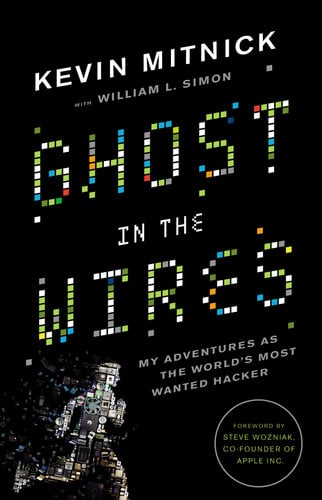
Ghost in the wires: my adventures as the world's most wanted hacker

Mitnick, Kevin
Kevin Mitnick was the most elusive computer break-in artist in history. He accessed computers and networks at the world's biggest companies--and however fast the authorities were, Mitnick was faster, sprinting through phone switches, computer systems, and cellular networks. He spent years skipping through cyberspace, always three steps ahead and labeled unstoppable. But for Kevin, hacking wasn't just about technological feats-it was an old fashioned confidence game that required guile and deception to trick the unwitting out of valuable information. Driven by a powerful urge to accomplish the impossible, Mitnick bypassed security systems and blazed into major organizations including Motorola, Sun Microsystems, and Pacific Bell. But as the FBI's net began to tighten, Kevin went on the run, engaging in an increasingly sophisticated cat and mouse game that led through false identities, a host of cities, plenty of close shaves, and an ultimate showdown with the Feds, who would stop at nothing to bring him down. Ghost in the Wires is a thrilling true story of intrigue, suspense, and unbelievable escape, and a portrait of a visionary whose creativity, skills, and persistence forced the authorities to rethink the way they pursued him, inspiring ripples that brought permanent changes in the way people and companies protect their most sensitive information
Little, Brown and Company 2011-08-15 413 pages

Hollywood ending: Harvey Weinstein and the culture of silence

Auletta, Ken
"A shocking account of how Harvey Weinstein rose to become one of the most iconic figures in the world of movies, how he used that position to feed his monstrous sexual appetites, and how it all came crashing down, from the author who has covered the Hollywood power game for the New Yorker for three decades. Twenty years ago, Ken Auletta wrote one of the iconic New Yorker profiles for which he is famous, of the Hollywood mogul Harvey Weinstein, then at the height of his powers. The profile created waves for exposing how volatile, even violent, Weinstein was to his employees and collaborators. But there was a much darker story that was just out of reach: rumors had long swirled that Weinstein was a sexual predator, but no one was willing to go on the record, and in the end he and the magazine concluded they couldn't close the case. But the story always nagged at him, and many years later, he was able to share his reporting notes and all that he knew with Ronan Farrow, and to cheer him along with Jodi Kantor and Megan Twohey as they broke their pioneering stories and wrote their bestselling books. But the story continued to nag at him. Farrow, Twohey, and Kantor did a brilliant job exposing the trail of assaults and their cover-up, but the larger questions remained: what explained Weinstein's monstrousness? Even more importantly, how and why was it never checked? How does a man run the day to day operations of a company with hundreds of employees and revenues in the hundreds of millions of dollars and at the same time live a shadow life of sexual predation without ever being caught, for years and years? How much is this a story about Harvey Weinstein, and how much is this a story about Hollywood and power? To answer that question fully, Ken Auletta has spent the past three years constructing a full reckoning with a career in film that has no parallel in Hollywood's history in its combination of extraordinary business and creative success and a personal brutality and viciousness that left a trail of ruined lives in its wake. How did one thing relate to the other? Hollywood Ending is an unflinching examination of Weinstein's life and career in full. Not simply a prosecutor's litany of crimes, it embeds them in the context of his overall business, his failures but also his outsized successes. To understand how he could behave as he did, we have to understand the power he wielded. Iconic film stars, Miramax employees and board members, old friends and family, even the person who knew him best, Harvey's brother Bob, all talked to Auletta at length. The result is not simply the portrait of a predator, it is a portrait of the power that allowed Weinstein to operate with such impunity for so many years, the spider web in which his victims found themselves trapped. To understand Weinstein's web is to understand how many other spider webs no doubt still remain."--
Penguin Press 2022-07-12 466 pages

Boy alone: a sibling journey through autism

Greenfeld, Karl Taro
Karl Taro Greenfeld knew from an early age that his little brother, Noah, was not like other children. He couldn't crawl, and he had trouble making eye contact or interacting with his family. As Noah grew older, his differences became even more pronounced—he was unable to communicate verbally, use the toilet, or tie his shoes, and despite his angelic demeanor, he often had violent outbursts. No doctor, social worker, or specialist could pinpoint what was wrong with Noah beyond a general diagnosis: autism. The boys' parents, Josh and Foumi, dedicated their lives to caring for their younger son with myriad approaches—a challenging, often painful experience that the devoted father detailed in a bestselling trilogy of books. Now, for the first time, acclaimed journalist Karl Taro Greenfeld speaks out about growing up in the shadow of his autistic brother, revealing the complex mix of rage, confusion, and love that defined his childhood. Boy Alone is his brutally honest memoir of the hopes, dreams, and realities of life with a mentally disabled sibling. Seamlessly weaving together the social history of autism and autism research—as the Greenfelds lived through it in seeking treatment for Noah—with the deeply affecting story of two very different boys growing up side by side, this book raises crucial philosophical questions: Can relationships exist without language? How should aging parents care for a nonverbal, violent child, and then a grown man who is not self-sufficient? Is there anything that can be done to help an extremely autistic child or adult become a member of mainstream society? Haunting, tragic, and unforgettable, this chronicle of autism is a beautiful, wholly original exploration of what it means to be a family, a brother, and a person.
HarperCollins 2009-05-12 355 pages

Being Heumann: an unrepentant memoir of a disability rights activist

Heumann, Judith E.
"One of the most influential disability rights activists in US history tells her personal story of fighting for the right to receive an education, have a job, and just be human. A story of fighting to belong in a world that wasn't built for all of us and of one woman's activism--from the streets of Brooklyn and San Francisco to inside the halls of Washington--Being Heumann recounts Judy Heumann's lifelong battle to achieve respect, acceptance, and inclusion in society."--
Beacon Press 2020 218 pages

The Fat Duck cookbook

Blumenthal, Heston
The cookbook hailed by the Los Angeles Times as a "showstopper" and by Jeffrey Steingarten of Vogue as "the most glorious spectacle of the season...like no other book I have seen in the past twenty years" is now available in a reduced-price edition. With a reduced trim size but an identical interior, this lavishly illustrated, stunningly designed, and gorgeously photographed masterpiece takes you inside the head of maverick restaurateur Heston Blumenthal. Separated into three sections (History; Recipes; Science), the book chronicles Blumenthal's improbable rise to fame and, for the first time, offers a mouth-watering and eye-popping selection of recipes from his award-winning restaurant. He also explains the science behind his culinary masterpieces, the technology and implements that make his alchemical dishes come to life. Designed by acclaimed artist Dave McKean-and filled with photographs by Dominic Davies-this artfully rendered celebration of one of the world's most innovative and renowned chefs is a foodie's dream.
Bloomsbury 2009-10-20 529 pages

The White House years

Kissinger, Henry
In this first volume of his memoirs, Dr Kissinger covers his first four years (1969-1973) as Assistant to the President for National Security Affairs, and President Nixon's closest adviser on foreign policy. It is undoubtedly the most significant book to come out of the Nixon Administration. Among the countless great and critical moments Dr Kissinger recalls are his first meeting with Nixon, his secret trip to China, the first SALT negotiation, the Jordan crisis of 1970, the India-Pakistan war of 1971, and the historic summit meetings in Peking and Moscow. He covers the major controversies over Indochina policy during that period, including events in Laos, the overthrow of Cambodia's Prince Sihanouk, his secret talks with the North Vietnamese in Paris, his 'Peace is at hand' press conference, and the breakdown of the talks that led to the 'Christmas bombing' of 1972. He offers his insight s into the Middle East conflicts, Sadat's break with the Soviets, the election of Salvador Allende in Chile, issues of defence strategy, and relations with Europe and Japan. Other highlights are his relationship with Nixon, brilliant portraits of major foreign leaders, and his views as to the handling of crises and the art of diplomacy. Few men have wielded as much influence in the arena of American foreign policy as Henry Kissinger. This record makes an invaluable and lasting contribution to the history of this crucial time.
Weidenfeld and Nicolson 1979 1521 pages

Retail gangster: the insane, real-life story of Crazy Eddie

Weiss, Gary
"A biography of the spectacular rise and fall of Eddie Antar, better known as "Crazy Eddie," whose home electronics empire changed the world even as it turned out to be one of the biggest business scams of all time Back in the fall of 2016 we heard the news about the passing of Eddie Antar, "Crazy Eddie" as he was known to millions of people, the man behind the successful chain of electronic stores and one of the most iconic ad campaigns in history. Few things evoke the New York of a particular era the way "Crazy Eddie! His prices are insaaaaane!" does. The journalist Herb Greenberg called his death the "end of an era" and that couldn't be more true. What's insane is that his story has never been told. Before Enron, before Madoff, before The Wolf of Wall Street, Eddie Antar's corruption was second to none. The difference was that it was a street franchise, a local place that was in the blood stream of everyone's daily life in the 1970s and early '80s. And Eddie pulled it off with a certain style, an in your face blue collar chutzpah. Despite the fact that then U.S. Attorney Michael Chertoff called him "the Darth Vader of capitalism" after the extent of the fraud was revealed, one of the largest SEC frauds in American history after Crazy Eddie's stores went public in 1984, Eddie was talked about fondly by the people who worked for him. They still do--there are myriads of ex-Crazy Eddie employee web pages that still attract fans, and the Crazy Eddie fraud scheme is now taught in every business school across the United States. Many years have passed since the franchise went down in spectacular fashion but Crazy Eddie's moment has endured the way that iconic brands and characters do--one only need Google the media outpouring that accompanied his death. Maybe it's because it crystallized everything about 1970s New York almost perfectly, the merchandise and rise of consumer electronics (stereos!), the ads (cheesy!), the money (cash!). In Retail Gangster, investigative journalist Gary Weiss takes readers behind the scenes of one of the most unbelievable business scam stories of all time, a story spanning continents and generations, reaffirming the old adage that the truth is often stranger than fiction"--
Hachette Books 2022 316 pages

Boys in the trees: a memoir

Simon, Carly
Simon's memoir reveals her remarkable life, beginning with her storied childhood as the third daughter of Richard L. Simon, the co-founder of publishing giant Simon & Schuster, her musical debut as half of The Simon Sisters performing folk songs with her sister Lucy in Greenwich Village, to a meteoric solo career that would result in 13 top-40 hits, including the #1 song "You're So Vain." She was the first artist in history to win a Grammy Award, an Academy Award and a Golden Globe Award, for a song composed, written, and performed entirely by a single artist: "Let the River Run" from the movie Working Girl. The memoir recalls a childhood enriched by music and culture, but also one shrouded in secrets that would eventually tear her family apart. Simon captures moments of creative inspiration, the sparks of songs, and the stories behind writing "Anticipation" and "We Have No Secrets" among many others. Romantic entanglements with some of the most famous men of the day fueled her confessional lyrics, as well as the unraveling of her storybook marriage to James Taylor.
Flatiron Books 2015-11-24 376 pages

My anecdotal life : a memoir

Reiner, Carl
More than once, Carl Reiner has had friends say, “Hey, Reiner, you ought to write those things down.” And at eighty, he finally has. In this funny and engaging memoir, one of the best raconteurs on the planet recalls his life in show business in short comic takes. Reiner tells of how, after answering an ad for free acting classes on his brother Charlie’s advice, he forsakes a budding career as a machinist for an acting career. In “Sidney Bechet and His Jazz Band Meet Franz Kafka,” he captivates the legendary jazz man and his band with an unusual reading of The Metamorphosis , during a thunderstorm at a Catskills resort in 1942. Reiner also recalls the highlights of the succeeding decades: his first sweaty audition, impersonating a dog impersonating movie stars; his forays into the theater; his work on Your Show of Shows and The Dick Van Dyke Show during TV’s golden days; and his long friendship and collaboration with Mel Brooks which gave birth to the Two Thousand Year Old Man. In “A Recipe to Remember,” he recites a recipe for cream cheese cookies to a star-studded audience that includes Paul Newman, Leonard Bernstein, and Barbra Streisand. In “The Gourmet Eating Club,” he gives an insider’s take on the now-legendary group that included Mario Puzo, Joseph Heller, Zero Mostel, and other luminaries. Mary Tyler Moore, Sid Caesar, Mickey Rooney, Johnny Carson, Cary Grant, Dinah Shore, Ann Bancroft, Jean Renoir – the list goes on and on – also appear in what Reiner calls the “literary variety show” that captures the highs and lows of his extraordinary life. Through it all, Reiner displays the wit and warmth that have made him one of the most beloved figures in the entertainment business. This charming memoir will delight anyone who wants a behind-the-scenes look at five decades of Hollywood and television history.
St. Martin's Press 2003-05-16 236 pages

The Romanovs: 1613-1918

Sebag Montefiore, Simon
The Romanovs were the most successful dynasty of modern times, ruling a sixth of the world's surface for three centuries. How did one family turn a war-ruined principality into the world's greatest empire? And how did they lose it all? This is the intimate story of twenty tsars and tsarinas, some touched by genius, some by madness, but all inspired by holy autocracy and imperial ambition. Simon Sebag Montefiore's gripping chronicle reveals their secret world of unlimited power and ruthless empire-building, overshadowed by palace conspiracy, family rivalries, sexual decadence and wild extravagance, with a global cast of adventurers, courtesans, revolutionaries and poets, from Ivan the Terrible to Tolstoy and Pushkin, to Bismarck, Lincoln, Queen Victoria and Lenin. To rule Russia was both imperial-sacred mission and poisoned chalice: six of the last twelve tsars were murdered. Peter the Great tortured his own son to death while making Russia an empire, and dominated his court with a dining club notable for compulsory drunkenness, naked dwarfs and fancy dress. Catherine the Great overthrew her own husband (who was murdered soon afterward), enjoyed affairs with a series of young male favorites, conquered Ukraine and fascinated Europe. Paul I was strangled by courtiers backed by his own son, Alexander I, who in turn faced Napoleon's invasion and the burning of Moscow, then went on to take Paris. Alexander II liberated the serfs, survived five assassination attempts and wrote perhaps the most explicit love letters ever composed by a ruler. The Romanovs climaxes with a fresh, unforgettable portrayal of Nicholas II and Alexandra, the rise and murder of Rasputin, war and revolution--and the harrowing massacre of the entire family. Dazzlingly entertaining and beautifully written from start to finish, The Romanovs brings these monarchs--male and female, great and flawed, their families and courts--blazingly to life. Drawing on new archival research, Montefiore delivers an enthralling epic of triumph and tragedy, love and murder, encompassing the seminal years 1812, 1914 and 1917, that is both a universal study of power and a portrait of empire that helps define Russia today.
Alfred A. Knopf 2016 744 pages

The big Fat Duck cookbook

Blumenthal, Heston
Takes you inside the head of maverick restaurateur, Heston Blumenthal. Separated into three sections (History; Recipes; Science), Blumenthal chronicles his improbable background and unorthodox rise to fame and, for the first time ever, offers a mouth-watering and eyes-widening selection of recipes from his award-winning restaurant. He also explains the science behind his culinary masterpieces, the technology and implements that make his alchemic dishes come to life.
Bloomsbury 2008 529 pages

Alger Hiss and the battle for history

Jacoby, Susan
Books on Whittaker Chambers and Alger Hiss abound, as countless scholars havelabored to uncover the facts behind Chambers s shocking accusation before the House Committee on Un-American Activities in the summer of 1948 that Alger Hiss, a former rising star in the State Department, had been a Communist and engaged in espionage. In this highly original work, Susan Jacoby turns her attention to the Hiss case, including his trial and imprisonment for perjury, as a mirror of shifting American political views and passions. Unfettered by political ax-grinding, the author examines conflicting responses, from scholars and the media on both the left and the right, and the ways in which they have changed from 1948 to our present post Cold War era. With a brisk, engaging style, Jacoby positions the case in the politics of the post World War II eraand then explores the ways in which generations of liberals and conservatives have put Chambers and Hiss to their own ideological uses. An iconic event of the McCarthy era, the case of Alger Hiss fascinates political intellectuals not only because of its historical significance but because of its timeless relevance to equally fierce debates today about the difficult balance between national security and respect for civil liberties."
Yale University Press 2009 256 pages

The House of Government: a saga of the Russian Revolution

Slezkine, Yuri
"On the 100th anniversary of the Russian Revolution, the epic story of an enormous apartment building where Communist true believers lived before their destruction. The House of Government is unlike any other book about the Russian Revolution and the Soviet experiment. Written in the tradition of Tolstoy's War and Peace, Grossman's Life and Fate, and Solzhenitsyn's The Gulag Archipelago, Yuri Slezkine's gripping narrative tells the true story of the residents of an enormous Moscow apartment building where top Communist officials and their families lived before they were destroyed in Stalin's purges. A vivid account of the personal and public lives of Bolshevik true believers, the book begins with their conversion to Communism and ends with their children's loss of faith and the fall of the Soviet Union. Completed in 1931, the House of Government, later known as the House on the Embankment, was located across the Moscow River from the Kremlin. The largest residential building in Europe, it combined 550 furnished apartments with public spaces that included everything from a movie theater and a library to a tennis court and a shooting range. Slezkine tells the chilling story of how the building's residents lived in their apartments and ruled the Soviet state until some eight hundred of them were evicted from the House and led, one by one, to prison or their deaths. Drawing on letters, diaries, and interviews, and featuring hundreds of rare photographs, The House of Government weaves together biography, literary criticism, architectural history, and fascinating new theories of revolutions, millennial prophecies, and reigns of terror. The result is an unforgettable human saga of a building that, like the Soviet Union itself, became a haunted house, forever disturbed by the ghosts of the disappeared."--Publisher description
Princeton University Press 2017 1104 pages