306 results for "Nobel"

Losing the Nobel Prize A Story of Cosmology, Ambition, and the Perils of Science?s Highest Honor

Brian Keating
"Riveting."— Science A Forbes , Physics Today , Science News , and Science Friday Best Science Book Of 2018 Cosmologist and inventor of the BICEP (Background Imaging of Cosmic Extragalactic Polarization) experiment, Brian Keating tells the inside story of the mesmerizing quest to unlock cosmology’s biggest mysteries and the human drama that ensued. We follow along on a personal journey of revelation and discovery in the publish-or-perish world of modern science, and learn that the Nobel Prize might hamper—rather than advance—scientific progress. Fortunately, Keating offers practical solutions for reform, providing a vision of a scientific future in which cosmologists may finally be able to see all the way back to the very beginning.
National Geographic Books 2019-09-24 368 pages

Einstein His Life And Times

Philipp Frank
Much has been written about Albert Einstein, technical and biographical, but very little remains as valuable as this unique hybrid of a book written by Einstein's colleague and contemporary. Both rich in personal insights and grounded in a deep knowledge of twentieth-century science, Phillip Frank's biography anchors the reader with a lucid overview of physics and draws an intimate portrait of the Nobel Prize–winner.
Da Capo Press 2002-03-01 358 pages

Elie Wiesel: an extraordinary life and legacy

Nadine Epstein
Elie Wiesel (1928-2016) is best known as the author of Night, survivor of Auschwitz and a powerful, enduring voice of the Holocaust. A recipient of the Nobel Peace Prize and the Presidential Medal of Freedom, he was a hero of human rights, professor and author of more than 50 books. Among his accomplishments, Wiesel co-founded Moment Magazine with Leonard Fein in 1975 to be a place of conversation for America's Jews. For editor-in-chief Nadine Epstein, he became a mentor and friend after she took over the magazine in 2004. In this striking volume, Epstein shares her memories of Wiesel and brings together 36 interviews with friends, colleagues and others who knew him - including, his son Elisha, Michael Berenbaum, Wolf Blitzer, Father Patrick Debois, Ronald S. Lauder, Bernard Henri-Levi, Kati Marton, Natan Sharansky, Ben Kingsley, and Oprah Winfrey. The foreword is by British Rabbi Jonathan Sacks and the afterword is by broadcaster Ted Koppel. To celebrate this humanitarian and keep his inspiration alive, Epstein presents readers with a visual history of Wiesel's life and examines the influence of Night. This chilling story of the Holocaust has already gripped the souls of millions of readers. Epstein includes a selection of his speeches and writings, lively conversations with teenagers about Night and discussion questions. The book features more than 100 photos. Says Rabbi Jonathan Sacks: "This book of reflections is a fitting tribute to the legacy of Elie Wiesel. In its pages and through the words of its contributors, you will feel a promise, not just to the souls who perished, but also to Elie and all those who survived Europe's darkest night." From the Inside Flap "It is absolutely imperative for this legacy of Elie Wiesel's to continue. It has to, and if it doesn't, it is our loss, and it will be an unfathomable loss." ―Ben Kingsley "Wiesel taught us that we must not forget; that there is no greater sin than that of silence and indifference. In doing so he has not just illumined the past, he has illumined the future" ―Oprah Winfrey "There was something burning inside of Elie, a flame ignited by injustice and pain. He was willing to share that part of himself. Pain can make people retreat from life, but opened Elie to the world." ―Kathleen Kennedy Townsend "He performed the alchemy of converting pain, injustice and horror into love, compassion and tolerance. We remember him not so much because he so often succeeded but because he never stopped trying." ―Ted Koppel "I believe there is a risk of Elie Wiesel, the Holocaust, and other genocides being forgotten. Without a real effort to retain their memory, they may simply disappear from history. Elie Wiesel was a light in the night for the whole world, not just the Jewish one." ―Father Patrick Desbois About the Author Editor: Nadine Epstein, Editor-in-Chief of Moment Magazine, is the founder and executive director of the Center for Creative Change and founder of the Daniel Pearl Investigative Journalism Initiative. An award-winning journalist and author, she reported for the City News Bureau of Chicago and the Chicago Bureau of the New York Times and covered the U.S.-Mexico border. She was a Knight-Wallace Fellow at the University of Michigan, where she also taught journalism. She is also an artist and the creator of the iShadow Project. Foreword: Rabbi Lord Jonathan Sacks is the former Chief Rabbi of the United Kingdom. He is the author of more than 25 books, most recently Not in God's Name: Confronting Religious Violence. Ted Koppel was the anchor and managing editor of ABC News Nightline for 25 years. He is currently a contributor to CBS News Sunday Morning and author of Lights Out.
MomentBooks 2019 176 pages

Why? what makes us curious

Livio, Mario
Astrophysicist and author Mario Livio investigates perhaps the most human of all our characteristics—curiosity—in this “lively, expert, and definitely not dumbed-down account” ( Kirkus Reviews ) as he explores our innate desire to know why . Experiments demonstrate that people are more distracted when they overhear a phone conversation—where they can know only one side of the dialogue—than when they overhear two people talking and know both sides. Why does half a conversation make us more curious than a whole conversation? “Have you ever wondered why we wonder why? Mario Livio has, and he takes you on a fascinating quest to understand the origin and mechanisms of our curiosity. I thoroughly recommend it.” (Adam Riess, Nobel Prize Winner in Physics, 2011). Curiosity is not only at the heart of mystery and suspense novels, it is also essential to other creative endeavors, from painting to sculpture to music. It is the principal driver of basic scientific research. Even so, there is still no definitive scientific consensus about why we humans are so curious, or about the mechanisms in our brain that are responsible for curiosity. In the ever-fascinating Why? Livio interviewed scientists in several fields to explore the nature of curiosity. He examined the lives of two of history’s most curious geniuses, Leonardo da Vinci and Richard Feynman. He also talked to people with boundless curiosity: a superstar rock guitarist who is also an astrophysicist; an astronaut with degrees in computer science, biology, literature, and medicine. What drives these people to be curious about so many subjects? An astrophysicist who has written about mathematics, biology, and now psychology and neuroscience, Livio has firsthand knowledge of his subject which he explores in a lucid, entertaining way that will captivate anyone who is curious about curiosity.
Simon & Schuster 2017 252 pages

Marigold and Rose: A Fiction

Glück, Louise
Marigold and Rose is a magical and incandescent fiction from the Nobel laureate Louise Glück. “Marigold was absorbed in her book; she had gotten as far as the V.” So begins Marigold and Rose , Louise Glück’s astonishing chronicle of the first year in the life of twin girls. Imagine a fairy tale that is also a multigenerational saga; a piece for two hands that is also a symphony; a poem that is also, in the spirit of Kafka’s The Metamorphosis , an incandescent act of autobiography. Here are the elements you’d expect to find in a story of infant twins: Father and Mother, Grandmother and Other Grandmother, bath time and naptime—but more than that, Marigold and Rose is an investigation of the great mystery of language and of time itself, of what is and what has been and what will be. “Outside the playpen there were day and night. What did they add up to? Time was what they added up to. Rain arrived, then snow.” The twins learn to climb stairs, they regard each other like criminals through the bars of their cribs, they begin to speak. “It was evening. Rose was smiling placidly in the bathtub playing with the squirting elephant, which, according to Mother, represented patience, strength, loyalty and wisdom. How does she do it, Marigold thought, knowing what we know.” Simultaneously sad and funny, and shot through with a sense of stoic wonder, this small miracle of a book, following thirteen books of poetry and two collections of essays, is unlike anything Glück has written, while at the same time it is inevitable, transcendent.
Picador USA 2023-10-10 64 pages

Mismeasuring Our Lives Why Gdp Doesn't Add Up

Jean-Paul Fitouss,Joseph E. Stiglitz,Amartya Kumar Sen
In February of 2008, amid the looming global financial crisis, President Nicolas Sarkozy of France asked Nobel Prize-winning economists Joseph Stiglitz and Amartya Sen, along with the distinguished French economist Jean Paul Fitoussi, to establish a commission of leading economists to study whether Gross Domestic Product (GDP) - the most widely used measure of economic activity - is a reliable indicator of economic and social progress. The Commission was given the further task of laying out an agenda for developing better measures. Mismeasuring Our Lives is the result of this major intellectual effort, one with pressing relevance for anyone engaged in assessing how and whether our economy is serving the needs of our society. The authors offer a sweeping assessment of the limits of GDP as a measurement of the well-being of societies - considering, for example, how GDP overlooks economic inequality (with the result that most people can be worse off even though average income is increasing); and does not factor environmental impacts into economic decisions.In place of GDP, Mismeasuring Our Lives introduces a bold new array of concepts, from sustainable measures of economic welfare, to measures of savings and wealth, to a ''green GDP.'' At a time when policymakers worldwide are grappling with unprecedented global financial and environmental issues, here is an essential guide to measuring the things that matter.
ReadHowYouWant.com 2011-04-22 228 pages

The Interpretation of Nature and the Psyche

Carl Gustav Jung,Wolfgang Ernst Pauli
Carl Gustav Jung (1875-1961) and Wolfgang Ernst Pauli (1900 - 1958) were two of the greatest thinkers of modern times. Jung is the founder of Analytical Psychology and is one of the best known researchers in the field of Dream Interpretation and Symbolization. Pauli was one of the pioneers of Quantum Physics. In 1945, Pauli received the Nobel Prize in Physics after being nominated by Albert Einstein for his "decisive contribution through his discovery of a new law of Nature, the exclusion principle" involving spin theory underpinning the structure of matter and the whole of chemistry. Together they collaborated on this book that was First published in 1952 in German as Naturerklarung und Psyche. C. G. Jung: Synchronizitat als ein Prinzip akausaler Zusammenhange. W. Pauli: Der Einfluss archetypischer Vorstellungen auf die Bildung naturwissenschaftlicher Theorien bei Kepler. However, our reviewer, himself an eminent professor of mathematics, concludes, "After thoroughly studying their writings for many months now, I have come to see clearly that they are both utterly mad.""
Ishi Press International 2012-02 280 pages

Something to remember me by

Bellow, Saul
A trio of short works by the Nobel laureate and "greatest writer of American prose of the twentieth century" (James Wood, "The New Republic") While Saul Bellow is known best for his longer fiction in award-winning novels such as "The Adventures of Augie March" and "Herzog," "Something to Remember Me By" will draw new readers to Bellow as it showcases his extraordinary gift for creating memorable characters within a smaller canvas. The loss of a ring in "A Theft" helps an oft-married woman understand her own wisdom and capacity for love. In "The Bellarosa Connection," Harry Fonstein has escaped from Nazi brutality with the help of an underground organization masterminded by the legendary Broadway impresario Billy Rose, and his story continues in America . In the title story, seventeen-year-old Louie--whose mother is dying of cancer--strays far from home and finds not solace but humiliation and, ultimately, the blessing of his father's wrath.
Penguin 1991 222 pages

Oxygen: a play in two acts

Djerassi, Carl
Was treibt Wissenschaftler an? Der Konkurrenzkampf, das Bestreben etwas Neues als erster zu entdecken, ist eine wichtige Motivation. Die moralischen Konsequenzen werden in dem Stück "Oxygen" behandelt, in dem es um die Entdeckung von Sauerstoff geht, dem für das Leben auf der Erde wichtigsten Element. Im Zentrum des Stückes stehen chemische und politische Revolutionen sowie der Nobel-Preis, der 2001 zum 100. Mal vergeben wird. Das Stück spielt 1777 und 2001; zur Aufführung werden drei Schauspieler und drei Schauspielerinnen benötigt, die elf Personen darstellen. Die Urauffühung wird im Frühjahr 2001 in San Diego stattfinden, die deutsche Premiere im September. Die weltberühmten Autoren Carl Djerassi und Roald Hoffmann bürgen aufgrund ihrer Erfahrungen als Wissenschaftler - Carl Djerassi ist bekannt als "Vater der Pille" und Roald Hoffmann erhielt 1982 den Nobelpreis für Chemie - und als Schriftsteller - Djerassi schrieb mehrere erfolgreiche Romane, Hoffmann viel beachtete Lyrik - für Kompetenz und Spannung.
Wiley-VCH 2001-03-05 119 pages

Atom and archetype: the Pauli/Jung letters, 1932-1958

Pauli, Wolfgang,Jung, C. G.,Meier, C. A.
In 1932, world-renowned physicist Wolfgang Pauli had already done the work that would win him the 1945 Nobel Prize. He was also suffering after a series of troubling personal events. He was drinking heavily, quarrelling frequently, and experiencing powerful, disturbing dreams. Pauli turned to C. G. Jung for help, forging an extraordinary intellectual conjunction not just between a physicist and a psychologist but between physics and psychology. As their acquaintance developed, Jung and Pauli discussed the nature of dreams and their relation to reality, finding surprising common ground between depth psychology and quantum physics and profoundly influencing each other's work. This portrait of an incredible friendship will fascinate readers interested in psychology, science, creativity, and genius.
Princeton University Press 2014-07-21 320 pages

Maximum Brainpower Challenging the Brain for Health and Wisdom

Shlomo Breznitz,Collins Hemingway
“A wonderfully helpful book . . . After reading it, you will understand what you must do for your brain, and why you must do it.”—Norman Doidge, M.D., New York Times bestselling author of The Brain That Changes Itself Did you know that experts are often less mentally agile than jacks-of-all-trades? That crossword puzzles and sudoku are of minimal help in building brainpower? That multitasking poses unique dangers to the brain? Cognitive psychologist Shlomo Breznitz knows—and what’s more, he knows what to do about it. In Maximum Brainpower, Breznitz and technologist Collins Hemingway provide both an in-depth look at how the brain works and proven methods to increase its capabilities. Armed with the results of cutting-edge research, they champion the stimulus of continual change over the deadening effects of comfortable routine, show how to separate good mental stress from bad, and demonstrate how hope and socialization can help defend against forgetfulness, memory loss, even dementia. Filled with colorful real-life stories and fascinating psychological experiments, this revelatory work will help adults of any age keep their minds sharp, healthy, and cognitively fit throughout life. It’s a no-brainer! Praise for Maximum Brainpower “Everyone knows the importance of physical fitness; less appreciated is the necessity of cognitive fitness. How do you maintain an exercised, stimulated, flexible brain? Start by reading this book.”—David Eagleman, New York Times bestselling author of Incognito “Profound, rich, and enriching . . . Because of its forceful suggestions, its analyses, and its wide knowledge, this book is well worth reading. And rereading.”—Elie Wiesel, Nobel Peace Prize Laureate and author “Many of us are petrified of Alzheimer’s disease, strokes, and other maladies that impair the functioning of the brain. Breznitz and Hemingway can deliver no ‘magic bullet’ to prevent dementia. But their book does get you thinking about what you can do to develop and maintain your gray matter, build on the plasticity of the brain, and increase the likelihood that you’ll live not just a longer but a fuller life.”—The Huffington Post “Most books about healthy brain maintenance just give you the ‘how’; this one tells you why. And it helps you do it.”—Rita Carter, author of Mapping the Mind
Random House Publishing Group 2013-07-30 288 pages

The escape from hunger and premature death, 1700-2100: Europe, America, and the Third World

Fogel, Robert William
Nobel laureate Robert Fogel's compelling new study examines health, nutrition and technology over the last three centuries and beyond. Throughout most of human history, chronic malnutrition has been the norm. During the past three centuries, however, a synergy between improvements in productive technology and in human physiology has enabled humans to more than double their average longevity and to increase their average body size by over 50 per cent. Larger, healthier humans have contributed to the acceleration of economic growth and technological change, resulting in reduced economic inequality, declining hours of work and a corresponding increase in leisure time. Increased longevity has also brought increased demand for health care. Professor Fogel argues that health care should be viewed as the growth industry of the twenty-first century and systems of financing it should be reformed. His book will be essential reading for all those interested in economics, demography, history and health care policy.
Cambridge University Press 2004 191 pages

Worth the risk: innovation and the future of finance

Merton, Robert C.
The 2008 financial crisis cost $15 trillion in the U.S. stock and residential housing markets. The crash hit institutions and citizens, threatening economic survival, employment, and retirement prospects. What went wrong? And how can we prevent a similar disaster? In Worth the Risk, Robert Merton--the Nobel Prize-winning economist whose work revolutionized financial markets--offers answers. Merton maintains that the magnitude of the crisis points to more fundamental forces at work than the greed, selfishness, or criminal behavior of some financial-system players and consumers. In clear, accessible language, he demystifies those forces. For example, he shows: -Why the professionals underestimated the riskiness of mortgage-backed securities and corporate loan portfolios. -How the financial innovations that brought home ownership to millions of Americans combined with other benign developments to inject huge, systemic risk into the U.S. economy. Merton then identifies specific reforms that could improve regulation and transparency in the financial-services industry and head off a similar crash in the future. In particular, he offers strategies for minimizing risks in the innovation of financial instruments--which remains essential for our economy's health. And he suggests innovations that could open the door to security and growth for nations, corporations, and individuals. Engaging and authoritative, Worth the Risk provides answers to the burning questions on everyone's mind'and paints an encouraging picture of a far more solid financial future.
Harvard Business 2010-10 130 pages

The search warrant

Modiano, Patrick
WINNER OF THE NOBEL PRIZE IN LITERATURE, 2014 Haunted by the fate of Dora Bruder - a fifteen-year-old girl listed as missing in an old December 1941 issue of Paris Soir - Nobel Prize-winning author Patrick Modiano sets out to find all he can about her. From her name on a list of deportees to Auschwitz to the fragments he is able to uncover about the Bruder family, Modiano delivers a moving survey of a decade-long investigation that revived for him the sights, sounds and sorrowful rhythms of occupied Paris. And in seeking to exhume Dora Bruder's fate, he in turn faces his own family history. Translated by Joanna Kilmartin 'Absolutely magnificent' Le Monde
Vintage Classics 2020 144 pages

Life Times Stories

Nadine Gordimer
"Superb...a series of masterly drawn glimpses into the storymaking art of one of Africa's great modern literary geniuses." -Alan Cheuse, NPR A selection of short stories written to date by Nobel Laureate Nadine Gordimer, Life Times reveals her acute understanding of human nature and paints a fascinatingly original portrait of South Africa. Whether focusing on politics, sexuality, race, love, or loss, Gordimer maps out the terrain of human relationships with razor-sharp psychological insight and a stunning lack of sentimentality. Complex and multifaceted, her stories challenge us, time and again, to examine the conflict between our actions and our unspoken desires. This powerful collection, which includes two new stories, is a testament to Gordimer's literary genius and the ongoing power and relevance of her vision.
Penguin 2011-10-25 560 pages

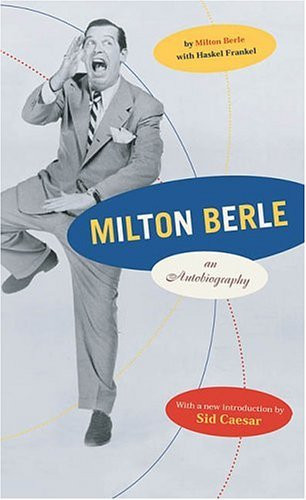
Milton Berle: an autobiography

Berle, Milton
(Applause Books). When Milton Berle died in the Spring of 2002, THE NEW YORK TIMES declared that the legendary comic "may have had a more profound influence on our way of life than some presidents or Nobel Prize winners." This landmark memoir, as startling today as it was when it was first published, reveals the life and times of the man known affectionately to millions as Uncle Miltie. Told with unflinching candor, here is one of the most fabled and influential show business careers of all time: from performing as a child in Vaudeville and making silent movies with Charlie Chaplin and Mary Pickford, to nightclub performances for Al Capone, working on radio during World War II, performing in Broadway musicals, and, finally, superstardom on television. Perhaps even more fascinating is Berle's scandal-ridden private life: his star-crossed love affair with a 1930's movie queen and the child they had out of wedlock, his numerous affairs with women ranging from evangelist Aimee Semple McPherson to Marilyn Monroe, and his stormy relationship with beautiful showgirl Joyce Mathews, whom Berle married twice. It is Berle's unsparing account of his life and his determination to show the world his real face that led Frank Sinatra, at the time, to call this "the gutsiest book I've read in years." Told with equal amounts of comedy and pathos, and featuring colorful appearancesby all the major stars of his day, MILTON BERLE is simply one of the best show business memoirs ever written.
Applause Theatre & Cinema Books 2002-09-01 337 pages

The limits of organization

Arrow, Kenneth J.
The tension between what we wish for and what we can get, between values and opportunities, exists even at the purely individual level. A hermit on a mountain may value warm clothing and yet be hard-pressed to make it from the leaves, bark, or skins he can find. But when many people are competing with each other for satisfaction of their wants, learning how to exploit what is available becomes more difficult. In this volume, Nobel Laureate Kenneth J. Arrow analyzes why - and how - human beings organize their common lives to overcome the basic economic problem: the allocation of scarce resources. The price system is one means of organizing society to mediate competition, and Arrow analyzes its successes and failures. Alternative modes of achieving efficient allocation of resources are explored: government, the internal organization of the firm, and the 'invisible institutions' of ethical and moral principles. Professor Arrow shows how these systems create channels to make decisions, and discusses the costs of information acquisition and retrieval. He investigates the factors determining which potential decision variables are recognized as such. Finally, he argues that organizations must achieve some balance between the power of the decision makers and their obligation to those who carry out their decisions - between authority and responsibility.
Norton 1974 86 pages

Bending history: Barack Obama's foreign policy

OHanlon, Michael,Indyk, Martin S.,Lieberthal, Kenneth G.
By the time of Barack Obama's inauguration as the 44th president of the United States, he had already developed an ambitious foreign policy vision. By his own account, he sought to bend the arc of history toward greater justice, freedom, and peace; within a year he was awarded the Nobel Peace Prize, largely for that promise. In Bending History , Martin Indyk, Kenneth Lieberthal, and Michael O’Hanlon measure Obama not only against the record of his predecessors and the immediate challenges of the day, but also against his own soaring rhetoric and inspiring goals. Bending History assesses the considerable accomplishments as well as the failures and seeks to explain what has happened. Obama's best work has been on major and pressing foreign policy challenges—counterterrorism policy, including the daring raid that eliminated Osama bin Laden; the "reset" with Russia; managing the increasingly significant relationship with China; and handling the rogue states of Iran and North Korea. Policy on resolving the Israeli-Palestinian conflict, however, has reflected serious flaws in both strategy and execution. Afghanistan policy has been plagued by inconsistent messaging and teamwork. On important "softer" security issues—from energy and climate policy to problems in Africa and Mexico—the record is mixed. As for his early aspiration to reshape the international order, according greater roles and responsibilities to rising powers, Obama's efforts have been well-conceived but of limited effectiveness. On issues of secondary importance, Obama has been disciplined in avoiding fruitless disputes (as with Chavez in Venezuela and Castro in Cuba) and insisting that others take the lead (as with Qaddafi in Libya). Notwithstanding several missteps, he has generally managed well the complex challenges of the Arab awakenings, striving to strike the right balance between U.S. values and interests. The authors see Obama's foreign policy to date as a triumph of discipline and realism over ideology. He has been neither the transformative beacon his devotees have wanted, nor the weak apologist for America that his critics allege. They conclude that his grand strategy for promoting American interests in a tumultuous world may only now be emerging, and may yet be curtailed by conflict with Iran. Most of all, they argue that he or his successor will have to embrace U.S. economic renewal as the core foreign policy and national security challenge of the future.
Brookings institution press 2012 342 pages

The economists' voice: top economists take on today's problems

Joseph E. Stiglitz,Aaron S. Edlin,J. Bradford De Long
In this valuable resource, more than thirty of the world's top economists offer innovative policy ideas and insightful commentary on our most pressing economic issues, such as global warming, the global economy, government spending, Social Security, tax reform, real estate, and political and social policy, including an extensive look at the economics of capital punishment, welfare reform, and the recent presidential elections. Contributors are Nobel Prize winners, former presidential advisers, well-respected columnists, academics, and practitioners from across the political spectrum. Joseph E. Stiglitz takes a hard look at the high cost of the Iraq War; Nobel Laureates Kenneth Arrow, Thomas Schelling, and Stiglitz provide insight and advice on global warming; Paul Krugman demystifies Social Security; Bradford DeLong presents divergent views on the coming dollar crisis; Diana Farrell reconsiders the impact of U.S. offshoring; Michael J. Boskin distinguishes what is "sense" and what is "nonsense" in discussions of federal deficits and debt; and Ronald I. McKinnon points out the consequences of the deindustrialization of America. Additional essays question whether welfare reform was successful and explore the economic consequences of global warming and the rebuilding of New Orleans. They describe how a simple switch in auto insurance policy could benefit the environment; unravel the dangers of an unchecked housing bubble; and investigate the mishandling of the lending institutions Freddie Mac and Fannie Mae. Balancing empirical data with economic theory, The Economists' Voice proves that the unique perspective of the economist is a vital one for understanding today's world. To learn more about the electronic journals published by The Berkeley Electronic Press, please visit http://www.bepress.com/ev.
Columbia University Press 2011 317 pages