2220 results for "History"

America's Great Depression

Murray N. Rothbard,Murray Rothbard
Rothbard opens with a theoretical treatment of business cycle theory, showing how an expansive monetary policy generates imbalances between investment and consumption. He proceeds to examine the Fed's policies of the 1920s, demonstrating that it was quite inflationary even if the effects did not show up in the price of goods and services. He showed that the stock market correction was merely one symptom of the investment boom that led inevitably to a bust. The Great Depression was not a crisis for capitalism but merely an example of the downturn part of the business cycle, which in turn was generated by government intervention in the economy. Had the book appeared in the 1940s, it might have spared the world much grief. Even so, its appearance in 1963 meant that free-market advocates had their first full-scale treatment of this crucial subject. The damage to the intellectual world inflicted by Keynesian- and socialist-style treatments would be limited from that day forward.--Amazon.com
Martino Fine Books 2019-02-06 372 pages

Calculated Risk

Mark W. Clark
Mark W. Clark was a major figure in World War II. He was prominent as one of the top American commanders. Together with Dwight D. Eisenhower, Omar N. Bradley, and George S. Patton, Jr., Clark was widely regarded as being responsible for victory on the European side of the conflict. One of the great World War II memoirs by a legendary American general in charge of operations in North Africa and Italy. General Mark W. Clark recounts his wartime exploits and tells the story of the battles in Tunisia and Italy with verve and attention to key detail. An unparalleled account by a great military leader.
Enigma Books 2007 399 pages

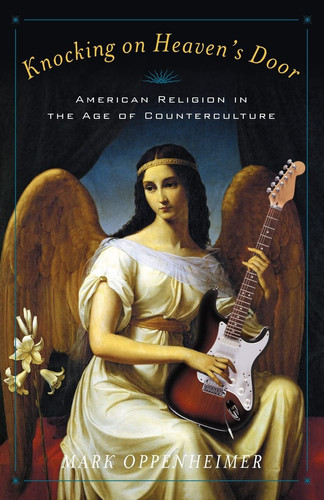
Knocking on Heaven's Door American Religion in the Age of Counterculture

Mark Oppenheimer
A witty and provocative reappraisal of the impact of the cultural upheavals of the sixties on American religious life What happened to American religion during the cultural revolution of the 1960s and early 1970s? The era has long been associated with the ascendancy of Eastern religions and fringe cults. But in this provocative book, Mark Oppenheimer demonstrates that contrary to conventional wisdom, most Americans did not turn on, tune in, and drop out of mainstream religious groups during the Age of Aquarius. Instead, many Americans brought the counterculture with them to their churches and temples, changing the face of American religion. Introducing us to America's first gay ministers and first female priests, to hippie Jews and folk-singing Catholics, Oppenheimer demonstrates that this was an era of extraordinary religious vitality. Drawing on a rich range of archival material as well as interviews with many of the protagonists, Knocking on Heaven's Door offersa wry and iconoclastic reappraisal of the ways in which the upheavals of the sixties changed America's relationship with God.
Yale University Press 2003 284 pages

Abstraction and the Holocaust

Godfrey, Mark
Since the 1950s American artists have used abstraction to deliberately attempt to confront the memory of the Holocaust or accepted commissions for memorial works. Examines individual paintings, an architectural project, a video installation, a site-specific sculpture, and commissioned works by Richard Serra, Joel Shapiro, Sol LeWitt, and Ellsworth Kelley (all 1993) in the US Holocaust Memorial Museum. Concludes that abstract art works can represent the Holocaust in complex ways.
Yale University Press 2007-01-01 294 pages

Early Paramount Studios

E. J. Stephens,Michael Christaldi,Marc Wanamaker
For over 100 years, Paramount Pictures has been captivating movie and television audiences worldwide with its alluring imagery and compelling stories. Arising from the collective genius of Adolph Zukor, Jesse L. Lasky, and Cecil B. DeMille during the 1910s, Paramount Pictures is home to such enduring classics as Wings, Sunset Boulevard, The Ten Commandments, Love Story, The Godfather, the Indiana Jones series, Chinatown, Forrest Gump, Braveheart, Titanic, and Star Trek. Early Paramount Studios chronicles Paramount's origins, culminating in the creation and expansion of the lot at 5555 Melrose Avenue, the last major motion picture studio still in Hollywood.
Arcadia Publishing Library Editions 2013-07-15 130 pages

Hollywood behind the lens: treasures from the Bison Archives

Wanamaker, Marc,Bingen, Steven
"Los Angeles is a city that runs from its own past" explains historian and Bison Archives owner Marc Wanamaker. Many of Hollywood's legendary sets and props, mansions, theaters, restaurants, nightclubs, hotels, and even the studios and the films they produced are now either gone or have been redeveloped, repurposed, or remade beyond recognition. Even more disarmingly, the physical ephemera associated with such items is often MIA as well. Photographs, files, maps, documents, menus, production paperwork, records, manuscripts, everything from matchbooks to movie magazines and entire movie backlots have now been lost in the backwash of dubious progress, short-sighted corporate mindsets, and civic indifference. Fortunately, for the last fifty years, in the very epicenter of Hollywood, thanks to Wanamaker, there has existed a haven where over 70,000 of these items, physically or photographically, have been collected and protected. These artifacts tell the story of Hollywood's glorious past, as well as its uncertain future as the hub of filmmaking in America"--
Lyons Press 2024-05-07 228 pages

Romancing the shadow: Poe and race

J. Gerald Kennedy,Liliane Weissberg
The nine essays gathered here pursue the provocative implications of Toni Morrison's claim that no early American writer was more important than Poe in shaping a concept of "American Africanism," an image of racialized blackness destined to haunt the Euro-American imagination. As contributors to this volume reveal, Poe's response to the "shadow" of blackness--like his participation in the cultural construction of whiteness--was both problematic and revealing. Born in Boston but raised mostly in Richmond, surrounded by the practices of slaveholding culture, Poe seems to have shared notions of racial hierarchy and Anglo-Saxon supremacy pervasive on both sides of the Mason-Dixon line. That he promulgated racist stereotypes in depicting black servants--his Jupiters and Pompeys--cannot be denied; that he complicated these stereotypes with veiled, subversive implications, however, gives his fiction peculiar relevance to the task of historicizing racial attitudes in antebellum culture. Was Poe an unabashed proslavery apologist, a careerist who avoided racial politics, a "gradualist" who hoped slavery would just disappear, or an ideological chameleon? Were Poe's views on race extreme or unusual? Overtly, in tales such as "The Gold-Bug," "The Journal of Julius Rodman," and The Narrative of Arthur Gordon Pym, and covertly in such works as "The Black Cat" and "Hop-Frog," Poe alternately caricatured and demonized the racial Other, yet he often endowed such figures with shrewdness and resourcefulness, at times portraying their defiance as inevitable and even understandable. In Romancing the Shadow, leading interpreters of nineteenth-century American literature and culture debate Poe's role in inventing the African of the white imagination. Their readings represent an array of positions, and while they reflect some consensus about Poe's investment in racialized types and tropes, they also testify to the surprising ways that race embedded itself in his work--and the diverse conclusions that can be drawn therefrom.
Oxford University Press 2001 292 pages

The cause of Hitler's Germany

Peikoff, Leonard
"'A truly revolutionary idea.... Clear, tight, disciplined, beautifully structured, and brilliantly reasoned.'--Ayn Rand. Self-sacrifice, oriental mysticism, racial 'truth,' the public good, doing one's duty -- these are among the seductive catchphrases that circulated in pre-Nazi Germany. Objectivist author and philosopher Leonard Peikoff was Ayn Rand's long-time associate. In The Cause of Hitler's Germany -- previously published in The Ominous Parallels -- Peikoff demonstrates how unreason and collectivism led the seemingly civilized German society to become a Nazi regime"--
Plume 2014-11-25 336 pages

Mr. & Mrs. Hollywood Edie and Lew Wasserman and Their Entertainment Empire

Kathleen Sharp
Ever wonder why so many B actors wind up as A-grade politicians? Or how the casting couch worked? Acclaimed author Kathleen Sharp traces the influence of show business through the lives of its first power couple. Edie and Lew Wasserman built the world's largest talent agency, MCA, created the multibillion-dollar Universal Studios, and helped shape Washington, DC. Starting from MCA's birth in gangland Chicago, Lew represented stars such as Jimmy Stewart and Marilyn Monroe; pioneered TV with Leave It to Beaver and Miami Vice ; spawned the blockbuster movie model with Psycho and Jaws ; and developed a mega-theme park. His savvy wife, Edie, was the daughter of a mob attorney, the queen of A-list parties, and Lew's secret agent who boosted their status. Yet, the couple was attacked by rivals, federal prosecutors, and their own protégés. Even so, over the course of seven decades they managed to vanquish their enemies and parlay their influence far beyond Sunset Strip into governors' mansions, Senate chambers, and the White House. At the end, Edie and Lew became diplomats, kingmakers, and philanthropists, who elevated the fortunes of middle-class workers and California itself. Based on some four hundred interviews, this book features Janet Leigh, Clark Gable, Grace Kelly, John Belushi, Jean Stein, and Steven Spielberg along with the Kennedys, the Johnsons, the Reagans, and the Clintons. It's a fascinating read about how two kids from Cleveland created the largest entertainment conglomerate in the world and wound up ruling twentieth-century America.
Blackstone Publishing 2017-12-05 538 pages

Yippie girl: exploits in protest and defeating the FBI

Gumbo, Judy
HONORABLE MENTION, Foreword INDIES Book of the Year Award, Autobiography & Memoir! Lifelong activist Judy Gumbo, an original member of The Yippies, a 1960s anti-war satirical protest group, offers an insider feminist memoir of her involvement with the Yippies, Black Panthers, women's rights, environmental actions, and a life of activism. In 1968, a 24-year-old woman moved to Berkeley, California and immediately became enmeshed in the Youth International Party, aka The Yippies, an anti-war satirical protest group. In the next few years, Judy Gumbo (a nickname given her by Eldridge Cleaver), was soon at the center of counter-cultural activity-from protests in People's Park, to meetings at Black Panther headquarters, to running a pig for President at the raucous Democratic National Convention in Chicago, a protest that devolved into violent attacks by the police and arrests that led to the notorious Chicago Conspiracy Trial. In this historical account, Gumbo reveals intimate details of--and struggles with--her fellow radicals Jerry Rubin, Anita & Abbie Hoffman, Eldridge Cleaver, Paul Krassner, Stew Albert, and more, detailing their experiences in radical protests. This deep dive into her activism includes details of her organization of a national women's rights group, her visit to North Vietnam during the war, her travels around the globe to promote women's liberation and anti-war protest, and her environmental activism. It also includes extensive excerpts from illegal wiretaps and surveillance by the FBI. "A welcome addition to the literature of radical activism." --Kirkus Reviews "A fun read and a valuable political document, long overdue." --Counterpunch Yippie Girl explores Gumbo's life as a protester to show that, while circumstances always change, protesters can stay loyal to the causes they believe in and remain true to themselves. She also reveals how dogmatism, authoritarianism, and interpersonal conflict can damage those same just causes, offering a timeless and strategic guide for activists today protesting against injustice in all its forms.
Three Rooms Press 2022 333 pages

Gimme some truth: the John Lennon FBI files

Wiener, Jon
When FBI Director J. Edgar Hoover reported to the Nixon White House in 1972 about the Bureau's surveillance of John Lennon, he began by explaining that Lennon was a "former member of the Beatles singing group." When a copy of this letter arrived in response to Jon Wiener's 1981 Freedom of Information request, the entire text was withheld—along with almost 200 other pages—on the grounds that releasing it would endanger national security. This book tells the story of the author's remarkable fourteen-year court battle to win release of the Lennon files under the Freedom of Information Act in a case that went all the way to the Supreme Court. With the publication of Gimme Some Truth , 100 key pages of the Lennon FBI file are available—complete and unexpurgated, fully annotated and presented in a "before and after" format. Lennon's file was compiled in 1972, when the war in Vietnam was at its peak, when Nixon was facing reelection, and when the "clever Beatle" was living in New York and joining up with the New Left and the anti-war movement. The Nixon administration's efforts to "neutralize" Lennon are the subject of Lennon's file. The documents are reproduced in facsimile so that readers can see all the classification stamps, marginal notes, blacked out passages and—in some cases—the initials of J. Edgar Hoover. The file includes lengthy reports by confidential informants detailing the daily lives of anti-war activists, memos to the White House, transcripts of TV shows on which Lennon appeared, and a proposal that Lennon be arrested by local police on drug charges. Fascinating, engrossing, at points hilarious and absurd, Gimme Some Truth documents an era when rock music seemed to have real political force and when youth culture challenged the status quo in Washington. It also delineates the ways the Reagan, Bush, and Clinton administrations fought to preserve government secrecy, and highlights the legal strategies adopted by those who have challenged it.
University of California Press 1999 344 pages

And nothing but the truth

Sekulow, Jay
In the 1960s a shadow of religious persecution fell across America. Public schools became as hostile to religion as their counterparts in Communist countries. Christians were stunned and dismayed. And this persecution increased for decades after that -- and continues even today. The government threatens intervention if workers display Bibles on their desks or mention their faith to coworkers. Local zoning committees deny churches protection against zoning laws that allow bars in their vicinity. Local governments ban films by Christians like James Dobson in public facilities. In And Nothing But the Truth you will learn how you can be a part of the new revolution of religious freedom sweeping our country. And you will discover what you can do to reclaim your community and your own rights.
T. Nelson Publishers 1996 276 pages

True Believer: Hubert Humphrey's Quest for a More Just America

Traub, James
A celebrated historian recounts Hubert Humphrey’s role as a liberal hero of twentieth-century America Hubert Humphrey was liberalism’s most dedicated defender, and its most public and tragic sacrifice. As a young politician in 1948, he defied segregationists and forced the Democratic Party to commit itself to civil rights. As a senator in 1964, he made good on that commitment by helping pass the Civil Rights Act. But as Lyndon B. Johnson’s vice president, his support for the war in Vietnam made him a target for both Right and Left, and he suffered a shattering loss in the presidential election of 1968. Though Humphrey’s defeat was widely seen as the end of America’s era of liberal optimism, he never gave up. Even after his humiliation on the most public stage, he crafted a new vision of economic justice to counter the yawning political divisions consuming American politics. This biography reveals a deep-dyed idealist willing to compromise and even fight ugly in pursuit of a better society. Elegantly crafted and strikingly relevant to the present, True Believer celebrates Hubert Humphrey’s long struggle for justice for all.
Basic Books 2026-02-17 528 pages

Living in the long emergency: global crisis, the failure of the futurists, and the early adapters who are showing us the way forward

Kunstler, James Howard
"James Howard Kunstler, author of The Long Emergency, which sold approximately 36K copies, returns with a new book exploring the looming collapse of the techno-industrial economy, featuring profiles of individuals who have drastically altered their lives due to financial difficulties"--
BenBella Books 2020 277 pages