2328 results for "Jewish History"

Western Jews in India: from the fifteenth century to the present

Kenneth X. Robbins,Marvin Tokayer
"This is the first book describing the roles of Western Jews in South Asian political affairs, medicine, painting, architecture and religion. A time-line summarizes their contributions and those of the Indian Jews to the Indian subcontinent. Many of these foreign Jews left behind their Jewish identities. Others remained Jews, but functioned as individuals unconcerned with implementing any 'Jewish agenda'." --
Manohar Publishers & Distributors 2013 310 pages

We set the night on fire: igniting the gay revolution

Shelley, Martha
"Martha Shelley didn't start out in life wanting to become a gay activist, or an activist of any kind. The daughter of Jewish refugees and undocumented immigrants in New York City, she grew up during the Red Scare of the late 1940s and 1950s, was inspired by the civil rights and anti-Vietnam War movements that followed, and struggled with coming out as a lesbian at a time when being gay made her a criminal. Shelley rose to become a public speaker for the New York chapter of the lesbian rights group the Daughters of Bilitis, organized the first gay march in response to the Stonewall Riots of 1969, and then cofounded the Gay Liberation Front. She coproduced the newspaper Come Out!, worked on the women's takeover of the RAT Subterranean News, and took a central role in the Lavender Menace action to confront homophobia in the women's movement. Martha Shelley's story is a feminist and lesbian document that gives context and adds necessary humanity to the historical record"--Dust jacket flap.
Chicago Review Press 2023 211 pages

Lost and Found in Johannesburg

Mark Gevisser
An inner life of Johannesburg that turns on the author’s fascination with maps, boundaries, and transgressionsThis singular memoir begins with a transgression—the invasion of a private home in Johannesburg. But it is far more than the story of a theft. Lost and Found in Johannesburg is a luminous exploration of place, one in which the author’s and the reader’s assumptions are constantly being tested. As a child growing up in apartheid South Africa, Mark Gevisser was obsessed with maps—and with Holmden’s Register , Johannesburg’s street guide, in particular. He played a game called Dispatcher with this eccentric guide, transporting himself across the city into places that would otherwise be forbidden to him. It was through Dispatcher that he discovered apartheid by realizing that he could not find an access route to the neighboring township of Alexandra and, later, by realizing that Soweto was not mapped at all. This was the beginning of his lifelong obsession with maps and photographs, and what they tell us about borders and boundaries—how we define ourselves by staying within them or by transgressing them. This memoir is an account of getting lost in one’s hometown, and then finding oneself as a gay Jewish South African who was raised under apartheid and who eventually married a man of a different race as the country moved toward freedom. Using maps, shards of memory, photographs, and stories, Gevisser constructs a stunning portrait of race and sexuality, heritage and otherness.
Jonathan Ball 2014 354 pages

With the Zionists in Gallipoli

John Patterson
"A Zionist without a copy of this first classic of a militant Jewish renaissance is like a Greek without his Homer. There cannot be the slightest doubt that in the traditions of the Orient, from the Mediterranean littoral to Tashkent and Samarkand, wherever Jews and Moslems live and thrive on their own soil, the story of the author and his Jewish paladins will be linked with those of Suleiman Malek, Iskander, and of the Colonel's countryman of the Lion-Heart. The exploits of Gallipoli, as told in this fascinating volume, will be sung at the shores of the Dead Sea and in the hills of Moab long after the present generation of Zionists will be gathered with their fathers....Col. Patterson tells us that his narrative of the Zionists of Gallipoli has been written during the enforced idleness of a month of illness....Our gallant Colonel, considered as a narrator, seems to have gone to school in Cairo with those improvisatori of the Arabian Nights' Entertainments, who enfold tale within tale, ad infinitum. For all that, no good-humored reader will feel like quarreling with the Colonel because his book reminds one of an autobiographical magazine series rather than of military reports. If the latter are more apt to be terse and to the point, books written in the style of the former are likely to be more readable; and if the personality of the author is spread all over the book, overshadowing in spots the fate of the regiment under his care, the reader will be glad to get acquainted with an attractive personality. His chief lineaments, as seen in his self-portrayal, are those of Sergeant George in 'Bleakhouse' - of a brave, obstinate, truth-telling, generous Briton, personal alliance with the fortunes of militant Judea the earnest of a national alliance to come." -The Maccabæan: A Magazine of Jewish Life and Letters "As an expression of admiration for the Jew as soldier and as man, and of strong sympathy with Jewish ideals one cannot speak too highly in its favor. The book is a worthy record of the gallantry and resourcefulness of the officers and men of the Zion Mule Corps, but it is none the less a monument to the kindliness and sympathy of the corps' non-Jewish commanding officer, the author." -The American Jewish Chronicle "It is the story of the famous Zion mule corps and its service in Gallipoli. This corps was the first Jewish military unit formed in 2,000 years and was composed of Russian born refugees from Palestine. Colonel Patterson commanded the corps and writes this account of the campaign as he saw it, its policy and the operations of war in execution of that policy." -Book Review Digest "There is electricity in each page, and fearless criticism provokes as much thought as the intrepid courage. Veteran soldiers have a right to be critics of military affairs; and when Colonel Patterson finds fault with any person or with anything, his phrases bite. They cannot be forgotten. And the motive-power behind them is the conviction that criticism cannot be too direct, because the lives of thousands are imperiled daily in the firing lines." -Saturday Review
CreateSpace Independent Publishing Platform 2017-03 208 pages

East of time

Rosenberg, Yaakov ben Gershon
EAST OF TIME is a rendezvous of history and imagination, of realities and dreams, hopes and disenchantments. This extraordinary book, by turns stark and poetic, unfolds in a succession of short reminiscences that weave together into a shimmering tapestry depicting a lost world. The setting is Lodz, Poland, in the years of the author's childhood, when he witnessed the grand belief in a just new world overtaken by the cataclysmic events of the 1930s, imprisoned between the walls of ghettos, and finally silenced at Auschwitz. The book's touchstone is the determination of an entire community to remain human, even at the last frontier of life.
Brandl & Schlesinger 2005 220 pages

The oil has not run dry: the story of my theological pathway

Baum, Gregory
"Born to a Jewish mother and Protestant father in 1923 Berlin, Gregory Baum has devoted his career to a humanistic approach to Catholicism. In The Oil Has Not Run Dry, Baum shares recollections about his lifelong commitment to theology, his atypical views, and his evolving understanding of the Catholic Church's message. Baum's reflects on his groundbreaking work with the Second Vatican Council (1962 65) and how it helped to open the Church to a new understanding of outsiders--one that advocated cooperation with world religions in support of peace and justice and respected secular philosophies committed to truth and social solidarity. Later embracing Latin American liberation theology, he became a leading thinker of the Catholic Left in Canada, adopting radical positions that initially earned support from Canadian bishops in the 1970s. Diverging from official Catholic doctrines regarding women and sexual ethics, Baum eventually left the priesthood, but continued to teach theology and remained active in the Church. The Oil Has Not Run Dry also discusses the contrast between Catholicism in Quebec and English-speaking North America, and the ways in which Baum sees Quebec's culture as more marked by social solidarity. This significant difference has inspired his decision to present in his own writings the original development of Catholic thought in Quebec to an English-speaking readership. Gregory Baum is professor emeritus in the Faculty of Religious Studies at McGill University and the author of Fernand Dumont: A Sociologist Turns to Theology and Truth and Relevance: Catholic Theology in French Quebec since the Quiet Revolution. "--
McGill-Queen's University Press 2016 259 pages

Keeping slug woman alive: a holistic approach to American Indian texts

Sarris, Greg
This remarkable collection of eight essays offers a rare perspective on the issue of cross-cultural communication. Greg Sarris is concerned with American Indian texts, both oral and written, as well as with other American Indian cultural phenomena such as basketry and religion. His essays cover a range of topics that include orality, art, literary criticism, and pedagogy, and demonstrate that people can see more than just "what things seem to be." Throughout, he asks: How can we read across cultures so as to encourage communication rather than to close it down? Sarris maintains that cultural practices can be understood only in their living, changing contexts. Central to his approach is an understanding of storytelling, a practice that embodies all the indeterminateness, structural looseness, multivalence, and richness of culture itself. He describes encounters between his Indian aunts and Euro-American students and the challenge of reading in a reservation classroom; he brings the reports of earlier ethnographers out of museums into the light of contemporary literary and anthropological theory. Sarris's perspective is exceptional: son of a Coast Miwok/Pomo father and a Jewish mother, he was raised by Mabel McKay—a renowned Cache Creek Pomo basketweaver and medicine woman—and by others, Indian and non-Indian, in Santa Rosa, California. Educated at Stanford, he is now a university professor and recently became Chairman of the Federated Coast Miwok tribe. His own story is woven into these essays and provides valuable insights for anyone interested in cross-cultural communication, including educators, theorists of language and culture, and general readers.
University of California Press 1993-08-05 214 pages

The Russian Jerusalem

Feinstein, Elaine
In this autobiographical novel, the author moves among the dead poets of Stalin's Russia with the poet Marina Tsvetaeva, mingling with the ghosts of writers such as Anna Akhmatova, Boris Pasternak, Osip Mandelstam and Joseph Brodsky. The author, herself of Russian descent, reconstructs the lives and fates of Russian, often Jewish, writers during the long age of Soviet terror, re-establishing them at the heart of the European tradition.
Carcanet 2008 169 pages

Rabbinic Judaism: space and place

Kraemer, David
"Following the destruction of the Jerusalem Temple in 70 CE, Jews were faced with a world in existential chaos--both they and their God were rendered homeless. So the rabbis, aspirants for leadership of the post-destruction Jewish community, appropriated inherited traditions and used them as building blocks for a new religious structure. Not unexpectedly, given the circumstances, this new rabbinic formation devoted considerable attention to matters of space and place. Rabbinic Judaism: Space and Place offers the first comprehensive study of spatiality in Rabbinic Judaism of late antiquity, exploring how the rabbis reoriented the Jewish relationship with space and place following the destruction of the Jerusalem Temple. Drawing upon the insights of theorists such as Tuan and LeFebvre, who define the crisis that "homelessness" represents and argue for the deep relationship of human societies to their places, the book examines the compositions of the rabbis and discovers both a surprisingly aggressive rabbinic spatial imagination as well as places, most notably the synagogue, where rabbinic attention to space and place is suppressed or absent. It concludes that these represent two different but simultaneous rabbinic strategies for re-placing God and Israel--strategies that at the same time allow God and Israel to find a place anywhere. This study offers new insight into the centrality of space and place to rabbinic religion after the destruction of the Temple, and as such would be a key resource to students and scholars interested in rabbinic and ancient Judaism, as well as providing a major new case study for anthropologists interested in the study of space"--
Routledge 2019 156 pages

Jews, Christians and religious pluralism

Cohn-Sherbok, Dan
Provides a basis for considering the claims of a wide variety of Jewish and Christian writers in the Judeo-Christian tradition, from biblical times to the present, who have wrestled with the issues of religious pluralism. In many cases these thinkers have reflected on the merits of one another's faith; alternatively, they have considered the truth-claims of their own faith in relation to the world's religions. Profiles on some 90 thinkers, such as Augustine, Helen Fry, and Baruch Spinoza, provide the type of information most commonly sought by students and general readers, including biographical details, theological position, and samples of work. The author is a professor of Judaism at the University of Wales, and visiting professor of interfaith dialog at Middlesex University. Annotation c. Book News, Inc., Portland, OR (booknews.com)
Edwin Mellen Press 1999 336 pages

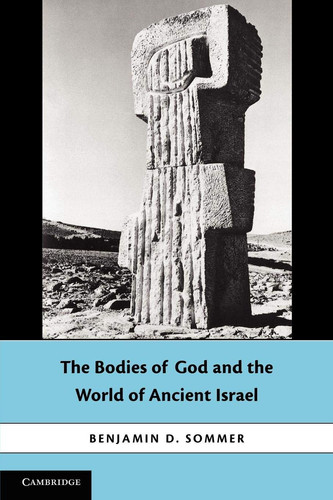
The bodies of God and the world of ancient Israel

Sommer, Benjamin D.
Sommer utilizes a lost ancient Near Eastern perception of divinity according to which a god has more than one body and fluid, unbounded selves. Though the dominant strains of biblical religion rejected it, a monotheistic version of this theological intuition is found in some biblical texts. Later Jewish and Christian thinkers inherited this ancient way of thinking; ideas such as the sefirot in Kabbalah and the trinity in Christianity represent a late version of this theology. This book forces us to rethink the distinction between monotheism and polytheism, as this notion of divine fluidity is found in both polytheistic cultures (Babylonia, Assyria, Canaan) and monotheistic ones (biblical religion, Jewish mysticism, Christianity), whereas it is absent in some polytheistic cultures (classical Greece). The Bodies of God and the World of Ancient Israel has important repercussions not only for biblical scholarship and comparative religion but for Jewish-Christian dialogue.
Cambridge University Press 2011-01-17 334 pages

The Jew accused: three anti-Semitic affairs (Dreyfus, Beilis, Frank), 1894-1915

Lindemann, Albert S.
Discusses social and political conditions bearing on antisemitism and philosemitism in France, Russia, and the American South as background for the Dreyfus Affair, the Beilis ritual murder trial, and the trial and lynching of Leo Frank. Declares that comparison helps to understand each of these affairs. Antisemitism is based on realities enhanced by fantasy: in the 19th century it increased because of the growth in the number and influence of Jews, as well as domestic and international political conditions. In all three trials, official antisemitism played little part either in directing suspicion at the particular defendants or in the prosecution: in all three, there was circumstantial evidence that at first seemed credible. Public debate, however, turned on antisemitism and philosemitism. also describes massive Jewish defense efforts, especially in the USA, in connection with all three trials.
Cambridge University Press 1991 301 pages

Jews and the American public square: debating religion and republic

Mittleman, Alan
Jews and the American Public Square is a study of how Jews have grappled with the presence of religion, both their own and others, in American public life. It surveys historical Jewish approaches to church-state relations and analyzes Jewish responses to the religion clauses of the First Amendment. The book also explores how the contemporary sociological and political characteristics of American Jews bear on their understanding of the public dimensions of American religion. In addition to a descriptive and analytic approach. the volume is also critical and polemical. Its contributors attack and defend prevailing views, raise critical questions about the political and intellectual positions favored by American Jews, and propose new syntheses. This book captures the current mood of the Jewish community: both committed to the separation of church and state and perplexed about its scope and application. It provides the necessary background for a principled reconsideration of the problem of religion in the public square.
Rowman & Littlefield 2002 375 pages

Rebecca's children: Judaism and Christianity in the Roman world

Segal, Alan F.
Renowned scholar Alan F. Segal offers startlingly new insights into the origins of rabbinic Judaism and Christianity. These twin descendants of Hebrew heritage shared the same social, cultural, and ideological context, as well as the same minority status, in the first century of the common era. Through skillful application of social science theories to ancient Western thought, including Judaism, Hellenism, early Christianity, and a host of other sectarian beliefs, Segal reinterprets some of the most important events of Jewish and Christian life in the Roman world. For example, he finds: — That the concept of myth, as it related to covenant, was a central force of Jewish life. The Torah was the embodiment of covenant both for Jews living in exile and for the Jewish community in Israel. — That the Torah legitimated all native institutions at the time of Jesus, even though the Temple, Sanhedrin, and Synagogue, as well as the concepts of messiah and resurrection, were profoundly affected by Hellenism. Both rabbinic Judaism and Christianity necessarily relied on the Torah to authenticate their claim on Jewish life. — That the unique cohesion of early Christianity, assuring its phenomenal success in the Hellenistic world, was assisted by the Jewish practices of apocalypticism, conversion, and rejection of civic ritual. — That the concept of acculturation clarifies the Maccabean revolt, the rise of Christianity, and the emergence of rabbinic Judaism. — That contemporary models of revolution point to the place of Jesus as a radical. — That early rabbinism grew out of the attempts of middle-class Pharisees to reach a higher sacred status in Judea while at the same time maintaining their cohesion through ritual purity. — That the dispute between Judaism and Christianity reflects a class conflict over the meaning of covenant. The rising turmoil between Jews and Christians affected the development of both rabbinic Judaism and Christianity, as each tried to preserve the partly destroyed culture of Judea by becoming a religion. Both attempted to take the best of Judean and Hellenistic society without giving up the essential aspects of Israelite life. Both spiritualized old national symbols of the covenant and practices that consolidated power after the disastrous wars with Rome. The separation between Judaism and Christianity, sealed in magic, monotheism, law, and universalism, fractured what remained of the shared symbolic life of Judea, leaving Judaism and Christianity to fulfill the biblical demands of their god in entirely different ways.
Harvard University Press 1986 207 pages

To the land of the cattails

Appelfeld, Aharon
To the Land of the Cattails evokes the uncanny atmosphere of Europe on the brink of the Holocaust with the same dreamlike realism that made The Age of Wonders a modern classic. In the summer of 1938, a Jewish woman living in Austria, suddenly gripped by a longing for her native land, departs with her adolescent son for the interior of Eastern Europe. As she proceeds, the landscape turns increasingly ominous and her son progressively more loutish. Just short of their goal, the young man falls into a drunken stupor. When he finally rouses himself and rushes to join his mother he is told she has been shipped off on a mysterious train to an unspecified destination. To the Land of Cattails is a haunting parable of the human spirit and an unforgettable account of the destiny of modern European Jewry.
Grove Press 1986 148 pages

Matilda's secret

Goldbacher, Sandra
Clementine Harper is 12 and learning to tap dance at Madame Pearl's Stage School in Finchley when war breaks out. As the air raids start to hit London, she and her two younger brothers, Ronnie and Ernie, are evacuated. Arriving in a tiny Devon village, they're sent to live with an eccentric widow who lives in a drafty mansion in the middle of wintry woods. Clementine is thrilled to meet another fi sh out of water - Giesele, a sophisticated Jewish girl, who has escaped from Nazi Germany and they become soul mates immediately. Giesele's parents are still in hiding in Berlin and her sister Klara has gone missing. If only they could help somehow. The girls are enlisted by the local Girl Guides who, they soon fi nd out, are training to do SO much more than bake cakes and tie knots. They're asked to help put on a Christmas show for the American soldiers at the military base nearby. But the show is a cover for a very secret mission, and the girls' lives are soon fi lled with mystery and adventure.
Daughters of History Ltd 2011 180 pages

Jewish History

Simon Dubnow
The translator lays this book of an accomplished and spirited historian before the German public. He does so in the hope that it will shed new light upon Jewish history even for professional scholars. He is confident that in many to whom our unexampled past of four thousand years' duration is now terra incognita, it will arouse enthusiastic interest, and even to those who, like the translator himself, differ from the author in religious views, it will furnish edifying and suggestive reading. J. F. PREFACE TO THE ENGLISH TRANSLATION The English translation of Mr. Dubnow's Essay is based upon the authorized German translation, which was made from the original Russian. It is published under the joint auspices of the Jewish
CreateSpace Independent Publishing Platform 2017-03-16 84 pages

From tolerance to tyranny: a cautionary tale from fifteenth century Spain

Paris, Erna
Before the Inquisition, Spain was a tolerant and peaceful society. How, precisely, does a culture that prizes autonomy and harmony within the population descend so quickly into one of the most oppressive nations to have ever existed? Focusing on the humanity of the major historical players, Erna Paris traces the obscure origins of what was to become a brutal and enduring campaign of religious and ethnic conformity through terror and segregation. The conclusions she draws from the annals of Spanish history are enduring lessons on basic human nature, as applicable to the modern world as they are to the medieval.
Cormorant Books 2015 316 pages