1524 results for "History"

Fear itself: the New Deal and the origins of our time

Katznelson, Ira
Redefining our traditional understanding of the New Deal, this book finally examines this pivotal American era through a sweeping international lens that juxtaposes a struggling democracy with enticing ideologies like Fascism and Communism. Historian Ira Katznelson asserts that, during the 1930s and 1940s, American democracy was rescued yet distorted by a unified band of southern lawmakers who safeguarded racial segregation as they built a new national state to manage capitalism and assert global power. --From publisher description
Liveright Publishing Corporation 2013-03 706 pages

The forger's spell: a true story of Vermeer, Nazis, and the greatest art hoax of the twentieth century

Dolnick, Edward
As riveting as a World War II thriller, The Forger's Spell is the true story of Johannes Vermeer and the small-time Dutch painter, Han van Meegeren, who dared to impersonate Vermeer centuries later. The con man's mark was Hermann Goering, one of the most reviled leaders of Nazi Germany and a fanatic collector of art.
Harper 2008 349 pages

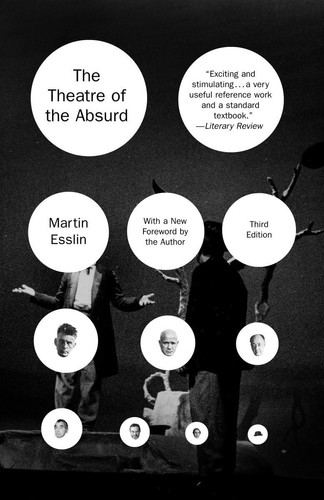
The theatre of the absurd

Esslin, Martin
In 1953, Samuel Beckett’s Waiting for Godot premiered at a tiny avant-garde theatre in Paris; within five years, it had been translated into more than twenty languages and seen by more than a million spectators. Its startling popularity marked the emergence of a new type of theatre whose proponents—Beckett, Ionesco, Genet, Pinter, and others—shattered dramatic conventions and paid scant attention to psychological realism, while highlighting their characters’ inability to understand one another. In 1961, Martin Esslin gave a name to the phenomenon in his groundbreaking study of these playwrights who dramatized the absurdity at the core of the human condition. Over four decades after its initial publication, Esslin’s landmark book has lost none of its freshness. The questions these dramatists raise about the struggle for meaning in a purposeless world are still as incisive and necessary today as they were when Beckett’s tramps first waited beneath a dying tree on a lonely country road for a mysterious benefactor who would never show. Authoritative, engaging, and eminently readable, The Theatre of the Absurd is nothing short of a classic: vital reading for anyone with an interest in the theatre.
Vintage Books 2004-01-06 480 pages

Alger Hiss and the battle for history

Jacoby, Susan
Books on Whittaker Chambers and Alger Hiss abound, as countless scholars havelabored to uncover the facts behind Chambers s shocking accusation before the House Committee on Un-American Activities in the summer of 1948 that Alger Hiss, a former rising star in the State Department, had been a Communist and engaged in espionage. In this highly original work, Susan Jacoby turns her attention to the Hiss case, including his trial and imprisonment for perjury, as a mirror of shifting American political views and passions. Unfettered by political ax-grinding, the author examines conflicting responses, from scholars and the media on both the left and the right, and the ways in which they have changed from 1948 to our present post Cold War era. With a brisk, engaging style, Jacoby positions the case in the politics of the post World War II eraand then explores the ways in which generations of liberals and conservatives have put Chambers and Hiss to their own ideological uses. An iconic event of the McCarthy era, the case of Alger Hiss fascinates political intellectuals not only because of its historical significance but because of its timeless relevance to equally fierce debates today about the difficult balance between national security and respect for civil liberties."
Yale University Press 2009 256 pages

Odd girls and twilight lovers: a history of lesbian life in twentieth-century America

Faderman, Lillian
This compelling story of lesbian life in the twentieth century traces the evolution of lesbian identity and subcultures from the early years of the century--when career opportunities first enabled women to support themselves and spend their lives in "romantic friendships" with other women--to the diversity of today's life styles. Faderman uses journals, unpublished manuscripts, songs, news accounts, novels, medical literature, and numerous personal interviews with lesbians of all races, ages, and classes, to uncover and relate this often surprising narrative of lesbian life in America. Lesbian identity could emerge, Faderman maintains, only during that time, with the sexual freedom of the 1920s and the 1960s, as well as the social freedom made possible by World War II, the education of women, and the civil rights and women's movements. The term "lesbian" did not become current until the late nineteenth century, when European sexologists began to explore female same-sex loving. Where close relationships between women had once been accepted--even encouraged--the sexologists stigmatized same-sex pairing as deviant, but at the same time fostered a lesbian consciousness which was necessary before lesbian communities could be formed. This book tells how women who accepted the label "lesbian" altered the sexologists' definitions, creating identities and ideologies for themselves.--Adapted from book jacket.
Columbia University Press 2011 373 pages

When affirmative action was white: an untold history of racial inequality in twentieth-century America

Katznelson, Ira
A study on the lesser-known origins of affirmative action argues that key programs passed during the New Deal and Fair Deal era of the 1930s and 1940s were purposefully discriminatory, revealing how Southern democrats widened the gap between black and white Americans through specific restrictions in social security, the GI bill, and landmark labor
W.W. Norton 2005 238 pages

The House of Government: a saga of the Russian Revolution

Slezkine, Yuri
"On the 100th anniversary of the Russian Revolution, the epic story of an enormous apartment building where Communist true believers lived before their destruction. The House of Government is unlike any other book about the Russian Revolution and the Soviet experiment. Written in the tradition of Tolstoy's War and Peace, Grossman's Life and Fate, and Solzhenitsyn's The Gulag Archipelago, Yuri Slezkine's gripping narrative tells the true story of the residents of an enormous Moscow apartment building where top Communist officials and their families lived before they were destroyed in Stalin's purges. A vivid account of the personal and public lives of Bolshevik true believers, the book begins with their conversion to Communism and ends with their children's loss of faith and the fall of the Soviet Union. Completed in 1931, the House of Government, later known as the House on the Embankment, was located across the Moscow River from the Kremlin. The largest residential building in Europe, it combined 550 furnished apartments with public spaces that included everything from a movie theater and a library to a tennis court and a shooting range. Slezkine tells the chilling story of how the building's residents lived in their apartments and ruled the Soviet state until some eight hundred of them were evicted from the House and led, one by one, to prison or their deaths. Drawing on letters, diaries, and interviews, and featuring hundreds of rare photographs, The House of Government weaves together biography, literary criticism, architectural history, and fascinating new theories of revolutions, millennial prophecies, and reigns of terror. The result is an unforgettable human saga of a building that, like the Soviet Union itself, became a haunted house, forever disturbed by the ghosts of the disappeared."--Publisher description
Princeton University Press 2017 1104 pages

Hope Dies Last Keeping the Faith in Troubled Times

Studs Terkel
America's most inspirational voices, in their own words: "If you're looking for a reason to act and dream again, you'll find it in the pages of this book" ( Chicago Tribune ). Published when Studs Terkel was ninety-one years old, this astonishing oral history tackles one of the famed journalist's most elusive subjects: Hope. Where does it come from? What are its essential qualities? How do we sustain it in the darkest of times? An alternative, more personal chronicle of the "American century," Hope Dies Last is a testament to the indefatigable spirit that Studs has always embodied, and an inheritance for those who, by taking a stand, are making concrete the dreams of today. A former death row inmate who served nearly twenty years for a crime he did not commit discusses his never-ending fight for justice. Tom Hayden, author of The Port Huron Statement , contemplates the legacy of 1960s student activism. Liberal economist John Kenneth Galbraith reflects on the enduring problem of corporate malfeasance. From a doctor who teaches his young students compassion to the retired brigadier general who flew the Enola Gay over Hiroshima, these interviews tell us much about the power of the American dream and the force of individuals who advocate for a better world. With grace and warmth, Terkel's subjects express their secret hopes and dreams. Taken together, this collection of interviews tells an inspiring story of optimism and persistence, told in voices that resonate with the eloquence of conviction. "The value of Hope Dies Last lies not in what it teaches readers about its narrow subject, but in the fascinating stories it reveals, and the insight it allows into the vast range of human experience." -- The A.V. Club "Very Terkelesque--by now the man requires an adjective of his own." --Margaret Atwood, The New York Times Review of Books "An American treasure." --Cornel West
The New Press 2004-11 360 pages

The right: the hundred year war for American conservatism

Continetti, Matthew
"When most people think of the history of modern conservatism, they think of Ronald Reagan, with his politics and policies front and center. Yet this narrow view of a movement obscures the whole, leaving many to question: How did Donald Trump win the presidency? And what is the future of the Republican party? In The Right, distinguished journalist Matthew Continetti shifts this lens, arguing that an understanding of the history of the pre-Reagan right is crucial to understanding the past and determining the future of the movement. The Right is a sweeping historical account of American conservatism's evolution, from the beginning of the Progressive Era through the present. It tells the story of how conservatism in the United States began as networks of intellectuals, often acting in concert with political figures, developed a critique of Progressivism and of New Deal liberalism, and institutionalized this vision in magazines, think tanks, nonprofits, and political entities and campaigns. Over time, these thinkers attracted new adherents, including former Democrats and evangelical Christians, and built up a conservative superstructure of organizations and media outlets that turned ideas into policy. With the end of the Cold War, this conservative superstructure found itself under attack from dissidents for whom it was too globalist, too corporate, and too open to unrestricted immigration. The superstructure held for two decades but buckled under the pressures of the second Iraq War and the global financial crisis of 2008. Just as the Vietnam War ended the reign of Cold War liberals in the Democratic Party, the Iraq War ended the reign of post-Cold War conservatives in the Republican Party, and the right began to resemble other national populist movements around the world. Drawing out the tensions between conservatism and populism, and between the conservative desire for mainstream acceptance and the pull of extremism, Continetti argues that the more one studies conservatism's past, the more one becomes convinced of its future. Deeply researched and brilliantly told, The Right is essential reading for anyone looking to understand the American right"--
Basic Books 2022 484 pages

Seduction: sex, lies, and stardom in Howard Hughes's Hollywood

Longworth, Karina
In this riveting popular history, the creator of You Must Remember This probes the inner workings of Hollywood’s glamorous golden age through the stories of some of the dozens of actresses pursued by Howard Hughes, to reveal how the millionaire mogul’s obsessions with sex, power and publicity trapped, abused, or benefitted women who dreamt of screen stardom. In recent months, the media has reported on scores of entertainment figures who used their power and money in Hollywood to sexually harass and coerce some of the most talented women in cinema and television. But as Karina Longworth reminds us, long before the Harvey Weinsteins there was Howard Hughes—the Texas millionaire, pilot, and filmmaker whose reputation as a cinematic provocateur was matched only by that as a prolific womanizer. His supposed conquests between his first divorce in the late 1920s and his marriage to actress Jean Peters in 1957 included many of Hollywood’s most famous actresses, among them Billie Dove, Katharine Hepburn, Ava Gardner, and Lana Turner. From promoting bombshells like Jean Harlow and Jane Russell to his contentious battles with the censors, Hughes—perhaps more than any other filmmaker of his era—commoditized male desire as he objectified and sexualized women. Yet there were also numerous women pulled into Hughes’s grasp who never made it to the screen, sometimes virtually imprisoned by an increasingly paranoid and disturbed Hughes, who retained multitudes of private investigators, security personnel, and informers to make certain these actresses would not escape his clutches. Vivid, perceptive, timely, and ridiculously entertaining, The Seducer is a landmark work that examines women, sex, and male power in Hollywood during its golden age—a legacy that endures nearly a century later.
Custom House 2018-11-13 543 pages

The origins of Nazi genocide: from euthanasia to the final solution

Friedlander, Henry
A history of the T4 program, or "euthanasia program", in Nazi Germany - that is, the murder of handicapped persons by the Nazis. This program was preceded by the politicization of science, which incorporated popular prejudices into "scientific" theories and declared some individuals and even "racial" groups, like Jews and Gypsies, to be "valueless"; by the eugenic movement; and by the misuse of scientific hypotheses by politicians. The policy of exclusion of the "racially inferior" stood at the center of the Nazi utopia. The "euthanasia program", implemented in 1939-40, paved the way for the mass extermination of Jews and Gypsies in 1942-44. Many of those involved in the T4 program (e.g. Franz Stangl) were later involved in the operation of the death camps. Special attention is devoted to the murder of handicapped Jews. These, progressively excluded from the public welfare system and from the medical institutions, were concentrated in 1939-40 in special Jewish hospitals and later killed in the course of the "euthanasia program".
University of North Carolina Press 1995-01-01 421 pages

The John Carlos story: the sports moment that changed the world

Carlos, John,Zirin, Dave
2012 NAACP Image Award Nominee for Outstanding Literary Work--Biography/Autobiography "A powerful and poignant memoir."--Cornel West, from the foreword "John Carlos is an American hero. And finally he has written a memoir to tell us his story--and a powerful story it is. I couldn't put this book down."--Michael Moore Seen around the world, John Carlos and Tommie Smith's Black Power salute on the 1968 Olympic podium sparked controversy and career fallout. Yet their show of defiance remains one of the most iconic images of Olympic history and the Black Power movement. Here is the remarkable story of one of the men behind the salute, lifelong activist John Carlos. John Carlos is a former track and field athlete and professional football player, and a founding member of the Olympic Project for Human Rights. He won the bronze medal in the 200-meter race at the 1968 Olympics, where his Black Power salute on the podium with Tommie Smith caused much political controversy. Dave Zirin is the author of four books, including Bad Sports: How Owners are Ruining the Games We Love , A Peoples' History of Sports in the United States , and What's My Name, Fool?
Haymarket Books 2021-09-13 226 pages

Hit list: an in-depth investigation into the mysterious deaths of witnesses to the JFK assassination

Belzer, Richard B.,Wayne, David
A New York Times Best Seller! Richard Belzer and David Wayne are back to set the record straight after Dead Wrong ; this time they’re going to uncover the truth about the many witness deaths tied to the JFK assassination. For decades, government pundits have dismissed these “coincidental” deaths, even regarding them as “myths” as “urban legends.” Like most people, Richard and David were initially unsure about what to make of these ‘coincidences’. After all, events don’t “consult the odds” prior to happening; they simply happen . Then someone comes along later and figures out what the odds of it happening were. Some of the deaths seemed purely coincidental; heart attacks, hunting accidents. Others clearly seemed noteworthy; witnesses who did seem to know something and did seem to die mysteriously. Hit List is a fair examination of the evidence of each case, leading to (necessarily) different conclusions. The findings were absolutely staggering; as some cases were clearly linked to a “clean-up operation” after the murder of President Kennedy, while others were the result of ‘other forces’. The impeccable research and writing of Richard Belzer and David Wayne show that if the government is trying to hide anything, they’re the duo who will uncover it. Skyhorse Publishing, as well as our Arcade imprint, are proud to publish a broad range of books for readers interested in history--books about World War II, the Third Reich, Hitler and his henchmen, the JFK assassination, conspiracies, the American Civil War, the American Revolution, gladiators, Vikings, ancient Rome, medieval times, the old West, and much more. While not every title we publish becomes a national bestseller, we are committed to books on subjects that are sometimes overlooked and to authors whose work might not otherwise find a home.
Skyhorse Publishing 2016-06-07 336 pages