364 results for "History"

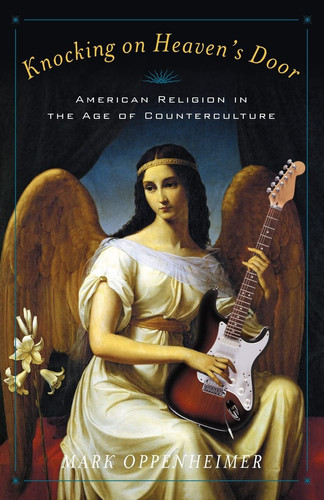
Knocking on Heaven's Door American Religion in the Age of Counterculture

Mark Oppenheimer
A witty and provocative reappraisal of the impact of the cultural upheavals of the sixties on American religious life What happened to American religion during the cultural revolution of the 1960s and early 1970s? The era has long been associated with the ascendancy of Eastern religions and fringe cults. But in this provocative book, Mark Oppenheimer demonstrates that contrary to conventional wisdom, most Americans did not turn on, tune in, and drop out of mainstream religious groups during the Age of Aquarius. Instead, many Americans brought the counterculture with them to their churches and temples, changing the face of American religion. Introducing us to America's first gay ministers and first female priests, to hippie Jews and folk-singing Catholics, Oppenheimer demonstrates that this was an era of extraordinary religious vitality. Drawing on a rich range of archival material as well as interviews with many of the protagonists, Knocking on Heaven's Door offersa wry and iconoclastic reappraisal of the ways in which the upheavals of the sixties changed America's relationship with God.
Yale University Press 2003 284 pages

Ezekiel's Hope A Commentary on Ezekiel 38-48

Jacob Milgrom,Daniel I. Block
Jacob Milgrom was a man of deep faith and deep learning. As teacher and scholar he is best known for his work on ancient Israel's religion, especially its cultic expression in tabernacle and temple. His command of this subject is evident in his massive, three-volume commentary on Leviticus (Anchor Bible Commentary) and his commentary on Numbers (JPS Torah Commentary). This provides perfect background for one who seeks to instruct us on the final chapters of Ezekiel. In this volume Milgrom guides us engagingly through Ezekiel's oracle against Gog (chs. 38-39) and his final vision of Israel's physical and spiritual restoration (chs. 40-48). Regrettably Professor Milgrom did not live to see his work on Ezekiel appear in print. Given his influence on biblical scholarship far beyond his native Jewish world, it is fitting that this final form of this project be cast as an interfaith dialogue with Daniel Block, who has himself written a major two-volume commentary on Ezekiel (NICOT). This volume offers a window into how one Jewish scholar engaged with the work of a Christian scholar. It invites readers to listen in on their conversation, in the course of which they will also hear the voices of medieval Jewish rabbis, particularly R. Eliezer of Beaugency and R. Joseph Kara. While Block and Milgrom are free to disagree in their reading of particular texts, readers will find this dialogue illuminating for their own understanding of the last chapters of Ezekiel.
Wipf & Stock Publishers 2012-09-14 338 pages

Peoples of an almighty god: competing religions in the ancient world

Goldstein, Jonathan A.
Some ancient civilizations, notably the Babylonians and the Israelites, held fast to the belief that their particular god (or gods) were stronger than all other heavenly powers and gods combined, supremely able to protect their well-being and success as a nation. This belief (which resounds in the modern-day rallying cry "God is on our side") led to some foolhardy and rash decisions, particularly when it came to war. For a nation defeated or conquered by a foreign power inevitably faced the profound, perplexing question: "Why did our God, who has sworn to protect us, allow this to happen?" Jonathan A. Goldstein turns to the religious literature of these ancient peoples to discover how they reconciled their beliefs with the realities of history. In a magnificent blend of several academic disciples (literary criticism, political theory, biblical and classical history), he compares and contrasts the responses of different eras and nations–from the Israelites, Babylonians, and Egyptians to the Zoroastrians, Iranians, and Persians under Alexander the Great. Goldstein’s close readings of literature written following such devastating events as the fall of the Israelites to the Assyrians and the Babylonians demonstrate that theology, far from being a static and unchanging set of beliefs, evolves with the course of history. Revealing how each defeat helped to shape and define the religious beliefs of the conquered, Peoples of an Almighty God clearly demonstrates that no belief can remain unchanged or untouched by the beliefs of other people.
Yale University Press 2009 575 pages

The Religious Test Why We Must Question the Beliefs of Our Leaders

Damon Linker
The Constitution states that "no religious test" may keep a candidate from aspiring to political office. Yet, since John F. Kennedy used the phrase to deflect concerns about his Catholicism, the public has largely avoided probing candidates' religious beliefs. Is it true, however, that a candidate's religious convictions should be off-limits to public scrutiny? Damon Linker doesn't think so, and in this book he outlines the various elements of religious belief--including radical atheism--that are simply incompatible with high office, and sometimes even active citizenship, in a democracy. In six forceful chapters he enlightens us to the complicated interrelations between churches and states, consistently applying a political litmus test to a range of theological views. Along the way, he clearly explains, among other topics, why the government in a religiously tolerant society must not promote a uniform, absolute code of ethics and behavior; why the conviction that America is worthy of divine attention is dangerous; and why the liberal position on the political deregulation of sex is our nation's only hope for conciliation. In this provocative, hard-hitting manifesto, Linker exhorts both believers and atheists to behave better in the public sphere, and he offers a carefully charted road map for doing so.
W. W. Norton 2010-09 252 pages

The Truth about Psychics

Sylvia Browne,Lindsay Harrison
How do psychic abilities work...and how can you tell if they're real? In this fascinating look into the history of spiritualism, celebrity psychic Sylvia Browne tells all: what's real, what's not, and how to tell the difference! Starting with her own personal odyssey, Sylvia covers the history of psychics dating from biblical times and reveals the truth about everything from witches and talking boards to angels and astral projection. Did you know... - If someone tells you that an object is "haunted..".they are probably fooling you." Objects can retain impressions of prior owners, like a photograph, but they don't contain the spirits of those on the Other Side." - If you get rid of one item in your house...it should be the talking board." Using one is like leaving your front door unlocked, inviting anyone (good or evil) to waltz right in." - Why Sylvia didn't believe in "living ghosts..".until she had a terrifying experience that changed her mind." The phenomenon called a doppelganger happened to her more than forty years ago." - How to tell if a psychic is giving you a good reading...or just followiwing a script." There are a few key phrases that can give away a fake." Through a wealth of personal stories and research into the lives of great psychics, Sylvia offers solid advice on how to put valid procedures to use and ignore the rest. The Truth About Psychics explains how you can spot a fraud and shows you how to tap into your own spiritualism and develop legitimate psychic skills!
Thorndike Press 2010-04-02 409 pages

Timeless Torah An Anthology Of The Writings Of Samson Raphael Hirsch

Samson Raphael Hirsch
Timeless Torah: An Anthology Of The Writings Of Samson Raphael Hirsch is a book that compiles the works of Samson Raphael Hirsch, a prominent rabbi and Jewish leader from the 19th century. The book includes a selection of his writings on a variety of topics, including Jewish law, philosophy, and ethics. Hirsch's teachings emphasize the importance of balancing tradition and modernity, and he argues that Judaism should be practiced in a way that is relevant and meaningful to contemporary life. The book is organized thematically, with sections on prayer, education, community, and other topics. It also includes a biographical introduction to Hirsch's life and work, as well as an overview of his contributions to Jewish thought and practice. Timeless Torah is a valuable resource for anyone interested in Jewish theology, history, and culture, and it offers insights into the enduring relevance of Hirsch's teachings for contemporary Jewish life.This scarce antiquarian book is a facsimile reprint of the old original and may contain some imperfections such as library marks and notations. Because we believe this work is culturally important, we have made it available as part of our commitment for protecting, preserving, and promoting the world's literature in affordable, high quality, modern editions, that are true to their original work.
Literary Licensing, LLC 2011-07 540 pages

Ezekiel 1-20

Moshe Greenberg
In "Ezekiel 1-20", the first of two volumes of commentary on the Scripture attributed to the third major Old Testament prophet, Moshe Greenberg, uses accessible prose to explain Ezekiel's ecstatic, erratic, almost incomprehensible otherworldly visions and prophecies. One of this century's most respected biblical scholars, Greenberg translates the text, identifies the critical issues raised by the book, and offers an impressively balanced, thoroughly holistic interpretation of Ezekiel."Ezekiel 1-20" rigorously engages the biblical text with all the tools of historical critical analysis. Drawing upon the rich history of Jewish and Christian interpretation, Greenberg employs ancient and modern sources in his elucidation of this most difficult prophetic book. Only his second and final volume, "Ezekiel 21-48", can complete the most authoritative commentary on Ezekiel.
Doubleday Religious Publishing Group 1995-03 408 pages

The way of the masks

Lévi-Strauss, Claude
Claude Levi-Strauss's fascination with Northwest Coast Indian art dates back to the late 1930s. "Sometime before the outbreak of the Second World War," he writes, "I had already bought in Paris a Haida slate panel pipe." In New York in the early forties, he shared his enthusiasm with a group of Surrealist refugee artists with whom he was associated. "Surely it will not be long," he wrote in an article published in 1943, "before we see the collections from this part of the world moved from ethnographic to fine arts museums to take their just place amidst the antiquities of Egypt of Persia and the works of medieval Europe. For this art is not unequal to the greatest, and, in the course of the century and a half of its history that is known to us, it has shown evidence of a superior diversity and has demonstrated apparently inexhaustible talents for renewal." In The Way of the Masks , first published more than thirty years later, he returned to this material, seeking to unravel a persistent problem that he associated with a particular mask, the Swaihwe, which is found among certain tribes of coastal British Columbia. This book, now available for the first time in an English translation, is a vivid, audacious illustration of Levi-Strauss's provocative structural approach to tribal art and culture. Bringing to bear on the Swaihwe masks his theory that mythical representations cannot be understood as isolated objects, Levi-Strausss began to look for links among them, as well as relationships between these and other types of masks and myths, treating them all as parts of a dialogue that has been going on for generations among neighboring tribes. The wider system that emerges form his investigation uncovers the association of the masks with Northwest coppers and with hereditary status and wealth, and takes the reader as far north as the Dene of Alaska, as far south as the Yurok of northern California, and as far away in time and space as medieval Europe. As one reader said of this book, "It will be controversial, as his work always is, and it will stimulate more scholarship on the Northwest Coast than any other single book that I can think of."
University of Washington Press 1982 249 pages

Ariel's Bible Commentary The Books of Judges and Ruth

Arnold G. Fruchtenbaum
The second installment in the Ariel's Bible Commentary Series. In his action packed, culturally relevant exegesis of the Book of Judges, Dr. Fruchtenbaum opens a portal where formerly unfamiliar names and places come alive with meaning. Armies clash, heroes rise, and human affection for other gods multiplies with soul-numbing impact. We see in his exegesis of the Book of Ruth a contrasting, in-depth picture of life among the true believers living in Bethlehem during this ancient time. These two history books are set in the time when Israel was in the Land but not yet a unified nation. Although God continues to hear the cry of the children of Israel each time they fall away and face turmoil, they fall ever further into spiritual blindness because of their disobedience. Eventually, even the spiritual leaders become immune to their own glaring indifference to God s Word. In all, God sent twelve Judges to save the children of Israel. Seven of these Judges are treated in detail as Israel goes through each cycle of apostasy, oppression, repentance, and salvation by a Judge. The Book of Ruth, an appendix to the Book of Judges, presents enormously touching portraits of Naomi, Ruth, and Boaz. They are pictured as part of the faithful community of Messianic Jewish believers of their own time, worthy ancestors of King David and the promised King Messiah yet to be revealed.
Ariel Ministries 2007-03 380 pages

Love, Sex, Fear, Death The Inside Story of the Process Church of the Final Judgment

Adam Parfrey,Timothy R. Wyllie
The Process Church of the Final Judgment was the apocalyptic shadow side of the flower-powered '60s and perhaps the most notorious cult of modern times. Hundreds of black-cloaked devotees, often wearing a satanic Goat of Mendes and a swastika-like mandala, swept the streets of London, New York, Boston, Chicago, New Orleans, and Toronto, selling magazines and books with titles like Fear and Humanity is the Devil. And within the group's Chapters, members would participate in Midnight Meditations beneath photographs of the Christ-like leader. Celebrities like Marianne Faithful, James Coburn, and Mick Jagger participated in Process publications, and Funkadelic, in its Maggot Brain album, reprinted Process' Fear Issue. Process' Death Issue interviewed the freshly-imprisoned Charles Manson leading to conspiracy hysteria in such books as Ed Sanders' The Family and Maury Terry's The Ultimate Evil. A lawsuit against Sanders' Manson book led to the removal of its Process-themed chapter by Dutton. Love, Sex, Fear, Death is the shocking, surprising, and secretive inside story of the Process Church, which later transformed into Foundation Faith of the Millennium, and most recently as the Utah-based animal sanctuary, Best Friends. Included will be text by Timothy R. Wyllie, a formative member of the Process and Foundation Faith organizations; interviews with other former Processeans; rare reproductions of Process magazines; never-before-seen photographs; and fascinating transcripts from holy books and legal actions. The special limited edition will be hardcover, signed, numbered, and slipcased, and will include a facsimile edition of the notorious Death Issue.
Feral House 2009-07 380 pages

African American Women and Christian Activism New York's Black YWCA, 1905-1945

Judith Weisenfeld
The middle class black women who people Judith Weisenfeld's history were committed both to social action and to institutional expression of their religious convictions. Their story provides an illuminating perspective on the varied forces working to improve quality of life for African Americans in crucial times. When undertaking to help young women migrating to and living alone in New York, Weisenfeld's protagonists chose to work within a national evangelical institution. Their organization of a black chapter of the Young Women's Christian Association in 1905 was a clear step toward establishing a suitable environment for young working women; it was also an expression of their philosophy of social uplift. And predictably it was the beginning of an equal rights struggle--to work as equals with white women activists. Growing and adapting as New York's black community evolved over the decades, the black YWCA assumed a central role both in the community's religious life and as a training ground for social action. Weisenfeld's analysis of the setbacks and successes closes with the National YWCA's vote in 1946 to adopt an interracial charter and move toward integration of local chapters, thus opening the door to a different set of challenges for a new generation of black activists. Weisenfeld's account gives a vibrant picture of African American women as significant actors in the life of the city. And it bears telling witness to the religious, class, gender, and racial negotiations so often involved in American social reform movements.
Harvard University Press 2013-10 239 pages

The Principles of State and Government in Islam

Muhammad Asad
2016 Reprint of 1961 Edition. Full facsimile of the original edition, not reproduced with Optical Recognition Software. Although the Muslims are for the most part imbued with enthusiasm for the idea of a truly Islamic state - that is, a state based not on the concepts of nationality and race but solely on the ideology of the Qur'an and Sunnah, they have as yet not realized a concrete vision of this form of government embodying a distinctly Islamic character. The very fact that none of the existing Muslim countries has so far achieved a form of government that could be termed genuinely Islamic, makes a discussion of the principle which ought to underlie the constitution of Islamic state imperative. By surveying nearly fourteen hundred years-beginning with the "Hijra", the formal origin of the Islamic calendar-this book demonstrates how manifold forms of the Islamic state may emerge from Islamic foundations, and how, essentially, any state that emerges, to be truly Islamic, must incorporate the doctrine of government by consent and counsel.
Martino Fine Books 2016-03-13 122 pages