
166 results for "Young Adult"

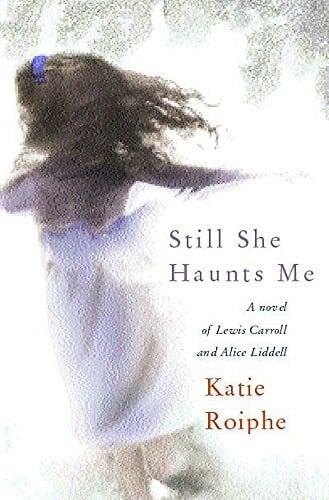
Still she haunts me

Roiphe, Katie
For seven years Charles Dodgson, a painfully shy Oxford don, and Alice Liddell, the fascinating little girl who was the daughter of the dean of Christ Church, had a strange, intense relationship. Then suddenly, when she was eleven, Alice's family shut Dodgson out. The pages from Dodgson's diary that may have explained the rift have disappeared. What remains are the stories he told her, transformed into the brilliant, revolutionary classics, Alice in Wonderland and Through the Looking Glass, and the pioneering photographs in which he captured her fleeting childhood. In a triumphant work of imagination, Katie Roiphe illuminates a luxuriously textured corner of Victorian society, with its affluence, social power-plays and politics, and the mysterious, difficult relationship Dodgson had with Alice, her family - and with himself. STILL SHE HAUNTS ME is an unforgettable novel about a singular, troubled man, from one of this century's most provocative young writers.
Review 2002 224 pages

Incident at Loring Groves

Sonia Levitin
Casssidy Keaton earns good grades, has lots of friends and a good home life. But having spent two weeks at summer camp, she begins her junior year a little bored -- and a little restless. Ken Farquar had "fallen" for Cassidy at camp. Still, he's not sure he really fits in with her crowd -- and he's not sure he wants to anyway. Right now, all he knows is that he wants to be with Cassidy. But one moonlit night, everything in their lives changes. While partying with their friends, Cassidy and Ken stumble upon a dead body. Suddenly, they are faced with the toughest decision of their lives. Winner of the Edgar Award for Best Young Adult Mystery.
Random House Publishing Group 1990-02-28 150 pages

All the sad young literary men

Gessen, Keith
A novel of love, sadness, wasted youth, and literary and intellectual ambition-"a wincingly funny debut" ("Vogue") Keith Gessen is a Brave and trenchant new literary voice. Known as an award-winning translator of Russian and a book reviewer for publications including "The New Yorker" and "The New York Times," Gessen makes his debut with this critically acclaimed novel, a charming yet scathing portrait of young adulthood at the opening of the twenty-first century. The novel charts the lives of Sam, Mark, and Keith as they overthink their college years, underthink their love lives, and struggle to find a semblance of maturity, responsibility, and even literary fame.
William Heinemann 2008 242 pages

Panorama: a novel

Adler, H. G.
Published for the first time in English, Panorama is a superb rediscovered novel of the Holocaust by a neglected modern master. One of a handful of death camp survivors to fictionalize his experiences in German, H. G. Adler is an essential author--referenced by W. G. Sebald in his classic novel Austerlitz , and a direct literary descendant of Kafka. When The Journey was discovered in a Harvard bookshop and translated by Peter Filkins, it began a major reassessment of the Prague-born H. G. Adler by literary critics and historians alike. Known for his monumental Theresienstadt 1941-1945 , a day-by-day account of his experiences in the Nazi slave-labor community before he was sent to Auschwitz, Adler also wrote six novels. The very depiction of the Holocaust in fiction caused furious debate and delays in their publication. Now Panorama , his first novel, written in 1948, is finally available to convey the kinds of truths that only fiction can. A brilliant epic, Panorama is a portrait of a place and people soon to be destroyed, as seen through the eyes of young Josef Kramer. Told in ten distinct scenes, it begins in pastoral Word War I-era Bohemia, where the boy passively witnesses the "wonders of the world" in a thrilling panorama display; follows him to a German boarding school full of creeping xenophobia and prejudice; and finds him in young adulthood sent to a labor camp and then to one of the infamous extermination camps, before he chooses exile abroad after the war. Josef's philosophical journey mirrors the author's own: from a stoic acceptance of events to a realization that "the viewer is also the participant" and that action must be taken in life, if only to make sure the dead are not forgotten. Achieving a stream-of-consciousness power reminiscent of James Joyce and Gertrude Stein, H. G. Adler is a modern artist with unique historical importance. Panorama is lasting evidence of both the torment of his life and the triumph of his gifts.
Random House 2011 450 pages

Matasha

Erens, Pamela
"It's 1970's Chicago. Eleven-year-old Matasha Wax is in the sixth grade and just starting to feel the pressures of growing up. Her best friend Jean has been blowing her off, while her parents are in a standoff over her mother's desire to adopt a refugee from Vietnam. And while the bullies in school have started to grow breasts and inches, Matasha remains a puny four-foot-four--which means she will need growth hormone shots, and she is terrified of needles. Apart from her daily reading of the advice columns in the newspaper, keeping up with the Patty Hearst and Watergate scandals, and tracking her parents' deteriorating marriage, Matasha is fixated by the story of Martin Kimmel, a nine-year-old boy who disappeared a few months ago, and whose body has yet to be found. But none of these ongoing problems could have prepared Matasha for her mother's sudden disappearance. When the letters start coming from Switzerland, she knows something is very, very wrong--but no one will tell her what's going on, so Matasha has to figure it all out for herself."--Page 4 of cover
Ig Kids 2021 295 pages

The exiled times of a Tibetan Jew

Simons, Jake Wallis
The novel centres on a colourful group of refugee Tibetans. One of the group's members, the charismatic (and slightly dubious) Rabbi Chod, recognises himself as the reincarnation of Moses, and various friends as reincarnations of key Biblical figures. Despite condemnation from both the mainstream Jewish and Tibetan communities, he declares his followers the true 'lost tribe of Israel', and defiantly opens up a synagogue in a pet shop. a family where suppression and dysfunction are common currency. Both of his parents are Tibetan Jews, followers of Rabbi Chod. His father owns a cafe called 'Hush Hush', so called because within the cafe, all forms of noise are forbidden. Any customer who speaks is instantly banned and a Polaroid photo of them is pinned to a cork board in case they should dare to return. way not into the future, but the past. He falls asleep each night only to wake up the day before. In this way, as he grows up his parents get younger. By the end of the book his parents are children - too young to manage by themselves - and the adult Monlam has to look after them. In this way he witnesses his own family history, quite literally living backwards into their lives.
Polygon 2005 292 pages

Tolstoy Lied A Love Story

Rachel Kadish
Tolstoy famously wrote, "Happy families are all alike; every unhappy family is unhappy in its own way." To Tracy Farber, thirty-three, happily single, headed for tenure at a major university, and content to build a life around friends and work, this celebrated maxim is questionable at best. Because if Tolstoy is to be taken at his word, only unhappiness is interesting; happiness must be as placid and unmemorable as a daisy in a field of a thousand daisies. Having decided to reject the petty indignities of dating, Tracy focuses instead on her secret project: to determine whether happiness can be interesting, in literature and in life, or whether it can be--must be--a plant with thorns and gnarled roots. It's an unfashionable proposition, and a potential threat to her job security. But Tracy is her own best example of a happy and interesting life. Little does she know, however, that her best proof will come when she falls for George, who will challenge all of her old assumptions, as love proves to be even more complicated than she had imagined. Can this young feminist scholar, who posits that "a woman's independence is a hothouse flower--improbable, rare, requiring vigilance," find happiness in a way that fulfills both her head and her heart? Love may be the ultimate cliché, but in Rachel Kadish's hands, it is also a morally serious question, deserving of our sober attention as well as our delighted laughter.
Houghton Mifflin 2006 325 pages

Tankborn

Karen Sandler
Kayla and Mishalla, two genetically engineered enslaved non-human (GENs), fall in love with higher-status boys, discover deep secrets about the creation of GENs, and in the process find out what it means to be human. Enslaved by their genetics. Oppressed by their creators. Fighting for their humanity. On rugged planet Loka, life for best friends Kayla and Mishalla is arduous at best. They are GENs, Genetically Engineered Non-humans, and in their strict caste system, GENs are at the bottom rung of society. GENs are gestated in a tank and sent to work as slaves as soon as they reach age fifteen. When Kayla is Assigned to care for Zul Manel, the patriarch of a trueborn family, she finds secrets and surprises--not least of which is her budding friendship with Zul's handsome great-grandson. Meanwhile, the children that Mishalla is Assigned to care for are being stolen in the middle of the night, and a strange lowborn boy is hanging around nearby. After weeks of toiling in their Assignments, mystifying circumstances enable Kayla and Mishalla to reunite. Together with the boys, they hatch a plan to save the disappearing children. Yet can GENs really trust humans? Both girls must put their lives and hearts at risk to crack open a sinister conspiracy, revealing secrets no one is ready to face. The first in a trilogy, Tankborn is a page-turning sci-fi thriller that will leave readers scrambling for the sequel! Check out the other titles in this series: TANKBORN * AWAKENING * REBELLION
Lee & Low Books 2015-10-15 384 pages

If only

Gilmore, Jennifer
At sixteen Bridget is pregnant--and her boyfriend has dumped her for another girl. She's trying to envision a future for her baby. But as she sifts through the many paths and the many people who want to parent her child, she can't help but feel that there is no right decision. Fifteen years later: Ivy knows that she is now the same age Bridget was when she placed Ivy for adoption. She knows that Bridget was the one who named her. When Ivy goes in search of Bridget--of her own history--will the risks outweigh the benefits of knowing where she comes from and why her birth mother chose to walk away?
HarperTeen, an imprint of HarperCollins Publishers 2018-07-31 275 pages