2328 results for "Jewish History"

Quite a Life! From Defeat to Defeat ... and Back

Carol Schwartz
After graduating from the University of Texas in 1965, Carol Schwartz, born in Mississippi and raised in Midland, Texas, visited Washington, D.C. She was due to be married in Austin in January and had a job teaching special education there. After a very tough childhood, a happier, less stressful life stood before her. But things changed--with Carol doing the changing. As she puts it, "A magnetic pull drew me to D.C." Carol began a journey that took her away from the familiar to D.C. and the dynamic world of local politics. Then a Republican in a city where Democrats made up nearly 80% of voters, she ran for Mayor and nearly beat Marion Barry in 1994 in the closest Mayoral election in the city's history. In Quite A Life: From Defeat to Defeat ... and Back, Carol talks about growing up on the poor side of the tracks in that small West Texas town, where she was made to work starting from age eight in the family store. There were only a few Jewish families and some prejudice. Carol was often responsible, beginning at age six, for caring for her beloved older brother and only sibling Johnny, who was intellectually disabled. And sadly, she was also the target of a brilliant but full-of-rage father. Carol describes life with her own family--her three kids and husband David, who suffered from severe depression. But despite that, he went from being a child of a limited-means family with student loans to becoming one of the more successful attorneys in a city made up of them. Depression, though, and Jack Daniels ultimately caused David's tragic death when the children were teenagers. Although wounded from her childhood, she leapt over ongoing insecurity and fear to run for the D.C. Board of Education in 1974, where she became an outspoken member and leader. Carol fought against the tide to help create Banneker Academic High School and usher in educational reforms 40 years ago when it was unfashionable and took lots of courage to do it--and which led to test scores increasing. On the D.C. Council starting in 1985, she was a lone voice against bloated budgets that eventually led the city to the financial brink. Carol became an ethical watchdog in a government that too often battled corruption. Spotting government sweetheart deals, she helped root them out as a guardian of taxpayer dollars. And she spearheaded the unanimous passage of sick and safe leave for private sector workers, making D.C. the second jurisdiction in the country to have it. In doing so, she went from being a best friend of business to being viciously targeted by that community. Her passion for the city and its residents inspired her to run for Mayor several times in spite of the odds. But she picked herself up after defeat--as her tough childhood had trained her to do--and kept on ... All the while she championed wins on behalf of the city and its residents in her continuing Council career. Community responsibility has been a lifelong clarion call for Carol. She has volunteered to battle for people with HIV/AIDS and other marginalized groups, and served for nearly two decades on the Board of the Whitman-Walker Clinic, which was at the forefront of that crisis. She became the first woman president of the Metropolitan Police Boys and Girls Clubs in its 61-year history. Her volunteer work of 50 years has touched many people, animals and organizations, and continues. Now an Independent and always a straight-shooter, Carol talks about her life with characteristic candor and her opinions with unbridled honesty--and usually with humor. As Carol says, "If you want someone to give you a sugar-coated synopsis of a life, go elsewhere. But if you want an outspoken personal autobiography--with pictures galore--that also talks about the history of D.C. since Home Rule, gives you behind-the-scenes accounts of chaotic campaigns, as well as the inner-workings of government--all rolled together--come on this ride with me." It's a journey of wins and defeats, and coming back with hope.
BookBaby 2017-11-09 764 pages

Intimate politics: how I grew up Red, fought for free speech, and became a feminist rebel

Aptheker, Bettina
Set amidst the political upheaval of the McCarthy trials, the Vietnam War, and the rise of the women's movement, Intimate Politics is a courageous and uncompromising account of one woman's personal and political transformation, and a fascinating portrayal of a key chapter in our nation's history. At eight years old, Bettina Aptheker watched her family's politics play out in countless living rooms across the country when her father, historian and U.S. Communist Party leader Herbert Aptheker, testified on television in front of the House on Un-American Activities Committee in 1953. Born into one of the most influential U.S. Communist families whose friends included W. E. B. Du Bois, Paul Robeson, and Elizabeth Gurley Flynn, Bettina lived her parents' politics witnessing first-hand one of the most dramatic upheavals in American history. She also lived with a terrible secret: incest at the hands of her famous father and a frightening and lonely life lived inside a home wrought with family tensions. A gripping and beautifully rendered memoir, Intimate Politics is at its core the story of one woman's struggle to still the demons of her personal world while becoming a controversial public figure herself. This is the story of childhood sexual abuse, abortion, sexual violence, activism, and the triumph over one's past. It's about FBI harassment and persecution, Jewish heritage, and lesbian identity. It is, finally, about the courage to speak one's truth despite the consequences and to break the sacred silence of family secrets.
Seal Press 2006-09-26 549 pages

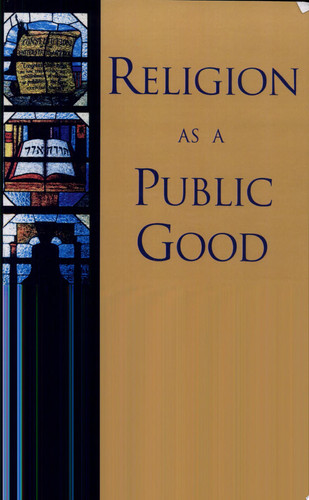
Religion as a public good: Jews and other Americans on religion in the public square

Alan Mittleman
Religion as a Public Good: Jews and Other Americans on Religion in the Public Square explores the often controversial topic of how religion ought to relate to American public life. The sixteen distinguished contributors, both Jewish and Christian, reflect on the topic out of their own disciplines-social ethics, political theory, philosophy, law, history, theology, and sociology. and take a stand based on their religious convictions and political beliefs. The volume is at once scholarly and committed, polemic and civil, reflective and activist. Written in the shadow of 9/11, it invites a new consideration of how religion enhances democratic public life with full awareness of the dangers that religion can sometimes pose. The volume is polemical, as befits the topic, but also civil, as befits a dialogue about an issue of profound significance for democratic citizenship.
Rowman & Littlefield 2003-12-09 336 pages

The Jewish question: a Marxist interpretation

Léon, Abraham
During the opening years of the 21st century, anti-­Semitic venom and incidents of violent assault on Jews have begun spreading. They are not a historical aberration. They are fueled by today's capitalist crises and fracturing of the post-World War II imperialist "order," described in recent decades as "globalization." At every turning point in history-from antiquity through feudalism, to capitalism's rise and the imperialist death throes of the past century-Jews have been targets of persecution. Including the genocide cold-bloodedly touted by Hitler as the "Final Solution." Why is Jew-hatred still raising its ugly head? What are its class roots? Why is there "no solution to the Jewish question under capitalism, just as there is no solution to other problems before humanity," without revolutionary struggles that transform us as we fight to transform our world? Abram Leon was killed in October 1944, at age 26, in the Nazi gas chambers at Auschwitz. He left us this book to help answer those questions.
Pathfinder 2020 346 pages

The Dreyfus affair: a trilogy

Whyte, George R.
The cause celebre of the 19th century, the Dreyfus Affair destabilized French society (1894-1906) and reverberated across the world. Its repercussions continue to this day. A deliberate miscarriage of justice, the public degradation of an innocent Jewish officer and his incarceration on Devil's Island, espionage, intrigue, media pressure, vehement antisemitism and political skulduggery--all these elements, based on historical records, are contained in George R. Whyte's trilogy of plays which also focuses on Emile Zola's letter to the President of France, J'Accuse, arguably history's most famous plea for human rights.
Oberon Books 2010 126 pages

What you did not tell: a Russian past and the journey home

Mazower, Mark
SHORLISTED FOR THE ORWELL PRIZE 2018 NEW STATESMAN AND EVENING STANDARD BOOKS OF THE YEAR 2017 'Brilliant ... a staggering story' Robert Fox, Evening Standard, Books of the Year 'Fascinating, vast and rich ... a dramatic family memoir' Guardian Uncovering his family's remarkable and moving stories, Mark Mazower recounts the sacrifices and silences that marked a generation and their descendants. It was a family that fate drove into the siege of Stalingrad, the Vilna ghetto, occupied Paris, and even into the ranks of the Wehrmacht . His British father was the lucky one, the son of Russian Jewish emigrants who settled in London after escaping the civil war and revolution. Max, the grandfather, had started out as a socialist and manned the barricades against tsarist troops, but never spoke of it. His wife, Frouma, came from a family ravaged by the Great Terror yet somehow making their way in Soviet society. In the centenary of the Russian Revolution, What You Did Not Tell recounts a brand of socialism erased from memory - humanistic, impassioned, and broad-ranging in its sympathies. But it also explores the unexpected happiness that may await history's losers, the power of friendship, and the love of place that allowed Max and Frouma's son to call England home.
Penguin Books 2018-07-05 400 pages

Dominican haven: the Jewish refugee settlement in Sosúa, 1940-1945

Kaplan, Marion A.
Discusses the generous proposal of the Dominican government to the Jewish refugees from Germany and Austria to settle in Sosúa against the background of the reluctance of most American countries to take in Jewish refugees. Notes that the USA not only put up "paper walls" in the way of Jewish refugees eager to enter the country, but from April-May 1940 (when the war broke out in Europe) tried to impede Jewish immigration into the Dominican Republic.
Museum of Jewish Heritage 2008 255 pages

Spinoza and medieval Jewish philosophy

Steven Nadler
Over the last two decades there has been an increasing interest in the influence of medieval Jewish thought upon Spinoza's philosophy. The essays in this volume, by Spinoza specialists and leading scholars in the field of medieval Jewish philosophy, consider the various dimensions of the rich, important, but vastly under-studied relationship between Spinoza and earlier Jewish thinkers. It is the first such collection in any language, and together the essays provide a detailed and extensive analysis of how different elements in Spinoza's metaphysics, epistemology, moral philosophy, and political and religious thought relate to the views of his Jewish philosophical forebears, such as Maimonides, Gersonides, Ibn Ezra, Crescas, and others. The topics addressed include the immortality of the soul, the nature of God, the intellectual love of God, moral luck, the nature of happiness, determinism and free will, the interpretation of Scripture, and the politics of religion.
Cambridge University Press 2018-04-12 239 pages

The rabbi's wife: the rebbetzin in American Jewish life

Schwartz, Shuly Rubin
2006 National Jewish Book Award, Modern Jewish Thought Long the object of curiosity, admiration, and gossip, rabbis' wives have rarely been viewed seriously as American Jewish religious and communal leaders. We know a great deal about the important role played by rabbis in building American Jewish life in this country, but not much about the role that their wives played. The Rabbi’s Wife redresses that imbalance by highlighting the unique contributions of rebbetzins to the development of American Jewry. Tracing the careers of rebbetzins from the beginning of the twentieth century until the present, Shuly Rubin Schwartz chronicles the evolution of the role from a few individual rabbis' wives who emerged as leaders to a cohort who worked together on behalf of American Judaism. The Rabbi’s Wife reveals the ways these women succeeded in both building crucial leadership roles for themselves and becoming an important force in shaping Jewish life in America.
New York University Press 2006-01-01 312 pages

Excommunicating the Faithful Jewish Christianity in the Early Church

Kenneth W. Howard
Excommunicating the Faithful traces the development of Jewish Christianity from among the earliest Jesus followers through its apparent disappearance in the fourth or fifth century. The author's thesis is that among Jewish Christians in the early Church, there existed at least one Jewish Christian sect whose theology stood within the acceptable boundaries of orthodoxy at that time and existed through at least the fifth century, at which point it was declared heretical by the Church Fathers and eventually died out despite the fact that it considered itself part of the greater Church. The author's thesis also suggests that the increasing antipathy of the Church toward Jewish Christianity was the result of a variety of interrelated influences operating over several centuries. Some of these influences included the changing demographics of the Church and the accompanying clash of cultures; the increasing isolation of Jewish Christianity from the predominantly Gentile Church; power struggles between competing Christian communities in Palestine, as well as Rome's interest in asserting its primacy; and theological and pastoral concerns, which were well-intentioned but resulted in increasingly narrow views of orthodoxy and orthopraxis; and lasting anti-Jewish sentiments throughout the Empire, some of which still exist today.
Global Center for Religious Research, LLC 2022-02 128 pages

Heritage and hellenism: the reinvention of Jewish tradition

Gruen, Erich S.
The interaction of Jew and Greek in antiquity intrigues the imagination. Both civilizations boasted great traditions, their roots stretching back to legendary ancestors and divine sanction. In the wake of Alexander the Great's triumphant successes, Greeks and Macedonians came as conquerors and settled as ruling classes in the lands of the eastern Mediterranean. Hellenic culture, the culture of the ascendant classes in many of the cities of the Near East, held widespread attraction and appeal. Jews were certainly not immune. In this thoroughly researched, lucidly written work, Erich Gruen draws on a wide variety of literary and historical texts of the period to explore a central question: How did the Jews accommodate themselves to the larger cultural world of the Mediterranean while at the same time reasserting the character of their own heritage within it? Erich Gruen's work highlights Jewish creativity, ingenuity, and inventiveness, as the Jews engaged actively with the traditions of Hellas, adapting genres and transforming legends to articulate their own legacy in modes congenial to a Hellenistic setting. Drawing on a diverse array of texts composed in Greek by Jews over a broad period of time, Gruen explores works by Jewish historians, epic poets, tragic dramatists, writers of romance and novels, exegetes, philosophers, apocalyptic visionaries, and composers of fanciful fables—not to mention pseudonymous forgers and fabricators. In these works, Jewish writers reinvented their own past, offering us the best insights into Jewish self-perception in that era.
University of California Press 2002-02-13 335 pages

Covenantal Rights: A Study in Jewish Political Theory

Novak, David
Covenantal Rights is a groundbreaking work of political theory: a comprehensive, philosophically sophisticated attempt to bring insights from the Jewish political tradition into current political and legal debates about rights and to bring rights discourse more fully into Jewish thought. David Novak pursues these aims by presenting a theory of rights founded on the covenant between God and the Jewish people as that covenant is constituted by Scripture and the rabbinic tradition. In doing so, he presents a powerful challenge to prevailing liberal and conservative positions on rights and duties and opens a new chapter in contemporary Jewish political thinking. For Novak, "covenantal rights" are rooted in God's primary rights as creator of the universe and as the elector of a particular community whose members relate to this God as their sovereign. The subsequent rights of individuals and communities flow from God's covenantal promises, which function as irrevocable entitlements. This presents a sharp contrast to the liberal tradition, in which rights flow above all from individuals. It also challenges the conservative idea that duties can take precedence over rights, since Novak argues that there are no covenantal duties that are not backed by correlative rights. Novak explains carefully and clearly how this theory of covenantal rights fits into Jewish tradition and applies to the relationships among God, the covenanted community, and individuals. This work is a profound and provocative contribution to contemporary religious and political theory.
Princeton University Press 2009-11-22 248 pages

Pollution in a promised land: an environmental history of Israel

Tal, Alon
Virtually undeveloped one hundred years ago, Israel, the promised "land of milk and honey," is in ecological disarray. In this gripping book, Alon Tal provides--for the first time ever--a history of environmentalism in Israel, interviewing hundreds of experts and activists who have made it their mission to keep the country's remarkable development sustainable amid a century of political and cultural turmoil.The modern Zionist vision began as a quest to redeem a land that bore the cumulative effects of two thousand years of foreign domination and neglect. Since then, Israel has suffered from its success. A tenfold increase in population and standard of living has polluted the air. The deserts have bloomed but groundwater has become contaminated. Urban sprawl threatens to pave over much of the country's breathtaking landscape. Yet there is hope. Tal's account considers the ecological and tactical lessons that emerge from dozens of cases of environmental mishaps, from habitat loss to river reclamation. Pollution in a Promised Land argues that the priorities and strategies of Israeli environmental advocates must address issues beyond traditional green agendas.
University of California Press 2002-08-01 546 pages

A history of the Jews in the English-speaking world: Great Britain

Rubinstein, W. D.
Deals also with British antisemitism from Cromwell's time to the present. There were objections against the admission of Jews to England in 1655, as well as attempts to restrict their rights in the 17th-18th centuries. Discusses pre-World War I antisemitic writers (e.g. G.K. Chesterton, H. Belloc) and the eugenics movement. Racial antisemitism was almost non-existent before 1914. Antisemitism reached a peak in Britain in 1917-22, but it was milder than in other Western countries. Relates, also, to left-wing antisemitism between the two World Wars. Ch. 3 (pp. 280-363), "Anglo-Jewry and the Holocaust, 1933-1945", deals with the reactions of Jews and non-Jews to the rise of Nazism and the Holocaust. Nazi antisemitism aroused revulsion in British society, even among conservatives and pro-Germans. States that Britain did more for refugees from Germany than any other country. British Jewry did all it could to rescue Jews to the extent that it understood their situation. During the war and the hostilities in the Middle East, there was an upsurge of antisemitism in the country but it receded in the 1950s. Contends that antisemitism in Britain was always a marginal phenomenon.
Macmillan 1996 539 pages