

449 results for "Business"

Linear Programming 1 Introduction
By George B. Dantzig LINEAR PROGRAMMING The Story About How It Began: Some legends, a little about its historical sign- cance, and comments about where its many mathematical programming extensions may be headed. Industrial production, the ?ow of resources in the economy, the exertion of military e?ort in a war, the management of ?nances—all require the coordination of interrelated activities. What these complex undertakings share in common is the task of constructing a statement of actions to be performed, their timing and quantity(calledaprogramorschedule), that, ifimplemented, wouldmovethesystem from a given initial status as much as possible towards some de?ned goal. While di?erences may exist in the goals to be achieved, the particular processes, and the magnitudes of e?ort involved, when modeled in mathematical terms these seemingly disparate systems often have a remarkably similar mathematical str- ture. The computational task is then to devise for these systems an algorithm for choosing the best schedule of actions from among the possible alternatives. The observation, in particular, that a number of economic, industrial, ?nancial, and military systems can be modeled (or reasonably approximated) by mathem- ical systems of linear inequalities and equations has given rise to the development of the linear programming ?eld.

EVEolution The Eight Truths of Marketing to Women
The first book which explains why all companies need to market to women AND teaches them how to do it.

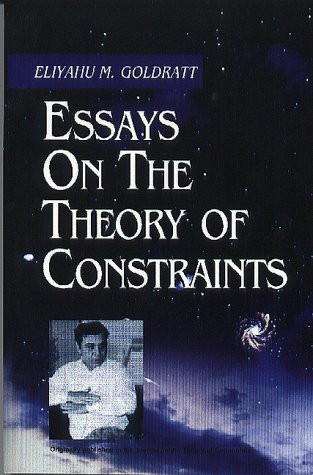
Essays on the Theory of Constraints
This collection of essays was originally published in The Journal on the Theory of Constraints.
Greedy Bastards How We Can Stop Corporate Communists, Banksters, and Other Vampires from Sucking America Dry
DYLAN RATIGAN’S mission is to uncover never-before-seen solutions to the most pressing issues of our time: government corruption, corporate communism, an ailing health care system, an age-old dependency on foreign oil, and a broken educational system. In this groundbreaking book, Ratigan makes a case that America has the opportunity to prosper, but only by setting clear goals. Ratigan believes that this country, now more than ever, needs passionate debate and smart policy, a brazen willingness to scrap what doesn’t work, and the entrepreneurial spirit to try what does. Ratigan has compiled brash and fresh solutions for building a new and better America, and with this book he has started the debate America deserves.

The Faber Report CNBC's "The Brain" Tells You How Wall Street Really Works and How You Can Make It Work for You
Already a major star on CNBC, Fabber is the host of a series of prime-time specials. The bear-market panic that crippled the sale of investment books is beginning to lift as investors realize that, especially in bad times, they need to know how to avoid loser stocks and find the rare winners.

Energy Future
Traces the development of the energy crisis and concludes that a serious program of conservation is needed

Do the Kind Thing Target Signed Edition

Ecological Intelligence
The bestselling author of Emotional Intelligence and Primal Leadership now brings us Ecological Intelligence--revealing the hidden environmental consequences of what we make and buy, and how with that knowledge we can drive the essential changes we all must make to save our planet and ourselves. In Ecological Intelligence, Daniel Goleman reveals why so many of the products that are labeled green are a "mirage," and teaches consumers and businesses alike how to accurately assess how green they really are in their activities.

The Central Bank and the Financial System
As economic advisor to the Bank of England for many years, C. A. E. Goodhart is uniquely positioned to assess the role of the central bank in the modern financial system. This book brings together twenty-one of his previously published articles dealing with the changing functions of central banks over time, recent efforts to maintain price stability, and debates over specific financial regulation proposals in the UK. Although the current day-to-day operations of central banks are subject to continuous comment and frequent criticism, their structural role within the economic system as a whole has generally been accepted without much question, despite several attempts by economists in recent decades to challenge the value of the institution. C. A. E. Goodhart brings his knowledge of both the theoretical arguments and the actual working of central banks to bear in these essays. Part I looks at the general purposes and functions of central banks within the financial system and their evolution over time. Part II concentrates on the current objectives and operations of central banks, and the maintenance of price stability in particular. Part III analyzes the broader issues of financial regulation.

Human Agency and Behavioral Economics Nudging Fast and Slow
This Palgrave Pivot offers comprehensive evidence about what people actually think of “nudge” policies designed to steer decision makers’ choices in positive directions. The data reveal that people in diverse nations generally favor nudges by strong majorities, with a preference for educative efforts – such as calorie labels - that equip individuals to make the best decisions for their own lives. On the other hand, there are significant arguments for noneducational nudges – such as automatic enrollment in savings plans - as they allow people to devote their scarce time and attention to their most pressing concerns. The decision to use either educative or noneducative nudges raises fundamental questions about human freedom in both theory and practice. Sunstein's findings and analysis offer lessons for those involved in law and policy who are choosing which method to support as the most effective way to encourage lifestyle changes.

Transaction Man Traders, Disrupters, and the Dismantling of Middle-Class America
An Amazon Best History Book of 2019 "A splendid and beautifully written illustration of the tremendous importance public policy has for the daily lives of ordinary people." —Ryan Cooper, Washington Monthly Over the last generation, the United States has undergone seismic changes. Stable institutions have given way to frictionless transactions, which are celebrated no matter what collateral damage they generate. The concentration of great wealth has coincided with the fraying of social ties and the rise of inequality. How did all this come about? In Transaction Man , Nicholas Lemann explains the United States’—and the world’s—great transformation by examining three remarkable individuals who epitomized and helped create their eras. Adolf Berle, Franklin Delano Roosevelt’s chief theorist of the economy, imagined a society dominated by large corporations, which a newly powerful federal government had forced to become benign and stable institutions, contributing to the public good by offering stable employment and generous pensions. By the 1970s, the corporations’ large stockholders grew restive under this regime, and their chief theoretician, Harvard Business School’s Michael Jensen, insisted that firms should maximize shareholder value, whatever the consequences. Today, Silicon Valley titans such as the LinkedIn cofounder and venture capitalist Reid Hoffman hope “networks” can reknit our social fabric. Lemann interweaves these fresh and vivid profiles with a history of the Morgan Stanley investment bank from the 1930s through the financial crisis of 2008, while also tracking the rise and fall of a working-class Chicago neighborhood and the family-run car dealerships at its heart. Incisive and sweeping, Transaction Man is the definitive account of the reengineering of America and the enormous impact it has had on us all.

The Origins of Scientific Economics English Economic Thought 1660-1776
This book illustrates how the first social science, that of economics, was built. It examines and discusses the work of Josiah Child, Nicholas Barbon, John Collins, William Petty, John Locke and Dudley North and the economic theories of the seventeenth and eighteenth centuries.

Franchising Pathway to Wealth Creation
Franchising: Pathway to Wealth Creation is franchising as true entrepreneurship, for every potential franchisor and franchisee ready to generate large-scale wealth. Authors include the entrepreneur who built the world's largest system of Jiffy Lube franchises, the executive who grew Dunkin' Donuts by 1,000%, and the franchising expert at the world's #1 franchise bank lender. This remarkable team covers every step from assessment through cashing out, every element of the product/service delivery system, and every facet of the franchisee/franchisor relationship.

W. D. Gann Treasure Discovered Simple Trading Plans for Stocks and Commodities
FORWORDI was once introduced at a seminar as having the best job in the world! The group leader exclaimed that as Editor of Technical Analysis of STOCKS & COMMODITIES magazine, I had the opportunity to see and work with all the new exciting technology, trading software and disclosed trading systems coming on the market. He surmised that I probably felt like a kid in a candy store.There is some truth to his words. I do see a great deal of new and exciting developments in trading software, as well as working first-hand with publishing new ideas and trading concepts found in our magazine. But to me, the most interesting aspect of my job is the people I work with.As Editor, I have worked with the famous and not-so famous, professional money managers handling billions as well as individuals who only trade their own money. Naturally, some made strong impressions upon me, for I learn, along with my readers, new things everyday. One individual, though, who made the most valuable of impressions was Robert Krausz, which is why I was happy to assist on this project.If you've ever seen Robert Krausz speak, or ever read Jack Schwager's New Market Wizards or his articles in from STOCKS & COMMODITIES magazine you will know that Krausz has identified that the chief difference between the successful trader and the wanna-be is the lack of a thoroughly researched trading plan. But what exactly is a trading plan? Within theses pages, you have the opportunity to learn and use a real trading plan in fact, a plan that has shown remarkable viability over history. The plans offered within these pages cover all of the important conceptual issues of having defined entry and exit rules, risk management and profit objectives. In addition, Krausz introduces some new swing trading techniques.Of course, there is no law saying that the plans will hold up going forward, but you can certainly see how you would have done with hindsight. If nothing else happens, your own systems- and skills will take a giant step forward. Thom Hartle, Editor Technical Analysis of STOCKS & COMMODITIES magazine.

Fade Out The Calamitous Final Days of Mgm
In the bestselling tradition of Indecent Exposure and Final Cut, Peter Bart--a production executive at MGM in 1983 and 1984--gives an inside r's account of how the once-great movie studio was destroyed by a Las Vegas financier and the series of incompetant studio heads he hired. 8-page photo insert.

Eyes Wide Open How to Make Smart Decisions in a Confusing World
Eyes Wide Open: How to Make Smart Decisions in a Confusing World is Noreena Hertz’s practical, cutting-edge guide to help you cut through the data deluge and make smarter and better choices, based on her highly popular TED talk. In this eye-opening handbook, the internationally noted speaker, economics expert, and bestselling author of IOU: The Debt Threat and Silent Takeover reveals the extent to which the biggest decisions in our lives are often made on the basis of flawed information, weak assumptions, corrupted data, insufficient scrutiny of others, and a lack of self-knowledge. To avert such disasters, Hertz persuasively argues, we need to become empowered decision-makers, capable of making high-stakes choices and holding accountable those who advise us. In Eyes Wide Open, she weaves together scientific research with real-world examples from Hollywood to Harry Potter, NASA to World War Two spies, to construct a path to more astute and empowered decision-making in ten clear steps. With a razor-sharp intellect and an instinct for popular storytelling, she offers counter-intuitive, actionable guidance for making better choices—whether you are a business-person, a professional, a patient, or a parent.

A Theory of the Consumption Function
What is the exact nature of the consumption function? Can this term be defined so that it will be consistent with empirical evidence and a valid instrument in the hands of future economic researchers and policy makers? In this volume a distinguished American economist presents a new theory of the consumption function, tests it against extensive statistical J material and suggests some of its significant implications. Central to the new theory is its sharp distinction between two concepts of income, measured income, or that which is recorded for a particular period, and permanent income, a longer-period concept in terms of which consumers decide how much to spend and how much to save. Milton Friedman suggests that the total amount spent on consumption is on the average the same fraction of permanent income, regardless of the size of permanent income. The magnitude of the fraction depends on variables such as interest rate, degree of uncertainty relating to occupation, ratio of wealth to income, family size, and so on. The hypothesis is shown to be consistent with budget studies and time series data, and some of its far-reaching implications are explored in the final chapter.

The Secret War Against the Jews How Western Espionage Betrayed the Jewish People
Tells of operations, from 1920 onwards planned by the world's major powers to bring about the destruction of the State of Israel. Based on the recollections of over 500 former intelligence officers, describes operations that were overtly hostile to Israel. Discusses racially bigoted Western spies during the period 1920-1947, and the use of US government intelligence to advance corporate policy, particularly the interests of the giant oil companies, from 1948 to 1973. Also discusses topics such as the allegations that the Reagan administration set up Israel as a scapegoat for the Iran-Contra scandal. Includes extensive references, a selected bibliography and an index. First published in the US in 1994. The authors' other joint publications include 'Ratline: How the Vatican's Nazi Network Betrayed Western Intelligence to the Soviets.

Handbook of Mathematical Economics
The Handbook of Mathematical Economics aims to provide a definitive source, reference, and teaching supplement for the field of mathematical economics. It surveys, as of the late 1970's the state of the art of mathematical economics. This is a constantly developing field and all authors were invited to review and to appraise the current status and recent developments in their presentations. In addition to its use as a reference, it is intended that this Handbook will assist researchers and students working in one branch of mathematical economics to become acquainted with other branches of this field. Volume 2 elaborates on Mathematical Approaches to Microeconomic Theory , including consumer, producer, oligopoly, and duality theory, as well as Mathematical Approaches to Competitive Equilibrium including such aspects of competitive equilibrium as existence, stability, uncertainty, the computation of equilibrium prices, and the core of an economy. For more information on the Handbooks in Economics series, please see our home page on http://www.elsevier.nl/locate/hes
