376 results for "Economic Development"

Bowett's Law of International Institutions

Philippe Sands
Bowett's Law of International Institutions provides an introductory overview of the law of international institutions, covering the major organisations and explaining their role and governing law. Key Features Covers all the major global, regional and judicial institutions such as the UN, the IMF, the WTO, the ICJ, the International Tribunal for the Law of Sea, the ICC and the ICTs as well as the EU and Council of Europe Includes coverage of International organisations that regulate aspects of development such as: environmental, administrative, judicial, trade, economic or criminal Split into three parts, part one describes the global institutions and then the regional institutions, part two addresses the various functions of international organisations and part three considers the four sets of common institutional problems Table of Contents General Introduction Part I: Overview of existing International Institutions The United Nations UN Specialised Agencies Other autonomous organisations Regional Institutions: Introduction European Organisations The Americas and Caribbean Asia The Middle East Africa Part II: The function of International Organisations Legislative or normative function Executive and administrative functions Judicial and quasi-judicial function Part III: Common Institutional Problems Law governing the activities of International Organisations Legal Personality Membership and representation of members Financial aspects
Sweet & Maxwell 2011-01-01

The invention of enterprise: entrepreneurship from ancient Mesopotamia to modern times

David S. Landes,Joel Mokyr,William J. Baumol
Whether hailed as heroes or cast as threats to social order, entrepreneurs - and their innovations - have had an enormous influence on the growth and prosperity of nations. "The Invention of Enterprise" gathers together, for the first time, leading economic historians to explore the entrepreneur's role in society from antiquity to the present. Addressing social and institutional influences from a historical context, each chapter examines entrepreneurship during a particular period and in an important geographic location. The book chronicles the sweeping history of enterprise in Mesopotamia and Neo-Babylon; carries the reader through the Islamic Middle East; offers insights into the entrepreneurial history of China, Japan, and Colonial India; and, describes the crucial role of the entrepreneur in innovative activity in Europe and the United States, from the medieval period to today. In considering the critical contributions of entrepreneurship, the authors discuss why entrepreneurial activities are not always productive and may even sabotage prosperity. They examine the institutions and restrictions that have enabled or impeded innovation, and the incentives for the adoption and dissemination of inventions. They also describe the wide variations in global entrepreneurial activity during different historical periods and the similarities in development, as well as entrepreneurship's role in economic growth. The book is filled with past examples and events that provide lessons for promoting and successfully pursuing contemporary entrepreneurship as a means of contributing to the welfare of society.
Princeton University Press 2010-01-31 566 pages

The female circumcision controversy: an anthropological perspective

Gruenbaum, Ellen
Ellen Gruenbaum looks at the validity of Western arguments against the practice of female circumcision. In doing so, she explores both outsider and insider perspectives on female circumcision, concentrating particularly on the complex attitudes of the individuals and groups who practice it and on indigenous efforts to end it. Gruenbaum finds that the criticisms of outsiders are frequently simplistic and fail to appreciate the diversity of cultural contexts, the complex meanings, and the conflicting responses to change. Drawing on over five years of fieldwork in Sudan, where the most severe forms of genital surgery are common, Gruenbaum shows that the practices of female circumcision are deeply embedded in Sudanese cultural traditions--in religious, moral, and aesthetic values, and in ideas about class, ethnicity, and gender. Her research illuminates both the resistance to and the acceptance of change. She shows that change is occurring as the result of economic and social developments, the influences of Islamic activists, the work of Sudanese health educators, and the efforts of educated African women. That does not mean that there is no role for outsiders, Gruenbaum asserts, and she offers suggestions for those who wish to help facilitate change. By presenting specific cultural contexts and human experiences with a deep knowledge of the tremendous variation of the practice and meaning of female circumcision, Gruenbaum provides an insightful analysis of the process of changing this complex, highly debated practice
University of Pennsylvania Press 2001 242 pages

Barbarism and civilization: a history of Europe in our time

Wasserstein, Bernard
"Here is the definitive history of contemporary Europe, a controversial but authoritative and lively narrative that is destined to become the standard account of the period from 1914 to the present. In this important new book, University of Chicago historian Bernard Wasserstein offers the first serious, full-length history of a century of convulsive change. It is a history of barbarism and civilization, of cruelty and tenderness, of technological achievement and environmental blight, of imperial expansion and withdrawal, of authoritarian repression and of individualism resurgent. Wasserstein provides both a narrative of the main contours of the political, diplomatic, and military history and an analysis of the underpinnings of demographic, economic, and social developments. Most notably, the book explores the evolution of values and sensibilities in a period when, for the first time, God disappeared as a living presence in the minds of most Europeans. Wasserstein argues that barbarism and civilization were not polar opposites: rather they marched hand in hand. Twentieth-century Europe saw incontestable improvements in living conditions for most inhabitants of the continent: average life span was extended by more than half; real incomes increased dramatically; illiteracy was all but eliminated; women, ethnic minorities, and homosexuals advanced closer to equality of respect and opportunity. Yet the century also witnessed some of the most brutish episodes in the recorded history of our species. Hence Wasserstein's conclusion that "greed, selfishness, lies, and cruelty are the stuff of the history of Europe in our time." Drawing on the latest scholarly findings,including recent disclosures of intelligence materials and archival revelations that followed the fall of Communism in Eastern Europe, Wasserstein captures the essence of contemporary European history in an engaging narrative that is by turns grim, humorous, surprising, and enlightening." -- Publisher.
Oxford University Press 2007 901 pages

How it all began: origins of the modern economy

Rostow, W. W.
First published in 1975, this book traces the origins of our modern economy, showing the routes by which nations have either achieved wealth or have been impoverished. W. W. Rostow brings together issues of public policy, international trade and the world of science and technology, arguing that conventional economic thought has failed to relate scientific innovation to the economic process. Chapters consider the politics of modernization, the Commercial Revolution and the development of the world economy between 1783 and 1820.
Routledge 2015-05 279 pages

Secret reports on Nazi Germany: the Frankfurt School contribution to the war effort

Neumann, Franz
A groundbreaking book that gathers key wartime intelligence reports During the Second World War, three prominent members of the Frankfurt School—Franz Neumann, Herbert Marcuse, and Otto Kirchheimer—worked as intelligence analysts for the Office of Strategic Services, the wartime forerunner of the CIA. This book brings together their most important intelligence reports on Nazi Germany, most of them published here for the first time. These reports provide a fresh perspective on Hitler's regime and the Second World War, and a fascinating window on Frankfurt School critical theory. They develop a detailed analysis of Nazism as a social and economic system and the role of anti-Semitism in Nazism, as well as a coherent plan for the reconstruction of postwar Germany as a democratic political system with a socialist economy. These reports played a significant role in the development of postwar Allied policy, including denazification and the preparation of the Nuremberg Trials. They also reveal how wartime intelligence analysis shaped the intellectual agendas of these three important German-Jewish scholars who fled Nazi persecution prior to the war. Secret Reports on Nazi Germany features a foreword by Raymond Geuss as well as a comprehensive general introduction by Raffaele Laudani that puts these writings in historical and intellectual context.
Princeton University Press 2013-07-14 679 pages

Time, labor, and social domination: a reinterpretation of Marx's critical theory

Postone, Moishe
Moishe Postone undertakes a fundamental reinterpretation of Karl Marx's mature critical theory. He calls into question many of the presuppositions of traditional Marxist analyses and offers new interpretations of Marx's central arguments. He does so by developing concepts aimed at grasping the essential character and historical development of modern society, and also at overcoming the familiar dichotomies of structure and action, meaning and material life. These concepts lead him to an original analysis of the nature and problems of capitalism and provide the basis for a critique of 'actually existing socialism'. According to this new interpretation, Marx identifies the core of the capitalist system with an impersonal form of social domination generated by labor and the industrial production process are characterized as expressions of domination generated by labor itself and not simply with market mechanisms and private property. Proletarian labor and the industrial production process are characterized as expressions of domination rather than as means of human emancipation. This reinterpretation entails the form of economic growth and the structure of social labor in modern society to the alienation and domination at the heart of capitalism. This reformulation, Postone argues, provides the foundation for a critical social theory that is more adequate to late twentieth-century capitalism.
Cambridge University Press 1993-04-30 424 pages

Capital, expectations, and the market process: essays on the theory of the market economy

Lachmann, Ludwig M.
This volume consists of seventeen of Ludwig Lachmann’s most important papers published during the period 1940-73. Two of the articles appear here in translation for the first time. Prepared especially for this volume is a new essay about the present “crisis” in economic thought. Walter Grinder’s extended introduction analyzes Lachmann’s scholarly career in four countries and his overall intellectual development.
Sheed Andrews and McMeel 1977 352 pages

Economics for an imperfect world: essays in honor of Joseph E. Stiglitz

Joseph E. Stiglitz
Essays by leading economic thinkers reflecting the influence of 2001 Nobel Prize winner Joseph E. Stiglitz. Throughout Joseph Stiglitz's long and distinguished career in economics, the focus has been on the real world, with all of its imperfections. His 2001 Nobel Prize recognized his pioneering research in imperfect information; his work in other areas, including macroeconomics, public economics, and development economics, has been just as influential. This volume, a collection of essays written to mark Stiglitz's sixtieth birthday, reflects the wide-ranging influence of "Stiglitzian" economics. The many distinguished contributors are his teachers, students, and coauthors; their participation testifies to the personal and professional impact of Joseph Stiglitz's contributions to contemporary economic thought.
MIT Press 2003 702 pages

The Faltering economy: the problem of accumulation under monopoly capitalism

Kalecki, Michał,Szlajfer, Henryk
The essays in this volume, by veteran economists as well as younger scholars, are part of a radical attempt to grapple with the problems of advanced capitalist development without discarding the real theoretical breakthroughs made by Keynes. The contributors argue that Keynes was correct in pointing to the economic contradictions stemming from unemployment, income inequality, and speculative finance, but failed to consider the class composition of social output, the macroeconomic effects of the modern firm, and the atrophy of investment under conditions of capitalist maturity. They thus seek to uncover the sources of stagnation under monopoly capitalism by building on the work of three of the great economists of modern times: Marx, Keynes, and Kalecki.
Monthly Review Press 1984 357 pages

Linear programming and extensions

Dantzig, George Bernard
The influential book that established the mathematical discipline of linear programming In the worlds of finance, business, and management, mathematicians and economists frequently encounter problems of optimization. In this classic book, George Dantzig shows how the methods of linear programming can provide solutions. Drawing on a wealth of examples, he introduces the basic theory of linear inequalities and describes the powerful simplex method used to solve them. He discusses the price concept, the transportation problem, and matrix methods, and covers key mathematical concepts such as the properties of convex sets and linear vector spaces. Dantzig demonstrates how linear programming can be applied to a host of optimization problems, from minimizing traffic congestion to maximizing the scheduling of airline flights. An invaluable resource for students and practitioners alike, Linear Programming and Extensions is an extraordinary account of the development and uses of this versatile mathematical technique, blending foundational research in mathematical theory with computation, economic analysis, and applications to industrial problems.
Princeton University Press 1998 627 pages

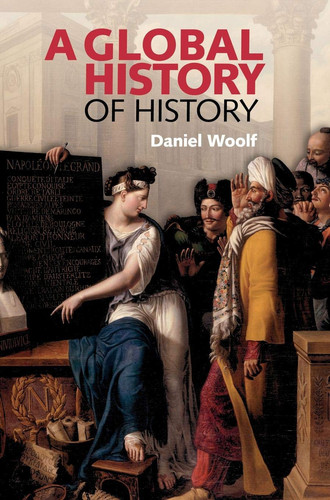
A global history of history

Woolf, D. R.
A global history of historical writing, thought and the development of the historical discipline from the ancient world to the present. This is a definitive guide to human efforts to recover, understand and represent the past, bringing together different historical traditions and their social, economic, political and cultural contexts. Daniel Woolf offers clear definitions of different genres and forms of history and addresses key themes such as the interactions between West and East, the conflict of oral, pictographic, and written accounts of the past and the place of history in society and in politics. Numerous textual extracts and illustrations in every chapter capture the historical cultures of past civilizations and demonstrate the different forms that historical consciousness has taken around the world. The book offers unique insights into the interconnections between different historical cultures over 3000 years and relates the rise of history to key themes in world history. --
Cambridge University Press 2011-02-17 568 pages

Fresh blood: the new American immigrants

Ungar, Sanford J.
Drawing on hundreds of richly textured interviews conducted from one end of the country to the other, veteran journalist Sanford J. Ungar documents the real-life struggles and triumphs of America's newest immigrants. He finds that the self-chosen who arrive every day, most of them legally, still enrich our national character and experience and make invaluable political, economic, social, cultural, and even gastronomic contributions. "First-class journalism, a book scholars will use decades from now to find out what it 'felt like' to be an immigrant in the 90s. I do not know of a better description and analysis of contemporary immigration." -- Roger Daniels, author of Coming to America: A History of Immigration and Ethnicity in American Life "An excellent overview of contemporary immigration issues set within the context of developments in the past fifty years. Ungar makes a strong case for the contributions of recent immigrants and for maintaining a relatively open door in the face of sometimes shrill opposition." -- Thomas Dublin, editor of Immigrant Voices: New Lives in America "Exactly the right book at the right time. [Ungar] looks at the national controversy over immigration policy with a clear eye, producing a history and a convincing argument why this is no time to reverse a liberal welcome to newcomers that has always--in good times and bad--made this a better and more prosperous democracy." -- Ben H. Bagdikian, author of Double Vision
University of Illinois Press 1998 411 pages

Handbook of energy efficiency and renewable energy

D. Yogi Goswami,Frank Kreith
Brought to you by the creator of numerous bestselling handbooks, the Handbook of Energy Efficiency and Renewable Energy provides a thorough grounding in the analytic techniques and technological developments that underpin renewable energy use and environmental protection. The handbook emphasizes the engineering aspects of energy conservation and renewable energy. Taking a world view, the editors discuss key topics underpinning energy efficiency and renewable energy systems. They provide content at the forefront of the contemporary debate about energy and environmental futures. This is vital information for planning a secure energy future. Practical in approach, the book covers technologies currently available or expected to be ready for implementation in the near future. It sets the stage with a survey of current and future world-wide energy issues, then explores energy policies and incentives for conservation and renewable energy, covers economic assessment methods for conservation and generation technologies, and discusses the environmental costs of various energy generation technologies. The book goes on to examine distributed generation and demand side management procedures and gives a perspective on the efficiencies, economics, and environmental costs of fossil and nuclear technologies. Highlighting energy conservation as the cornerstone of a successful national energy strategy, the book covers energy management strategies for industry and buildings, HVAC controls, co-generation, and advances in specific technologies such as motors, lighting, appliances, and heat pumps. It explores energy storage and generation from renewable sources and underlines the role of infrastructure security and risk analysis in planning future energy transmission and storage systems. These features and more make the Handbook of Energy Efficiency and Renewable Energy the tool for designing the energy sources of the future.
CRC Press 2007-05-07 1560 pages

Iran, the looming crisis: can the West live with Iran's nuclear threat?

Ottolenghi, Emanuele
In August 2002 the National Council of the Resistance in Iran (NCRI) revealed in Washington to a stunned world how advanced Iran's nuclear programme was. And in September 2009, amidst unprecedented protest in Iran against the country's regime, President Barack Obama exposed yet another clandestine nuclear site there, bringing the possibility of a nuclear arsenal ever closer. For seven fruitless years the international community has been too divided to counter this threat. Russia and China view Iran as a tool to counter US influence. Obama's efforts to engage Iran have yielded no results. Sunni Arab governments fear Iran, but are powerless to keep it in check. And Israel, fearing that the bomb will be used against them, might decide on a pre-emptive strike, with drastic consequences for the region.Preventing Iran from building a nuclear arsenal is a European priority. But Europe's strategic and economic interests collide: the EU is Iran's biggest commercial partner; its energy policy tilts towards Iran, yet its interests in the region clash with Iran's policies. Iran: the Looming Crisis is a new and extensively revised edition of Emanuele Ottolenghi's well received Under a Mushroom Cloud (2009). Fully updated to take account of the current diplomatic stalemate, recent developments in Iran's nuclear and ballistic missile programmes, Obama's 2009 diplomatic overtures to Iran, the 2009 re-election of President Ahmadinejad, his increasingly repressive stance and the mounting discontent of Iran's civil society against its oppressive rulers, this uncompromising analysis offers a compelling answer to the dilemmas facing the West. Drawing on extensive research, including interviews with senior officials, security and intelligence personnel of many countries, it provides a comprehensive account of a serious strategic threat, and offers a list of practical recommendations. (Global books in print).
Profile 2010 339 pages

A blueprint for a safer planet: how we can help save our world and create prosperity

Stern, N. H.
"Lord Stern, author of the Stern Review on the Economics of Climate Change and former Chief Economist at the World Bank, is the world's leading authority on what we can do in the face of such unprecedented threat. Action on climate change will require the greatest possible international collaboration, but if successful will ensure not just our future, but our future prosperity. Focusing on the economic management of investment and growth from the perspective of both adaptation and mitigation, Stern confronts the most urgent questions facing us now: what is the problem; what are the dangers; what can be done to reduce emissions, at what cost; how can the world adapt; and, what does all this mean for corporations, governments and individuals. A Blueprint for a Safer Planet provides authoritative, inspirational, and hopeful, answers."--Jacket.
Vintage 2010 246 pages

Ruling the waves: cycles of discovery, chaos, and wealth from the compass to the internet

Spar, Debora L.
Beginning with the development of the compass, Ruling the Waves examines a series of technological revolutions that promised, in their time, to transform the world's politics and business. With Debora Spar's gifted storytelling, each chapter reads like an adventure tale as she recounts the histories of the printing press and maps; of the telegraph, radio, and satellite television; of software, encryption, and the advent of digital music. At each of these junctures Spar suggests that invention led to both a wave of commerce and of chaos. Entrepreneurs such as Samuel Morse and Rupert Murdoch carved new markets from the emerging technology and proclaimed that the old rules no longer applied. And for a while, they were right. But eventually--and inevitably--even cowboys need rules: rules of property, rules of coordination, rules of competition. The erstwhile pioneers thus turn to government, lobbying for order and setting the stage for the next wave of discovery. A fascinating history of business, Ruling the Waves is also an original, thought-provoking analysis of the parallels between past innovations and inventions and our own tumultuous times.
Harcourt 2001 403 pages

Development Projects Observed

Albert Otto Hirschman
In this recent volume, Professor Albert O. Hirschman turns his attention to the ways in which economic development decision making is molded activated, or hampered by the specific nature of the project that is undertaken; for example, the establishment and operation of a pulp and paper mill in east Pakistan, an irrigation project in Peru, railway expansion in Nigeria, and other development undertakings. The bulk of the study explores new territory.
Brookings Institution Press 1967-10 197 pages

The devil and commodity fetishism in South America

Taussig, Michael T.
Fortunately for the reader, the author is not only a sophisticated practicing anthropologist--and incidentally a medical man--but also a person of wide and cosmopolitan literary culture. ... The interest of this exercise extends far beyond two backward corners of South America. How human beings make intellectual sense of the world in which they live, and which they no longer even partially control, is a question which concerns all of us. What they do with the 'social constructions (and deceptions) of reality' is equally significant. For men strive not only to understand but to change the world."--E.J. Hobsbawm, New York Review of Books "[Taussig] gives us superb ethnography, a Marxist critique of world capitalism, a lesson in analogical and dialectical techniques (some of them bordering on the mystical), and argues convincingly that humanist interpretation can be as empirically 'hard' as scientific measurement. ... [He] develops a set of painstaking techniques that allow us to 'read' the text of Caucana beliefs by means of an elaborate iconography derived from analogic reasoning and grounded in Marxist theory. Such a text is not to be 'understood' as a peasant or folk recourse to 'limited good' or 'folk Catholocism, ' but rather as revelatory of real social relationships that are disguised in more advanced capitalist societies by the process of ideological mystification that Marx called 'the fetishism of commodities.'"
University of North Carolina Press 2010 296 pages

Joseph Stiglitz and the World Bank: the rebel within

Stiglitz, Joseph E.
Comprises nine speeches by Joseph Stiglitz, the former Chief Economist of the World Bank. Covers the failure of shock therapy and transition economics, the limits of capital market liberalization, the myopia of the Washington Consensus, the role of knowledge in markets, the process of developing market institutions, and the primacy of openness and worker participation.
Anthem Press 2001 320 pages