194 results for "History"

The one-state condition: occupation and democracy in Israel/Palestine

Azoulay, Ariella,Ophir, Adi
"Since the start of the occupation of Palestinian territories in 1967, Israel's domination of the Palestinians has deprived an entire population of any political status or protection. But even decades on, most people speak of this rule - both in everyday political discussion and in legal and academic debates - as temporary, as a state of affairs incidental and external to the Israeli regime. In The One-State Condition, Ariella Azoulay and Adi Ophir directly challenge this belief. Looking closely at the history and contemporary formation of the ruling apparatus - the technologies and operations of the Israeli army, the General Security Services, and the legal system imposed in the Occupied Territories - Azoulay and Ophir outline the one-state condition of Israel/Palestine: the grounding principle of Israeli governance is the perpetuation of differential rule over populations of differing status. Israeli citizenship is shaped through the active denial of Palestinian citizenship and civil rights. Though many Israelis, on both political right and left, agree that the occupation constitutes a problem for Israeli democracy, few ultimately admit that Israel is no democracy or question the very structure of the Israeli regime itself. Too frequently ignored are the lasting effects of the deceptive denial of the events of 1948 and 1967, and the ways in which the resulting occupation has reinforced the sweeping militarization and recent racialization of Israeli society. Azoulay and Ophir show that acknowledgment of the one-state condition is not only a prerequisite for considering a one- or two-state solution; it is a prerequisite for advancing new ideas to move beyond the trap of this false dilemma."--Publisher's description
Stanford University Press 2013 316 pages

Acting in the night: Macbeth and the places of the Civil War

Nemerov, Alexander
"Alexander Nemerov is one of the greatest readers of American visual culture. This book has the revelatory power that only wide-ranging curiosity and true independence of mind can achieve." Richard H. Brodhead President of Duke University and author of Cultures of Letters: Scenes of Reading and Writing in Nineteenth-Century America ; "A benchmark in the writing of art history and in studies of the Civil War, Acting in the Night occupies a category unto itself. It uniquely immerses the reader in a holistic experience of the Civil War and shows Nemerov as a cosummate stylist in the field of American art history."Kathleen Pyne author of Modernism and the Feminine Voice ; "This is a work of criticism that borders on poetry, a brilliant and extremely original book that invites us to rethink to the artistic world we study."Julia Reinhard Lupton author of Thinking with Shakespeare: Essays on Politics and Life ; What can the performance of a single play on one night tell us about the world this event inhabited so briefly? Alexander Nemerov takes a performance of Macbeth in Washington, D.C., on October 17, 1863--with Abraham Lincoln in attendance--to explore this question and illuminate American art, politics, technology, and life as it was being lived. Nemerov's inspiration is Wallace Stevens and his poem "Anecdote of the Jar,"in which a single object organizes the wilderness around it. For Nemerov, that evening's performance of Macbeth reached across the tragedy of civil war to acknowledge the horrors and emptiness of a world it tried and ultimately failed to change. --Book Jacket
University of California Press 2010-09-01 299 pages

Mind, modernity, madness: the impact of culture on human experience

Greenfeld, Liah
In the culminating volume of her nationalism trilogy, Greenfeld argues that we have overlooked the connection between egalitarian society and mental illness. Modern nationalism rests on principles of popular sovereignty, equality, and secularism. Citizens of the twenty-first century enjoy unprecedented freedom to become the authors of their personal destinies. Empowering as this is, it also places them under enormous psychic strain. They must constantly appraise their identities, manage their desires, and calibrate their place within society. For vulnerable individuals, this pressure is too much. Training her analytic eye on extensive case histories in manic depression and schizophrenia, Greenfeld contends that these illnesses are dysfunctions of selfhood caused by society's overburdening demands for self-realization. In her rigorous diagnosis, madness is a culturally constituted malady
Harvard University Press 2013-04-08 670 pages

Science and society: studies in the sociology of science

Agassi, Joseph
"If a science has to be supported by fraudulent means, let it perish. " With these words of Kepler, Agassi plunges into the actual troubles and glories of science (321). The SOciology of science is no foreign intruder upon scientific knowledge in these essays, for we see clearly how Agassi transforms the tired internalistJexternalist debate about the causal influences in the history of science. The social character of the entire intertwined epistemological and practical natures of the sciences is intrinsic to science and itself split: the internal sociology within science, the external sociology of the social setting without. Agassi sees these social matters in the small as well as the large: from the details of scientific communication, changing publishing as he thinks to 'on-demand' centralism with less waste (Ch. 12), to the colossal tension of romanticism and rationality in the sweep of historical cultures. Agassi is a moral and political philosopher of science, defending, dis turbing, comprehending, criticizing. For him, science in a society requires confrontation, again and again, with issues of autonomy vs. legitimation as the central problem of democracy. And furthermore, devotion to science, pace Popper, Polanyi, and Weber, carries preoccupational dangers: Popper's elitist rooting out of 'pseudo-science', Weber's hard-working obsessive . com mitment to science. See Agassi's Weberian gloss on the social psychology of science in his provocative 'picture of the scientist as maniac' (437).
D. Reidel Pub. Co 1981-09-01 531 pages

Reading clocks, alla Turca: time and society in the late Ottoman Empire

Wishnitzer, Avner
Up until the end of the eighteenth century, the way Ottomans used their clocks conformed to the inner logic of their own temporal culture. However, this began to change rather dramatically during the nineteenth century, as the Ottoman Empire was increasingly assimilated into the European-dominated global economy and the project of modern state building began to gather momentum. In Reading Clocks, Alla Turca , Avner Wishnitzer unravels the complexity of Ottoman temporal culture and for the first time tells the story of its transformation. He explains that in their attempt to attain better surveillance capabilities and higher levels of regularity and efficiency, various organs of the reforming Ottoman state developed elaborate temporal constructs in which clocks played an increasingly important role. As the reform movement spread beyond the government apparatus, emerging groups of officers, bureaucrats, and urban professionals incorporated novel time-related ideas, values, and behaviors into their self-consciously “modern” outlook and lifestyle. Acculturated in the highly regimented environment of schools and barracks, they came to identify efficiency and temporal regularity with progress and the former temporal patterns with the old political order. Drawing on a wealth of archival and literary sources, Wishnitzer’s original and highly important work presents the shifting culture of time as an arena in which Ottoman social groups competed for legitimacy and a medium through which the very concept of modernity was defined. Reading Clocks, Alla Turca breaks new ground in the study of the Middle East and presents us with a new understanding of the relationship between time and modernity.
University of Chicago Press 2015-07-07 273 pages

Nation and history: Israeli historiography and identity between Zionism and post-Zionism

Gelber, Yoav
During the last 20 years, Israel has reached unprecedented prosperity, yet it is haunted by existential fears for its future, identity, and survival. Israel's legitimacy is under assault from within and without by a coalition of left-wing radicals, Palestinians and their sympathizers, and Muslim fundamentalists. All these groups deny the existence of a Jewish nation and argue that Jews do not need a nation state. Hence, Israel should either disappear completely or become 'a state of all its citizens' devoid of any Jewish symbol or identity. The origins of this campaign are twofold. One derives from the traditional opposition that has accompanied Zionism from its inception. The second is contemporary, articulating the post-ist fads that swamped the West since the 1980s. The past occupies a prominent place in this crusade that aims at the present and future. Traditional historiography, scientific and pseudo-scientific, and the new vogue of memory and narrative, that claims to be the true history of human experience, are equally abused to delegitimize Israel. This book follows these two paths, while avoiding disputes over current political issues. First, it portrays the disciplinary background - the evolution of the modern history discipline. Subsequently, it focuses on the conflicting approaches to the cardinal issue of Zionism's essence: Is it a national liberation movement of European origin that offered a solution to the modern Jewish Question in a world of nationalities? Or is it a colonial movement that oppressed equally Arabs and oriental Jews?
Vallentine Mitchell 2011 337 pages

Catastrophe and meaning: the Holocaust and the twentieth century

Moishe Postone,Eric L. Santner
How should we understand the relation of the Holocaust to the broader historical processes of the century just ended? How do we explain the bearing of the Holocaust on problems of representation, memory, memorialization, and historical practice? These are some of the questions explored by an esteemed group of scholars in Catastrophe and Meaning, the most significant multiauthored book on the Holocaust in over a decade. This collection features essays that consider the role of anti-Semitism in the recounting of the Holocaust; the place of the catastrophe in the narrative of twentieth-century history; the questions of agency and victimhood that the Holocaust inspires; the afterlife of trauma in literature written about the tragedy; and the gaps in remembrance and comprehension that normal historical works fail to notice. --
University of Chicago Press 2003-11-15 274 pages

Ballet class: an American history

Klapper, Melissa R.
Surveying the state of American ballet in a 1913 issue of Clure's Magazine, author Willa Cather reported that few girls expressed any interest in taking ballet class and that those who did were hard-pressed to find anything other than dingy studios and imperious teachers. One hundred years later, ballet is everywhere. Beginning with the arrival of Russian dancers like Anna Pavlova, who first toured the United States on the eve of World War I, 'Ballet Class: An American History' explores the growth of ballet from an ancillary part of nineteenth-century musical theater, opera, and vaudeville to the quintessential extracurricular activity it is today, pursued by countless children nationwide and an integral part of twentieth-century American childhood across borders of gender, class, race, and sexuality. 0A social history, 'Ballet Class' takes a new approach to the very popular subject of ballet and helps ground an art form often perceived to be elite in the experiences of regular, everyday people who spent time in barre-lined studios across the United States. Drawing on a wide variety of materials, including children's books, memoirs by professional dancers and choreographers, pedagogy manuals, and dance periodicals, in addition to archival collections and oral histories, this pathbreaking study provides a deeply-researched national perspective on the history and significance of recreational ballet class in the United States and its influence on many facets of children's lives, including gender norms, consumerism, body image, children's literature, extracurricular activities, and popular culture
Oxford University Press 2020 403 pages

Why baseball matters

Jacoby, Susan
Baseball, first dubbed the "national pastime" in print in 1856, is the country's most tradition-bound sport. Despite remaining popular and profitable into the twenty-first century, the game is losing young fans, among African Americans and women as well as white men. Furthermore, baseball's greatest charm--a clockless suspension of time--is also its greatest liability in a culture of digital distraction. These paradoxes are explored by the historian and passionate baseball fan Susan Jacoby in a book that is both a love letter to the game and a tough-minded analysis of the current challenges to its special position--in reality and myth--in American culture. The concise but wide-ranging analysis moves from the Civil War--when many soldiers played ball in northern and southern prisoner-of-war camps--to interviews with top baseball officials and young men who prefer playing online "fantasy baseball" to attending real games. Revisiting her youthful days of watching televised baseball in her grandfather's bar, the author links her love of the game with the informal education she received in everything from baseball's history of racial segregation to pitch location. Jacoby argues forcefully that the major challenge to baseball today is a shortened attention span at odds with a long game in which great hitters fail two out of three times. Without sanitizing this basic problem, Why Baseball Matters remind us that the game has retained its grip on our hearts precisely because it has repeatedly demonstrated the ability to reinvent itself in times of immense social change.
Yale University Press 2018-01-01 200 pages

His and hers: gender, consumption, and technology

Roger Horowitz,Arwen Mohun
The pathbreaking essays in this collection explore the history of consumption by synthesizing discrete historical literatures on consumer culture, gender, and the history of technology. Luxury hotels and the chocolate industry are among the diverse array of topics these authors use to demonstrate that consumption is both a material and a cultural process. Production and consumption become equally inextricable under close analysis. Tools from both the history of technology and gender studies illuminate how these categories intersect. Although broad social and technological trends influence the outcome of these stories, the authors emphasize the agaency of particular groups, including consumers, workers, manufacturers, and the "mediators" who communicate between producers and consumers. This volume will be of interest to historians in a wide range of fields.
University Press of Virginia 1998 240 pages

A larger sense of purpose: higher education and society

Shapiro, Harold T.
Universities were once largely insular institutions whose purview extended no further than the campus gates. Not anymore. Today's universities have evolved into multifaceted organizations with complex connections to government, business, and the community. This thought-provoking book by Harold Shapiro, former president of both Princeton University and the University of Michigan, and Chairman of the National Bioethics Advisory Commission under President Bill Clinton, explores the role the modern university should play as an ethical force and societal steward. Based on the 2003 Clark Kerr lectures, A Larger Sense of Purpose draws from Shapiro's twenty-five years of experience leading major research universities and takes up key topics of debate in higher education. What are the nature and objectives of a liberal education? How should universities address the increasing commercialization not only of intercollegiate sports but of education and research? What are the university's responsibilities for the moral education of students? The book begins with an expanded history of the modern research institution followed by essays on ethics, the academic curriculum, the differences between private and public higher education, the future of intellectual property rights, and the changing relationship between the nation's universities and the for-profit sector. Shapiro calls for universities to be more accountable morally as well as academically. He urges scientists not only to educate others about the potential and limitations of science but also to acknowledge the public's distress over the challenges presented by the very success of the scientific enterprise. He advocates for a more intimate connection between professional training and the liberal arts--in the hope that future doctors, lawyers, and business executives will be educated in ethics and the social sciences as well as they are in anatomy, torts, and leveraged buyouts. Candid, timely, and provocative, A Larger Sense of Purpose demands the attention of not only those in academics but of anyone who shares an interest in the soul of education.
Princeton University Press 2005-10-16 183 pages

Finitude's score: essays for the end of the millennium

Ronell, Avital
Suspending the distinction between headline news and high theory, Avital Ronell examines the diverse figures of finitude in our modernity: war, guerrilla video, trauma TV, AIDS, music, divorce, sadism, electronic tagging, rumor. Her essays address such questions as, How do rumors kill? How has video become the conscience of TV? How have the police come to be everywhere, even where they are not? Is peace possible? “[W]riting to the community of those who have no community—to those who have known the infiniteness of abandonment,” her work explores the possibility, one possibility among many, that “this time we have gone too far”: “One last word. It is possible that we have gone too far. This possibility has to be considered if we, as a species, as a history, are going to get anywhere at all.”
University of Nebraska Press 1994 368 pages

Aerograms across the ocean: a love story in letters

Biale, David,Biale, Rachel
"In August 1970, David Biale, a 21-year-old American Jewish student, arrived at Kibbutz Kfar Ruppin in Israel's Bet She'an Valley as a volunteer. There, he met Rachel Korati, nine days shy of her eighteenth birthday. They began an intense dialogue about how a secular Jew might be Jewish and what the role of Israel and kibbutz ought to be in modern Jewish life. They also found a common language in the counter-culture of the 1960s to which both were drawn. Upon David's return to university studies in Berkeley and Rachel's first steps into independent adulthood - living in a town near Tel Aviv and working as a youth movement counselor -- the two commenced a correspondence in which they continued their intellectual and ideological discussions from the summer, engaging Jewish sources on the one hand, and contemporary events on the other. Gradually, the letters became more intimate and so began an epistolary romance, which one might associate more with the nineteenth century and which would be inconceivable in today's world of texting and email. Over the next two years, the correspondence continued, often on a daily basis. Twice, David's plans to come to Israel were dashed. The two struggled to hold onto a relationship composed primarily of written words. In the fall of 1971, Rachel was drafted into the Israeli Army and David had his own brush with the American draft in the last phase of the Vietnam War. Aerograms Across the Ocean: A Love Story in Letters opens a rare window into the lives and thoughts of two passionate young people, trying to find their identities and life trajectories in the tumultuous early 1970s. By turns philosophical and playful, poetic and prosaic, idealistic and uncertain, pensive and erotic, this jointly-written memoir is a coming-of-age story in Israel after the Six Day War and in America in the shadow of the Vietnam War. The book is organized around the 258 letters the authors exchanged, a correspondence that takes readers back into a different age, half a century ago." --
Wildcat Books 2021-12-15 232 pages

Selling the people's Cadillac: the Edsel and corporate responsibility

Jan G. Deutsch
This extraordinary book shows that corporate social responsibility should be treated as a legal rather than as an economic problem. Having established the Edsel as a case in point, Deutsch offers a jurisprudence based on that history, presenting law as a process that can be understood only by an awareness of the context in which it takes place.
Yale University Press 1976 261 pages

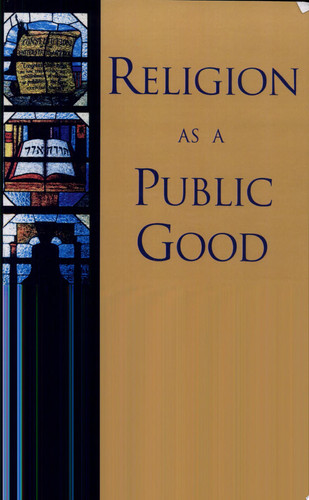
Religion as a public good: Jews and other Americans on religion in the public square

Alan Mittleman
Religion as a Public Good: Jews and Other Americans on Religion in the Public Square explores the often controversial topic of how religion ought to relate to American public life. The sixteen distinguished contributors, both Jewish and Christian, reflect on the topic out of their own disciplines-social ethics, political theory, philosophy, law, history, theology, and sociology. and take a stand based on their religious convictions and political beliefs. The volume is at once scholarly and committed, polemic and civil, reflective and activist. Written in the shadow of 9/11, it invites a new consideration of how religion enhances democratic public life with full awareness of the dangers that religion can sometimes pose. The volume is polemical, as befits the topic, but also civil, as befits a dialogue about an issue of profound significance for democratic citizenship.
Rowman & Littlefield 2003-12-09 336 pages

The rise of the individual in 1950s Israel: a challenge to collectivism / Orit Rozin ; translated by Haim Watzman

Rozin, Orit
n this sharply argued volume, Orit Rozin reveals the flaws in the conventional account of Israeli society in the 1950s, which portrayed the Israeli public as committed to a collectivist ideology. In fact, major sectors of Israeli society espoused individualism and rejected the state-imposed collectivist ideology. Rozin draws on archival, legal, and media sources to analyze the attitudes of black-market profiteers, politicians and judges, middle-class homemakers, and immigrants living in transit camps and rural settlements. Part of a refreshing trend in recent Israeli historiography to study the voices, emotions, and ideas of ordinary people, Rozin’s book provides an important corrective to much extant scholarly literature on Israel’s early years.
Brandeis University Ppress 2011 254 pages