339 results for "Biography"

The true Herod

Vermès, Géza
Who was Herod the Great? How did he come to govern one of the most politically tumultuous regions in the world? Was he the heartless baby-killer of Matthew's Gospel, or does this popular tale do Herod a great disservice? Geza Vermes, whose work on the Historical Jesus and the Dead Sea Scrolls has made him one of the most recognisable names in Biblical and Jewish studies, provides a new portrait of Herod. Vermes examines Herod's legacy as a political leader, and a potentate, a man of culture, and an all-round smooth operator. Vermes opens up the fascinating character of Herod, from his sizable and fragile ego to his devastation at the execution of his beloved wife, an execution that Herod ordered himself. Beginning with the key historical sources (notably Josephus) Vermes moves on to consider Herod's greatest legacy and testament - his extensive building works, which include the Temple in Jerusalem, Masada and Herodium. Colour images, combined with Vermes' lively prose make this new picture of Herod an enticing and informative guide to one of ancient history's most misunderstood figures.
Bloomsbury T & T Clark 2014-05-22 181 pages

Gaby Brimmer: an autobiography in three voices

Brimmer, Gabriela
This English-language translation of the autobiography of Gabriela Brimmer (1947-2000) tells an amazing story in three voices. Gaby, who had cerebral palsy, communicated largely by typing with her left foot on an electric typewriter, and also by using that foot to point at letters and numbers on an "alphabet board" at the base of her wheelchair. She gained admission to Mexico City public schools, attended the prestigious National Autonomous University of Mexico, and became a key figure in launching Mexico's disability rights movement. Brimmer was raised by her parents, Austrian Jews who fled the Nazis in the late 1930s, and a devoted Mexican caregiver, Florencia Morales Sanchez. Renowned writer Elena Poniatowska structured this text by alternating Gaby's voice with those of her mother, Sari, and Florencia. Memorable not just as the memoir of an extraordinary woman, but as a unique and imaginative form of autobiographical writing, the volume opens with a foreword by Judith E. Heumann and Jorge Pineda, and features a new introduction by Lauri Umansky and afterword by Avital Bloch providing additional context about Gaby's life and writing, as well as disability, women's, and Jewish/Mexican history.
Brandeis University Press 2009 200 pages

From the ghetto to the melting pot: Israel Zangwill's Jewish plays : three playscripts

Zangwill, Israel
In his historic play The Melting Pot, Israel Zangwill (1864–1926) introduced into our discourse a potent metaphor that for nearly a hundred years has served as a key definition of the United States. The play, enthusiastically espoused by President Theodore Roosevelt, to whom it was dedicated, offered a grand vision of America as a dynamic process of ethnic and racial amalgamation. By his own admission, The Melting Pot grew out of Zangwill's intense involvement in issues of Jewish immigration and resettlement and was grounded in his interpretation of Jewish history. Zangwill, Anglo Jewry's most renowned writer, began writing seriously for the stage in the late 1890s. At the time, the negative stereotype of the so-called Stage Jew was still deeply entrenched in the theatrical mainstream, so much so that Jewish playwrights writing for the English-language stage avoided altogether the portrayal of Jewish life. Zangwill shattered this silence in 1899 with the American premiere of Children of the Ghetto―his first full-length drama, and the first English-language play devoted in its entirety to the depiction of Jewish life in an authentic and positive fashion. The play's groundbreaking production drew tremendous attention and generated heated debates, but since the script was never published, the memory of the passions it generated dimmed, and its whereabouts eventually became unknown. After more than a century, theater historian Edna Nahshon has discovered the original manuscript of this milestone text, as well as that of another unpublished Zangwill play, The King of Schnorrers, and the original version of The Melting Pot. Nahshon brings these three works together in print for the first time in From the Ghetto to the Melting Pot. Edna Nahshon's in-depth introduction to this volume includes a biography of Israel Zangwill that especially pertains to these works and situates them within the Anglo-American theater of the time. The essays preceding each play provide rich and hitherto unknown information on the scripts, their stage productions, and their popular and critical reception. While some issues addressed in From the Ghetto to the Melting Pot are uniquely Jewish, others are universal and typical of the negotiation of self-presentation by ethnic and minority groups, particularly within the American experience.
Wayne State University Press 2006 559 pages

Shush! growing up Jewish under Stalin : a memoir

Draitser, Emil
Memoirs of a Jew born in 1937 in Odessa, relating his childhood experiences in the postwar period. Popular antisemitism was rampant in Odessa, and the people in power, from school teachers to local authorities, turned a blind eye to it. Between 1948-53 popular antisemitism gave way to officially-sponsored antisemitic campaigns. Draitser, who had a traditional Jewish upbringing, was taught to be quiet, to maintain a low profile, and never to stress his Jewishness publicly. Contends that all Soviet Jews of his generation received the same upbringing of self-hatred, learned fear (including fear of "gentile" women), and an inferiority complex. In 1974 he emigrated to the USA. Describes, also, his family's evacuation from Odessa in 1941, and how some relatives perished either in German-occupied Minsk or in Ukraine.
University of California Press 2008-09-04 301 pages

What time and sadness spared: mother and son confront the Holocaust

Ben-Atar, Roma Nutkiewicz,Ben-Atar, Doron S.
Roma Ben-Atar resisted until late in life the urging of her family to share the memories of her Nazi-era experiences. The Holocaust exerted a dark pressure on all of their lives but was never openly discussed. It was only when her granddaughter insisted on hearing the whole truth, with a directness partly generational, that Mrs. Ben-Atar agreed to tell her story. What Time and Sadness Spared is a journey of both loss and endurance, moving with shocking speed from a carefree adolescence in upper-middle-class Warsaw to the horrors of the Final Solution. The young girl sees her neighborhood transformed into a ghetto populated by skeletal figures both alive and dead. Unbelievably, things only grow worse as this ruin gives way to the death factories of Majdanek and Auschwitz and the death marches of 1945. Life in the camps changes her in less than a day, as if "the person in my body was a stranger I had never met." Her only consolation is to lie on her wooden bunk, no mattress, and speak to the soul of her mother, who, like virtually her entire family, had already been swept away. Roma must summon astonishing powers of adaptation simply to survive, bringing her finally through the wreckage of postwar Europe and to an entirely new life in Israel. In this unique family collaboration Roma Ben-Atar's son Doron, a historian who brings with him fluency in psychoanalysis, contributes through his commentary an awareness of the difficulties presented by historical narrative and memory. A visitor to the much-changed sites in which his mother grew up and was interned by the Nazis, he also voices the perspective of the survivors' children and their ambivalence over being "protected" from this past. As the generation that endured the camps passes from this world, What Time and Sadness Spared illustrates with particular urgency the historical responsibilities of the survivors' descendants, who must become the new vessels for a story that will not remain alive on its own but demands our courage and curiosity.
University of Virginia Press 2018-07-05 196 pages

Menasseh ben Israel: rabbi of Amsterdam

Nadler, Steven M.
An illuminating biography of the great Amsterdam rabbi and celebrated popularizer of Judaism in the seventeenth century Menasseh ben Israel (1604-1657) was among the most accomplished and cosmopolitan rabbis of his time, and a pivotal intellectual figure in early modern Jewish history. He was one of the three rabbis of the "Portuguese Nation" in Amsterdam, a community that quickly earned renown worldwide for its mercantile and scholarly vitality. Born in Lisbon, Menasseh and his family were forcibly converted to Catholicism but suspected of insincerity in their new faith. To avoid the horrors of the Inquisition, they fled first to southwestern France, and then to Amsterdam, where they finally settled. Menasseh played an important role during the formative decades of one of the most vital Jewish communities of early modern Europe, and was influential through his extraordinary work as a printer and his efforts on behalf of the readmission of Jews to England. In this lively biography, Steven Nadler provides a fresh perspective on this seminal figure
Yale University Press 2018 298 pages

Martin Buber's life and work

Friedman, Maurice S.
Martin Buber's Life and Work is a complete reprint of Maurice Friedman's monumental three-volume biography. Friedman covers Buber's life from his work on I and Thou to the challenges of Nazi Germany and prewar Palestine. He charts Buber's activities on behalf of Jewish-Arab rapprochement, his dialogue with Dag Hammarskjold, and comments on the philosopher's last years, his death, and his legacy to world Jewry.
Wayne State University Press 1988 493 pages

Holocaust hero: the untold story and vignettes of Solomon Schonfeld, an extraordinary British Orthodox Rabbi who rescued 4000 Jews during the Holocaust

Kranzler, David
Recounts the Holocaust rescue efforts from London of Rabbi Schonfeld (1912-1984) via the organization he founded, the Chief Rabbi's Religious Emergency Council. He was influenced by his teacher, Rabbi Michael Dov Weissmandel, who rescued Jews in Europe. Despite the opposition of assimilationist, antisemitism-fearing members of the British Jewish establishment, and of some Zionists, Schonfeld succeeded in bringing to England several thousand Orthodox Jews, both children and adults (mainly rabbis, teachers, and their families). He raised funds, provided housing, and gained support from the goverment. His rescue work began in 1938 and continued after 1945, when he brought Jewish orphans out of antisemitic Poland. Schonfeld was interested in spiritual as well as physical rescue and his successes affected the profile of British Jewry. Pt. 1 (pp. 1-119) contains a biography of Schonfeld. Pt. 2 (pp. 121-236) contains testimonies on his activities, especially the Kindertransports he organized, by people who were rescued by him or worked with him.
KTAV Publishers 2004 289 pages

Moses Montefiore: Jewish liberator, imperial hero

Green, Abigail
Humanitarian, philanthropist, and campaigner for Jewish emancipation on a grand scale, Sir Moses Montefiore (1784–1885) was the preeminent Jewish figure of the nineteenth century - and one of the first truly global celebrities. His story, told here in full for the first time, is a remarkable and illuminating tale of diplomacy and adventure. Abigail Green's sweeping biography follows Montefiore through the realms of court and ghetto, tsar and sultan, synagogue and stock exchange. Interweaving the public triumph of Montefiore's foreign missions with the private tragedy of his childless marriage, this book brings the diversity of nineteenth-century Jewry brilliantly to life - from London to Jerusalem, Rome to St. Petersburg, Morocco to Istanbul. Here we see the origins of Zionism and the rise of international Jewish consciousness, the faltering birth of international human rights, and the making of the modern Middle East. With the globalization and mobilization of religious identities now at the top of the political agenda, Montefiore's life story is relevant as never before. Mining materials from eleven countries in nine languages, Green's masterly biography bridges the East-West divide in modern Jewish history, presenting the transformation of Jewish life in Europe, the Middle East, and the New World as part of a single global phenomenon. As it reestablishes Montefiore's status as a major historical player, it also restores a significant chapter to the history of our modern world.
Belknap Press of Harvard University Press 2010-03-15 540 pages

My lucky star

Fantlová, Zdenka
Memoirs of a Jew born in 1922 in Blatná, Czechoslovakia. In 1925 her family moved to Rokycany (west of Prague). In 1940 Fantlová's father was arrested; he was interned in various camps and died in 1945 on a death march. In January 1942, Fantlová was deported to Theresienstadt with her stepmother, brother, and sister. Describes cultural activities in Theresienstadt, especially musical theater, in which she participated. In October 1944 the family was deported to Auschwitz, where Fantlová's stepmother was killed. Her brother was sent to Gleiwitz and died there. Fantlová and her sister were taken to the Kurzbach labor camp, and from there to Gross-Rosen, Mauthausen, and Bergen-Belsen, where her sister perished and Fantlová was liberated. In July 1945 she was sent for treatment to Sweden and remained there.
Herodias 2001 203 pages

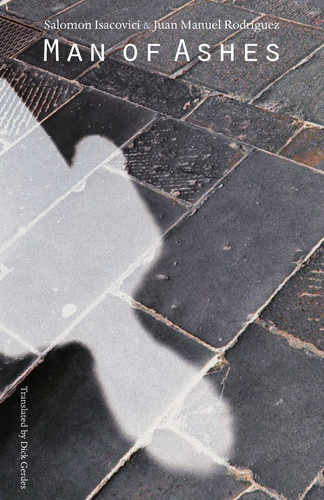
Man of ashes

Isacovici, Salomon
"A poignant, groundbreaking memoir that links the Holocaust and its aftermath to the safe haven that opened for camp survivors in Latin America at mid-century. The controversy surrounding the collaboration between Isacovici and Rodr guez remains an extraordinary opportunity to reflect on the thorny path of Jewish-Hispanic relations worldwide."-Ilan Stavans"Distinguished by geography as well as by its painful testimony. . . . Much of the memoir's early drama involves the creeping Nazi threat opposing Jews' wishful thinking-that the war might be ending and that 'it can't happen here.' . . . The author's family is shattered in Birkenau, but he survives Auschwitz with jobs peeling potatoes and mining coal at Jaworno, and he survives a gruesome death march as the Soviets advance. Isacovici is able to rejoin two brothers in a fruitless return to the family farm and to many European cities in search of a haven. He then joins the family of a woman with whom he has a serious romance, who end up with visas for Ecuador, where he feels an empathy for the suffering of the local Indians. . . . This account tells an unforgettable and unique story."-Kirkus ReviewsSalomon Isacovici died in 1998. Dick Gerdes is a professor of Spanish at George Mason University. Man of Ashes was first published in Mexico in 1990 as A7393: Hombre de cenizas and was awarded the Fernando Jeno Prize.
University of Nebraska Press 2002 244 pages